
-
Recommendations for the Biden Administration on Climate Migration
›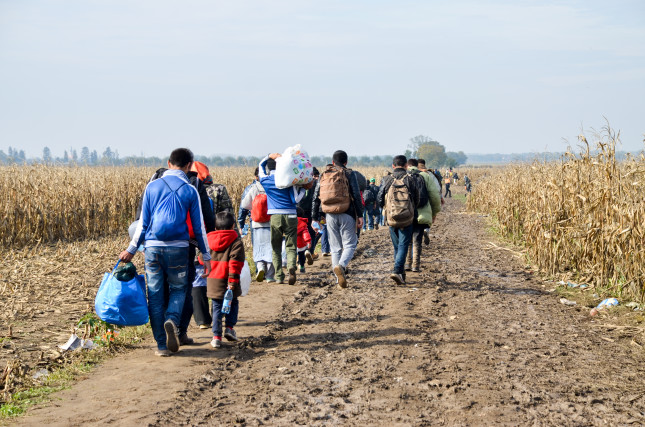
“There is little doubt that tens of millions of people will be displaced over the next two to three decades due in large measure by disaster and other environmental changes affected by climate, with the majority displaced within the borders of their own countries. The United States has a special responsibility to lead on issues of climate change, migration, and displacement,” said Eric Schwartz, President of Refugees International, at a recent event presenting a Blue-Ribbon Task Force report on climate change and migration.
-
Untapped Potential: Women Leadership is Key to Effective Water Diplomacy in the Middle East
›
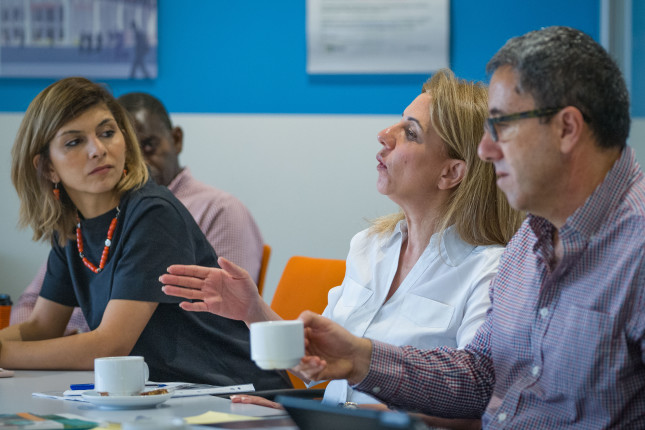
“We see women playing a critical role in water resource management and decision-making at the family level as well as the community level. However, they’re very often absent from high level water-related negotiations and agreements,” said Merissa Khurma, director of the Wilson Center’s Middle East Program (MEP), introducing a Wilson Center event on the inclusion of women in water leadership and diplomacy in the Middle East, co-hosted by the Environmental Change and Security Program, MEP, and EcoPeace Middle East.
-
Engaging Marginalized Groups is Essential to Achieving Universal Health Coverage
›Too often, many in my community are excluded from sexual and reproductive health services, said Ruth Morgan Thomas, co-founder and Global Coordinator of the Global Network of Sex Work Projects, in today’s episode of Friday Podcasts. This episode features highlights from a recent Wilson Center and UNFPA event where Thomas and Zandile Simelane, an HIV Youth Advocate from Eswatini, address the barriers that their respective communities—sex workers and HIV positive youth—face in accessing sexual and reproductive health (SRH) services and universal health coverage (UHC). -
China’s Race to 77.6: Is a Target-based COVID-19 Campaign a Model for Climate Response?
›In China’s campaign to get its population of 1.4 billion vaccinated against COVID-19, the magic number is 77.6 percent. Government agencies all over the country, from Inner Mongolia to Jiangsu, uniformly pledge to get this exact percentage of their populations vaccinated. A rural township in Harbin boasts that it’s fully vaccinated 11,025 of its population of 14,198, 0.05 percentage point above the sacred target of 77.6 percent. So, just what is the significance of 77.6?
-
A New Generation of Family Caregivers Emerges During the Pandemic
›The population of unpaid family caregivers is shifting, and the pandemic has accelerated that change. One in five carers became caregivers for the first time during the pandemic, according to the Embracing Carers Global Carer Well Being Index®. A disproportionate share of these new carers were Gen Z or millennial (less than 38 years old). And 25 percent were caring for children and a sick/aging parent or grandparent.
-
Taking Action to Address Wildlife Crime’s Environmental, Health, and Security Risks
›“This COVID-19 pandemic has reminded us, albeit in a devastating way, of the interconnected nature of things, most particularly between economies, the environment, human and wildlife health and welfare,” said John Scanlon AO, the former Secretary-General of the Convention on International Trade in Endangered Species (CITES) and Chair of the Global Initiative to End Wildlife Crime, at a recent Wilson Center event on wildlife crime’s connection to human health and security. Despite its serious implications for a broad swath of issue areas, wildlife crime and trafficking remain under-studied and under-regulated. At the event, experts from diverse fields in defense, global health, and conservation highlighted the need for international cooperation to mitigate wildlife crime’s impact on environmental degradation, the spread of zoonotic disease, and transnational security threats.
-
World Population Day 2021 – Setbacks in Development and Family Planning Slow Progress Along the Demographic Transition
›Globally, the demographic transition from high to low fertility and mortality has improved quality of life for billions of people over the past several decades. The average number of children born per woman worldwide decreased from nearly 5 in 1950 to 2.47 by 2020. Improvements in infant and child mortality boosted life expectancy at birth from a global average of 47 years in 1950 to over 72 years today. These gains in fertility and mortality were a result of rising incomes and significant investments and improvements in public health, education, and family planning access—18 months into a global pandemic, it’s becoming increasingly apparent that COVID-19 has disrupted these gains, slowing progress along the demographic transition for those countries in the earliest stages. This World Population Day is therefore an important opportunity to recommit to investments in health and education and resume our progress in improving lives for the world’s poorest and most vulnerable.
-
John Scanlon on the Case for Criminalizing Wildlife Trafficking under International Law
›“The world is still feeling the full brunt of the COVID-19 pandemic which most likely had its origins in a wild animal,” says John Scanlon AO, Former Secretary-General of CITES (the Convention on International Trade in Endangered Species of Wild Fauna and Flora) and Chair of the Global Initiative to End Wildlife Crime, in this week’s Friday Podcast. Scanlon spoke at a recent Wilson Center event on the connections between wildlife crime, human health, and security.
 A Publication of the Stimson Center.
 Too often, many in my community are excluded from sexual and reproductive health services, said Ruth Morgan Thomas, co-founder and Global Coordinator of the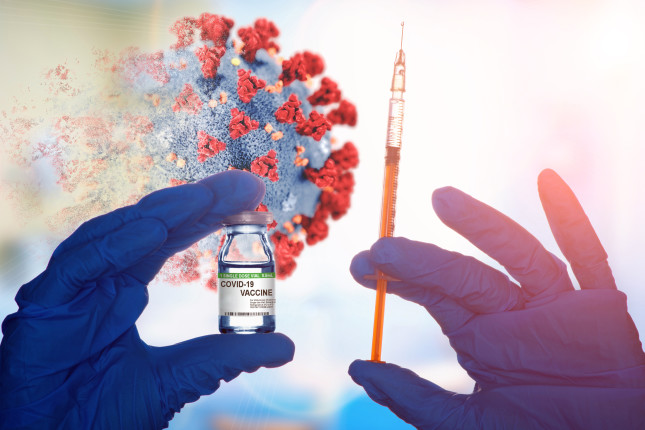


 “The world is still feeling the full brunt of the COVID-19 pandemic which most likely had its origins in a wild animal,” says John Scanlon AO, Former Secretary-General of CITES (the Convention on International Trade in Endangered Species of Wild Fauna and Flora) and Chair of the Global Initiative to End Wildlife Crime, in this week’s Friday Podcast. Scanlon spoke at a recent Wilson Center event on the connections between

