-
Alice Hill on Mainstreaming Climate Risks Into U.S. Government Planning: “We Should Care Deeply”
› “Perhaps I’m a case study for what happens in the federal government when we start on a tough problem,” says Alice Hill, the senior director for resilience policy at the National Security Council and former senior counselor to the secretary of homeland security, in this week’s podcast.
 -
A New Climate for Peace: Taking Action on Climate and Fragility Risks (Report Launch)
›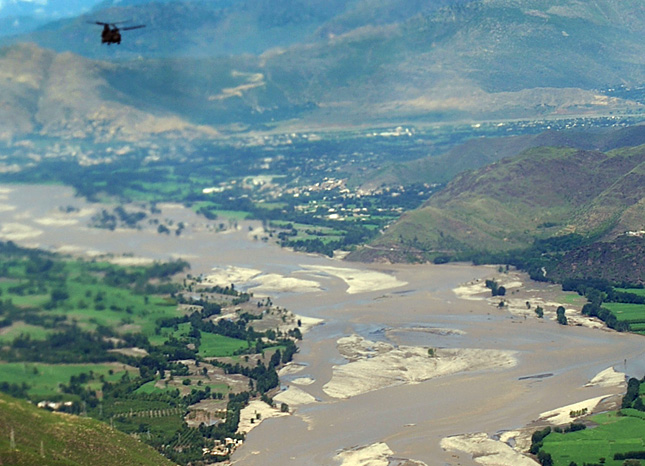
As momentum builds towards the negotiation of the Sustainable Development Goals and UN climate change summit later this year, the G7 countries – France, Germany, Italy, Japan, Canada, the UK, and the United States – have made a strong statement about the importance of climate security risks. A New Climate for Peace: Taking Action on Climate and Fragility Risks, an independent report commissioned by G7 foreign ministers and authored by a consortium of international organizations including the Wilson Center, analyzes the security and stability risks posed by climate change and offers concrete policy options for addressing them. [Video Below]
-
How to Create a New Climate for Peace: Preventing Climate Change From Exacerbating Conflict and Fragility
›June 19, 2015 // By Lauren Herzer RisiWhen the leaders of the G7 countries – Canada, France, Germany, Italy, Japan, the United Kingdom, and the United States – met earlier this month, they agreed to make fossil fuels a thing of the past by 2100. At the same time the G7 is also taking steps to make climate change’s connection to conflict a priority in the present.
-
Safety and Security in the Global Youth Wellbeing Index
›Few would argue with the notion that socioeconomic development is contingent on peace, safety, and security. What goes for nations, goes for people too – especially young people.
-
UK Global Trends Report Forecasts Security Threats in Face of Growth, Climate and Technological Change
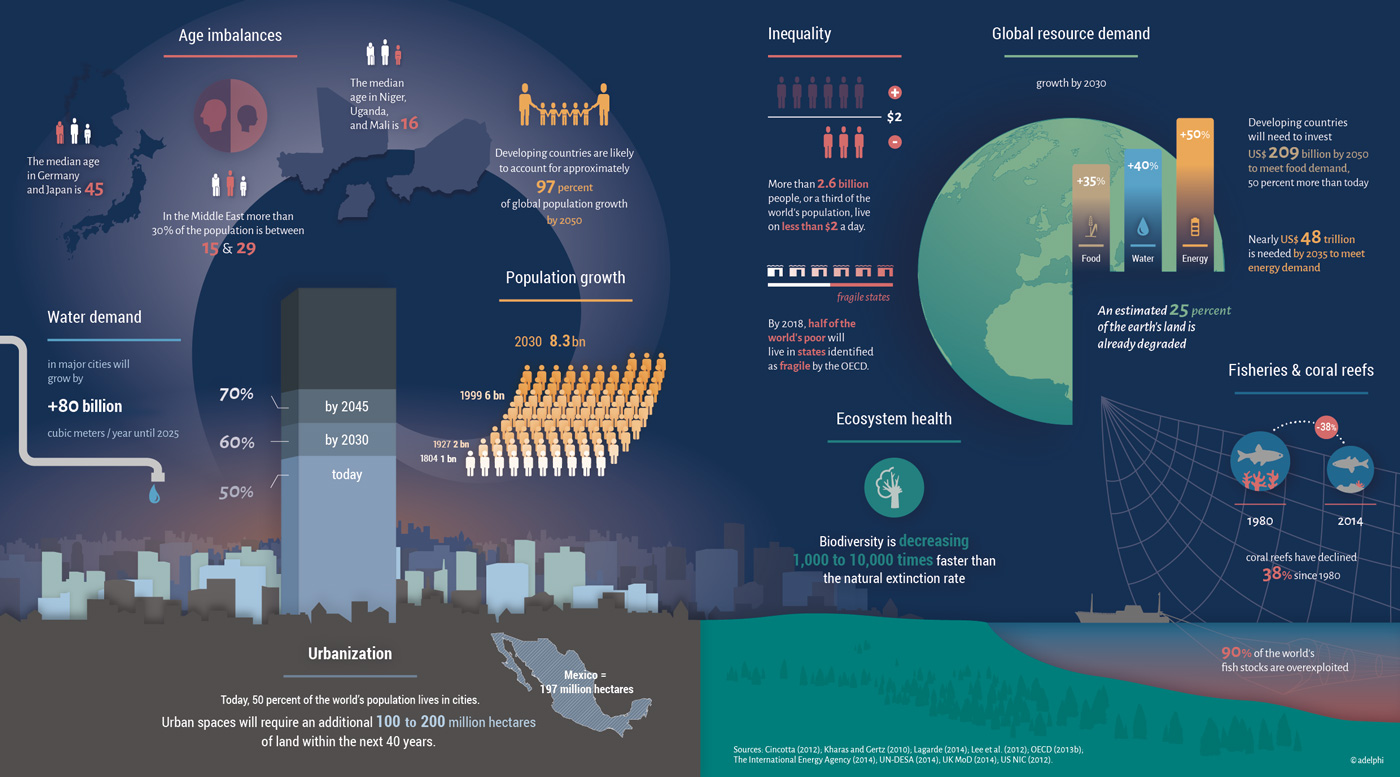
›October 22, 2014 // By Heather RandallBy 2045, global population will be north of 9 billion with increased urbanization and migration, natural resource stress, improved medical technologies, greater use of robotic labor, and a shift towards lifelong (and increasingly online) learning, according to a recent report from the UK Ministry of Defense.
-
Getting Specific About Climate Conflict: Case Studies Show Need for Participatory Approaches to Adaptation
›May 28, 2014 // By Moses JacksonWill climate change cause conflict? That question, which has sparked heated debates in academia and the media, resists simple answers. But is climate change already contributing to conflict in some places? If so, how exactly? And more importantly, what should be done about it? These questions were the focus of a 2013 preliminary report produced for USAID by international development firm Tetra Tech ARD, which examines the climate-conflict nexus in Uganda, Ethiopia, and Peru.
-
What Can Demography Tell Us About the Advent of Democracy?
›April 28, 2014 // By Elizabeth Leahy MadsenDemocracy is fickle. Many of the competing theories on the best ways to foment and consolidate plural, inclusive governance or predict its rise and fall focus on political and economic forces. Yet a small group of demographers have explored population age structure as a catalyst for and reflection of a host of changes in societies that can affect governance. -
In Quest to Understand Climate Change and Conflict, Avoid Simplification
›As the war in Syria shows no signs of letting up, a recent article in Middle Eastern Studies put forward the hypothesis that the brutal conflict was triggered by government mismanagement of the country’s recent drought, which lasted from 2006 to 2010. It’s a story we’ve heard before.
Showing posts from category UK.
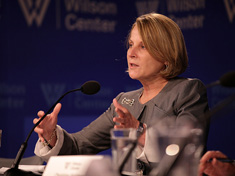 “Perhaps I’m a case study for what happens in the federal government when we start on a tough problem,” says Alice Hill, the senior director for resilience policy at the National Security Council and former senior counselor to the secretary of homeland security, in this week’s podcast.