• woodrow wilson center
  • ecsp

New Security Beat

Subscribe:
  • rss
  • mail-to
  • Who We Are
  • Topics
    • Population
    • Environment
    • Security
    • Health
    • Development
  • Columns
    • China Environment Forum
    • Choke Point
    • Dot-Mom
    • Friday Podcasts
    • Navigating the Poles
    • Reading Radar
  • Multimedia
    • Water Stories (Podcast Series)
    • Backdraft (Podcast Series)
    • Tracking the Energy Titans (Interactive)
  • Films
    • Water, Conflict, and Peacebuilding (Animated Short)
    • Paving the Way (Ethiopia)
    • Broken Landscape (India)
    • Scaling the Mountain (Nepal)
    • Healthy People, Healthy Environment (Tanzania)
  • Publications
  • Events
  • Contact Us

NewSecurityBeat

The blog of the Wilson Center's Environmental Change and Security Program
Showing posts from category UK.
  • Susannah Fisher, International Institute for Environment and Development

    In Nepal, Measuring Climate Change Resilience From the Community Up

    ›
    February 11, 2014  //  By Wilson Center Staff
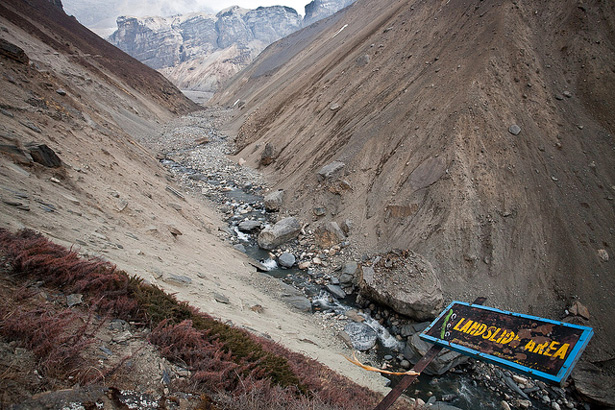
    landslide-area-nepal

    The original version of this article, by Susannah Fisher, appeared on the International Institute for Environment and Development.

    Nepal’s vulnerability to a warming climate became clear in May 2012 when the Seti River burst its banks during flash floods and landslides that killed more than 60 people. Scientists say such events are likely to become more common as the world warms, so communities need to adapt.

    MORE
  • “What I See Is That Women Are Healthier…Children Are Healthier”: Vik Mohan on Blue Ventures’ Work in Madagascar

    ›
    Beat on the Ground  //  January 15, 2014  //  By Laura Henson

    Six years after beginning a marine conservation program focused on octopus fishery management in southwest Madagascar, “we can proudly say that we have made a real impact as an organization providing health care,” said Dr. Vik Mohan, medical director of Blue Ventures and a practicing doctor in the United Kingdom.

    MORE
  • Rear Admiral Neil Morisetti on Opportunities for Transatlantic Cooperation on Climate Change, Energy

    ›
    Friday Podcasts  //  August 16, 2013  //  By Jacob Glass
    Morisetti-Podcast

    “We’ve got real pressure on key natural resources: food, water, energy, and land,” says Rear Admiral Neil Morisetti, the U.K. Foreign and Commonwealth Office’s special representative on climate change, in this week’s podcast. “But what we haven’t got, if I can use the words of Winston Churchill, we haven’t got ‘action this day.’”

    “Morisetti spoke at the Wilson Center on June 6 for the launch of The Climate and Energy Nexus: Challenges and Opportunities for Transatlantic Security, by CNA and the Royal United Services Institute. As climate change threatens stability in some places, energy security has emerged as a key vulnerability to Western militaries’ abilities to respond to conflict and assist in disaster relief operations, says Morisetti.

    MORE
  • Amidst Climate Change and Shifting Energy Markets, New Challenges for Transatlantic Security

    ›
    From the Wilson Center  //  July 8, 2013  //  By Jacob Glass

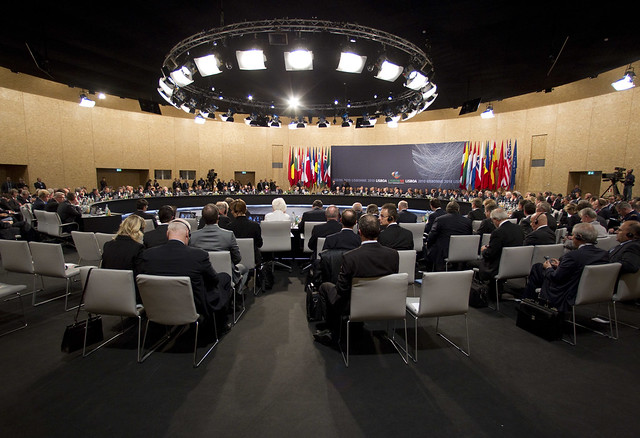
    “In the post-Cold War period, the challenges of energy, environment, climate change, and water have become very much a part of our fundamental transatlantic relationship,” said CNA General Counsel Sherri Goodman, launching a new report on U.S.-EU security at the Wilson Center. [Video Below]

    MORE
  • New Support for International Family Planning: The Significance of the London Summit

    ›
    December 21, 2012  //  By Carolyn Lamere

    At a major summit in London this summer the Bill and Melinda Gates Foundation launched one of the most significant efforts yet to revitalize commitments around the world towards providing universal access to family planning. More than 220 million women around the world – mostly in developing countries – want to delay or avoid pregnancy but are not using effective methods of contraception. Meeting the unmet needs of these women could save the lives of hundreds of thousands of mothers and millions of infants, not to mention significantly impact the future of human development. But the last decade has been a period of relative neglect by international donors.

    MORE
  • 2012 Aid Transparency Index

    ›
    Eye On  //  October 15, 2012  //  By Payal Chandiramani

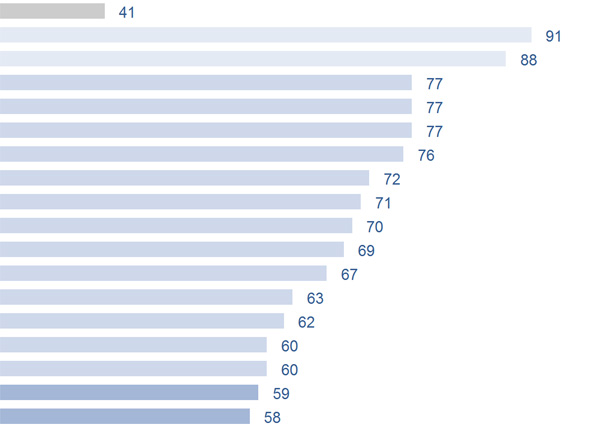
    Publish What You Fund recently released its 2012 Aid Transparency Index, an annual review of 43 indicators assessing to what degree information about policies, strategies, and individual projects are published for public consumption by aid donors. These indicators include things like disclosing the type of aid given (e.g., grant, loan, export credit, debt relief), the quality of disclosure policies, and the online presence of centralized, public databases of all the organization’s activities.

    MORE
  • After the London Summit on Family Planning: What Happens Now?

    ›
    September 21, 2012  //  By Carolyn Lamere
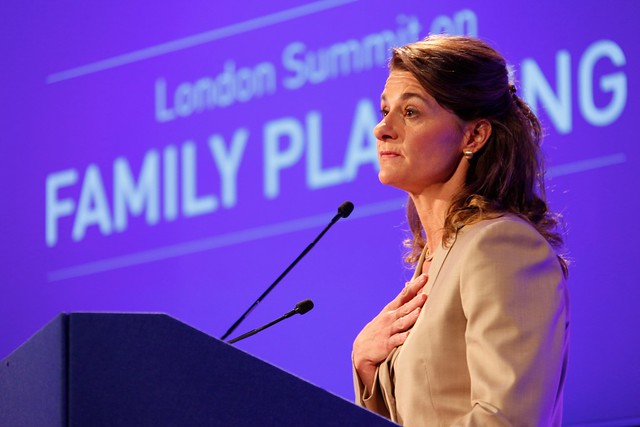
    Melinda Gates speaking at the opening of the London Summit on Family Planning

    People are still talking about this summer’s London Summit on Family Planning, which was hosted by the Bill and Melinda Gates Foundation and the UK’s Department of International Development (DIFD) on July 11. On Monday here at the Wilson Center, the Environmental Change and Security Program featured representatives from USAID, DFID, and Gates Foundation for a standing-room only panel discussion of the landmark event.

    MORE
  • Tobias Feakin on the Debate in Europe About Climate Change and the Military

    ›
    Eye On  //  July 24, 2012  //  By Keenan Dillard
    “We established [the Climate Change Security Program] as a methodology of exposing the defense community in the U.K. and Europe to some of the more nuanced security debates that are going on around climate change, environmental change, and resource shortages,” said Tobias Feakin, senior research fellow at the Royal United Services Institute for Defense and Security Studies (RUSI) in an interview with ECSP.

    What they found when they first approached the U.K. defense establishment in 2006, was surprising. “They opened [that] door wide open and said, ‘actually, you know what, we’ve been looking at this, we’ve been concerned about this for a long time, and we’ve already started including it in our long-term planning and strategic thinking.’”

    “One of the reasons that the defense community has been looking at this issue is that they have a longer-term vision, if you like, than other departments,” Feakin said. “They have to think about procurement decisions which are going to be stretching out…up to 30 years into the future, so there are bigger demands on them to be thinking about these kinds of strategic issues.”

    Feakin co-authored International Dimensions of Climate Change, a 2011 report for the British government which highlights the security threats and challenges, both internal and external, that the U.K. will face as result of climate change.

    While the defense community acknowledged the need to include climate change in their planning processes, members of the policymaking community expressed concern that they did not, “have enough detailed understanding of what this [climate change] is going to mean in a security paradigm,” said Feakin. To meet that need, RUSI has been conducting regional and country-based studies in order to determine how things might play out.

    Dialogue on the issue has transcended Great Britain and is now taking place among member states of the European Union, although Feakin notes that, “there’s perhaps more hesitancy in terms of framing the debate in the security paradigm and perhaps a slight perception that it might be leading us down the wrong path when mitigation efforts should be at the top of the order of play.”

    Despite these ongoing debates, Feakin believes that the security aspect of climate change helps to “make a comprehensive case that we have a situation that does have to be dealt with and there are going to be multiple players in that.” Efforts to address climate change will be civilian-led, but the defense community will play an important supporting role in the future, he said.

    “It’s something we have to plan for and we will be part of the response.”
    MORE
Newer Posts   Older Posts
View full site

Join the Conversation

  • RSS
  • subscribe
  • facebook
  • G+
  • twitter
  • iTunes
  • podomatic
  • youtube
Tweets by NewSecurityBeat

Trending Stories

  • unfccclogo1
  • Pop at COP: Population and Family Planning at the UN Climate Negotiations

Featured Media

Backdraft Podcast

play Backdraft
Podcasts

More »

What You're Saying

  • Volunteers,At,The,Lagos,Food,Bank,Initiative,Outreach,To,Ikotun, Pan-African Response to COVID-19: New Forms of Environmental Peacebuilding Emerge
    Rashida Salifu: Great piece 👍🏾 Africa as a continent has suffered this unfortunate pandemic.But it has also...
  • A desert road near Kuqa An Unholy Trinity: Xinjiang’s Unhealthy Relationship With Coal, Water, and the Quest for Development
    Ismail: It is more historically accurate to refer to Xinjiang as East Turkistan.
  • shutterstock_1779654803 Leverage COVID-19 Data Collection Networks for Environmental Peacebuilding
    Carsten Pran: Thanks for reading! It will be interesting to see how society adapts to droves of new information in...

What We’re Reading

  • Rising rates of food instability in Latin America threaten women and Venezuelan migrants
  • Treetop sensors help Indonesia eavesdrop on forests to cut logging
  • 'Seat at the table': Women's land rights seen as key to climate fight
  • A Surprise in Africa: Air Pollution Falls as Economies Rise
  • Himalayan glacier disaster highlights climate change risks
More »
  • woodrow
  • ecsp
  • RSS Feed
  • YouTube
  • Twitter
  • Facebook
  • Home
  • Who We Are
  • Publications
  • Events
  • Wilson Center
  • Contact Us
  • Print Friendly Page

© Copyright 2007-2021. Environmental Change and Security Program.

Woodrow Wilson International Center for Scholars. All rights reserved.

Developed by Vico Rock Media

Environmental Change and Security Program

Woodrow Wilson International Center for Scholars

Ronald Reagan Building and International Trade Center

  • One Woodrow Wilson Plaza
  • 1300 Pennsylvania Ave., NW
  • Washington, DC 20004-3027

T 202-691-4000