-
Meeting Women’s Modern Contraceptive Needs Could Yield Dramatic Benefit
›
“Achieving true progress on sexual and reproductive health and rights requires a comprehensive approach and a commitment to tackling deeply entrenched inequities and injustices of which marginalized communities continue to bear the brunt,” said Dr. Herminia Palacio, President and CEO of the Guttmacher Institute. She spoke at a recent Wilson Center event where speakers analyzed findings from the Guttmacher Institute on the state of sexual and reproductive health and rights (SRHR) globally.
-
Highlights from the First-Ever State of the World’s Nursing Report
›
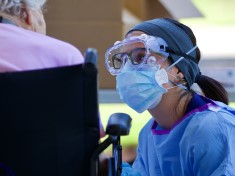
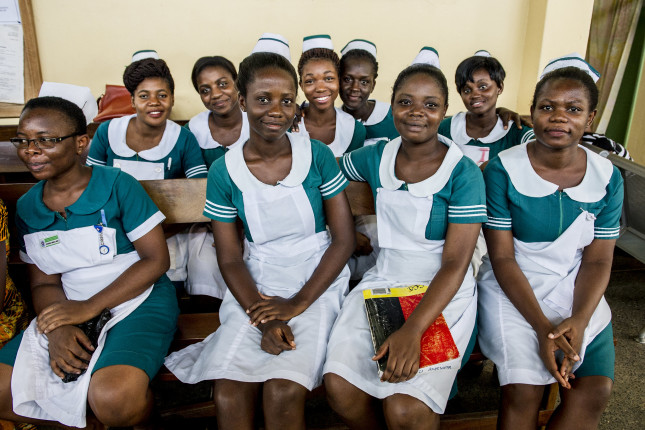
The year 2020 has been designated as the Year of the Nurse and the Midwife by the World Health Organization. In April 2020, the World Health Organization (WHO), International Council of Nurses, and Nursing Now, published the first-ever State of the World’s Nursing Report. This week’s Friday Podcast highlights remarks from a recent Wilson Center event on the report’s findings and recommendations, gender implications in the health workforce, and the role of nurses during the COVID-19 pandemic.
-
First Ever State of the World’s Nursing Report: Unlocking the Gender Dimensions
›“The year is 2020 and it’s a year none of us will forget due to the Covid-19 pandemic,” said Sarah Barnes, Women and Gender Advisor and Project Director of the Maternal Health Initiative at the Wilson Center at a recent webcasted Wilson Center event. “The year 2020, as designated by the World Health Organization, is also the Year of the Nurse and the Midwife and was meant to be a year of celebration and much due recognition of these two incredible professions.” This month, the first ever State of the World’s Nursing report was published by the World Health Organization (WHO), International Council of Nurses, and Nursing Now.
-
Sexuality Education Begins to Take Root in Africa
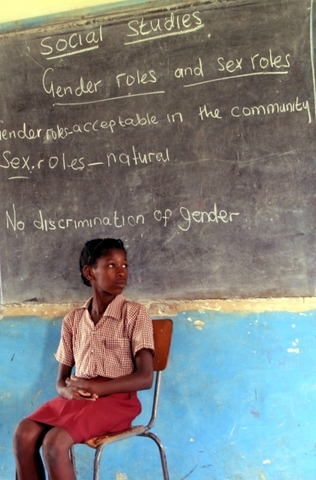
›In Kenya, primary and secondary school students take courses called Life Skills Education. So do students in Malawi, Mozambique, Namibia, and Swaziland. South Sudan adds “peace-building” to the subject title. Lesotho, Madagascar, Rwanda, Tanzania, Uganda, and Zambia are more direct. These countries add the word “sexuality” to the course name.
-
Advancing One Health: Protecting People, Gorillas, and the Land on Which They Live
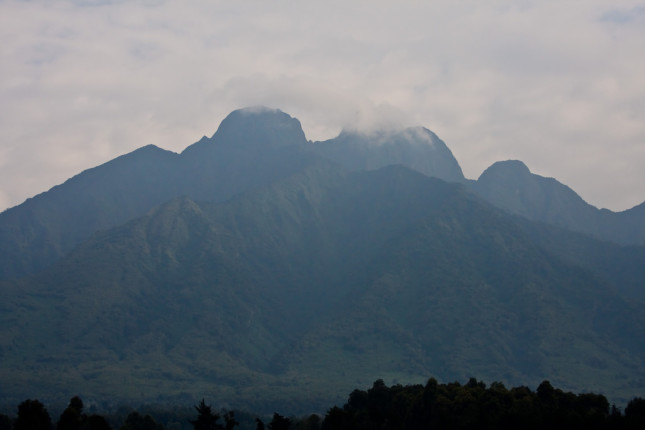
›In 2003, a scabies skin disease outbreak affecting mountain gorillas in Bwindi Impenetrable National Park was traced to people living around the national park—people with limited access to basic health and social services. To protect the people and wildlife of this special park, we launched Conservation Through Public Health (CTPH), an NGO that promotes biodiversity conservation by enabling people, gorillas, and other wildlife to coexist harmoniously through improved health and wellbeing. -
To Accelerate Economic Growth, Uganda Should Prioritize Young People’s Health Care
›Even though it has always been said that young people are the future of society, it is important to note that we are very much present. We are ready to thrive and become productive adults. Unfortunately, many adolescents and young people are robbed of their potential. We still face a high risk of unplanned pregnancy, sexually transmitted infections, teenage pregnancy, early child bearing, unsafe abortions, and dropping out of school.
-
The Path to Self-Reliance: Building Community Health
›“We recognize that what we’re talking about is a journey, but we also recognize that people have dreams for themselves and what this is about is helping them achieve those dreams,” said Ellen Starbird, Director of the Office of Population and Reproductive Health at USAID, at a recent Wilson Center event about the importance of community health systems, with a particular focus on voluntary family planning and infectious disease prevention. This two-panel event focused on how USAID’s Advancing Partners & Communities (APC) project worked together with communities and partners to strengthen health systems and to support countries on the journey to self-reliance said Starbird.
-
Missing Peace: Why Transboundary Conservation Areas Are Not Resolving Conflicts
›Transboundary Conservation Areas, such as Parks for Peace, have been heralded for their potential to simultaneously contribute to biodiversity conservation and peace, but evidence to this effect has been elusive. In fact, more indications suggest that transboundary conservation areas, including Parks for Peace, rely on pre-existing international peace between countries for formalization and on-going non-violent relations for continuity. Although they are primarily designed for ecological peace (based largely on arguments of ecological connectivity), they are not immune to environmental harms. Perhaps even more challenging is how “fortress conservation” and “green securitization” compromise social peace.
Showing posts from category Uganda.
 In 2003, a scabies skin disease outbreak affecting mountain gorillas in Bwindi Impenetrable National Park was traced to people living around the national park—people with limited access to basic health and social services. To protect the people and wildlife of this special park, we launched