• woodrow wilson center
  • ecsp

New Security Beat

Subscribe:
  • rss
  • mail-to
  • Who We Are
  • Topics
    • Population
    • Environment
    • Security
    • Health
    • Development
  • Columns
    • China Environment Forum
    • Choke Point
    • Dot-Mom
    • Friday Podcasts
    • Navigating the Poles
    • Reading Radar
  • Multimedia
    • Water Stories (Podcast Series)
    • Backdraft (Podcast Series)
    • Tracking the Energy Titans (Interactive)
  • Films
    • Water, Conflict, and Peacebuilding (Animated Short)
    • Paving the Way (Ethiopia)
    • Broken Landscape (India)
    • Scaling the Mountain (Nepal)
    • Healthy People, Healthy Environment (Tanzania)
  • Publications
  • Events
  • Contact Us

NewSecurityBeat

The blog of the Wilson Center's Environmental Change and Security Program
Showing posts from category Pakistan.
  • National Research Council Produces Climate and Security Analysis at Request of U.S. Intelligence Community

    ›
    December 20, 2012  //  By Payal Chandiramani & Schuyler Null

    The CIA may have shut down its dedicated climate change center earlier this year, but a recently released report sponsored by the intelligence community reaffirms the deep connection between climate change and national security. New threats to U.S. national security – like increased food and water insecurity and more natural disasters requiring humanitarian assistance – have emerged as climate change creates unprecedented changes in the global environment.

    MORE
  • India’s Environmental Security Challenge: Water, Coal, Natural Gas, and Climate Change Fuel Friction

    ›
    November 23, 2012  //  By Michael Kugelman

    The original version of this article appeared in NATO Review.

    Few regions are more environmentally insecure than South Asia.

    The region faces rising sea levels and regularly experiences coastal flooding – of particular concern in a region with heavily populated and arable-land-rich coastal areas. Additionally, it is highly vulnerable to glacial melt. The Western Himalayas, which provide water supplies to much of South Asia, have experienced some of the most rapid melt in the world.

    MORE
  • Youth Bulge, Public Policy, and Peace in Pakistan

    ›
    October 26, 2012  //  By Payal Chandiramani

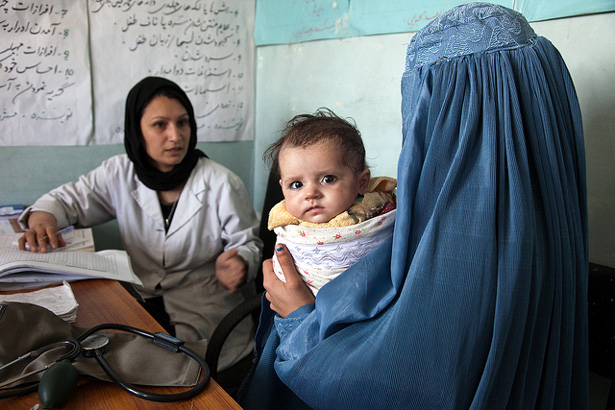
    While Pakistan’s demographic challenges are perhaps well known – two-thirds of the population of 180 million is under 30 years old – increasing security concerns have prompted discussions about exactly how much the country’s youthfulness is affecting its prospects for peace. On October 10, the U.S. Institute of Peace and George Mason University’s School of Public Policy hosted a day-long conference on “Youth Bulge, Public Policy, and Peace in Pakistan” to tackle this question.

    MORE
  • Michael Kugelman, Global Times

    Repairs Could Stifle South Asia’s Water War

    ›
    October 19, 2012  //  By Wilson Center Staff

    The original version of this article, by Michael Kugelman, appeared on Global Times.

    In recent weeks, militants in Pakistan have escalated their hostile rhetoric toward India. The subject of their ire is water. Hafiz Saeed, the head of militant Islamist group Jamaat-ud-Dawa, has warned that India plans “to make Pakistan barren” by preventing the waters of the Indus Basin from flowing downstream to Pakistan. 

    MORE
  • Manipadma Jena, Inter Press Service

    A Lake of Hope and Conflict

    ›
    October 4, 2012  //  By Wilson Center Staff

    The original version of this article, by Manipadma Jena, appeared on Inter Press Service.

    Parvez Ahmad Dar climbs three hours to reach the hilltop, generator-equipped tourist center in Ajaf village, 35 kilometers from Srinagar, to recharge his mobile phone.

    The 46-year-old president of the Wular Valley People’s Welfare Forum is in high demand as an activist and organizer – he cannot allow the long power outages in northern India’s Kashmir Valley to cut off communication with his constituency.

    MORE
  • Containing a Development Flood: Green Urbanization in Asia

    ›
    From the Wilson Center  //  October 4, 2012  //  By Sandy Pho

    On April 1, 2012, a Chinese woman on her way to work suddenly felt the earth beneath her crumble and, in an instant, found herself plunging into an abyss of scalding hot water. The woman had unknowingly stepped into one of the many sinkholes appearing in China’s megacities. The emergence of sinkholes in China is part of a larger set of environmental issues related to rapid urbanization taking place in the Asia-Pacific region overall. [Video Below]

    MORE
  • Another Year, Another Debate: Is the Failed States Index Simply Misnamed?

    ›
    August 23, 2012  //  By Schuyler Null & Carolyn Lamere

    Every year, there are mixed reactions over the rankings and the efficacy of the Fund for Peace’s Failed States Index (FSI), the eighth edition of which was released in June. But this year, the criticism seems especially intense.

    “Failed means there is no way back. Failed means a binary division between those countries that are salvageable and those beyond redemption. It is a word reserved for marriages and exams. It does not belong in a pragmatic debate,” wrote Claire Leigh for The Guardian in June.

    MORE
  • Stress Levels of Major Global Aquifers Revealed by Groundwater Footprint Study

    ›
    Eye On  //  August 21, 2012  //  By Carolyn Lamere

    In the “first spatially explicit comparison of groundwater use, availability, and environmental flow for aquifers globally,” a new article in Nature finds that the “size of the global groundwater footprint is currently about 3.5 times the actual area of aquifers.” An aquifer’s footprint is the theoretical size it would need to be to sustainably support use at its current rate, so groundwater footprints being much larger than their corresponding aquifers is a sign of overuse.

    MORE
Newer Posts   Older Posts
View full site

Join the Conversation

  • RSS
  • subscribe
  • facebook
  • G+
  • twitter
  • iTunes
  • podomatic
  • youtube
Tweets by NewSecurityBeat

Trending Stories

  • unfccclogo1
  • Pop at COP: Population and Family Planning at the UN Climate Negotiations

Featured Media

Backdraft Podcast

play Backdraft
Podcasts

More »

What You're Saying

  • Volunteers,At,The,Lagos,Food,Bank,Initiative,Outreach,To,Ikotun, Pan-African Response to COVID-19: New Forms of Environmental Peacebuilding Emerge
    Rashida Salifu: Great piece 👍🏾 Africa as a continent has suffered this unfortunate pandemic.But it has also...
  • A desert road near Kuqa An Unholy Trinity: Xinjiang’s Unhealthy Relationship With Coal, Water, and the Quest for Development
    Ismail: It is more historically accurate to refer to Xinjiang as East Turkistan.
  • shutterstock_1779654803 Leverage COVID-19 Data Collection Networks for Environmental Peacebuilding
    Carsten Pran: Thanks for reading! It will be interesting to see how society adapts to droves of new information in...

What We’re Reading

  • Rising rates of food instability in Latin America threaten women and Venezuelan migrants
  • Treetop sensors help Indonesia eavesdrop on forests to cut logging
  • 'Seat at the table': Women's land rights seen as key to climate fight
  • A Surprise in Africa: Air Pollution Falls as Economies Rise
  • Himalayan glacier disaster highlights climate change risks
More »
  • woodrow
  • ecsp
  • RSS Feed
  • YouTube
  • Twitter
  • Facebook
  • Home
  • Who We Are
  • Publications
  • Events
  • Wilson Center
  • Contact Us
  • Print Friendly Page

© Copyright 2007-2021. Environmental Change and Security Program.

Woodrow Wilson International Center for Scholars. All rights reserved.

Developed by Vico Rock Media

Environmental Change and Security Program

Woodrow Wilson International Center for Scholars

Ronald Reagan Building and International Trade Center

  • One Woodrow Wilson Plaza
  • 1300 Pennsylvania Ave., NW
  • Washington, DC 20004-3027

T 202-691-4000