

-
Youth Need More Information on Climate, Population Links
›December 9, 2011 // By Brenda ZuluYouth need more information about climate change, but also on its links to reproductive health and gender, said Esther Agbarakwe, technical advisor for the Africa Youth Initiative on Climate Change. Speaking at the joint Aspen Institute, Population Action International, and Wilson Center side event, “Healthy Women, Healthy Planet,” at the COP-17 climate conference, Agbarakwe pointed out that “there are critical issues, like demography, the number of young people, and young women in this population, that should be discussed.” But, she said, they would likely not be brought up in any official manner at the conference because of fears about “population control.”
In Nigeria, young people, and particularly young girls, are frequently excluded from formal discussions about climate change and sustainable development. Growing up, Agbarakwe said she was aware of environmental change due to pollution in the Niger Delta, but her parents did not talk to her about reproductive health. In her community, many young girls had unplanned pregnancies and boys dropped out of school. It was only through a child rights activists’ club that she learned about how she could protect herself.
“That is why there is need to have young women in this discussion,” she said.
Giving a Voice to the Most Affected
Wendy Mnyandu, a student from Durban’s Zwelibanzi High School attending the side event, noted in an interview that climate changes have affected mothers more because they are dependent on the forest for energy.
“It is important for villagers to adapt to new technologies [such as] cook stoves, where they can use less fuelwood that will not take away the forest,” she said.
At the Wilson Center earlier this year, Agbarakwe explained how insufficient rain has led to longer trips to collect water, increasing women’s vulnerability. A friend of hers was raped while walking to the next village to fetch water after her own community’s well dried up – an ordeal that was not only emotionally and physically traumatizing, but also isolated her from her community and jeopardized her future plans and dreams.
“It is important for more men to talk about this topic,” said Roger-Mark De Souza, vice president of research at Population Action international, who also spoke at the side event. “I am talking on behalf of my mother, my daughters, my wife, and my granddaughters, for their voices are not often heard. I am a father of two young teenage boys and they know how to talk about this. By talking about it, we can see how family planning is very effective,” he said.
Talking About Population to Climate Experts, and Vice Versa
“Just last week I was in Dakar, Senegal, at the International Conference on Family Planning,” said De Souza. “I was talking to specialists and I was getting them interested in climate change.” Similarly, “more and more we find that climate change activists and specialists are appreciating that climate change is important to women and their wellbeing,” he said.
Population Action International (PAI) has mapped agricultural production, water stress, and increased vulnerability to climate change. “We see that there are 26 global hotspots where these issues are critical. What we have also done is look at these hotspots to determine where there is a very high unmet need for family planning,” said De Souza. PAI is using these maps to show the climate change community that a cost-effective investment in family planning could increase resilience in these areas.
De Souza said that in order to build support for programs that address these issues, it is important to look at national adaptation programs of action and their funding needs. “Funding is critical, and these types of interventions produce results – we need to understand where those missed opportunities are and tell that story to our policymakers and our delegations that are here in Durban and to keep with that message when we go back home,” he said.
Empowering Young African Women
Agbarakwe became interested in these issues after meeting former president of Ireland Mary Robinson, who also spoke at the side event. “I had met a Nigerian young man who challenged me that it was difficult for a woman to realize her career dreams because one day she will have to be married and bear children,” said Agbarakwe:When I saw my passion, I was confused and asked questions of Robinson on what she would do if she found herself at the crossroads like me. She told me as a young woman, I will find myself at a crossroad. That is why I am very determined about this issue, and that is what is needed, because when young women are empowered they actually can make decisions.
Robinson, the chair of the Global Leaders Council for Reproductive Health, said in an interview that she was heartened to see the number of youth at the side event. In Durban, she spoke with a group of young women who were part of Oxfam’s Project Empower:We met young women and several of them had come from the Eastern Cape [of South Africa]. They had come to Durban to look for work. Instead they found themselves in rural poverty. They had dreams of a better life for themselves, but their daily reality they talked to us about was nobody’s dream. They talked to us about negative impacts of their communities – the violence against women that is very prevalent, the unplanned pregnancies, and the reality of women who even have to use their bodies to gain money.
African women are looking for contraceptives, such as the female condom, where they can be in control, said Robinson; there are about 215 million women in the world who do not want to get pregnant but are not using modern contraception. “If we were to solve that problem, women [would not only] be better mothers, but also be better leaders in their communities,” she said.
The good thing was that they were ready to talk about the problems and did not consider themselves to be victims. They were strong women. They had learned to say ‘no’ and to say ‘respect me.’ They talked about going into some of the clinics and facing encounters with the police and that the police did not respect them. ‘We do not accept that anymore. We know now that we are members of the community who wish to be respected,’ they explained.
Brenda Zulu is a member of Women’s Edition for Population Reference Bureau and a freelance writer based in Zambia. Her reporting from the COP-17 meeting in Durban (see the “From Durban” series on New Security Beat) is part of a joint effort by the Aspen Institute, Population Action International, and the Wilson Center.
Sources: Population Action International, World Health Organization.
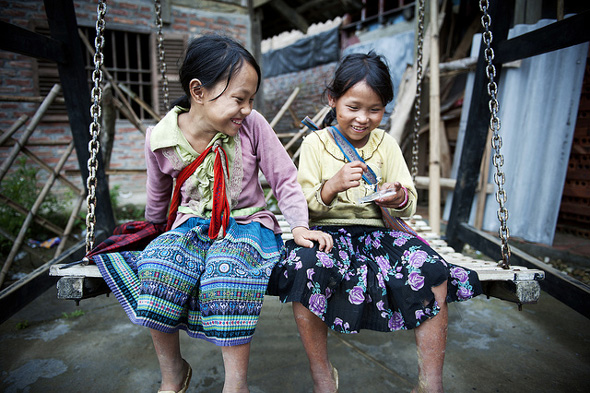
Photo Credit: “Viet Nam and Primary Education,” courtesy of flickr user United Nations Photo; video courtesy of Population Action International. -
Book Review: ‘Plundered Nations? Successes and Failures in Natural Resource Extraction’
›The principal argument of Plundered Nations? Successes and Failures in Natural Resource Extraction is highlighted by the question mark in the title. In many resource rich countries, natural assets have not led to development. The book advances the hypothesis that “for the depletion of natural assets to be converted into sustained development, a series of decisions has got to be got sufficiently right” (p. 1). That series of decisions is examined in detail through case studies on Cameroon, Chile, Iran, Kazakhstan, Malaysia, Nigeria, Russia, and Zambia, produced by a diverse group of academic and practicing economists under the auspices of the Center for the Study of African Economies and the Oxford Center for the Economics of Resource Rich Countries (OxCarre).
-
How Did We Arrive at 7 Billion – and Where Do We Go From Here? [Part Two]
›October 26, 2011 // By Elizabeth Leahy MadsenThe world’s women will determine whether the global population in 2050 is as low as 8 billion or as high as 11 billion through their choices (or lack thereof) about the number and timing of their children. Women in developing regions of the world will have the greatest effect on these potential population trajectories. Even if fertility rates remain constant at current levels (which is unlikely), developing regions would grow from 5.7 billion in 2010 to 9.7 billion in 2050, but the total population of developed countries would remain essentially unchanged.The UN estimates that the seven billionth person alive today will be born on October 31. Demographer Elizabeth Leahy Madsen explains how we got to that number, its significance, and where our demographic path might take us from here. Read part one here.
The world’s women will determine whether the global population in 2050 is as low as 8 billion or as high as 11 billion through their choices (or lack thereof) about the number and timing of their children. Women in developing regions of the world will have the greatest effect on these potential population trajectories. Even if fertility rates remain constant at current levels (which is unlikely), developing regions would grow from 5.7 billion in 2010 to 9.7 billion in 2050, but the total population of developed countries would remain essentially unchanged.
The way that people decide the timing and number of their children is not easily distilled into a simple formula with a single solution. Still, some basic and important facts are known. In the developing world, where more than 80 percent of the world’s population lives, women in rural areas, those who have little or no education, and those who are poor, have larger families. As demographers have shown in modeling the determinants of fertility, women tend to seek contraception once they are confident that their children will survive to adulthood and when socioeconomic development increases the “costs” of having children, for example by motivating parents to send them to school rather than to work.
One of the most direct reasons for past declines in fertility rates was the rapid expansion of family planning and reproductive health programs, supported by country governments and international donors, that enabled women and men to more effectively choose the size of their families. But today, about 215 million women across the developing world would like to delay or avoid pregnancy but are using ineffective contraception or none at all. Funding programs to meet the family planning needs of these women, which would cost about $3.6 billion annually, would both empower them and help fertility rates continue to decline.
Beyond Access: Gender Inequality Inhibits Contraceptive Use
While increasing support for family planning programs tops the list of demographers’ recommended policies, ensuring that contraceptives are available and accessible will not alone achieve the fertility declines projected in most of the UN’s range of possibilities. Many women who are having or planning to have large families know about family planning and where to find it, but are choosing not to use contraception for cultural reasons that are often deeply engrained.
In sub-Saharan Africa, the region with the highest global fertility rate, only 16 percent of married/partnered women of reproductive age are using effective contraception. In comparison, between 62 and 75 percent of their peers in Ireland, the United States, and Uruguay – countries whose fertility rates are almost exactly at replacement level – are using it.
Logically, sub-Saharan Africa needs similar levels of contraceptive use to bring its average fertility rate towards replacement level as the UN projects, so the region’s average prevalence rate for modern contraception would need to rise by at least 10 percentage points in each of the next four decades. However, contraceptive use in the region has grown by only 0.5 percentage points or less over the past 30 years.
What is inhibiting the use of contraception? Demographic and health surveys find in Nigeria, for example, that 10 percent of married women are using an effective contraceptive method, while twice as many have an unmet need for family planning. This low use of family planning demonstrates high potential for change in the country’s demographic future, which, as the most populous in Africa, will greatly influence global and regional trends. Yet among women who do not intend to use contraception, 39 percent report that they or their family members are opposed to family planning, and another 16 percent fear side effects or have other health-related concerns. If Nigeria’s fertility rate remains unchanged, the country will be home to 500 million people by 2050.
In Pakistan, where 24 percent of births are unintended, surveys show similar barriers. Ninety-six percent of married women know about effective contraceptive methods, but only 22 percent are using one. More than one-quarter of women who do not plan to use contraceptives report that their fertility is “up to God” and 23 percent report that they or their family members are opposed to family planning. Pakistan’s population would more than double from 174 million to 379 million by 2050 if current fertility trends hold constant.
Peak Planet? Population Growth and Consumption Strain Environmental Resources
Because Nigeria, Pakistan, and other countries’ demographic trajectories may not follow the path laid out in population projections, we can’t take a world of nine billion for granted. While human ingenuity and technological advancements have improved standards of living in many countries, scientists caution that the combination of rising human numbers and growing consumption has serious environmental implications. Already, the quantity and quality of fresh water supplies are under strain, and forests in many developing countries are being rapidly depleted.
Population projections are much more than wonkish speculation – they foreshadow the serious problems that lie ahead if health, environment, and development policies aren’t strengthened. If the UN projections of our demographic future are to bear any semblance of reality, we must move beyond the status quo. While improving physical access to family planning should remain a top priority, meeting unmet need will also require addressing the deep-seated challenges of women’s education and empowerment.
Elizabeth Leahy Madsen is a consultant on political demography for the Wilson Center’s Environmental Change and Security Program and former senior research associate at Population Action International.
Sources: Bongaarts and Sinding (2009), Bongaarts (2006), Futures Institute, Guttmacher Institute and UN Population Fund, Measure DHS, O’Neill, Dalton, Fuchs, Jiang, Shonali Pachauri, and Katarina Zigova (2010), UN Population Division, Washington Post.
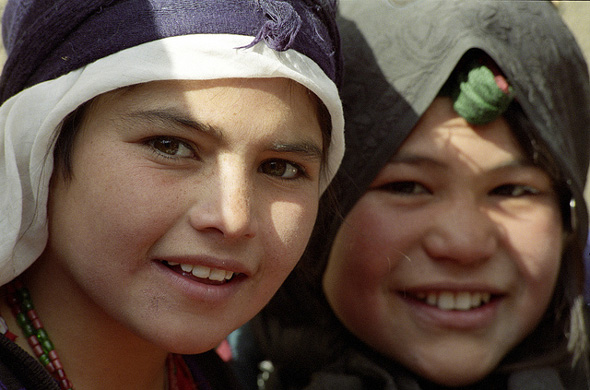
Photo Credit: “Afghan Internally Displaced Persons,” courtesy of flickr user United Nations Photo. -
How Did We Arrive at 7 Billion – and Where Do We Go From Here? [Part One]
›October 26, 2011 // By Elizabeth Leahy MadsenThe United Nations Population Division has estimated world population will reach seven billion on Monday. Which changes in demographic trends led us to this milestone? What do the past and present tell us about how human numbers will change in the future?
The “Day of Seven Billion” was announced this spring following the release of the latest revision of UN population projections. Although the seven billionth person will not be precisely identified, this estimate is based on careful demographic modeling. Every two years, the UN revises its projections to incorporate the latest trend data and modify its assumptions, as seemingly small changes can make a huge difference demographically.The UN estimates that the seven billionth person alive today will be born on October 31. Demographer Elizabeth Leahy Madsen explains how we got to that number, its significance, and where our demographic path might take us from here. Read part two here.
The United Nations Population Division has estimated world population will reach seven billion on Monday. Which changes in demographic trends led us to this milestone? What do the past and present tell us about how human numbers will change in the future?
The “Day of Seven Billion” was announced this spring following the release of the latest revision of UN population projections. Although the seven billionth person will not be precisely identified, this estimate is based on careful demographic modeling. Every two years, the UN revises its projections to incorporate the latest trend data and modify its assumptions, as seemingly small changes can make a huge difference demographically.
Demography Is Driven by Fertility and Population Momentum
Since world population reached three billion in 1959, the rate of growth has increased, peaked, and begun to slow. Each succeeding milestone was reached more quickly than the last: It took 15 years to reach four billion, 13 years to hit five billion, and only 11 years to get to six billion at the end of 1998. The interval leading to seven billion was slightly longer, at 13 years, as the global rate of population growth has slowed.
Although mortality and migration also affect population trends, the factor with the greatest influence by far is fertility – the average number of children born to each woman. The decline in the global fertility rate from an average of nearly 5 children per woman in the early 1960s to 2.5 children today has in turn slowed the pace of world population growth. However, demographic momentum from previous generations of high fertility can drive population growth for decades to come. Even if Nigeria reached replacement-level fertility today, its population would still grow by one-third by 2050 as the number of births continued to exceed the number of deaths.
Assumptions Matter
Population projections consider: 1) current data about fertility and 2) assumptions about the ways fertility will change in the future. These assumptions vary depending on the source, so how much of a difference do they make? As it turns out, quite a lot.
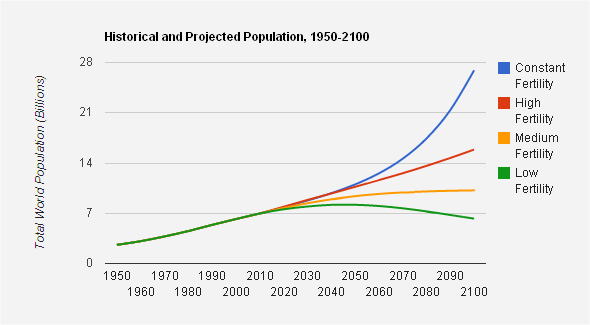
Projections of world population in 2050 range from 8.1 billion (if fertility rates fall to a global average of 1.7 children per woman) to 10.9 billion (if they remain unchanged). The gap of nearly three billion between those possibilities is greater than the combined populations of China and India today.
Estimates vary even more widely for the end of the century, with the UN projecting that by 2100 world population could total anywhere between 6 billion (if total fertility falls to an average of 1.55 children per woman) and 27 billion (if every country’s fertility rates remain constant at today’s levels).
While demographers parse the details of the projections, policymakers would like to know which of these scenarios is more likely. After all, the economic, environmental, and political consequences of a population of 8 or 11 billion two generations hence are not the same, and a world of 27 billion is difficult for anyone to fathom.
If we simply projected past trends into the future at a steady rate, the population estimates on the low end of the fertility spectrum seem more likely. The global fertility rate has fallen from 4.5 children per woman in the early 1970s to 2.5 today, a decline of 43 percent, so the 14 percent decline projected in the medium-fertility variant between now and 2050 seems reasonable at first glance, perhaps even conservative. The medium-fertility variant assumes that all countries’ fertility rates will begin moving towards replacement level, around 2.1 children per woman, regardless of whether they are currently above or below that number.
However, even a 14 percent decline in fertility assumes that areas where fertility rates remain stalled at high levels will soon begin rapid declines, paralleling the past experience of other regions. As Population Reference Bureau demographer Carl Haub writes, “the assumption that the developing world will necessarily follow the path of the industrialized world…is far from a sure bet.”
In the last 40 years, fertility rates in the Caribbean, northern and southern Africa, Latin America, and all of Asia declined by 50 percent or more. The pace of decline in sub-Saharan Africa, while still notable, was much slower, at 23 percent. In order to meet the UN medium-variant projections, the region’s fertility rate would need to fall by nearly 40 percent by mid-century.
Some of the largest, fastest-growing populations in the developing world would need to experience a major acceleration from recent trends. In Nigeria, fertility edged down by 15 percent between 1970 and 2010, but the medium variant projection depends on a decline of 37 percent over the next four decades; Ethiopia’s fertility rate will need to fall by half.
Gender Matters, Too
The great irony of fertility trends is that gender inequities play an important role at both ends of the scale. In countries with the highest fertility rates, women tend to have less education than men and less autonomy. Their fertility choices may be greatly affected by the preferences of their husbands or other family members. In Niger, which has the highest fertility rate in the world, married men would, on average, like three more children than married women. In Uganda, where women average more than six children each, 60 percent of men report that domestic violence is justified.
By contrast, in countries with the lowest fertility rates, women have achieved equal access to education and the labor market, with more autonomy about how to earn income and what to do with it. Yet cultural expectations that place the burden for child and elder care and housework almost entirely on women can make marriage an unappealing option. In Japan, which is among the 10 lowest fertility countries in the world, more women are choosing to stay single: The marriage rate has fallen by almost half since the 1970s. Japanese women who do marry are waiting until their late 20s and tend not to give birth until they are 30, both of which result in lower average family size.
Even at this end of the demographic spectrum, the assumptions embedded within population projections seem optimistic. Japan’s fertility rate was last above replacement level in the early 1970s; it has fallen steadily to 1.3 children per woman today. The UN projections assume that fertility will immediately reverse track and begin rising to over 1.8 children per woman in 2050, rebounding above two children per woman before the end of the century.
The stalled high fertility rates in much of sub-Saharan Africa and parts of the Middle East, together with unprecedented low fertility in Eastern Europe and parts of East Asia, indicate that we are currently in an era of remarkable demographic diversity, despite the UN’s projection of future convergence.
Continue reading part two here.
Elizabeth Leahy Madsen is a consultant on political demography for the Wilson Center’s Environmental Change and Security Program and former senior research associate at Population Action International.
Sources: Boling (2008), Haub (2011), Japan Statistics Bureau, Measure DHS, UN Population Division, UN Population Fund, Washington Post.
Image Credit: Chart data from UN Population Division, arranged by Elizabeth Leahy Madsen. -
Weathering Change: New Film Links Climate Adaptation and Family Planning
›“Our planet is changing. Our population is growing. Each one of us is impacting the environment…but not equally. Each one of us will be affected…but not equally,” asserts the new documentary, Weathering Change, launched at the Wilson Center on September 22. The film, produced by Population Action International (PAI), explores the devastating impacts of climate change on the lives of women in developing countries through personal stories from Ethiopia, Nepal, and Peru. Family planning, argue the filmmakers, is part of the solution.
-
Deirdre LaPin, Niger Delta Working Group
Next Step, Clean Up the Niger Delta: The UNEP Ogoni Environmental Report
›August 12, 2011 // By Wilson Center StaffThe original version of this article, by Deirdre LaPin, appeared on the Niger Delta Working Group and AllAfrica.
The long-awaited report from the United National Environmental Program (UNEP) on oil damage in the Ogoni area was presented to President Goodluck Jonathan on August 4 in Abuja. This important study, the first of its kind in the Niger Delta, was conceived well before 2006 by the Federal Government as part of the Ogoni reconciliation and peace process led by Father Matthew Kukah (recently named Bishop of Sokoto). Intended as a major assessment of the impacts of oil production in the Ogoni region, UNEP in an early statement described the aim as to “clarify and de-mystify concerns expressed by local communities.” [Audio Below]
Shell Petroleum Development Company (SPDC) suspended active production in Ogoniland in late 1993 as a response to growing resistance to industry presence led by the martyred freedom fighter and writer Ken Saro-Wiwa. However, the company remained responsible during its withdrawal for monitoring and maintaining its installations, and especially the critical Trans-Niger pipeline serving Bonny Terminal. It also left behind a number of spill sites.
Deirdre LaPin on the History of Inequality in the Niger Delta [Excerpted Version] by ECSP WWC
Over the years the company had mixed success in negotiating with local communities access to spills sites or achieving their complete remediation. The impoverished local population also pursued informal oil production that centered on bunkering (oil pipeline tapping) and bush refining – increasing opportunities for further spills and pollution. In keeping with the “polluter pays” principle, the operator SPDC joint venture funded the U.S. $9.5 million UNEP study.
Last week the press had a field day with the freshly unveiled report.
Journalists whisked together highlights and added spice from the region’s contested history. Some articles cooked in the press kitchen missed key ingredients or simply got them mixed up. The best among them focused on the findings from the study’s careful scientific analysis, which led UNEP to the conclusion that “pollution has perhaps gone further and penetrated deeper than many may have previously supposed.”
This forceful opinion stated in the foreword by UNEP’s executive director Achim Steiner represents a long step beyond the study’s original technical terms of reference or the limited policy aims supporting reconciliation and “de-mystification.”
Now in 2011, UNEP’s thoughtful recommendations, while not assigning blame, point clearly to the need for a genuine shift in the priorities and practices of the oil industry and governmental regulatory agencies operating throughout the Niger Delta. The muscular sub-text rippling throughout the report makes clear that nothing less than ending pollution and full remediation of Ogoniland (and indeed the whole Niger Delta region) should be accepted as an end point.
Continue reading on the Niger Delta Working Group.
For more on the Niger Delta, be sure to also read “Nigeria’s Future Clouded by Oil, Climate Change, and Scarcity,” which includes the full audio interview with Deidre LaPin (excerpted above) on the history of the Niger Delta.
Sources: UNEP.
Photo Credit: NASA Space Shuttle Overflight photo of the Niger Delta, courtesy of NASA. -
The Implications of Urbanization on Food Security and Child Mortality of the Urban Poor
›In the chapter, “Urban Agriculture and Climate Change Adaptation: Ensuring Food Security Through Adaptation,” of the edited volume, Resilient Cities: Cities and Adaptation to Climate Change – Proceedings of the Global Forum 2010, authors Marielle Debbeling and Henk de Zeeuw assess the viability of urban and peri-urban agriculture (UPA) as a method of climate change adaptation for the urban poor. Debbeling and de Zeeuw assert that UPA increases the resilience of cities by diversifying both food supply and income streams for the urban poor; decreasing the negative effects of “heat island effect,” air pollution, and urban flooding; conserving water and utilizing organic waste; and reducing energy use and greenhouse gas emissions. Given the scale and impact of modern urbanization, the authors write that “the integration of UPA into urban development and master plans, urban land use and zoning plans, as well as active maintenance of the protected agricultural zones…is crucial.”In “Urban Area Disadvantage and Under-5 Mortality in Nigeria: The Effect of Rapid Urbanization,” published by Environmental Health Perspectives, authors Diddy Antai and Tahereh Moradi found a significant link between the mortality rate of children under five years of age and a poor and disadvantaged urban environment; such an environment is characterized by poor sanitation, overcrowding, a lack of access to safe water, and high levels of disease-inducing air pollution and hazardous wastes. Although urban living may increase proximity to health care and other social amenities, low- and middle-income countries, such as Nigeria, have overstretched their adaptive capacities and the result is poor health indicators. Antai and Moradi predict that the rapid urbanization of Nigerian cities will bring increased infant mortality, unless individual- and community-based policy interventions are implemented to counter the adverse environmental conditions of deprived areas. -
One in Three People Will Live in Sub-Saharan Africa in 2100, Says UN
›June 8, 2011 // By Schuyler Null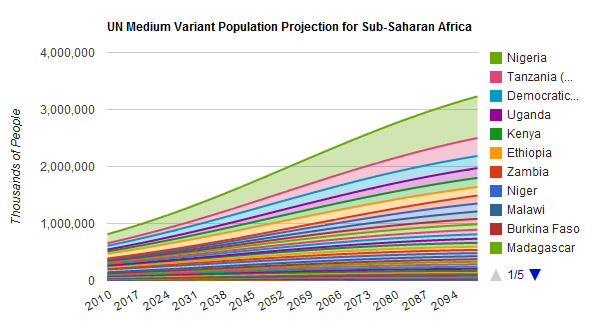
Between now and 2100, three out of every four people added to world population will live in sub-Saharan Africa. That’s what the medium variant of the UN’s world population projections estimates.* As we noted in our previous post on the latest UN numbers, Nigeria leads sub-Saharan growth, but other countries will also grow by major multiples: Tanzania and Somalia will be 7 times larger; Malawi more than 8 times; and Niger, to grow to more than 10 times its current population.
Showing posts from category Nigeria.




.jpg)