-
It’s Not a Drug, It’s Not a Device – It’s Women Working Together
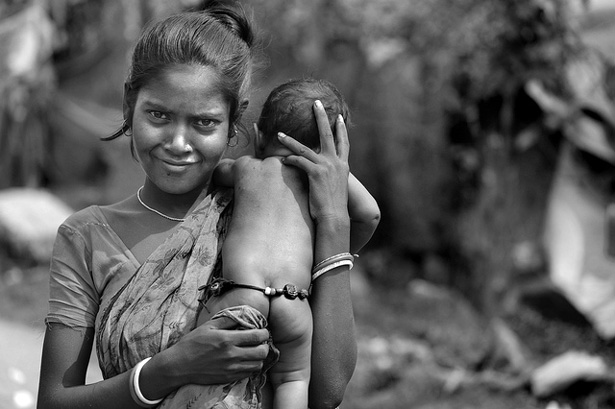
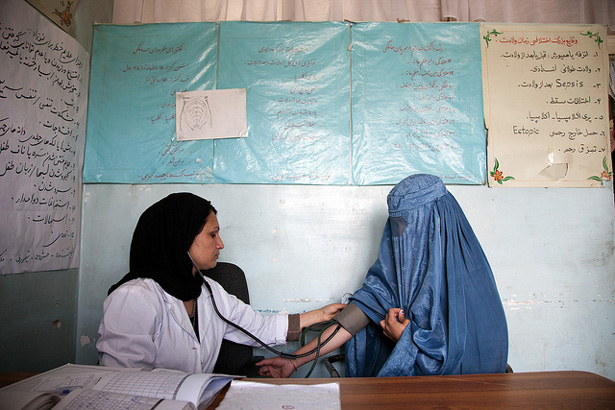
›“Cooperative nurturing is the natural state of humans,” said Anthony Costello, director of the University College London’s Institute for Global Health, during a side event yesterday here at the Women Deliver conference in Kuala Lumpur. Children and mothers are healthier when they have a support network, so the Institute for Global Health has partnered with a number of NGOs over the last two decades to form thousands of community-based women’s groups in Bangladesh, India, Nepal, and Malawi.
-
Janani Vivekananda on Strengthening Resilience to Climate Variability in South Asia
›
“Building resilience should help address the root causes of vulnerability, creating increased capacity to be able to adapt to a range of possible climate futures, not just cope with… specific climate impacts,” says International Alert’s Janani Vivekananda. Otherwise, if the specific impacts don’t play out, “in a fragile context that could be quite destabilizing and seen as a wasted opportunity.”
-
Strengthening Responses to Climate Variability in South Asia
›
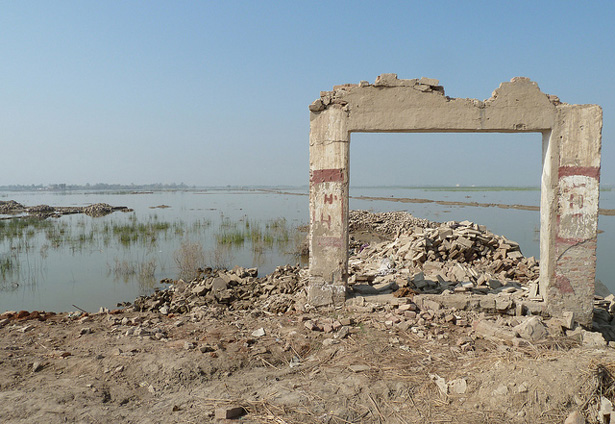
Climate change and conflict can create a self-reinforcing feedback loop: Climate change exacerbates existing conflicts, while conflict makes adapting to climate change more difficult, said Janani Vivekananda of International Alert at the Wilson Center on February 7. [Video Below]
-
Managing Mountains for Ecological Services and Environmental Security
›
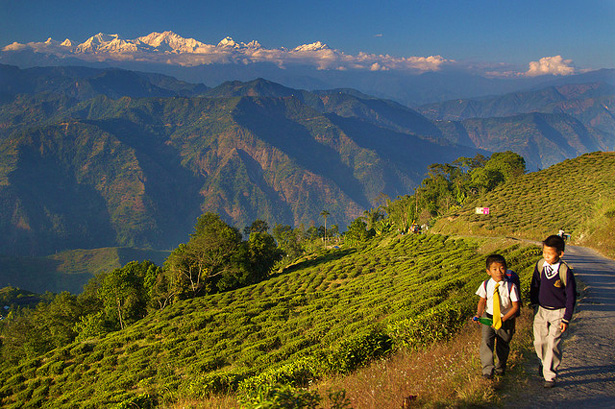
High mountain regions face grave environmental challenges with climate change impacts already as severe as any place on earth. Temperature increases are expected to be greater at higher altitudes than at sea level, and glaciers and snowfields are retreating in many areas, increasing the risk of catastrophic glacial lake outburst floods, affecting fresh water supplies for hundreds of millions of people, and exacerbating territorial and natural resource disputes.
-
Stronger Evidence Base Needed to Demonstrate Added Value of PHE
›
It is well known that public health issues that affect the world’s most vulnerable populations – food insecurity, maternal and child health, water- and sanitation-related disease, and resource scarcity – are inextricably linked. Where these linkages are strongest, experience on the ground has shown that community-based integrated approaches to development provide more effective and sustainable solutions over vertical, sector-based programs. But so far, there are very few comprehensive evaluations providing strong quantitative evidence of this advantage.
-
Programmatic and Policy Recommendations for Addressing Obstetric Fistula and Uterine Prolapse
›
Obstetric fistula is “not just a medical issue, but a human issue,” said Dr. Luc de Bernis, senior maternal health advisor at UNFPA, during a September 27 panel discussion at the Wilson Center. Obstetric fistula, a hole in the birth canal that can develop between the vagina and the bladder and/or rectum during prolonged labor without proper medical intervention, is preventable and treatable but continues to affect more than two million women worldwide, mostly in developing countries where women lack access to cesarean services. Women stricken with it face severe pain and suffering, social stigmatization, and usually give birth to a stillborn child.
-
Russell Sticklor, Stimson Center
The Race to Harness Himalayan Hydropower
›October 11, 2012 // By Wilson Center Staff
The original version of this article, by Russell Sticklor, appeared at the Stimson Center.
Spend a day in Kathmandu, Nepal’s sprawling capital of four million people, and you’ll quickly notice what has long been a fact of life in this landlocked Himalayan country, and many other South Asian nations – no reliable electricity supply exists. Up to eight times a day, neighborhoods throughout the city suffer rolling power cuts due to load shedding, causing residents and businesses alike to either carry on in the darkness or rely on expensive, diesel-consuming generators to keep the lights on. Although the country’s civil war ended in 2006, carrying the promise of restored domestic stability and accelerated economic development, Nepal’s economy has remained hamstrung by an inconsistent energy supply, with only 40 percent of the population having access to electricity. This situation persists despite the fact that the country sits on top of a virtual goldmine – an estimated 80,000 megawatts (MW) of untapped hydroelectricity, of which it has harnessed a scant 700 MW.
-
What Would It Take To Help People ‘and’ the Planet?
›February 1, 2012 // By Geoffrey D. DabelkoThe original version of this article first appeared in the “Scientist’s Soapbox” column of Momentum magazine’s special issue on “what would it take” to craft solutions to some of the Earth’s toughest challenges.
People living in the most biodiverse areas of the world tend to be poor, isolated, and dependent on natural resources. They often lack reliable access to alternative livelihoods and health services and thus can place stress on these ecologically unique regions.
Conservation efforts will merely slow habitat loss if they don’t fundamentally address the living conditions of the human residents as well as the flora and fauna. But programs to assist these communities have commonly focused on one problem at a time, reflecting the interests of the funders: Environmental groups focus on conservation, while health organizations concentrate on disease. We must ask whether investments to protect biologically rich areas are effective and sustainable if they don’t respond to the many needs of the people who live there.
But the problems faced by people in these remote areas don’t fit our traditional sectors. The way we disburse our funds, divide our bureaucracies, demarcate our disciplines, and measure success ignores the reality of intersecting needs. Such stovepiping can disrespect the communities’ scarce resources, especially their time. It can waste development aid on duplicate supplies and staff. And it can lead us to miss how the solution to one problem (e.g., providing antiretroviral drugs to treat HIV/AIDS) can be undercut by another (e.g., lacking access to safe water with which to take the pills).
So, what would it take to help particularly vulnerable populations while protecting particularly important ecological systems?
We need to strategically target our help by addressing HELP – health, environment, livelihoods, and population – through a truly integrated approach to sustainable development in these areas. Evidence suggests tackling problems concurrently can be more efficient and effective. Key donors such as the U.S. Agency for International Development are increasingly prioritizing integrated responses, providing some funding for sustainable development innovators and supporting evaluation of the results. But we need more evidence that these efforts can achieve results that match or exceed the outcomes of single-sector projects. To rigorously test this approach, more projects must be funded, implemented and analyzed, over longer periods of time and at bigger scales.
To date, some promising projects and research in diverse locations – Ethiopia, Nepal, Madagascar, Rwanda, the Philippines, and Uganda – suggest that the HELP approach offers greater benefits than traditional programs.
In the Philippines, for example, the PATH Foundation Philippines’ Integrated Population and Coastal Resource Management (IPOPCORM) program addresses pressing needs for both family planning services and sustainable environmental stewardship in densely populated coastal communities, where local fisheries have been depleted because of increased demand for food. IPOPCORM helps create marine protected areas and promotes alternative economic livelihoods such as seaweed harvesting, thus allowing critical local fish stocks to recover. Concurrently, the initiative mitigates human-induced pressures on the environment and lowers the vulnerability of this underserved population by providing voluntary family planning services. Since its launch in 2001, the IPOPCORM program’s approach has yielded measurable benefits, simultaneously reducing program costs and improving health and environmental outcomes – and outperforming compartmentalized, side-by-side sector interventions.
How can we bring HELP to biodiversity-rich communities? First, we can encourage scholars, practitioners, and policy-makers to step outside their stovepipes by producing and distributing manuals, for example, based on lessons learned from existing cross-disciplinary projects. Second, we must bridge the gap between analysis and field-based programs by developing new metrics that better assess the impact of integrated programs. Third, we must open up bureaucratic funding structures by demonstrating not only the short-term savings but also the synergies that bolster long-term sustainability.
The challenges are significant, but I see promising new opportunities for overcoming them. For example, the new Pathfinder International-led projects around Lake Victoria in Uganda and Kenya mark the entry of a respected health organization into the environmental arena and the return of a leading private funder – the MacArthur Foundation – to HELP programs. With some of Africa’s highest population densities, poverty, ethnic diversity, and biodiversity, the Great Lakes region is one of the most volatile intersections of human development and environmental change.
Through these and other community-based, integrated projects, we can truly help people and the planet at the same time.
Photo Credit: “Boy on road east of Addis,” courtesy of Geoff Dabelko/Wilson Center.
Showing posts from category Nepal.