• woodrow wilson center
  • ecsp

New Security Beat

Subscribe:
  • rss
  • mail-to
  • Who We Are
  • Topics
    • Population
    • Environment
    • Security
    • Health
    • Development
  • Columns
    • China Environment Forum
    • Choke Point
    • Dot-Mom
    • Friday Podcasts
    • Navigating the Poles
    • Reading Radar
  • Multimedia
    • Water Stories (Podcast Series)
    • Backdraft (Podcast Series)
    • Tracking the Energy Titans (Interactive)
  • Films
    • Water, Conflict, and Peacebuilding (Animated Short)
    • Paving the Way (Ethiopia)
    • Broken Landscape (India)
    • Scaling the Mountain (Nepal)
    • Healthy People, Healthy Environment (Tanzania)
  • Publications
  • Events
  • Contact Us

NewSecurityBeat

The blog of the Wilson Center's Environmental Change and Security Program
Showing posts from category Middle East.
  • Christine Parthemore, Center for Climate and Security

    How Are Climate Plans Affecting Nuclear Security?

    ›
    May 5, 2016  //  By Wilson Center Staff
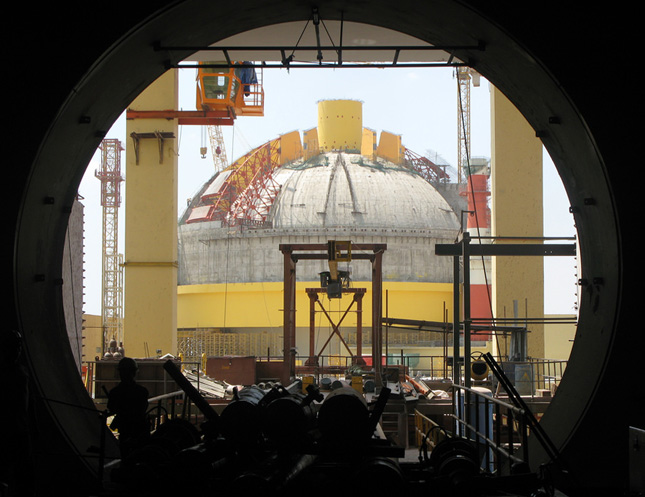
    Kalpakkam-Complex

    The original version of this article, by Christine Parthemore, appeared at the Center for Climate and Security.

    Today, new nations are pursuing civilian but dual-use nuclear capabilities, the threat of non-state actors seeking nuclear materials may be growing, and countries continue to debate proper ways to enhance nuclear safety, security, and nonproliferation systems to keep up with the pace of change. At the same time, governments worldwide are having difficulty managing the effects of a rapidly changing climate, such as more damaging natural disasters and resource stress. The relationships among nuclear, climate, and security risks are growing more complex and interconnected, and these issues are likely to begin converging in new ways. By early 2016, it has become clear that the international community must take a fresh look at the ways in which they are likely to connect and potentially collide in the years ahead, and foster deeper dialogue on what should be done about it.

    MORE
  • Behind the Headlines, Emerging Security Threats in the Middle East

    ›
    Guest Contributor  //  May 4, 2016  //  By Anders Jägerskog & Ashok Swain
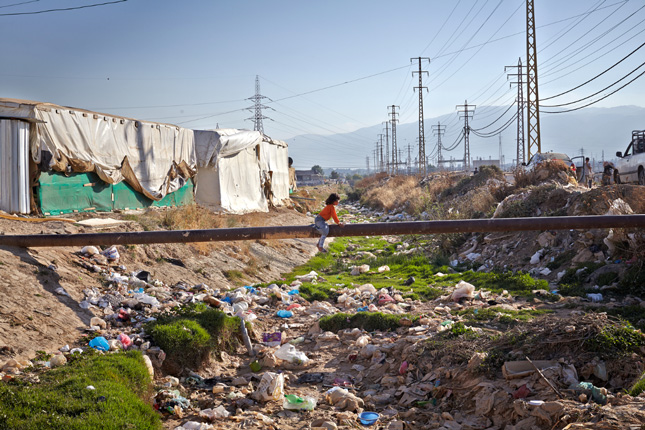
    Lebanon-camp

    The Middle East, as much as ever, is the focus of international attention, but the obvious crises may be a distraction from deeper underlying issues.

    MORE
  • How Effective Is the Extractive Industries Transparency Initiative? And a Transatlantic Food Security Strategy

    ›
    April 28, 2016  //  By Gracie Cook

    EITI ImageSovacool et al. in a study published in World Development compare the performance of the first 16 member countries of the Extractive Industries Transparency Initiative (EITI) to their performance before membership and to other non-member countries and find little difference in most governance and economic development categories.

    MORE
  • Culture and Rights: The Struggle From Within to End Female Genital Cutting

    ›
    Dot-Mom  //  Guest Contributor  //  April 25, 2016  //  By Anubha Bhonsle
    shadow into light

    Ashraf and Shazia use the word “guilt” often.* Their voices tremble as they rewind to the day when they read an article in an Indian magazine, Manorama, that opened their eyes to the reality of khatna – the practice of female genital mutilation among their community. “We felt guilt – immense, powerful guilt – when we realized that this was not needed, that we didn’t need to put our elder daughter through this,” the parents say. “We had no idea this was just going on, prevalent, generation after generation.”

    MORE
  • Turning the Impending Mosul Dam Disaster Into Opportunity

    ›
    From the Wilson Center  //  April 19, 2016  //  By Azzam Alwash
    MosulDam

    The original version of this article appeared as part of the Middle East Program’s Viewpoints series.

    Iraq has seen its share of calamities in recent years, but none is as dangerous as the impending failure of the Mosul Dam. A breach of the dam will result in a tsunami-like wave that sweeps through cities and hamlets along the Tigris River from Mosul to as far south as Amarah and even Basra. Baghdad would be submerged under five meters of water within four days. Not only do experts estimate the possible fatalities to range from 500,000 to more than 1 million, but consider the logistics of trying to provide electricity, drinking water, food, hospitals, transportation, and diesel for millions of people.

    MORE
  • Keith Johnson, Foreign Policy

    Pentagon Directive Quietly Makes Climate Change Long-Term Priority

    ›
    March 24, 2016  //  By Wilson Center Staff
    Khan-Neshin

    The original version of this article, by Keith Johnson, appeared on Foreign Policy.

    In the middle of January, Deputy Secretary of Defense Robert Work signed off on one of the potentially most significant, if little-noticed, orders in recent Pentagon history. The directive told every corner of the Pentagon, including the office of the secretary of defense, the joint chiefs of staff, and all the combatant commands around the world, to put climate change front and center in their strategic planning.

    MORE
  • Creating a Water Ready World

    ›
    March 22, 2016  //  By Sherri Goodman
    Haiti-flood

    Sitting at my desk looking at bills to be paid, the first one on the stack is for the water company, emblazoned with the phrase, “Water is Life.” Yes, we all know that. But really, as my teenagers would say, “Duh, Mom. So what?”

    Well, here’s the “so what” on this World Water Day 2016.

    MORE
  • Ellen Starbird on the Allure of the Demographic Dividend and How to Achieve It

    ›
    Friday Podcasts  //  February 26, 2016  //  By Sean Peoples

    Starbird-small“It has always surprised me actually how powerful this ‘demographic dividend’ framework seems to be,” says Ellen Starbird, director of USAID’s Office of Population and Reproductive Health, in this week’s podcast. But “for a lot of countries it’s a long way off.”

    MORE
Newer Posts   Older Posts
View full site

Join the Conversation

  • RSS
  • subscribe
  • facebook
  • G+
  • twitter
  • iTunes
  • podomatic
  • youtube
Tweets by NewSecurityBeat

Trending Stories

  • unfccclogo1
  • Pop at COP: Population and Family Planning at the UN Climate Negotiations

Featured Media

Backdraft Podcast

play Backdraft
Podcasts

More »

What You're Saying

  • Volunteers,At,The,Lagos,Food,Bank,Initiative,Outreach,To,Ikotun, Pan-African Response to COVID-19: New Forms of Environmental Peacebuilding Emerge
    Rashida Salifu: Great piece 👍🏾 Africa as a continent has suffered this unfortunate pandemic.But it has also...
  • A desert road near Kuqa An Unholy Trinity: Xinjiang’s Unhealthy Relationship With Coal, Water, and the Quest for Development
    Ismail: It is more historically accurate to refer to Xinjiang as East Turkistan.
  • shutterstock_1779654803 Leverage COVID-19 Data Collection Networks for Environmental Peacebuilding
    Carsten Pran: Thanks for reading! It will be interesting to see how society adapts to droves of new information in...

What We’re Reading

  • Rising rates of food instability in Latin America threaten women and Venezuelan migrants
  • Treetop sensors help Indonesia eavesdrop on forests to cut logging
  • 'Seat at the table': Women's land rights seen as key to climate fight
  • A Surprise in Africa: Air Pollution Falls as Economies Rise
  • Himalayan glacier disaster highlights climate change risks
More »
  • woodrow
  • ecsp
  • RSS Feed
  • YouTube
  • Twitter
  • Facebook
  • Home
  • Who We Are
  • Publications
  • Events
  • Wilson Center
  • Contact Us
  • Print Friendly Page

© Copyright 2007-2021. Environmental Change and Security Program.

Woodrow Wilson International Center for Scholars. All rights reserved.

Developed by Vico Rock Media

Environmental Change and Security Program

Woodrow Wilson International Center for Scholars

Ronald Reagan Building and International Trade Center

  • One Woodrow Wilson Plaza
  • 1300 Pennsylvania Ave., NW
  • Washington, DC 20004-3027

T 202-691-4000