-
Political Demography: How Population Changes Are Reshaping International Security and National Politics (Book Launch)
›
“The world’s population is changing in ways that are historically unprecedented,” said Jack Goldstone, George Mason University professor and co-editor of the new book, Political Demography: How Population Changes Are Reshaping International Security and National Politics. [Video Below]
-
Caryle Murphy for the Middle East Program
Saudi Arabia’s Youth and the Kingdom’s Future
›Saudi Arabia is passing through a unique demographic period. …Approximately 37 percent of the Saudi population is below the age of 14. Those under age 25 account for around 51 percent of the population, and when those under 29 are included, young people amount to two-thirds of the kingdom’s population. (In the United States, those 14 years and younger are 20 percent of the population; those 29 and below make up 41 percent.)
-
Iran: A Seemingly Unlikely Setting for World’s Fastest Demographic Transition
›January 11, 2012 // By Elizabeth Leahy MadsenThis is the second post in a series profiling the process of building political commitment in countries whose governments have made strong investments in family planning. Read the first post, on Rwanda’s recent rapid demographic changes, here.
To date, only 11 countries outside of the developed world, China, and a handful of small island states have reached the end of the demographic transition, with fertility rates declining from more than four children per woman to replacement level or lower.* Of these, only two countries have completed the transition in 15 years or less – and both might surprise you. One is Cuba, whose government dispensed family planning services to its relatively small population in the 1970s through accessible primary health care facilities and legalized safe abortion eight years before the United States did. The other: Iran.
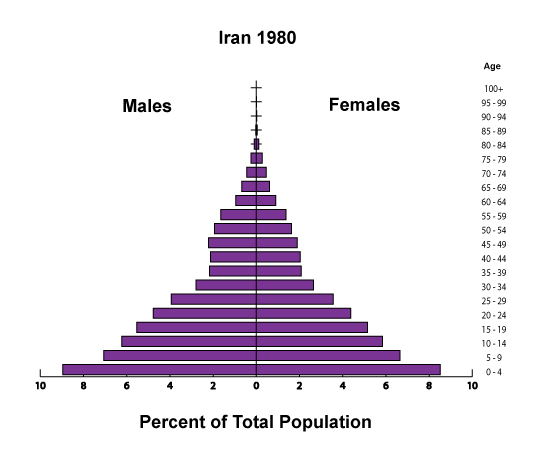
Following the 1979 revolution, Iran’s new theocracy adopted a socially conservative, pro-natalist outlook. Half of the population lived in rural areas, which typically constrains access to health services. In addition, abortion was illegal in most circumstances. According to the UN, Iranian women had an average of 6.5 children each in the early 1980s and the population was growing nearly four percent annually, a rate high enough for it to double in 19 years.
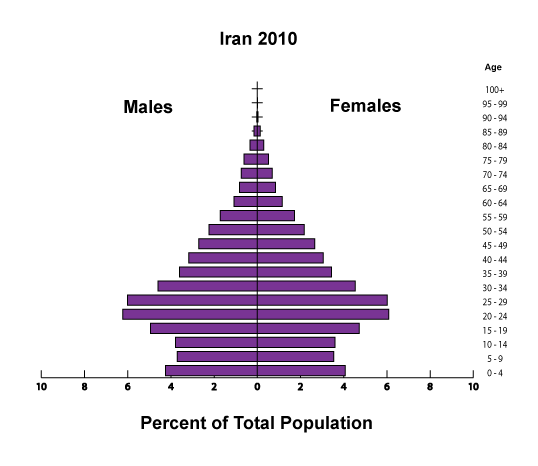
But, by the early 2000s, Iran’s fertility rate had dropped below two children per woman. The swift changes can be attributed to the efforts of government officials concerned about meeting the employment needs of a growing population, supported by public health experts who wanted to rebuild the eroded family planning program.
A Dramatic Policy ShiftThe turning point came after the end of Iran’s eight-year war with Iraq in 1988. With military demands high – several hundred thousand people were killed during the war – population growth was viewed positively. But as the war ended, policy directives did an about-face.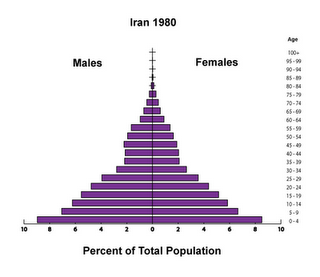
Although public health officials had framed the need for reinvigorated family planning programs in health-related terms for years, the motivation for government officials to change policy appears to have been economic. The national budget agency informed the prime minister that after nearly a decade of conflict, the country lacked adequate funding to both rebuild and to meet the needs of its people. The prime minister responded quickly, directing that demographic factors be integrated into the new development plan and stating that “Iranians’ standard of living was being eroded by the growth of the country’s population.”
“Pragmatism Has Prevailed Over Pure Ideology”
After convincing their superiors, Iranian government officials who supported family planning faced the added challenge of garnering the backing of the influential religious establishment. Shortly after the revolution, Ayatollah Khomeini officially sanctioned the use of contraception, though his perspective was not universal among clerics. Once the prime minister decided to introduce a national family planning program, officials sought support from additional religious authorities. Opposition was minimal after two key institutions offered endorsements. The High Judicial Council determined that there was “no Islamic barrier to family planning” in late 1988, and the Expediency Council approved the government’s plans soon after.
By late 1989, a new family planning program had been officially introduced. The program’s aims were to lengthen spacing between births; limit pregnancies in the early and late reproductive years; and lower fertility by educating the population and ensuring access to free and diverse contraceptive methods. By the mid-1990s, the government had fully integrated family planning into the existing primary health system.
Iran thus followed the example of other majority-Muslim countries where religion was not an impediment to family planning, including Egypt, Indonesia, Jordan, and Oman. Just as in countries where highly Catholic populations have low fertility rates (Italy, Poland, Spain, and many others), religious guidance has been interpreted in varying ways in different settings and is not necessarily a central factor in individual fertility decisions. As Akbar Aghajanian and Amir H. Merhyar write in a summary of Iran’s family planning program, “Pragmatism has prevailed over pure ideology when necessary.”
The Contributions of Women’s Education and a Strong Health System
A new policy orientation was the critical first step, but successful implementation was necessary for Iran’s demographic trajectory to change in response. Fortunately, the government had some advantages in rolling out its new program, namely a strong existing health system, a history of past efforts to promote family planning, and an educated female population among whom demand for contraception was high.Rural development became a priority of the government after the revolution and resulted in improved access to an array of services. In rural areas, community health workers receive two years of training to provide family planning services along with other preventative care and treatment. Services are also available at rural health “houses,” urban clinics, and higher-level centers around the country.
The status of women has also played a major role. A research exercise conducted by IIASA estimated that improvements in educational attainment among women were responsible for about one-third of Iran’s fertility decline between 1980 and 2005. Women’s literacy was already rising during the period of the revolution and reached 74 percent by 1996, while attitudes toward female employment became more supportive. By the late 1990s, new classes of university students included more women than men. The response to the 1989 program indicated that women clearly had an unmet demand for family planning. Use of modern contraception jumped from 31 percent in 1989 to 51 percent just five years later, then rose more slowly over the subsequent decade.
A Dividend Squandered?
The rapid changes in Iran’s age structure, thanks to declining fertility, have opened a window of opportunity for the country to boost economic growth through lower dependency ratios – a phenomenon called the demographic dividend. However, the dividend is not an automatic bonus, and Iran’s capacity to capitalize on its demographic change is questionable.
The unemployment rate among young people today is over 20 percent, indicating that the economy is not generating sufficient jobs, which is a prerequisite to improving productivity. This inopportune climate may even contribute to a further decline in the fertility rate: Some observers have suggested that the country’s economic troubles and rising costs of living have motivated young people to delay marriage and have smaller families. “Unemployment and high costs of living, coupled with social and political restrictions, have made [life] increasingly difficult for young Iranians,” Farzaneh Roudi of the Population Reference Bureau (PRB) explained in a blog post last year.
Given Iran’s challenges in producing adequate jobs and other economic benefits for its population, President Mahmoud Ahmadinejad’s recent unusual pronouncements on population issues are especially puzzling. Last year, Ahmadinejad introduced a pro-natalist policy offering direct payments to each child born, continuing until they reach adulthood, and later suggested that girls should marry at age 16 or 17.
But despite a high level of international media attention, most observers expect the policy to have little impact. Widespread adoption of family planning has become entrenched in society: 60 percent of Iranian women now use a modern contraceptive method. As PRB’s Roudi wrote in response to Ahmadinejad’s proposal, “Iranian women and men have gotten used to exercising their reproductive rights and would expect to be able to continue to do so.”
*The 11 countries that have achieved replacement fertility or lower outside of developed regions, China, and small island states are Brazil, Chile, Costa Rica, Cuba, Iran, Lebanon, Myanmar, Thailand, Tunisia, and the United Arab Emirates.
Elizabeth Leahy Madsen is a consultant on political demography for the Wilson Center’s Environmental Change and Security Program and senior technical advisor at Futures Group.
Look for related analysis on the political implications of Iran’s changing age structure by Richard Cincotta on New Security Beat soon.
Sources: Abbasi-Shavazi, Lutz, Hosseini-Chavoshi and Samir (2008), Abbasi-Shavazi (2002), Aghajanian and Merhyar (1999), Christian Science Monitor, GlobalSecurity.org, The New York Times, Noble and Potts (1996), Population Reference Bureau, Roudi-Fahimi (2002), UN Population Division, World Bank.
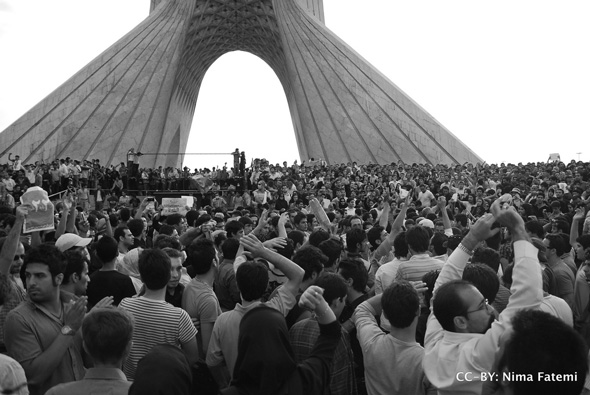
Image Credit: “بیست و پنجم خرداد ۸,” courtesy of flickr user Recovering Sick Soul (Nima Fatemi); charts arranged by Sean Peoples and Elizabeth Leahy Madsen. -
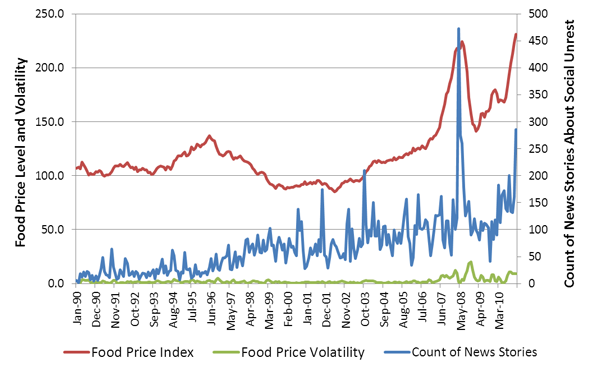
Do High Food Prices Cause Social Unrest?
›In March 2011, a senior Brookings Institution official wrote that “the crux of the food price challenge is about price volatility, rather than high prices per se” and that “[i]t is the rapid and unpredictable changes in food prices that wreak havoc on markets, politics, and social stability.”
-
Three New Reports Highlight Ongoing Significance of Youth Demographics in Global Trends
›January 2, 2012 // By Elizabeth Leahy MadsenAmidst world population reaching seven billion and last year’s Arab Spring, which in some nations is continuing into this winter, it can be easy to miss emerging pieces of research that tell us something relatively objective about youth and instability. Three new studies give practitioners and policymakers a stronger foundation of evidence to highlight the challenges and opportunities facing the world’s largest generation of young people.
Results of a recent UNICEF staff survey indicate that the people responsible for the UN’s efforts targeting children and youth are seriously concerned about demographic and economic dynamics. Asked to review a list of 20 “global trends,” UNICEF staff rated “growing disparities” and “youth bulge and youth unemployment” as the most significant to children. The results, which the agency will soon publish in a paper on “The Next Generation and Global Trends,” also indicate that staff members feel that UNICEF has a strong capacity to influence the future of these trends.
UNICEF’s recent “Child Outlook” report on global trends discusses the issues highlighted in the survey. The report notes that although many countries are moving toward middle-income status, poverty rates remain stubbornly high, indicating that economic development does not benefit all equally. Income and consumption in such countries tend to be concentrated among the wealthiest households. “While many families will prosper, others are being left behind,” the report explains.
“Tensions and discouragement arising from youth unemployment, combined with higher food prices and fiscal contractions, may have contributed to increased civil unrest, protests, and political instability,” UNICEF asserts. In many developing countries, the number of young people entering the labor market far surpasses the number of available jobs. Although some youth are not working because they are enrolled in secondary or tertiary education, low rates of youth participation in the workforce often are not a matter of choice. Young people, especially those with low levels of education and from poorer families, are often unable to find secure, decent jobs. More than one-quarter of all young people with jobs worldwide live below the poverty line of $1.25 per day.
Economic Pressures on Youth in East Africa
Two other research projects – one published, one still underway – provide additional context to the combination of demographic and economic challenges that face the world’s young people. In the first, part of a recent special U.S. Institute of Peace series on South Sudan, Stephanie Schwartz and Wilson Center fellow Marc Sommers probe the expectations of and obstacles faced by youth in the newly created country.
According to the incipient government’s statistics agency, 72 percent of South Sudan’s population is younger than 30, which places it among the 20 youngest age structures in the world. Only 40 percent of youth ages 15 to 24 are literate, and nearly 80 percent of households depend on agriculture for their income. Based on interviews conducted with urban and rural youth in three areas of South Sudan, the authors find that the pressure of paying rising dowry costs is the most salient issue facing young men, while young women are treated as economic assets with no influence in their own future. The authors’ research suggests that “some young men join armed gangs, at least in part, because they believe it will help them pay dowries.”
Although many young people in South Sudan aspire to the stability of government work, the limited number of jobs and shortage of relevant skills inhibit their aspirations. With an underdeveloped private sector, few opportunities for training, and nepotistic practices in hiring, there is little work for those living in towns and urban areas beyond manual labor and selling goods. The authors recommend that education and job training be expanded, with a focus on equitable access among young people from varied geographic backgrounds.
Across the border in northern Uganda, Chris Blattman, an associate professor of political science at Yale, has been studying the social effects of the government’s youth employment program started in 2007. The program offered grants to small groups of young people for vocational training or to fund the costs of starting a new business. Although a full paper has not yet been published, preliminary findings indicate strong economic benefits of the program which in turn improve social cohesion and community participation while diminishing aggression and “disputes with authorities” among young men. If they bear out, the results may well confirm the oft-repeated policy recommendation that focusing on youth employment is critical to improving national development as well as reducing the likelihood of instability and conflict.
In the year of seven billion, we heard much about the need to invest in young people and the tremendous potential they embody, for demographic dividends as well as overall development. Yet 2011 was also a year of tremendous upheaval, much of which was driven by young people – and their older counterparts – seeking representative and democratic governance. This should serve as a reminder that youth can be a remarkable force for positive change, but in too many places – South Sudan among them – their opportunities, prospects, and contributions are constrained. As the UNICEF survey results reiterate how important this issue is to development programming, the Uganda research may be another important piece of evidence that direct investment in young people reaps tangible results not only for them, but also for society.
Elizabeth Leahy Madsen is a consultant on political demography for the Wilson Center’s Environmental Change and Security Program and senior technical advisor at Futures Group. She was previously a senior research associate at Population Action International.
Sources: Bill and Melinda Gates Institute for Population and Reproductive Health, Chris Blattman, ILO, Sommers and Schwartz (2011), South Sudan National Bureau of Statistics, UNICEF, World Bank.
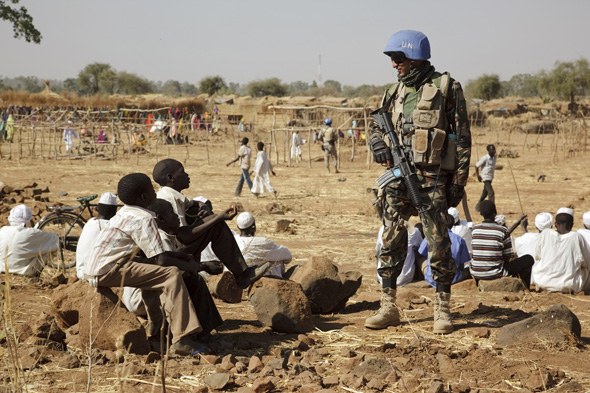
Photo Credit: “UNAMID Peacekeeper Speaks with Sudanese Youth,” courtesy of UN Photo/Albert Gonzalez Farran. -
Sanitation and Water MDGs in the Middle East and North Africa: Missing the Target?
›Goal 7, Target 10 of the United Nations Millennium Development Goals (MDGs) is to “halve, by 2015, the proportion of people without sustainable access to safe drinking water and basic sanitation.” The Joint Monitoring Programme (JMP), established by the UN to monitor progress towards this goal, has twice concluded (in 2008 and 2010) that the Middle East and North Africa (MENA) are in good shape to meet this target. However, a new article in Development and Change, “The Politics of Assessment: Water and Sanitation MDGs in the Middle East,” by Neda Zawahri, Jeannie Sowers, and Erika Weinthal, argues that the JMP’s “reliance on classifying ‘improved’ and ‘unimproved’ water and sanitation infrastructure, through infrequent household surveys, has produced misleading assessments that fail to capture the extensive water quality and sanitation problems plaguing the MENA.”
The authors compared the findings of the JMP with a variety of data sources – participatory assessments, reports from other UN agencies, donor projects, domestic ministries and agencies, and academic research – and found major contradictions between the progress reported by the JMP and the situation on the ground. In one example, the authors write that “while the JMP considers piped household water as an improvement in water coverage, it fails to differentiate between ‘full’ coverage and ‘partial’ coverage, that is, household water supplies available only a few hours a week.” And the authors point out that according to UN-Habitat, “the availability of piped water does not necessarily translate into safe drinking water, as water may become contaminated before it reaches the tap.”
As a result of the weakness of the indicators used by the JMP, household surveys conducted by the JMP in the MENA region “[do] not adequately capture the quality of drinking water,” the authors write, and efforts to address this inadequacy through more comprehensive testing of municipal water samples were deemed “too complex to be routinely employed through the world” and “prohibitively expensive.”
“International organizations and national leaderships in the MENA lack substantial incentives to adopt more accurate assessments for safe water and sanitation,” Zawahri et al. conclude. The need to generate comparable data across time and space has trumped the importance of “gauging access, quality, and affordability of water and sanitation.” -
UNiTE To End Violence Against Women
›November 25, 2011 // By Schuyler NullToday is the International Day to End Violence Against Women, an awareness and advocacy campaign organized by a host of UN agencies and offices “to galvanize action across the UN system to prevent and punish violence against women.”
Gender equity and inequity play a role in a myriad of international development, health, security, and even environmental issues, from rape as a weapon of war; demography’s effects on political stability; maternal health and its impact on child development; women’s rights as a social stability issue; and the disproportionate effect of climate change on rural women.
The numbers around gender-based violence are staggering. According to the UN:
Here are some of New Security Beat’s posts on gender-based violence and inequity and their intersection with development, the environment, and security:- 70 percent of women experience physical or sexual violence from men in their lifetime.
- Approximately 250,000 to 500,000 women and girls were raped in the 1994 Rwandan genocide, and in the eastern Democratic Republic of Congo (DRC), at least 200,000 cases of sexual violence, mostly involving women and girls, have been documented since 1996, though the actual numbers are considered to be much higher.
- In the United States, one-third of women murdered each year are killed by intimate partners; in South Africa, a woman is killed every six hours by an intimate partner; in India, 22 women were killed each day in dowry-related murders in 2007; and in Guatemala, two women are murdered, on average, each day.
- Over 60 million girls worldwide are child brides, married before the age of 18, primarily in South Asia (31.1 million) and sub-Saharan Africa (14.1 million).
Gender-Based Violence in the DRC: Research Findings and Programmatic Implications:
Dr. Lynn Lawry, senior health stability and humanitarian assistance specialist at the U.S. Department of Defense, presented findings from the first cross-sectional, randomized cluster study on gender-based violence in the DRC at the Wilson Center this year. The first of its kind in the region, the population-based, quantitative study covered three districts in the DRC and a total of 5.2 million adults, comprehensively assessing gender-based violence, including its prevalence, circumstances, perpetrators, and physical and mental health impacts.
Pop Audio: Judith Bruce on Empowering Adolescent Girls in Post-Earthquake Haiti: “The most striking thing about post-conflict and post-disaster environments is that what lurks there is also this extraordinary opportunity,” said Judith Bruce, a senior associate and policy analyst with the Population Council. Bruce spent time last year working with the Haiti Adolescent Girls Network, a coalition of humanitarian groups conducting workshops focused on the educational, health, and security needs of the country’s vulnerable female youth population.
The Walk to Water in Conflict-Affected Areas: Constituting a majority of the world’s poor and at the same time bearing responsibility for half the world’s food production and most family health and nutrition needs, women and girls regularly bear the burden of procuring water for multiple household and agricultural uses. When water is not readily accessible, they become a highly vulnerable group. Where access to water is limited, the walk to water is too often accompanied by the threat of attack and violence.
Weathering Change: New Film Links Climate Adaptation and Family Planning: “Our planet is changing. Our population is growing. Each one of us is impacting the environment…but not equally. Each one of us will be affected…but not equally,” asserts the new documentary, Weathering Change, launched at the Wilson Center in September. The film, produced by Population Action International, explores the devastating impacts of climate change on the lives of women in developing countries through personal stories from Ethiopia, Nepal, and Peru.
Sajeda Amin on Population Growth, Urbanization, and Gender Rights in Bangladesh:
The Population Council’s Sajeda Amin describes the Growing Up Safe and Healthy (SAFE) project, launched in Dhaka and other Bangladeshi cities last. The initiative aims, to increase access to reproductive healthcare services for adolescent girls and young women, bolstering social services to protect those populations from (and offer treatment for) gender-based violence, and strengthen laws designed to reduce the prevalence of child marriage – a long-standing Bangladeshi institution that keeps population growth rates high while denying many young women the opportunity to pursue economic and educational advancement.
No Peace Without Women: On October 31, 2000, the UN Security Council adopted Resolution 1325, which called for women’s equal participation in all efforts to maintain and promote peace and security; however, little progress has been made over these last 10 years and women remain on the periphery when it comes to post-conflict reconstruction and development. A report from the humanitarian organization CARE concedes that “much of the action remains declarative rather than operational.”
Addressing Gender-Based Violence to Curb HIV: At last year’s International AIDS Conference in Vienna an astonishing development in the campaign to stem the spread of HIV/AIDS was unveiled – a microbicide with the ability to reduce the risk of transmission of HIV. This welcome development coincides with an intensified focus on women’s health and security needs among donors, especially the United States.
The Future of Women in the MENA Region: A Tunisian and Egyptian Perspective: Lilia Labidi, minister of women’s affairs for the Republic of Tunisia and former Wilson Center fellow, joined Moushira Khattab, former minister of family and population for Egypt, this summer at the Wilson Center to discuss the role and expectations of women in the Egyptian and Tunisian revolutions, as well as issues to consider as these two countries move forward.
Sources: UN Secretary-General’s Office. -
Watch: Gidon Bromberg Gives an Update on Jordan River Rehabilitation Efforts
›October 27, 2011 // By Kate DiamondGidon Bromberg, co-director of Friends of the Earth Middle East (FOEME), says in this short interview with ECSP that his outlook on rehabilitating the Jordan River has changed completely over the last five years. We had been “laughed at” for trying to restore the waterway, he said; now though, “we are very confident that the Jordan River south of the Galilee down to the Dead Sea will be rehabilitated.”
By building a cross-border peace park and encouraging collaboration between Israelis, Palestinians, and Jordanians on water scarcity and quality issues, FOEME aims to improve environmental and security problems that bind the three groups together.
The Jordan River has become so polluted that visitors, many of whom are devout Christians making a pilgrimage to one of the religion’s most sacred sites, have been barred from its waters due to health concerns. Furthermore, more than 98 percent of its fresh water is diverted for agricultural work, meaning that the pollutants that end up in the river are highly concentrated.
But today, Bromberg said, sewerage is being removed on both the Israeli and Jordanian sides and there is a commitment to do the same from the Palestinians. For the first time in 60 years, there are concrete plans to return fresh water to a river that is “so holy to half of humanity.”
Sources: The Age, Friends of the Earth Middle East, The Guardian, U.S. Environmental Protection Agency
Showing posts from category Middle East.