-
Dr. Mishkat Al-Moumin on the Importance of Women & the Environment to Sustainable Peace
› “I believe if you acknowledge women as primary users of environmental resources, if you draft the policy with women [at] the table, offering you their unique perspective and unique feedback, you’re going to have a more stable policy. A policy that gets implemented,” says Mishkat Al-Moumin, scholar in residence at the Environmental Law Institute, in this week’s Friday Podcast, and second in a series of interviews recorded at the First International Conference on Environmental Peacebuilding.
 -
Population, Climate, and Politics—A New Phase is Emerging
›For some time, it has been clear that a global population imbalance is emerging. High income countries, including nearly all of the Americas, Europe, and most of East and parts of South and Southeast Asia, have seen a dramatic, sustained fall in fertility. Already, this is resulting in shrinking labor forces and the oldest mean age populations seen in history. At the same time, the low income countries and even some lower middle-income countries—mainly in Africa but also in Central America, the Middle East, and parts of South and Southeast Asia—continue to have relatively high fertility. This is now, and even more in the coming decades, producing fast-growing labor forces and relatively young populations. -
The Environment Has Become a Hostage of Armed Conflict
›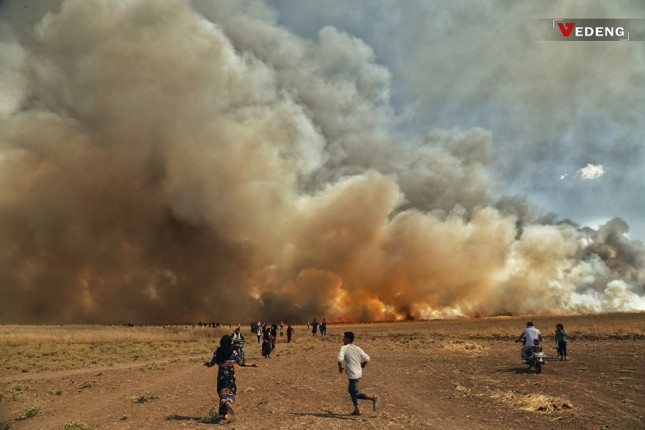
This year, 2019, marked a new nadir for the environment that may reflect an ominous trend in warfare: Environmentally sensitive targets are being weaponized and taken hostage. Farmland went up in flames and burning oil tankers dominated the headlines, serving as a stark reminder of conflict’s ripple effects.
-
Erika Weinthal on the Weaponization of Water in Conflict Settings
›“When you’re in a post-conflict phase, it means we really should be moving away from humanitarian assistance into development because we’ve moved along the conflict spectrum toward peace and development,” says Erika Weinthal, the Lee Hill Snowdon Professor of Environmental Policy at Duke University, in this week’s Water Stories podcast. -
Gidon Bromberg on Water and Environmental Peacebuilding
›“The Jordan River has been the lifeblood of the Levant,” says Gidon Bromberg, the Israeli co-director of EcoPeace Middle East, in this week’s Water Stories podcast. The river’s importance offers a unique platform for multi-level conflict resolution and environmental conservation efforts in a region wracked by conflict. -
Environmental Cooperation Can Facilitate Peace Between States
›Environmental stress and climate change can accelerate instability and conflict—but shared environmental problems can also be a source of cooperation and facilitate peacemaking between states. Transnational environmental problems are common threats and often cross national boundaries, requiring international cooperation to address. In turn, this cooperation can provide a good entry point for building trust and cooperation.
-
Building Stability in the Middle East: Defining a Transatlantic Agenda for Climate Resilience
›Climate change can undermine stability in the Middle East and North Africa, where both the United States and Europe have critical foreign policy and security interests. The Middle East and North Africa (MENA) region “is impacted by climate and resource scarcity risks now, in the medium, and in the long term,” said Nick Mabey, director and chief executive of the environmental think tank E3G, during a recent Wilson Center event on building climate resilience in MENA countries. “It’s a region that is highly vulnerable to climate change,” said Mabey, and “also incredibly vulnerable to global systems.”
-
The New Middle Eastern Wars: To Protect Civilians, Protect Environmental Infrastructure
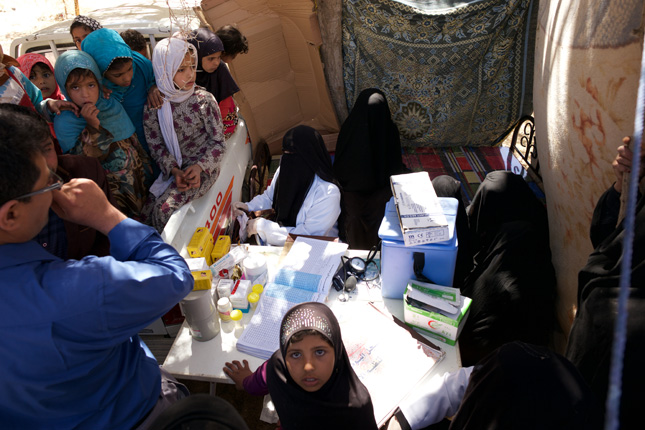
›Six years of brutal warfare have destroyed basic infrastructure in Yemen, Libya, and Syria. While U.S. and European governments have been largely preoccupied with providing immediate assistance and dealing with refugees, international humanitarian organizations—such as the International Committee of the Red Cross and Doctors without Borders—are focusing on how to repair, maintain, and safeguard the facilities that provide essential services like clean water, sanitation, and electricity. Yet these efforts are hindered by lack of resources, protracted violence, and—most insidiously—by the warring parties’ intentional targeting of humanitarian actors and environmental infrastructure. Just as the extensive damage from hurricanes in the Caribbean and southeastern United States has underscored the need for more resilient infrastructure, the wars of the Middle East show that protecting infrastructure is key to protecting civilians caught up in conflict.
Showing posts from category Middle East.
 “I believe if you acknowledge women as primary users of environmental resources, if you draft the policy with women [at] the table, offering you their unique perspective and unique feedback, you’re going to have a more stable policy. A policy that gets implemented,” says Mishkat Al-Moumin, scholar in residence at the Environmental Law Institute, in this week’s Friday Podcast, and second in a series of interviews recorded at the First International Conference on Environmental Peacebuilding.
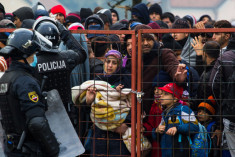 For some time, it has been clear that a global population imbalance is emerging. High income countries, including nearly all of the Americas, Europe, and most of East and parts of South and Southeast Asia, have seen a dramatic, sustained fall in fertility. Already, this is resulting in shrinking labor forces and the oldest mean age populations seen in history. At the same time, the low income countries and even some lower middle-income countries—mainly in Africa but also in Central America, the Middle East, and parts of South and Southeast Asia—continue to have relatively high fertility. This is now, and even more in the coming decades, producing fast-growing labor forces and relatively young populations.
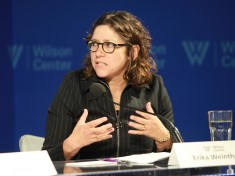 “When you’re in a post-conflict phase, it means we really should be moving away from humanitarian assistance into development because we’ve moved along the conflict spectrum toward peace and development,” says Erika Weinthal, the Lee Hill Snowdon Professor of Environmental Policy at Duke University, in this week’s Water Stories podcast.
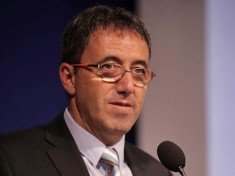 “The Jordan River has been the lifeblood of the Levant,” says Gidon Bromberg, the Israeli co-director of EcoPeace Middle East, in this week’s Water Stories podcast. The river’s importance offers a unique platform for multi-level conflict resolution and environmental conservation efforts in a region wracked by conflict.