• woodrow wilson center
  • ecsp

New Security Beat

Subscribe:
  • rss
  • mail-to
  • Who We Are
  • Topics
    • Population
    • Environment
    • Security
    • Health
    • Development
  • Columns
    • China Environment Forum
    • Choke Point
    • Dot-Mom
    • Friday Podcasts
    • Navigating the Poles
    • Reading Radar
  • Multimedia
    • Water Stories (Podcast Series)
    • Backdraft (Podcast Series)
    • Tracking the Energy Titans (Interactive)
  • Films
    • Water, Conflict, and Peacebuilding (Animated Short)
    • Paving the Way (Ethiopia)
    • Broken Landscape (India)
    • Scaling the Mountain (Nepal)
    • Healthy People, Healthy Environment (Tanzania)
  • Publications
  • Events
  • Contact Us

NewSecurityBeat

The blog of the Wilson Center's Environmental Change and Security Program
Showing posts from category Mexico.
  • Hunger in Shangri-La: Causes and Consequences of Food Insecurity in the World’s Mountains

    ›
    Guest Contributor  //  June 6, 2016  //  By Andrew Taber
    Chichaucancha1

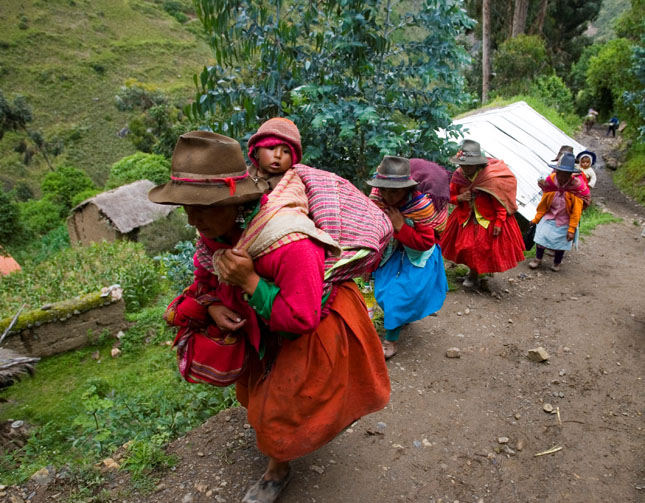
    Over the past decade, the number of undernourished people around the world has declined by around 167 million, to just under 800 million people. However, this positive trend glosses over a stark reality: Food insecurity is increasing in the world’s mountains. This pattern has been under-recognized by development experts and governments, a dangerous oversight with far-reaching social and environmental repercussions.

    MORE
  • The Case for a Caribbean Carbon Market

    ›
    Guest Contributor  //  May 24, 2016  //  By Gary Clyne
    Trinidad-industry

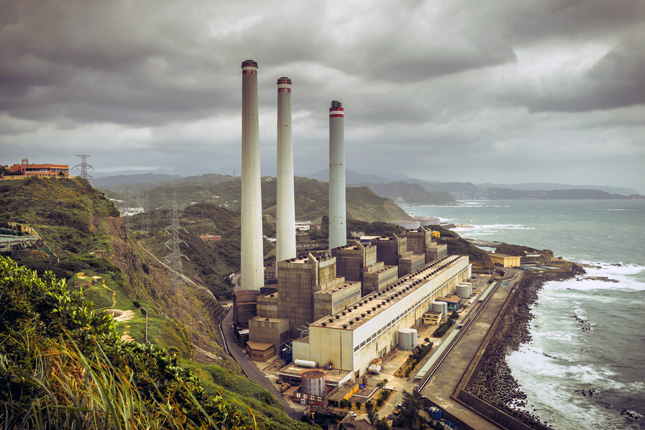
    In an effort to scale-up climate change mitigation, the largest private sector engagement in the history of the United Nations was drafted to fund clean technology projects in developing countries. Carbon credits were to offset pollution in developed nations and pay for clean energy projects in developing countries. But many developed countries, including the United States, spurned the agreement, preferring to manage greenhouse gas emissions internally and build or retrofit infrastructure in ways that directly benefited their economies. The ambitions of the Kyoto Protocol, which went into effect in 2005, were subsequently stranded and then scrapped.

    MORE
  • After Mexico City and Before Copenhagen: Keeping Our Promise to Mothers and Newborns

    ›
    Dot-Mom  //  From the Wilson Center  //  May 3, 2016  //  By Haodan "Heather" Chen
    mother and child

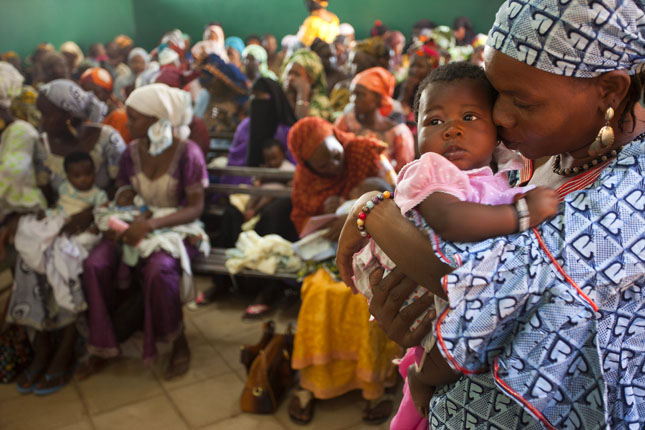
    Last October, on the heels of the UN General Assembly agreeing to the Sustainable Development Goals, the global health community met in Mexico City to discuss strategy for achieving the “grand convergence”: finally bridging the gap between maternal and newborn health in rich and poor countries. [Video Below]

    MORE
  • Mariam Claeson: Quality, Not Quantity of Care for Maternal and Child Health

    ›
    Dot-Mom  //  Friday Podcasts  //  April 29, 2016  //  By Sean Peoples

    Claeson-small“It’s not about counting how many times a mother interacts with antenatal services or comes to the facility,” says Dr. Mariam Claeson, the director of maternal newborn and child health at the Bill and Melinda Gates Foundation, in this week’s podcast. “But it’s what happens in these encounters that matters.”

    MORE
  • Carlos Manuel Rodriguez, Human Nature

    Murders of Environmental Activists Reflect Chronic Clashes Over Resource Use

    ›
    April 4, 2016  //  By Wilson Center Staff
    Berta-Caceres-rally

    The original version of this article, by Nancy Lindborg, appeared on Conservation International’s Human Nature blog.

    When I heard of the horrific murder of Berta Cáceres, a Honduran environmental activist who had spent years fighting to protect her community’s traditional lands, I was shocked – though perhaps I shouldn’t have been.

    MORE
  • Climate Change Adaptation and Population Dynamics in Latin America and the Caribbean (Report)

    ›
    From the Wilson Center  //  October 14, 2015  //  By Kathleen Mogelgaard
    rio favela1

    Global climate trends indicate that our planet will continue warming into the next century, leading to more extreme climate conditions. The Latin America and Caribbean region is vulnerable to some of the most challenging aspects of climate change – sea-level rise, changes in precipitation, glacial melting, spreading of disease, and extreme weather events.

    MORE
  • Previewing the Next Generation of Global Maternal and Newborn Health Programs in Mexico City

    ›
    Dot-Mom  //  October 9, 2015  //  By Sandeep Bathala
    Afghan mother

    The Global Maternal Newborn Health Conference, held in Mexico City from October 18-21, will provide a forum to identify, understand, and respond to the most urgent health needs of mothers and newborns. The hope is that it will accelerate momentum for maternal and newborn health in the newly adopted Sustainable Development Goals and put us on a track to end all preventable maternal and newborn deaths.

    MORE
  • Heather McGray & Kathleen Mogelgaard, World Resources Institute

    Not Just Mitigation: National Climate Plans Raise Adaptation’s Profile

    ›
    August 13, 2015  //  By Wilson Center Staff
    Amhara-Ethiopia

    The original version of this article, by Heather McGray and Kathleen Mogelgaard, appeared at the World Resources Institute.

    As the world prepares for a pivotal climate conference in Paris this December, countries are offering their national plans to tackle a changing climate. These plans, known as intended nationally determined contributions (INDCs), contain details of what each country is prepared to do as part of a new global climate agreement. While the public focus is often on mitigation – how much countries are willing to reduce emissions, by when, and with what degree of transparency – adaptation to the impacts of climate change demands the same level of attention. In fact, the last round of international climate talks in Lima invited parties to include adaptation in their INDCs.

    MORE
Newer Posts   Older Posts
View full site

Join the Conversation

  • RSS
  • subscribe
  • facebook
  • G+
  • twitter
  • iTunes
  • podomatic
  • youtube
Tweets by NewSecurityBeat

Trending Stories

  • unfccclogo1
  • Pop at COP: Population and Family Planning at the UN Climate Negotiations

Featured Media

Backdraft Podcast

play Backdraft
Podcasts

More »

What You're Saying

  • Volunteers,At,The,Lagos,Food,Bank,Initiative,Outreach,To,Ikotun, Pan-African Response to COVID-19: New Forms of Environmental Peacebuilding Emerge
    Rashida Salifu: Great piece 👍🏾 Africa as a continent has suffered this unfortunate pandemic.But it has also...
  • A desert road near Kuqa An Unholy Trinity: Xinjiang’s Unhealthy Relationship With Coal, Water, and the Quest for Development
    Ismail: It is more historically accurate to refer to Xinjiang as East Turkistan.
  • shutterstock_1779654803 Leverage COVID-19 Data Collection Networks for Environmental Peacebuilding
    Carsten Pran: Thanks for reading! It will be interesting to see how society adapts to droves of new information in...

What We’re Reading

  • Rising rates of food instability in Latin America threaten women and Venezuelan migrants
  • Treetop sensors help Indonesia eavesdrop on forests to cut logging
  • 'Seat at the table': Women's land rights seen as key to climate fight
  • A Surprise in Africa: Air Pollution Falls as Economies Rise
  • Himalayan glacier disaster highlights climate change risks
More »
  • woodrow
  • ecsp
  • RSS Feed
  • YouTube
  • Twitter
  • Facebook
  • Home
  • Who We Are
  • Publications
  • Events
  • Wilson Center
  • Contact Us
  • Print Friendly Page

© Copyright 2007-2021. Environmental Change and Security Program.

Woodrow Wilson International Center for Scholars. All rights reserved.

Developed by Vico Rock Media

Environmental Change and Security Program

Woodrow Wilson International Center for Scholars

Ronald Reagan Building and International Trade Center

  • One Woodrow Wilson Plaza
  • 1300 Pennsylvania Ave., NW
  • Washington, DC 20004-3027

T 202-691-4000