Showing posts from category Kenya.
-
Improving Maternal Health: A Conversation With Kenyan Field Workers and Policymakers
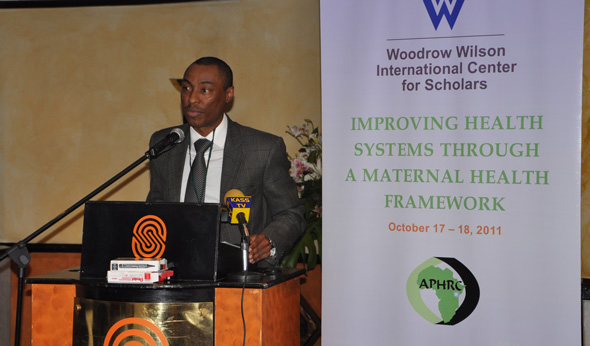
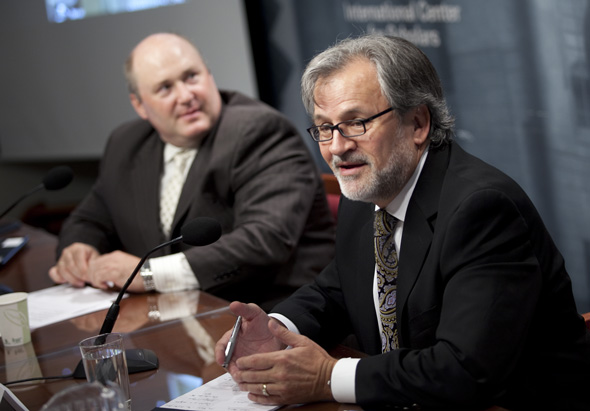
›“The traditional strategies for improving the health system include the horizontal approach, which prioritizes non-communicable diseases, and the vertical approach which prioritizes communicable diseases such as HIV/AIDS,” said John Townsend, vice president of reproductive health programs at Population Council, during a webcast discussion – the second in a series – between the Woodrow Wilson Center in Washington, DC, and maternal health experts in Nairobi, Kenya. [Video Below]
Recently, a third strategy, called the “diagonal approach,” was developed to more clearly define health system priorities and guide general system-wide improvements. Participants in both locations discussed this new approach and other structural improvements that can be made to better integrate maternal health indicators into developing country health systems on October 17.
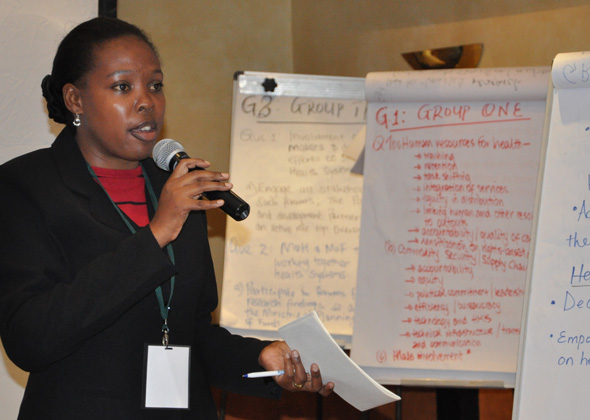
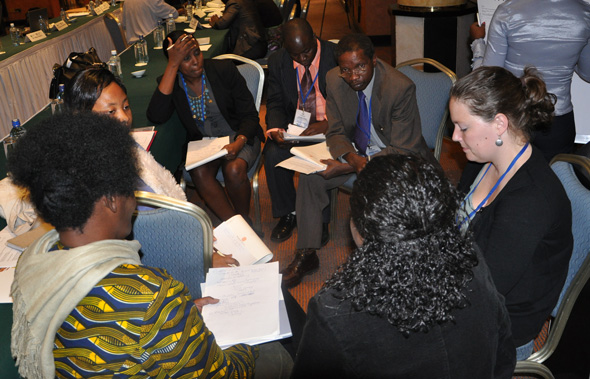
The meeting was part of the 2011 Advancing Dialogue on Maternal Health series, with the Wilson Center’s Global Health Initiative and the African Population and Health Research Center. Participants in Nairobi were assigned to three topical groups and asked to identify challenges and opportunities related to their themes.
The Role of Policymakers and Funders“We must engage [policymakers and donors] in forums like this one to share findings and share lessons learned,” said participant Sylvia Bushuru of Kenya as she reported back from the policymakers and funders working group. The group focused on steps required to hold politicians accountable to commitments made to maternal health, such as the Abuja Declaration, which requires the Ministry of Finance to dedicate 15 percent of the budget to health. Currently, only 5.5 percent of the Kenya budget is dedicated to the health sector.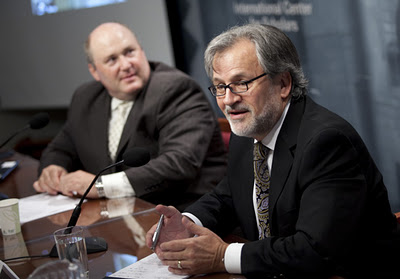
Identifying strategic partners will help in reaching ambitious goals, the group agreed; however, they noted that it’s important to ensure that these partnerships and policies extend to an operational level. Besides the overall budget pledge, important steps like ensuring 24-hour emergency health facilities in rural areas and implementing a results-based financing plan based on maternal health indicators have yet to be completed.
A Definition of Priorities through a Diagonal Approach
James Wariero, a regional health advisor with the MDG Centre for East and South Africa, served as the representative for the group discussing the “diagonal approach,” which focused on how maternal health indicators can best set priorities to improve the overall health system. They identified antenatal care visits as a priority because they also serve as an entry point to other health services, including HIV/AIDS treatment.Discussing gender, he said that “male involvement in maternal health will have benefits for child health and other issues…it is an area with little headway here in Kenya and other similar countries in Africa.” Additionally, Wariero discussed how the diagonal approach could be used to link maternal health indicators with other sectors such as technology and information systems.
The group said that improving the health system should start at the district level to ensure the most vulnerable populations at the community level have proper access. However, they said that ideally district-level programming should be evaluated and funded through results-based financing and structured on clear maternal health indicators.
Knowledge Gaps and Research Needed
“We initially began our discussion surrounding the [World Health Organization’s] six health system blocks,” reported Dr. Kristine Kisaka, a program officer with Deutsche Stiftung Weltbevoelkerung and representative from the “knowledge gaps and research needed” group. This group identified access to mobile phones for maternal health data collection as a major resource gap. Instead of calling for additional research they said they would prefer better implementation of existing, evidence-based programming.
Utilizing the World Health Organization’s health system framework, the group identified existing knowledge gaps to improve maternal health in Kenya and six recommendations:- Strengthen community strategies through a national synchronization of information
- Harmonize planning and implementation of the provisioning of supplies and commodities at the community level
- Address inequalities in the distribution and delivery of health services, ensuring distribution to urban and rural centers, including slums
- Centralize health financing in order to reach both national and community levels
- Empower households in financing, including both women and men, so they plan and save for maternal health
- Address the imbalance in supply and demand of healthcare workers
Linkages: Key To Improving Maternal Health Systems
“It’s really about linkages,” said John Townsend, giving closing remarks after the presentations from Nairobi. Maternal health indicators can be a catalyst for change, due to their strong cross-cutting links to other development systems, such as transportation, the economy, and education. “I think the call to action that the Kenyan working groups made is quite valuable,” he said, but the question is, “How do we get intelligent decision alternatives in front of our leaders to figure out what are the best investments given the critical resources?”
“The private sector [presents] an opportunity,” said Townsend. “I think we need to be more explicit about how we want to engage with them and what we would like to see from them.” He pointed out that the national maternal health strategy in Kenya is explicit and promising, but there needs to be stronger links between the national strategy and the operational aspects of actually implementing it.
Event Resources:- Photo gallery
- Presentation: “Improving Health Systems Through a Maternal Health Framework,” African Population and Health Research Center
- Video
Photo Credit: #1 and #3, courtesy of Jonathan Odhong, African Population and Health Research Center; #2 courtesy of David Hawxhurst/Wilson Center. -
Day of 7 Billion Puts Future Generations in Spotlight
›This month, our small planet’s population will hit seven billion. Reproductive health and environmental groups worldwide are raising awareness about the exact day – the “Day of Seven Billion” – when we’re estimated to hit that number next week, calling for sustainability and women’s empowerment. But the future trajectory of the world’s population projections – and all that they entail for human and environmental wellbeing – depends on decisions we make now.
Let’s start with the more than 215 million women worldwide – including many in our home countries, the United States and Kenya – who do not want to get pregnant but are not using modern contraception. Our world looks very different in 2050 if these women’s needs are met.
Research from the Futures Group shows that meeting women’s needs results in a significantly slowed population trajectory, with world population topping out at eight billion in 2050. According to recently revised UN estimates, without this intervention population could rise to 10 or even 12 billion by century’s end. Meeting this need is also a smart investment: Our research estimates that access to modern contraception for all who want it would cost $3.7 billion per year. Others have estimated the savings in health care costs of providing contraception to all who want it at $5.1 billion per year. Family planning is cost-effective; it has been estimated that a dollar spent on family planning can save between $15 and $20 in education, health, housing, and other socio-economic support costs, making the achievement of the Millennium Development Goals cheaper for developing countries.
The health and environmental benefits are also enormous: a one-third reduction in maternal mortality; a one-fifth reduction in child mortality; a major reduction in the greenhouse gas emissions. Recent research shows that carbon emissions slow when we slow our population trajectory in an effect similar to increasing the world’s use of wind power forty-fold. In Nigeria it was recently estimated that providing universal access to family planning would result in a reduction of carbon emissions equivalent to eight years from current sources.
These investments also provide more than big numbers: By enabling couples and women to choose when and how many children they’ll have, women can continue their educations longer, participate more in the workforce, and contribute to household decisions that benefit the family.
Giving women what they want and need to plan their pregnancies is one of the most obvious, yet most overlooked solutions to many of the most pressing problems we face, from maternal and child mortality to climate change. International family planning funding has stagnated for over 10 years and the results have been predictable: In Kenya, and in many countries, unmet need – with all its human costs – has increased.
Today, the largest generation of young people ever is coming of age. The aspirations and health of the millennial generation – as well as all those in the future – are on the line.
Pamela Onduso, MPH, is a Kenyan reproductive health advocate and program adviser with Pathfinder International’s Kenya office based in Nairobi. Dr. Scott Moreland is a senior researcher at the Futures Group, and leads demographic work in countries around the world.
Sources: African Institute for Development Policy, Futures Group, Guttmacher Institute, Health Policy Initiative, PNAS, Population Services International, UN Population Division, World Health Organization.
Photo Credit: Adapted from “Tea picker and son,” courtesy of flickr user ROSS HONG KONG. -
Remembrance: Wangari Maathai, Nobel Peace Prize Winner, Linked Environment and Conflict
›September 26, 2011 // By Schuyler NullSad news today as Wangari Maathai, the first African woman and the first environmentalist to win the Nobel Peace Prize, has passed away in Nairobi. The Green Belt Movement, which Maathai founded in 1977, has planted over 30 million trees and advocates for what Maathai called the three essential components of a stable society: sustainable environmental management, democratic governance, and a culture of peace. [Video Below]
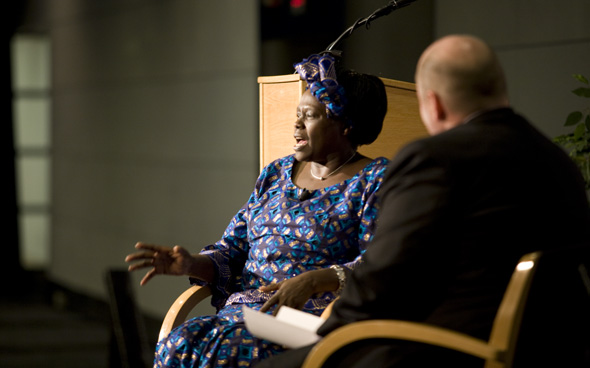
“Almost every conflict in Africa you can point at has something to do with competition over resources in an environment,” said Maathai during her visit to the Wilson Center in 2009:Unless you deal with the cause, you are wasting your time. You can use all the money you want for all the years you want; you will not solve the problem, because you are dealing with a symptom. So we need to go outside that box and deal with development in a holistic way.
Maathai’s message was molded from her experiences in Kenya and across sub-Saharan Africa in general. She was not shy about condemning African leaders and advocating for women in the political space. In ECSP Report 12, she wrote, “I come from a continent that has known many conflicts for a long time. Many of them are glaringly due to bad governance, unwillingness to share resources more equitably, selfishness, and a failure to promote cultures of peace.”
Importantly, though, Maathai advocated for addressing these issues in concert, not separately. She said at the Wilson Center:I can’t say, ‘Let us deal with governance this time, and don’t worry about the resources.’ Or, ‘Don’t worry about peace today, or conflicts that are going on; let us worry about management of resources.’ I saw that it was very, very important to use the tree-planting as an entry point.
A Message to the World
Some raised questions when Maathai won the Nobel Peace Prize in 2004 – the first awarded to someone from the environmental field – but the recognition was more than deserved, wrote Environmental Change and Security Program (ECSP) Director Geoff Dabelko on Grist:Maathai is on the front lines of the struggle over natural resources that fuels conflicts across the world. While there is no dramatic footage of tanks rumbling across borders or airplanes flying into buildings, the everyday fight for survival of those who depend directly on natural resources – forests, water, minerals – for their livelihoods is at the heart of the battle for peace and human security.
Maathai explained in Report 12 that she thought her winning of the prize was intended as a message to the world to “rethink peace and security.”
…
Elevating such a strong Southern voice – and one whose elephant’s skin bears the scars of the fight for peace – is a noble choice.
The Nobel Committee “wanted to challenge the world to discover the close linkage between good governance, sustainable management of resources, and peace,” she wrote. “In managing our resources, we need to realize that they are limited and need to be managed more sustainably, responsibly, and accountably.”
Sources: Grist, The New York Times.
Photo Credit: David Hawxhurst/Wilson Center. -
Deborah Mesce, Behind the Numbers
Kenya’s New Data Website Puts the Ball in Media’s Court
›The original version of this article, by Deborah Mesce, appeared on PRB’s Behind the Numbers blog.
The Kenya government took a bold step toward transparency a few weeks ago when it fired up its Open Data website and posted loads of data in a format that makes the information easily understood by the average person. The data sets include national census statistics as well as government spending, and the government promises more data to come. This is a boon for journalists willing to wade into the numbers to examine what’s going on in their country and hold their government accountable. I’m waiting now to see how they will use this new tool.
We always hear that information is power, but that works only if the information is used. Lots of information begins as numbers, statistics, and data sets, with lots of good stories tucked away in there to be found by the journalist willing to go the extra mile, examine the numbers, and do the math. In many developing countries, the information – numbers, statistics, data sets – isn’t easily accessible, if it is available at all. Governments keep a tight hold on it, or if it’s made available, the average person would be hard pressed to make heads or tails out of it.
Continue reading on Behind the Numbers.
Image Credit: Open Data. -
Maternal Health Challenges in Kenya: What New Research Evidence Shows
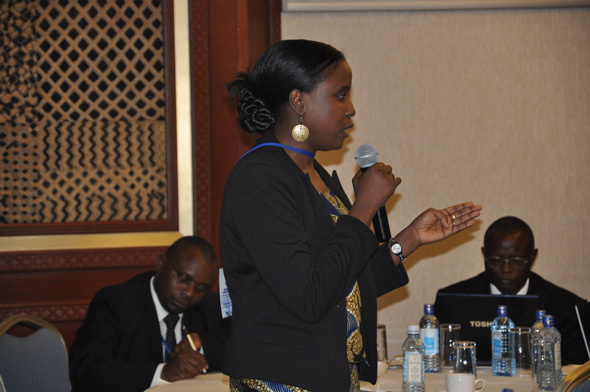
›“Although there have been improvements in the recent past, the status of maternal health care has not met the required international standards,” said Professor at the University of Nairobi Geoffrey Mumia Osaaji during a live video-conference from Nairobi on July 12.
As part of the 2011 Maternal Health Dialogue Series the Woodrow Wilson Center’s Global Health Initiative is partnering with the African Population and Health Research Center to convene a series of technical meetings on improving maternal health in Kenya. The 20 Kenyan experts attending the workshop in Nairobi also shared their strategies and action points with a live audience in Washington, DC during a video conference discussion. [Video Below]
Osaaji was joined by panelists Lawrence Ikamari, director of Population Studies and Research Institute (PSRI), and Catherine Kyobutungi, director of Health Systems and Challenges at the African Population and Research Center to discuss new maternal health research in Kenya. Panelists also shared recommendations for moving the maternal health agenda forward that came out of discussions during the two-day, in-country workshop with Kenyan policymakers, community health workers, program managers, media, and donors. Following the panelists’ presentations, Dr. Nahed Mattta, senior maternal and newborn health advisor at U.S. Agency for International Development (USAID) and John Townsend, vice-president of reproductive health program for Population Council provided reflecting remarks from the Woodrow Wilson Center during the live webcast.
Maternal Health Challenges in Rural Kenya
“Maternal mortality in rural Kenya is still very high,” said Ikamari. “Rural women in Kenya need to have increased access to maternal health services.” Ikamari discussed a number of factors that contribute to high rates of maternal mortality in rural Kenya, including lack of access to quality care and skilled birth attendants, the high burden of HIV/AIDS, and an unmet need for family planning.
Though nearly 90 percent of women in rural Kenya seek antenatal care, according to the UNFPA, many wait until the second or third trimester, limiting the benefits. Additionally, a majority of women in rural Kenya give birth outside of health facilities, oftentimes without the care of a skilled birth attendant, said Ikamari. In a recent survey, many rural women indicated that transportation to often distant health facilities prevented them from seeking adequate maternal health care, he added.
Additionally, “the burden of HIV is really felt in rural Kenya,” said Ikamari. Survey results show that HIV/AIDS prevalence is about seven percent in rural Kenya and because the majority of the Kenyan population lives in rural areas, this adds yet another layer of complications.
“Family planning saves lives,” said Ikamari, stressing the importance of contraception on maternal health outcomes. Only 35 to 40 percent of currently married Kenyan women use family planning, according to the last demographic and health surveys, and unmet need remains particularly high in rural areas. Promoting institutional delivery systems, improving antenatal and postnatal care, and finding other ways to increase access to family planning can help to improve maternal health outcomes and reduce preventable deaths in rural Kenya, concluded Ikamari.
Comparison of Urban and Rural Areas
“The interventions to address maternal health are well known: family planning, increased access to safe abortion services, skilled health workers, health facilities that are accessible, as well as referral systems that work,” said Kyobutungi. “Yet urban averages [of maternal mortality] are becoming either close or worse than rural averages.”
“As much as we appreciate the rural-urban divide that exists for most health indicators, the urban-urban divide (the fact that there are huge intra-urban differences) needs attention”
“Teenage pregnancy is a failure of family planning,” said Kyobutungi. Studies indicate that there are three times more teenagers that are pregnant among the urban poor, compared to the urban rich.
As in rural Kenya, access to quality health facilities and care is also limited in cities. “Health facilities are few and far between and the referral systems are weak,” said Kyobutungi, and “when you remove Nairobi from the numerator, the number of skilled physicians per population is in the decimals.”
Moving forward, there is a need to promote effective integration and improvement of health worker training and monitoring but also development of performance-based incentives to ensure successful programs are properly funded. “It’s not all gloom and doom in urban areas,” concluded Kyobutungi.
Innovative Ideas for Better Results
“By year 2025 there will be 25 percent more people [in Kenya],” said Townsend. “What that means is, when we are planning…we have to think about the scale of solutions that we are proposing in 2025 and 2050.” Therefore, it is essential to acquire new models of data and evidence to better predict future population growth and maternal needs, he suggested.
In addition to expanding services to meet the needs of a growing population, the panelists in Washington emphasized the need to support integration at all levels. Trends are moving in the right direction: Within the Obama administration’s Global Health Initiative, “there is a strong push and recommendation for integration among the health sectors,” said Matta.
But integration is not a magic bullet to improve maternal health, warned the panelists. “Integration is a terrific issue, but when the health sectors are weak, putting more burden on a local community health worker does not usually make sense; we have to think about smart integration,” said Townsend.
Focusing on Kenya’s health sector from all aspects, both at the private and public level, and improving family planning, institutional delivery care, as well as antennal care will help Kenya overcome its maternal health barriers. Additionally, thinking of ways to utilize new models of data and integrating the various sectors will yield substantial benefits, concluded Matta and Townsend.
Following the technical meeting, a public dialogue was held on July 13 in Nairobi to share the recommendations and knowledge gaps identified with members of Kenya’s Parliament, including Hon. Sofia Abdi, parliamentary health committee member; Hon. Ekwee Ethuro, chair of the parliamentary network for population and development; and Hon. Jackson Kiptanui. They joined a group of more than 50 maternal health experts, program managers, members of the media, and donors – such as the UK Department for International Development (DFID) – to identify real solutions and action points for improving maternal health in Kenya.
The formal report from the in-country technical meeting will be available in the near future.
See also the Maternal Health Task Force’s coverage of the event, here and here.
Sources: Kenya National Bureau of Statistics, UNFPA.
Photo Credit: Jonathan Odhong, African Population and Health Research Center. -
Emily Puckart, MHTF Blog
Maternal Health in Kenya From a Human Rights Perspective
›The original version of this article, by Emily Puckart, appeared on the Maternal Health Task Force blog. This is the second post about MHTF and the Woodrow Wilson Center’s trip to Nairobi, Kenya to host a cross-Atlantic web-cast meeting on “Maternal Health Challenges in Kenya: What New Research Shows.” The first is available here along with video of the conference.
“Do you want to be a pregnant woman or a prisoner in Kenya?” asked Dr. Margret Meme, one of speakers in Nairobi at the recent policy dialogue “Maternal Health Challenges in Kenya: What New Research Shows.” She explained that the last prisoner killed in Kenya through capital punishment was over 20 years ago, yet pregnant women continue to die of treatable causes not just in Kenya, but globally.
As Dr. Meme addressed maternal health through the lens of a human rights perspective she highlighted a number of recommendations in order to more adequately address maternal health challenges in Kenya. She was concerned that pregnancy was treated more like a medical disease with purely medical solutions. Dr. Meme urged maternal health advocates to also focus on the cultural, social, gender, and economic factors that influence maternal health and asked that these factors be addressed along with medical solutions in order to truly address maternal health challenges.
Naturally, addressing maternal health challenges can come with a monetary price. However, instead of viewing that cost as a cost that must come after more immediate government priorities such as infrastructure and defense, Dr. Meme argued that cost should be borne as the government would bear any other cost for public goods. As pregnancy builds a nation, Dr. Meme argued that maternal health is a public good, in the same vein as defense. Therefore maternal health should have a budget allocation that is just as important as the budget line for defense.
Of course, pushing for more public funding of maternal health can lead to other complications. If advocates successfully encourage politicians to increase funding for maternal health programs, the work of maternal health advocates cannot simply end there. Advocates should hold governments accountable; not just in putting aside funding for maternal health, but also for actually making sure that the money reaches the intended beneficiaries. Therefore budget accountability tracking mechanisms should go hand and hand with pushing for increased public funding to maternal health programs.
Finally, Dr. Meme addressed the need for men to be more involved in maternal health. As she clearly stated; the role of men in maternal health shouldn’t stop at conception. Men focused programs which clarify reproductive and sexual health rights, as well as educate men on issues of maternal mortality and morbidity should encourage men to respect the rights of women to space their pregnancies and deliver their babies safely.
Emily Puckart is a senior program assistant for the Maternal Health Task Force (MHTF).
Photo Credit: Jonathan Odhong, African Population and Health Research Center. -
Emily Puckart, MHTF Blog
Maternal Health Challenges in Kenya: An Overview of the Meetings
›The original version of this article, by Emily Puckart, appeared on the Maternal Health Task Force blog.
I attended the two day Nairobi meeting on “Maternal Health Challenges in Kenya: What New Research Evidence Shows” organized by the Woodrow Wilson International Center and the African Population and Health Research Center (APHRC). [Video Below]
First, here in Nairobi, participants heard three presentations highlighting challenges in maternal health in Kenya. The first presentation by Lawrence Ikamari focused on the unique challenges faced by women in rural Kenya. Presently Kenya is still primarily a rural country where childbearing starts early and women have high fertility rates. A majority of rural births take place outside of health institutions, and overall rural women have less access to skilled birth attendants, medications, and medical facilities that can help save their lives and the lives of their babies in case of emergency.
Catherine Kyobutungi highlighted the challenges of urban Kenyan women, many of whom deliver at home. When APHRC conducted research in this area, nearly 68 percent of surveyed women said it was not necessary to go to health facility. Poor road infrastructure and insecurity often prevented women from delivering in a facility. Women who went into labor at night often felt it is unsafe to leave their homes for a facility and risked their lives giving birth at home away from the support of skilled medical personnel and health facilities. As the urban population increases in the coming years, governments will need to expend more attention on the unique challenges women face in urban settings.
Finally, Margaret Meme explored a human rights based approach to maternal health and called on policymakers, advocates, and donors to respect women’s right to live through pregnancies. Further, she urged increased attention on the role of men in maternal health by increasing the education and awareness of men in the area of sexual and reproductive health as well as maternal health.
After these initial presentations, participants broke out into lively breakout groups to discuss these maternal health challenges in Kenya in detail. They reconvened in the afternoon in Nairobi to conduct a live video conference with a morning Washington, DC audience at the Woodrow Wilson Center. It was exciting to be involved in this format, watching as participants in Washington were able to ask questions live of the men and women involved in maternal health advocacy, research and programming directly on the ground in Kenya. It was clear the excitement existed on both sides of the Atlantic as participants in Nairobi were able to directly project their concerns and hopes for the future of maternal health in Kenya across the ocean through the use of video conferencing technology.
There was a lot of excitement and energy in the room in Nairobi, and I think I sensed the same excitement through the television screen in DC. I hope that this type of simultaneous dialogue, across many time zones, directly linking maternal health advocates around the globe, is an example of what will become commonplace in the future of the maternal health field.
Emily Puckart is a senior program assistant at the Maternal Health Task Force (MHTF).
Photo Credit: MHTF. -
Edward Carr, Open the Echo Chamber
Drought Does Not Equal Famine
›July 27, 2011 // By Wilson Center StaffThe original version of this article, by Edward Carr, appeared on Open the Echo Chamber.
After reading a lot of news and blog posts on the situation in the Horn of Africa, I feel the need to make something clear: The drought in the Horn of Africa is not the cause of the famine we are seeing take shape in southern Somalia. We are being pounded by a narrative of this famine that more or less points to the failure of seasonal rains as its cause…which I see as a horrible abdication of responsibility for the human causes of this tragedy.
First, I recommend that anyone interested in this situation – or indeed in food security and famine more generally, to read Mike Davis’ book Late Victorian Holocausts. It is a very readable account of massive famines in the Victorian era that lays out the necessary intersection of weather, markets, and politics to create tragedy – and also makes clear the point that rainfall alone is poorly correlated to famine. For those who want a deeper dive, have a look at the lit review (pages 15-18) of my article “Postmodern Conceptualizations, Modernist Applications: Rethinking the Role of Society in Food Security” to get a sense of where we are in contemporary thinking on food security. The long and short of it is that food insecurity is rarely about absolute supplies of food – mostly it is about access and entitlements to existing food supplies. The Horn of Africa situation does actually invoke outright scarcity, but that scarcity can be traced not just to weather – it is also about access to local and regional markets (weak at best) and politics/the state (Somalia lacks a sovereign state, and the patchy, ad hoc governance provided by Al Shabaab does little to ensure either access or entitlement to food and livelihoods for the population).
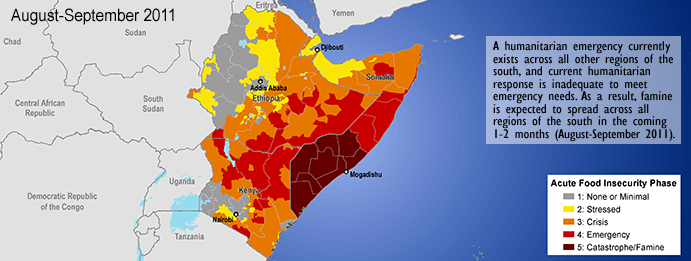
For those who doubt this, look at the Famine Early Warning System Network (FEWS NET) maps I put in previous posts here and here (Editor: also above). Famine stops at the Somali border. I assure you this is not a political manipulation of the data – it is the data we have. Basically, the people without a functional state and collapsing markets are being hit much harder than their counterparts in Ethiopia and Kenya, even though everyone is affected by the same bad rains, and the livelihoods of those in Somalia are not all that different than those across the borders in Ethiopia and Kenya. Rainfall is not the controlling variable for this differential outcome, because rainfall is not really variable across these borders where Ethiopia, Kenya, and Somalia meet.
Continue reading on Open the Echo Chamber.
Image Credit: FEWS NET and Edward Carr.