-
Family Planning and Results-Based Financing Initiatives
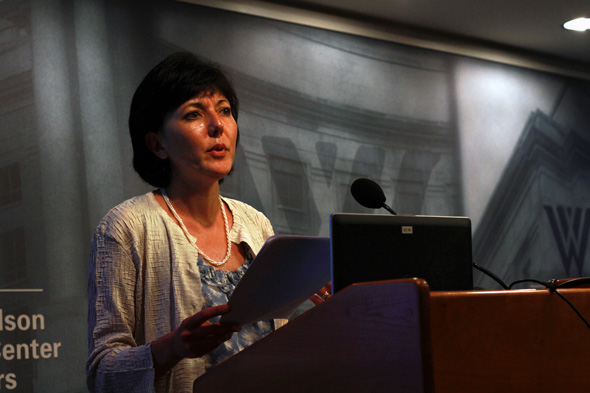
›“Family planning means healthier moms and kids – and it’s good for development too,” said Lindsay Morgan, a senior health analyst at Broad Branch Associates, a healthcare advocacy group. But any number of hurdles can keep women from accessing family planning services. Morgan spoke at a May 21 discussion about results-based financing (RBF) programs, which aim to address hurdles on both the supply and demand sides of the equation in developing countries by incentivizing the provision of a variety of quality services while removing barriers to access for women in need of those services.
Removing Barriers to Providing and Using Family Planning Services
Incentives in RBF programs can come in a variety of forms – like subsidies or fees paid to clinics or vouchers sold to women, said Morgan. In Burundi, for example, under a pilot program rolled out across three provinces in 2006, health facilities receive payments for each patient that uses a modern method of contraception. In 2009, the government and international partners began scaling up the program to a nationwide level. In addition to expanding the program’s geographic reach, the scale-up incorporated new payment criteria to better incentivize quality of care (as opposed to just quantity) and longer-lasting methods of contraception.
Since the RBF pilot began, maternal and child health indicators have improved. The number of children being fully immunized is up, as is contraceptive prevalence, said Morgan. Additionally, those immediate results can lead to a slew of additional benefits down the line. For instance, improving modern contraceptive prevalence is one of the most cost-effective interventions available for reducing maternal death, she said.
In nearby Kenya, the health ministry leads a voucher system across four districts and two Nairobi slums to help some of the country’s poorest women afford maternal healthcare, family planning, and gender-based violence services.
The program is “written into large policy documents [and] strategic pieces,” including Vision 2030, a long-term government-wide strategy document “unveiled in 2008 as a way to reach middle-income country status by 2030,” said Ben Bellows, a reproductive health associate at Population Council Kenya. The government’s emphasis on the voucher program as more than just a health initiative is an acknowledgment of the downstream impact that improved maternal and reproductive health can have on the country’s development, he said.
“An Equity Gap in Family Planning”
However, the fact that the voucher program is needed at all is evidence of “an equity gap in family planning,” Bellows said. Access to family planning services can be significantly skewed depending on a woman’s income level, he said, pointing to a recent article in The Lancet assessing health inequalities in 12 different maternal and child health services across 54 priority Millennium Development Goal countries.
The equity gap reflects “an interesting problem with development,” said Bellows: Though low-income countries are converging with higher income countries, in terms of economic growth rates and income levels “the benefits of growth aren’t being evenly distributed.” The Africa Progress Panel’s annual report, released last month, echoes that point, he said.
“Governments are failing to convert the rising tide of wealth into opportunities for their most marginalized citizens,” the report concludes, and “unequal access to health, education, water and sanitation is reinforcing wider inequalities.”
Kenya’s voucher system is designed to help shrink that gap. Among the poorest of the poor – those benefitting from the system – inequalities are dropping, even if on a broader scale, inequity still exists between poor and wealthy Kenyans. “We’re seeing lower inequalities of service in areas exposed to the voucher,” said Bellows.
“RBF supports progress on a path towards universal health coverage,” said Beverly Johnston, the senior policy advisor at USAID’s Office of Population and Reproductive Health. And within the context of family planning “the whole idea is to level the playing field” so that all contraceptive methods are equally readily available to the women seeking them.
“A Catalyst for Change” in Family Planning
In addition to addressing equal access concerns, RBF programs can serve as “a catalyst for change…to stimulate quality of care and quality of family planning counseling in particular,” said Johnston.
A commonly cited hurdle to better family planning access is social norms that support large family sizes or otherwise limit a woman’s ability to space or limit her pregnancies. Given community health workers’ unique roles within their communities – “often on the front lines…where many of these social taboos and barriers exist,” as Morgan described – simply strengthening their training, and in turn improving the quality of care that women receive, can help counter norms that might otherwise prohibit access to family planning.
As more women receive higher quality care, norms dissipate even further, said Morgan. “There is evidence that [quality of care] is strongly associated with a woman’s decision to choose a method to use, to continue to use it, and to recommend it to others.”
“Rights Are Tantamount”
One trap RBF programs need to be aware of is over-incentivizing expansion of coverage to the detriment of quality or individual women’s concerns about what makes sense for them, said Johnston.
“Rights are tantamount,” she said. In order to ensure that rights are upheld, programs must reflect and be sensitive to local histories and local needs – particularly given the fact that some countries have had “a history of coercive programs and policies.”
Ultimately, “we really look at RBF as just one tool,” said Johnston. “RBF is not for every place and every context,” and neither is family planning’s place in RBF programming.
As one tool of many, RBF programs are gaining prominence as a way to meet MDGs related to maternal and child health. Bellows sees RBF’s importance lasting long past that 2015 deadline, though.
“The high inequity that we witness across many low-income countries, and the ability of targeted mechanisms [like Kenya’s voucher program] to address that, suggest that this may be a kind of generalized solution,” he said. “Obviously it will be context specific in the way in which it is rolled out, but the strategy of incentivizing clients and providers suggests that there’s some sort of globalized solution that could be considered for this widespread challenge.”
Event Resources
Photo Credit: Sean Peoples/Wilson Center. -
Poor Land Tenure: A Key Component to Why Nations Fail
›The murder of five land rights campaigners during the last two months – one in Colombia, three in Brazil, and one in Cambodia – have not captured many headlines, but they are a reminder of the central role land tenure plays not just in rural economic development but also in sparking broadly distributed economic gains throughout a society.
-
Responses to JPR Climate and Conflict Special Issue: John O’Loughlin, Andrew M. Linke, Frank Witmer (University of Colorado, Boulder)
›
Complexity, in terms of economic, cultural, institutional, and ecological characteristics, weighs heavily on contemporary attempts to unravel the climate change/variability and conflict nexus. The view that local-level complexity can be “controlled away” by technical fixes or adding variables in quantitative analysis does not sit well with many geographers (though some do try to adopt a middle ground position).
-
After the Disaster: Rebuilding Communities
›Recent history has shown that no country, developed or developing, is immune to the effects of a natural disaster. The catastrophic tsunami that struck Indonesia in 2004, the earthquake and subsequent tsunami that struck Japan in 2011, the 2010 earthquake in Haiti, and Hurricane Katrina in the United States in 2005, are all reminders of the deep and long-lasting impacts that disasters can have from the local neighborhood all the way up to the national level. Each of these disasters also garnered international attention and response, showing that globalization is a game-changer in the worldwide response to community or regional-level crises.
And yet, as evidenced by the continued challenges faced by each of the places above, the disaster response community still struggles with how to contribute most effectively to local level recovery. Recognizing this, the Wilson Center’s Comparative Urban Studies Project and Environmental Change and Security Program, and the Fetzer Institute recently brought together an international group of practitioners, policymakers, community leaders, and scholars to identify best practices and policy in disaster response that are based on community engagement. A subsequent publication, After the Disaster: Rebuilding Communities, highlights the complex nature of disaster response and explores ways to overcome the inherent tension between those responding to disasters and the local community.
Voice, Space, Safety, and Time
A key theme that emerged during the workshop was the importance of identifying the strengths of the post-disaster community and building responses based on those. So how can one identify the strengths of a community? In a previous Wilson Center/Fetzer Institute workshop on community resilience, participants emphasized the importance of civil society voice; the creation of space, both physical and political; and the assurance of safety and time.
Not surprisingly, all of these aspects of resilience emerged in the post-disaster response discussion as avenues to access the strengths of a community. Finding and listening to the voices of the community, identifying the physical spaces or “centers of gravity” around which the community operates (often spiritual and cultural activities, or gatherings that bring women together), and providing safe and sustained support for healing, are necessary steps to engage with and meet the needs of communities.
Having a voice means that people “feel that they have some way to participate meaningfully in decisions that are being made about their lives…[that] they have access, points of influence, and conversation,” explained John Paul Lederach, professor of international peacebuilding at the University of Notre Dame.
Key to listening to the voices of the local community is acknowledging them as first responders. “An involvement and control of the relief and rehabilitation process empowers communities,” wrote Arif Hasan, founder and chairperson of the Urban Resource Centre in Karachi, Pakistan. “It improves their relationship with each other, makes it more equitable with state organizations, and highlights aspects of injustice and deprivation that have been invisible.”
Technology is playing a growing role in giving local communities voice and helping relief workers to identify those centers of gravity. “Whether in conflict or even post-conflict reconstruction, technology gives us a possibility of having a collective history but also collective memory,” noted Philip Thigo, a program associate at Social Development Network in Nairobi. “I spoke in a conference where communities were able to map what was important for them and bring it to the public domain: This is who we are and what we are saying, therefore you, the government, have to interact with us within this space. In that sense technology begins to enable communities to say we exist.”
Connecting to Community Points of Power
At the same time, new technology isn’t paramount to connecting with a community, and just having the technology is not sufficient. Leonard Doyle, country spokesperson for the International Organization for Migration (IOM), shared the story of a simple but effective effort to encourage a national conversation in Haiti by enabling “a flow of information between affected communities, humanitarian actors, and local service providers.”
IOM set up more than 140 information booths, complete with suggestion boxes, among the 1,300 camps where more than 1.5 million homeless people were housed after the 2010 earthquake. There was some doubt that the suggestion boxes would attract letters in a country with just a 50 percent literacy rate, but it didn’t take long for the letterboxes to fill up. In just three days, 900 letters were dropped into a booth in one of the poorest communities, Cité Soleil.
“Amid the flotsam of emails and text messages that dominate modern life,” wrote Doyle, “these poignant letters had an authenticity that is hard to ignore….Urgent cases received a quick response; others became part of a ‘crowd-voicing’ effort to listen to those who had been displaced by the earthquake.”
In the end, “the problem is when we NGOs [or other outside bodies] try to create new systems,” observed Thigo. “We do not look at what exists in the community as knowledge. We do not see how to plug our formal thinking into a structure that we may not understand but that we could perhaps simply try to enhance, to provide better services. We think power doesn’t exist in those communities. But there’s a structure of power. It could be leadership that is not necessarily within the formal context that we understand. The fundamental point is: How can we, even during disasters, connect to these points of power?”
Download After the Disaster: Rebuilding Communities from the Wilson Center. -
Reproductive Health an Essential Part of Climate Compatible Development
›April 11, 2012 // By Sandeep BathalaECSP was at London’s 2012 Planet Under Pressure conference following all of the most pertinent population, health, and security events.
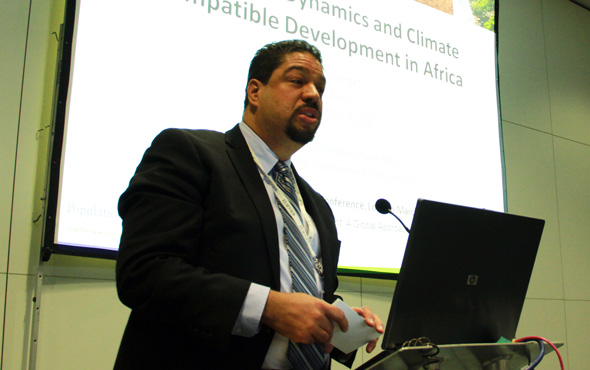
At a panel on “climate compatible development” at this year’s Planet Under Pressure global change conference, Population Action International’s Roger-Mark De Souza was the lone voice to speak about demographics. He presented a detailed analysis of population trends, based on collaboration with the Kenya-based African Institute for Development Policy.
“The link between population dynamics and sustainable development is strong and inseparable – as is the link between population dynamics, reproductive health, and gender equality,” said De Souza. These linkages were emphasized by the UN at the International Conference on Population and Development, held in Cairo in 1994, as well as during the original Rio Conference on Environment and Development in 1992.
“Climate compatible development” is a novel development paradigm being developed by the Climate and Development Knowledge Network and defined as “development that minimizes the harm caused by climate impacts, while maximizing the many human development opportunities presented by a low emissions more resilient future.”The key tenet of this development framework is an emphasis on climate strategies that embrace development goals and integrate opportunities alongside the threats of a changing climate. In this respect, climate compatible development is seen as moving beyond the traditional separation of adaptation, mitigation, and development strategies. It challenges policymakers to consider “triple win” strategies that result in lower emissions, better resilience, and development – simultaneously.
Although developed nations are historically the major contributors of greenhouse gases due to comparatively high levels of consumption, developing countries are the most vulnerable to consequences of climate change. Emerging evidence shows that rapid population growth in developing countries exacerbates this vulnerability and undermines resilience to the effects of climate change, said De Souza. Socioeconomic improvement will also increase the levels of consumption and emissions from developing countries.
“Meeting women and their partners’ needs for family planning can yield the ‘triple win’ strategy envisaged in the climate development framework,” De Souza said. “Meeting unmet family planning needs would help build resilience and strengthen household and community resilience to climate change; slow the growth of greenhouse gases; and enhance development outcomes by improving and expanding health, schooling, and economic opportunities.”
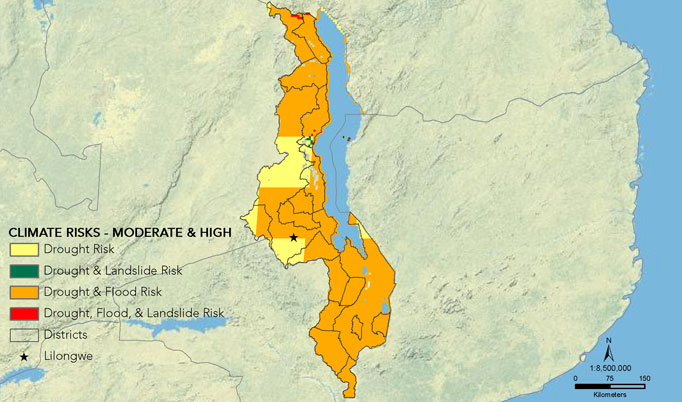
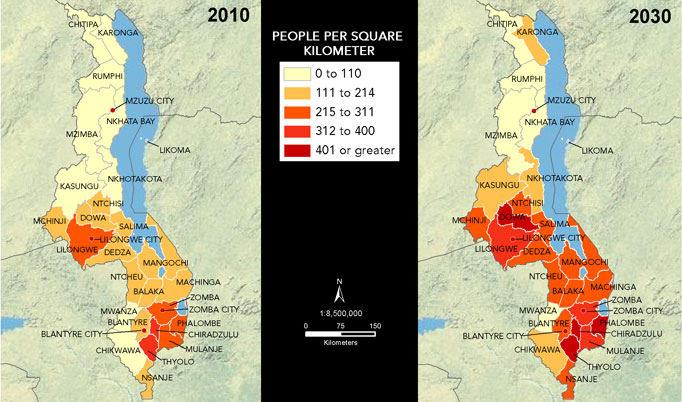
Decision makers engaged in climate change policy planning and implementation at local, national, and international levels should have access to evidence on population trends and their implications on efforts to adapt to climate change as well as the overall development process, De Souza said.He presented new maps and analysis for Africa, particularly Malawi and Kenya, developed by PAI, building on earlier mapping work which identified 26 global population and climate change hotspots – countries that are experiencing rapid population growth, low resilience to climate change, and high projected declines in agricultural production.
“PAI’s work is a clear demonstration of how better decision making can be informed by the right analysis, in the right format, at the right time,” said Natasha Grist, head of research at the Climate Knowledge and Development Network.
“Most of the hotspot countries have high levels of fertility partly because of the inability of women and their partners to access and use contraception,” said De Souza. He continued:Investing in voluntary health programs that meet family planning needs could, therefore, slow population growth and reduce vulnerability to climate change impacts. This is especially important because women, especially those who live in poverty, are likely to be most affected by the negative effects of climate change and also bear the disproportionate burden of having unplanned children due to lack of contraception.
In conclusion, said De Souza, “global institutions and frameworks that support and promote climate compatible development can enhance the impact of their work by recognizing and incorporating population dynamics and reproductive health in their adaptation and development strategies.”
For full population-related coverage from the conference, see our “Planet 2012 tag.” Pictures from the event are available on our Facebook and Flickr pages, and you can join the conversation on Twitter (#Planet2012).
Sources: Climate and Development Knowledge Network, IPCC, Population Action International.
Photo Credit: Sean Peoples/Wilson Center; Maps: Population Action International. -
Mia Foreman, Behind the Numbers
Serving the Reproductive Health Needs of Urban Communities in Nairobi
›The original version of this article, by Mia Foreman, appeared on the Population Reference Bureau’s Behind the Numbers blog.
Kenya’s population is growing rapidly, more than tripling from 10.9 million people in 1969 to 38.6 million in 2009. According to the United Nations, the annual population growth rate between 2010 and 2015 is 2.7 percent with 22.5 percent of the population residing in urban areas in 2011.
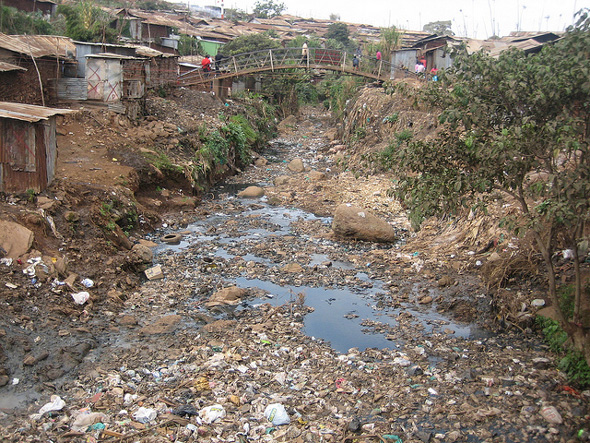
One area that has seen tremendous growth is Nairobi’s largest slum, Kibera. While experts have given estimates ranging from 270,000 to 2,000,000 residents, Kibera is a large area of informal settlements plagued by challenges such as the lack of electricity, job opportunities, and high levels of violence.
While it may be easier to focus on what is lacking in Kibera, there are also many services being provided in the community including affordable and quality reproductive health care by organizations such as Marie Stopes Kenya.
Marie Stopes Kenya was established in Kenya in 1985 as a locally registered nongovernmental organization. It is Kenya’s largest and most specialized sexual reproductive health and family planning organization and is known for providing a wide range of high-quality, affordable, and client-centered services to men, women, and youth throughout Kenya. In 1997, Marie Stopes Kenya opened its first clinic in Kibera and began offering reproductive health services at an affordable rate for residents.
Continue reading on Behind the Numbers.
Sources: UN Population Division.
Photo Credit: “The Kibera ‘river’,” courtesy of Dara Lipton and flickr user The Advocacy Project. -
USAID’s New Climate Strategy Outlines Adaptation, Mitigation Priorities, Places Heavy Emphasis on Integration
›February 29, 2012 // By Kathleen MogelgaardIn January, the U.S. Agency for International Development released its long-awaited climate change strategy. Climate Change & Development: Clean Resilient Growth provides a blueprint for addressing climate change through development assistance programs and operations. In addition to objectives around mitigation and adaptation, the strategy also outlines a third objective: improving overall operational integration.
The five-year strategy has a clear, succinct goal: “to enable countries to accelerate their transition to climate-resilient low emission sustainable economic development.” Developed by a USAID task force with input from multiple U.S. agencies and NGOs, the document paints a picture of the threats climate change poses for development – calling it “among the greatest global challenges of our generation” – and commits the agency to addressing both the causes of climate change and the impacts it will have on communities in countries around the world.
These statements are noteworthy in a fiscal climate that has put development assistance under renewed scrutiny and in a political environment where progress on climate change legislation seems unlikely.
Not Just Challenges, But Opportunities
To make the case for prioritizing action on climate change, the strategy cites climate change’s likely impact on agricultural productivity and fisheries, which will threaten USAID’s food security goals. It also illustrates the ways in which climate change could exacerbate humanitarian crises and notes work done by the U.S. military and intelligence community in identifying climate change as a “threat multiplier” (or “accelerant of instability” as the Quadrennial Defense Review puts it) with implications for national security.
Targeted efforts to address climate change, though, could consolidate development gains and result in technology “leap-frogging” that will support broader development goals. And, noting that aggregate emissions from developing countries are now larger than those from developed countries, the strategy asserts that assisting the development and deployment of clean technologies “greatly expands opportunities to export U.S. technology and creates ‘green jobs.’”
In addition to providing a rationale for action, the strategy provides new insights on how USAID will prioritize its efforts on climate change mitigation and adaptation. It provides a clear directive for the integration of climate change into the agency’s broader development work in areas such as food security, good governance, and global health– a strong and encouraging signal for those interested in cross-sectoral planning and programs.
Priorities Outlined, Tough Choices Ahead
President Obama’s Global Climate Change Initiative, revealed in 2010, focuses efforts around three pillars: clean energy, sustainable landscapes, and adaptation. USAID’s climate strategy fleshes out these three areas, identifying “intermediate results” and indicators of success – such as the development of Low Emission Development Strategies in 20 partner countries, greenhouse gas sequestration through improved ecosystem management, and increasing the number of institutions capable of adaptation planning and response.
In laying out ambitious objectives, however, the authors of the strategy acknowledge constrained fiscal realities. The strategy stops short of identifying an ideal budget to support the activities it describes, though it does refer to the U.S. pledge to join other developed countries in providing $30 billion in “fast start financing” in the period of 2010 to 2012 and, for those USAID country missions that will be receiving adaptation and mitigation funding, establishes “floors” of $3 million and $5 million, respectively.
The final section of the strategy lists over thirty countries and regions that have already been prioritized for programs, including Bangladesh, India, Kenya, Malawi, and Peru. But “we are unable to work in every country at risk from climate change impacts or with the potential for low carbon sustainable growth,” the strategy asserts. An annex includes selection criteria to guide further funding decisions, including emission reduction potential, high exposure to physical climate change impacts, a suitable enabling environment, coordination with other donors, and diplomatic and geographic considerations.
“Integration” Central to Strategy
The concept of integration figures prominently throughout the 27-page document. For those of us working in the large and growing space where the global challenges of climate change, food security, health, livelihoods, and governance overlap, this attention is heartening. While it may sometimes seem simply fashionable to pay lip service to the idea of “breaking out of stovepipes,” the strategy identifies concrete ways to incentivize integration.
“Integration of climate change into USAID’s development portfolio will not happen organically,” the strategy says. “Rather, it requires leadership, knowledge and incentives to encourage agency employees to seek innovative ways to integrate climate change into programs with other goals and to become more flexible in use of funding streams and administrative processes.”
To this end, USAID plans to launch a group of pilot activities. USAID missions must submit pilot program proposals, and selected programs will emphasize integration of top priorities within the agency’s development portfolio (including Feed the Future and the Global Health Initiative). Among other criteria, pilots must demonstrate buy-in from multiple levels of leadership, and will be selected based on their potential to generate integration lessons and tools over the next several years.
This kind of integration – the blending of key priorities from multiple sectors, the value of documented lessons and tools, the important role of champions in fostering an enabling environment – mirrors work carried out by USAID’s own population, health, and environment (PHE) portfolio. To date, USAID’s PHE programs have not been designed to address climate challenges specifically, and perhaps not surprisingly they aren’t named specifically in the strategy. But those preparing and evaluating integration pilot proposals may gain useful insights on cross-sectoral integration from a closer look at the accumulated knowledge of more than 10 years of PHE experience.
Population Dynamics Recognized, But Opportunities Not Considered
Though not a focus of the strategy, population growth is acknowledged as a stressor – alongside unplanned urbanization, environmental degradation, resource depletion, and poverty – that exacerbates growing challenges in disaster risk reduction and efforts to secure a safe and sufficient water supply.
Research has shown that different global population growth scenarios will have significant implications for emissions growth. New analysis indicates that the fastest growing populations are among the most vulnerable to climate change and that in these areas, there is frequently high unmet need for family planning. And we have also clearly seen that in many parts of the world, women’s health and well-being are increasingly intertwined with the effects of changing climate and access to reproductive health services.
In its limited mention of population as a challenge, however, the strategy misses the chance to identify it also as an opportunity. Addressing the linked challenges of population growth and climate change offers an opportunity to recommit the resources required to assist of the hundreds of millions of women around the world with ongoing unmet need for family planning.
The strategy’s emphasis on integration would seem to be an open door to such opportunities.
Integrated, cross-sectoral collaboration that truly fosters a transition to climate-resilient, low-emission sustainable economic development will acknowledge both the challenge presented by rapid population growth and the opportunities that can emerge from expanding family planning access to women worldwide. But for this to happen, cross-sectoral communication will need to become more commonplace. Demographers and reproductive health specialists will need to engage in dialogues on climate change, and climate specialists will need both opportunities and incentives to listen. USAID’s new climate change integration pilots could provide a new platform for this rare but powerful cross-sectoral action.
Kathleen Mogelgaard is a writer and analyst on population and the environment, and a consultant for the Environmental Change and Security Program.
Sources: FastStartFinance.org, International Energy Agency, Maplecroft, Population Action International, The White House, U.S. Department of Defense, USAID.
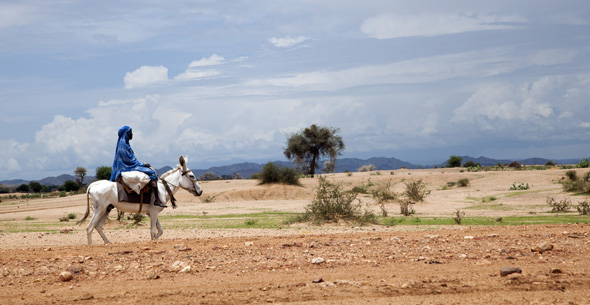
Photo Credit: “Displaced Darfuris Farm in Rainy Season,” courtesy of United Nations Photo. -
Integration, Communication Across Sectors a Must, Say Speakers at 2012 NCSE Environment and Security Conference (Updated)
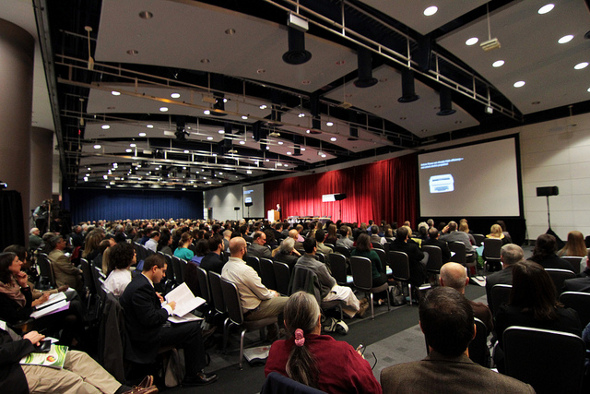
›February 23, 2012 // By Wilson Center StaffECSP staff were among the more than 1,000 attendees discussing non-traditional security issues at the 12th National Conference on Science, Policy, and the Environment last month at the Ronald Reagan Building. Our own Geoff Dabelko spoke on the opening plenary (above) and we collected other excerpts below, though they’re only a small slice of the conference. Find our full coverage by following the NCSE tag, see the full agenda on environmentalsecurity.org, and follow the conversation on Twitter (#NCSEconf).
Climate, Energy, Food, Water, and Health
At the conference’s lead-off plenary, Jeff Seabright (Vice President, The Coca-Cola Company), Daniel Gerstein (Deputy Under Secretary for Science and Technology, U.S. Department of Homeland Security), Rosamond Naylor (Director, Stanford’s Center on Food Security and Environment), and our ECSP’s Geoff Dabelko highlighted the challenges and opportunities of addressing the diverse yet interconnected issues of climate, energy, food, water, and health.
“We need to embrace diversity regardless of the complexity,” said Dabelko, and “abandon our stereotypes and get out of our stovepipes.” Government agencies, academics, and NGOs must be open to using different tools and work together to capture synergies. “If we know everyone in the room, we are not getting out enough,” he said.
“We have to be concerned with every level – national, state, tribal, regional, down to the individual,” said Gerstein. DHS recognizes that climate change affects all of its efforts, and has established three main areas of focus: Arctic impacts; severe weather; and critical infrastructure and key resources.
For Coca-Cola, “managing the complex relationship among [food, water, and energy] is going to be the challenge of the 21st century, said Seabright, who noted that the business community is “seeing a steady increase in the internalization of these issues into business,” including as part of companies’ competitive advantages and strategies.
Similarly, we must offer opportunities and not just threats, said Dabelko, such as exploring climate adaptation’s potential as a tool for peacebuilding rather than simply focusing on climate’s links to conflict. We need to “find ways to define and measure success that embrace the connections among climate, water, and energy, and does not try to pretend they aren’t connected in the real world,” he said.
Communicating Across Sectors: Difficult But Necessary
Next, Sherri Goodman (Executive Director, CNA Military Advisory Board), Nancy Sutley (Chair, White House Council on Environmental Quality), Rear Admiral Neil Morisetti (Climate and Energy Security Envoy, UK Ministry of Defence), and Susan Avery (Director, Woods Hole Oceanographic Institute) called on governments, militaries, and institutions to move away from traditional, vertically segmented responsibilities to address today’s environmental and security challenges.
“We live in an interdependent, connected world,” Morisetti said, but communicating that is a challenge. Militaries are likely to have new, broader missions, including conflict prevention, he said, which makes communications all the more important.
Science is moving from reductive to integrated outlooks to better address larger, systems-wide challenges, said Avery, but communicating results of this research to the public, and across and between disciplines, is difficult.
Confronting these communication and education challenges, particularly the difficulties of conveying the probability of various risks, is a key focus of the Council on Environmental Quality, said Sutley. “We confront the challenge of risk communication every day and it’s not limited to climate change,” she said.Challenging Conventional Wisdom on Climate and Conflict
The common argument is that climate change will lead to scarcity – less arable land, water, rain, etc. – and scarcity will lead to conflict, said Kate Marvel (Lawrence Livermore National Lab). But the link between scarcity and conflict is not that clear. It’s “very important to treat models as tools, not as magic balls,” she said. Developing better diagnostics to test models will help researchers and observers sort out which ones are best.
Kaitlin Shilling (Stanford University) called on the environmental security community to move beyond simple causal pathways towards finding solutions. After all, rolling back climate change is not an option at this point, she said; to find solutions, therefore, we need more detailed analysis of the pathways to violence.
The most common types of climate-conflict correlations are not likely to directly involve the state, said Cullen Hendrix (College of William and Mary). Traditional inter-state wars (think “water wars”) or even civil wars are much less likely than threats to human security (e.g., post-elections violence in Kenya) and community security (e.g., tribal raiding in South Sudan). For this reason, the biggest breakthroughs in understanding climate and conflict links will likely come from better interactions between social and physical scientists, he said.
Because the many unique factors leading to conflict vary from place to place, a better way to assess climate-conflict risk might be mapping human vulnerability to climate change rather than predicting conflict risk in a given place, said Justin Mankin (Stanford University). While human reactions are very difficult to predict, vulnerability is easier to quantify.
Yu Hongyuan (Shanghai Institute for International Studies) compared the concerns of U.S. and Chinese officials on climate change. Polling results, he said, show Chinese officials are most concerned with maintaining access to resources, while American policymakers focus on climate change’s effects on global governance and how it will impact responses to natural disasters, new conflicts, and humanitarian crises. Given the centrality of these two countries to international climate negotiations, Yu said he hoped the “same issues, different values” gulf might be bridged by better understanding each side’s priorities.
Schuyler Null, Lauren Herzer, and Meaghan Parker contributed to this article.
Video Credit: Lyle Birkey/NCSE; photo credit: Sean Peoples/Wilson Center.
Showing posts from category Kenya.