• woodrow wilson center
  • ecsp

New Security Beat

Subscribe:
  • rss
  • mail-to
  • Who We Are
  • Topics
    • Population
    • Environment
    • Security
    • Health
    • Development
  • Columns
    • China Environment Forum
    • Choke Point
    • Dot-Mom
    • Friday Podcasts
    • Navigating the Poles
    • Reading Radar
  • Multimedia
    • Water Stories (Podcast Series)
    • Backdraft (Podcast Series)
    • Tracking the Energy Titans (Interactive)
  • Films
    • Water, Conflict, and Peacebuilding (Animated Short)
    • Paving the Way (Ethiopia)
    • Broken Landscape (India)
    • Scaling the Mountain (Nepal)
    • Healthy People, Healthy Environment (Tanzania)
  • Publications
  • Events
  • Contact Us

NewSecurityBeat

The blog of the Wilson Center's Environmental Change and Security Program
Showing posts from category India.
  • Planning for Complex Risks: Environmental Change, Energy Security, and the Minerva Initiative

    ›
    Guest Contributor  //  January 28, 2013  //  By Chad M. Briggs

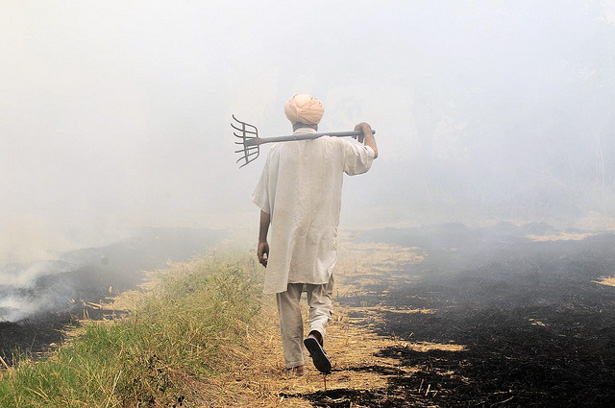
    2012 witnessed a remarkable number and extremity of environmental conditions, from Hurricane Sandy and the U.S. drought to wildfires in Siberia and drought-driven blackouts in India. Arctic sea ice melted to its furthest extent in recent history. The energy landscape continued to change as well, from the launch of the U.S. Navy’s Great Green Fleet to the first liquefied natural gas shipments across the Arctic. As President Obama clearly stated in his second inaugural address, climate change is heightening both our risks and the need to respond, but tying together all of these issues is a highly complex endeavor.

    MORE
  • Environmental Migration, Security, and Climate Change

    ›
    Reading Radar  //  January 21, 2013  //  By Carolyn Lamere

    “Environmental degradation has measurable impacts on migration and presents humanity with unprecedented challenges,” writes Laurence Turbiana in The State of Environmental Migration, edited by François Gemenne  and Pauline Brücker of the Institute for Sustainable Development and International Relations and Dina Ionesco of the International Organization for Migration. The report presents the findings of students at the Paris School of International Affairs who examined a number of case studies in 2011, including sudden disasters like the floods in Thailand, Colombia, China, and Bangladesh, as well as slower-onset events like droughts in Somalia and Mexico. The editors conclude that “environmental migration, in its forced and voluntary forms, is a reality.”

    MORE
  • Building a Global Network of Maternal Health Policymakers

    ›
    Dot-Mom  //  January 18, 2013  //  By Sandeep Bathala

    On day three of the 2013 Global Maternal Health Conference here in Arusha, Tanzania, I was joined by the Global Health Initiative’s partners to present the results of the Wilson Center’s four-year-old Advancing Dialogue on Maternal Health Series. This series is unique in its convening power, helping to bring together experts and policymakers from around the world to collaborate on a shared goal: healthier mothers and children.

    MORE
  • Should Maternal Health Goals Be Combined With WASH?

    ›
    Dot-Mom  //  January 17, 2013  //  By Lauren Herzer Risi

    Does access to quality water and sanitation have an effect on maternal health outcomes? That was a surprising topic of discussion on day one of the second-ever Global Maternal Health Conference hosted this week in Arusha, Tanzania.

    Surprising because, to be honest, I did not think there would be strong disagreements over the relationship between water and sanitation (WASH) and maternal health. In my work with the Comparative Urban Studies Project, the two seem to be clearly linked.

    MORE
  • Tapping the Potential of Displaced Young People in Urban Settings

    ›
    From the Wilson Center  //  January 4, 2013  //  By Payal Chandiramani

    “When young people claim their right to education and health – including sexual and reproductive health – they increase their opportunities to become a powerful force for economic development and positive change,” said Nicole Gaertner, of UN Refugee Agency and the U.S. Department of State, quoting Secretary of State Hilary Clinton at the Wilson Center on December 13. [Video Below]

    MORE
  • Africa’s Urban Youth Cohort, and Women’s Health in Forest Communities

    ›
    Reading Radar  //  January 2, 2013  //  By Payal Chandiramani

    As recently discussed by the National Intelligence Council, sub-Saharan Africa is home to both the most rapidly growing populations in the world and its fastest expanding cities. Save the Children’s recent report, Voices From Urban Africa: The Impact of Urban Growth on Children, explores the challenges faced by the continent’s youngest age cohort, revealing what forces are driving children and families to migrate to urban areas and the poverty many are experiencing upon getting there. In response to the report’s findings, the authors recommend training and deploying more health care workers, facilitating public-private dialogue to identify long-term water and sanitation solutions, improving access to jobs and skills training, expanding access to early childhood care, and strengthening the education system to ensure widespread attendance. Compiled from 1,050 interviews, the report is unique for its first-hand accounts of the daily lives of children, their families, and community members.

    MORE
  • National Research Council Produces Climate and Security Analysis at Request of U.S. Intelligence Community

    ›
    December 20, 2012  //  By Payal Chandiramani & Schuyler Null

    The CIA may have shut down its dedicated climate change center earlier this year, but a recently released report sponsored by the intelligence community reaffirms the deep connection between climate change and national security. New threats to U.S. national security – like increased food and water insecurity and more natural disasters requiring humanitarian assistance – have emerged as climate change creates unprecedented changes in the global environment.

    MORE
  • Beyond Carbon Credits: TIST Combines Reforestation, Health, and Livelihood Efforts

    ›
    Beat on the Ground  //  December 17, 2012  //  By Carolyn Lamere

    Carbon offsets have fallen in and out of favor since they were established with the Kyoto Protocol in 1997. Critics say they allow wealthy organizations to placate consumers and claim their products are “green” without making any real, lasting changes. But, if the scheme works properly, some action is supposed to be taken somewhere, so what is it like at one of these credit-producing organizations?

    MORE
Newer Posts   Older Posts
View full site

Join the Conversation

  • RSS
  • subscribe
  • facebook
  • G+
  • twitter
  • iTunes
  • podomatic
  • youtube
Tweets by NewSecurityBeat

Trending Stories

  • unfccclogo1
  • Pop at COP: Population and Family Planning at the UN Climate Negotiations

Featured Media

Backdraft Podcast

play Backdraft
Podcasts

More »

What You're Saying

  • Volunteers,At,The,Lagos,Food,Bank,Initiative,Outreach,To,Ikotun, Pan-African Response to COVID-19: New Forms of Environmental Peacebuilding Emerge
    Rashida Salifu: Great piece 👍🏾 Africa as a continent has suffered this unfortunate pandemic.But it has also...
  • A desert road near Kuqa An Unholy Trinity: Xinjiang’s Unhealthy Relationship With Coal, Water, and the Quest for Development
    Ismail: It is more historically accurate to refer to Xinjiang as East Turkistan.
  • shutterstock_1779654803 Leverage COVID-19 Data Collection Networks for Environmental Peacebuilding
    Carsten Pran: Thanks for reading! It will be interesting to see how society adapts to droves of new information in...

What We’re Reading

  • Rising rates of food instability in Latin America threaten women and Venezuelan migrants
  • Treetop sensors help Indonesia eavesdrop on forests to cut logging
  • 'Seat at the table': Women's land rights seen as key to climate fight
  • A Surprise in Africa: Air Pollution Falls as Economies Rise
  • Himalayan glacier disaster highlights climate change risks
More »
  • woodrow
  • ecsp
  • RSS Feed
  • YouTube
  • Twitter
  • Facebook
  • Home
  • Who We Are
  • Publications
  • Events
  • Wilson Center
  • Contact Us
  • Print Friendly Page

© Copyright 2007-2021. Environmental Change and Security Program.

Woodrow Wilson International Center for Scholars. All rights reserved.

Developed by Vico Rock Media

Environmental Change and Security Program

Woodrow Wilson International Center for Scholars

Ronald Reagan Building and International Trade Center

  • One Woodrow Wilson Plaza
  • 1300 Pennsylvania Ave., NW
  • Washington, DC 20004-3027

T 202-691-4000