-
Portraits of Women From Afghanistan to the DRC
A Conversation on Art and Social Change
›“At the core of human rights and artistic behavior is respect for human dignity. It is this that unites art and justice,” said Jane M. Saks, executive director of the Institute for the Study of Women and Gender in the Arts and Media, speaking at an event cosponsored by the Environmental Change and Security Program and the Africa Program at the Woodrow Wilson Center. Lynsey Addario, MacArthur-winning photographer and former Institute fellow, joined Saks to share striking photographs highlighting the effects of conflict on women and girls around the world. [Video Below]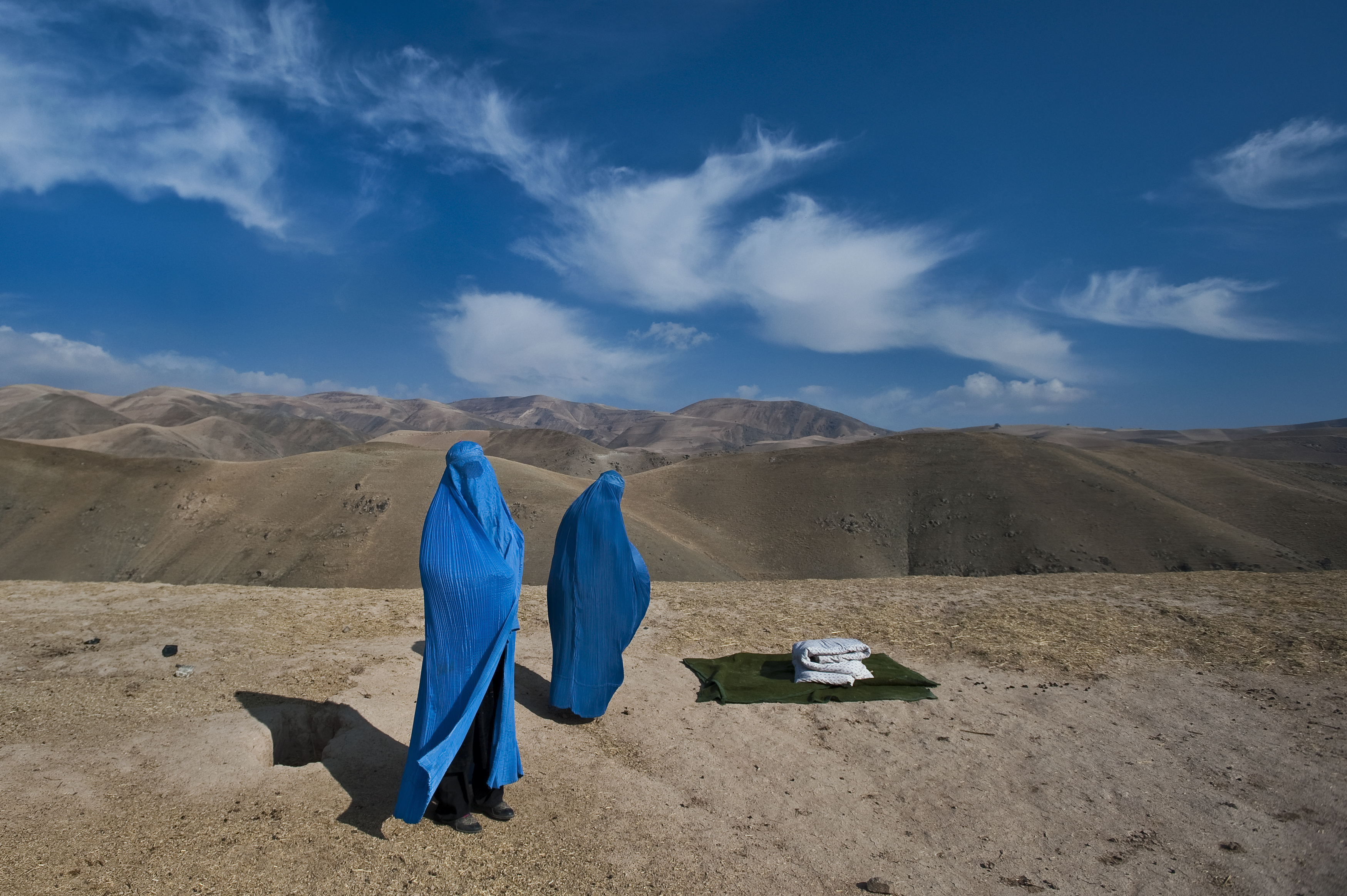
The Power of Art
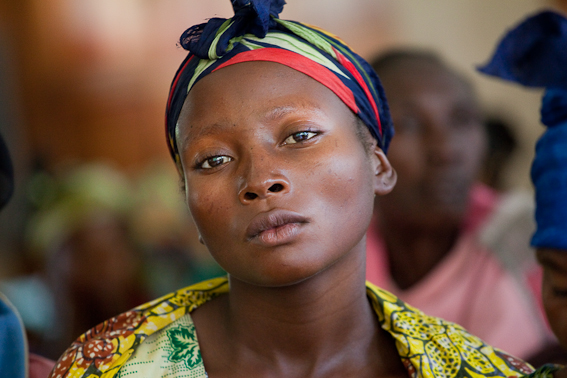
“Art is inherently political because it has the power to really engage in social justice,” Saks said. The Institute that she helped found promotes art that pushes boundaries and creates conversations about peace and war, so as to “add to the accepted canon of understanding of conflict.” As part of this effort, the Institute created the exhibition, “Congo Women: Portraits of War,” composed of photographs by Addario and others about violence against women in the eastern Democratic Republic of Congo (DRC).
Saks hopes that these “photographs saturated with human dignity” will create awareness and, ultimately, influence policy about the conflict in the DRC. The exhibition has traveled to more than 20 locations since its opening. In May 2009 it was installed at the Senate Rotunda during the Senate Foreign Relations Committee hearings on violence against women in conflict.
Addario, who said her work is drive by a desire to “give the people a voice,” has spent 15 years traveling deep into conflict zones all over the world, including Iraq, Sudan, and Afghanistan.
Women and Childbirth
Addario’s images reveal the often shocking conditions in which women around the world give birth. In Sierra Leone, she documented 18-year old Mamma Seesay, “one of thousands of women who die in childbirth.” Due to a shortage of doctors, lack of transportation, and high rates of child marriage, one in eight women in Sierra Leone die in childbirth. Afghanistan has the second highest rate of maternal mortality in the world, partly because “an Afghan woman will be pregnant up to 15 times in her life,” she said. “When you watch someone who in most other developed nations would survive without question, it’s just not fair.”
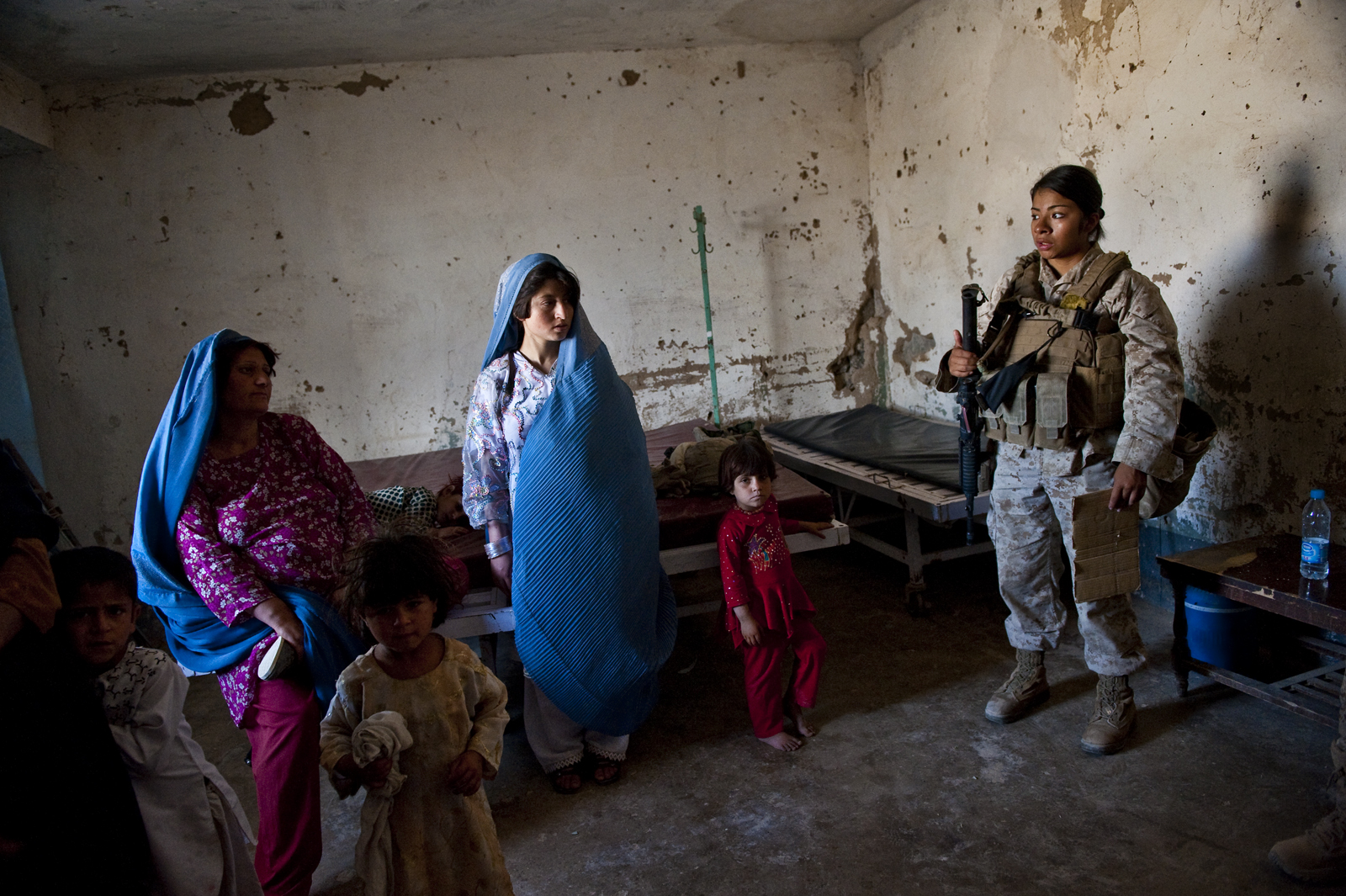
Throughout a decade of covering women in Afghanistan, Addario has sought to provide a “balanced picture” of their lives to American audiences. Her photographs show the milestones women have achieved since the fall of the Taliban: graduating college; driving cars; becoming actors, producers, or police officers; getting married; and giving birth.But her coverage of Afghanistan also contains stories like that of Fariba, an 11-year-old girl who doused herself with petrol and set herself on fire after being abused by her parents. The burn ward at the hospital in Kabul is full of such women who commit self-immolation “to escape their lives,” said Addario. An Afghan woman’s life “is worse than a donkey…there is no release for these women.”
“Give Us Your Guns”
In 2009, she went to the tribal areas of Pakistan to meet the Taliban. “Wrapped up like a cigar,” she posed as the wife of former New York Times correspondent Dexter Filkins and went into a room of 30 Taliban fighters “armed to the teeth.” The two spent the day with the Taliban and “by the end, they loved us,” she said. “The whole time they just laughed at us: ‘You Americans, you give money to the Pakistani government and they give it to us!”
While covering the conflict in Darfur, Addario had to convince UN peacekeepers to drive into a Janjaweed-occupied village so that she could verify how many people had been killed. “Every time we would go towards the village, the Janjaweed would shoot at us and so [the peacekeepers] would turn the cars around and go,” Addario said. To convince the peacekeepers to go in anyway, she said to the commander: “Just give us your guns. We’re gonna go in ourselves if you don’t.” When they finally drove towards the village, “the Janjaweed set it on fire right in front of us, and we just kept driving, and when we got there they had left,” she said.
Addario has spent years as a single woman traveling around the world and throughout conflict zones. “Women in Afghanistan think I’m insane,” she said. “They think I have a lonely, miserable life.” But she believes that as a woman working in conflict zones, she has a unique ability to access places that a man could not and a mission to tell the stories that she hears. “For me it’s about showing the greater American public what’s happening.”
Sources: Institute for the Study of Women and Gender in the Arts and Media, National Geographic, The New York Times, Public Radio International, Slate, UNICEF, and the U.S. Senate Committee on Foreign Relations.
Photo Credit: Woman in labor with her mother on the way to the hospital in Afghanistan and a U.S. Marine in Afghanistan, used with permission courtesy of Lynsey Addario and the VII Network. -
‘Blood in the Mobile’ Documents the Conflict Minerals of Eastern Congo
›With Blood in the Mobile, Danish director Frank Poulsen dives into the eastern Democratic Republic of Congo (DRC) to document a vicious cycle of conflict that has claimed millions of lives, produced rampant humanitarian abuses, and is driven in part (though not entirely, it should be noted) by the area’s rich mineral resources – all under the noses of the world’s largest peacekeeping operation.
The minerals extracted in the eastern DRC – tin, tantalum, tungsten, and gold, mainly from North and South Kivu provinces – are used in cell phones around the world. The trailer shows Poulsen gaining access to an enormous tin mine in the area – the biggest illegal mine in the Congo, he says – capturing powerful footage of the squalid and dangerous conditions that thousands of often-teenage workers labor under for days at a time.
“Four years ago this place was nothing but jungle,” narrates Poulsen. “Today, 15,000-20,000 people are working here [and] different armed groups are fighting to gain control over the mine.”
Though Poulsen is pictured making dramatic phone calls to Nokia (the largest cell phone manufacturer in the world), the issue of conflict minerals from the DRC and places like it is in fact more than just a blip on the radar screens of most leading technology companies. The NGO the Enough Project in particular has been championing the cause and bringing it to tech companies’ doorsteps for quite some time. Their efforts have helped produce an action plan for certifying conflict-free supply chains (complete with company rankings) and also helped lead to passage of the United States’ first law addressing conflict minerals this fall.
However, Poulsen’s message of the developed world taking responsibility for sourcing is commendable. Efforts like this that have led to the adoption of corporate responsibility initiatives like the Cardin-Lugar amendment, a similar measure in the works for the European Union, the Extractive Industries Transparency Initiative, and the Kimberley Process for diamonds.
Blood in the Mobile premiered this fall at the International Documentary Film Festival and the producers are “in dialogue with different U.S. distributors,” according to their Facebook page, where those interested are advised to stay tuned.
Sources: BloodintheMobile.org, Enough Project, EurActiv.
Video Credit: Blood in the Mobile Official Trailer. -
Albert Lotana Lokasola, PHE Champion
Improving Health and Preserving Ecosystems in the Democratic Republic of Congo
›This PHE Champion profile was produced by the BALANCED Project.
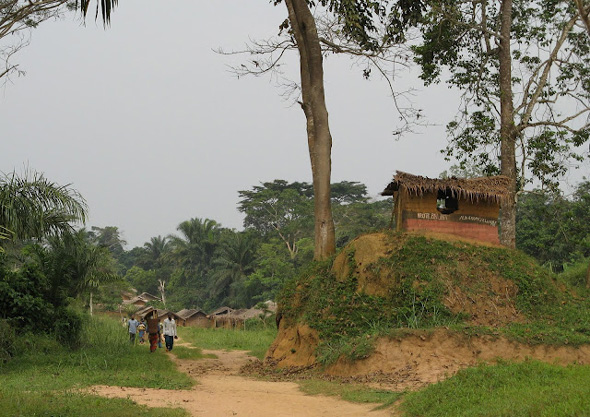
In the remote forests of the Democratic Republic of Congo (DRC), Albert Lotana Lokasola is helping improve livelihoods by bringing much-needed health services to the communities living in and around the Kokolopori Bonobo Reserve. Officially recognized by the DRC government in May 2009, the reserve is a high biodiversity wilderness area covering an area about the size of Rhode Island (4,785 square kilometers).
Located 300 miles southwest of Kisangani, the reserve contains bonobos, a rare and highly endangered great ape species that is as closely related to humans as chimpanzees. In addition, the reserve is highly valued for its biodiversity, including several other flagship species such as leopards, elephants, Congo peafowl, Tshuapa red colobus, and Salonga monkeys.
Lokasola founded a nationally recognized organization called Vie Sauvage, or “Wild Life” in English. He serves as the president of the organization and works with international organizations to foster conservation and rural development in an integrated, holistic approach. As a native of Kokolopori, he believes that “the forest, men, and wildlife live together and should be protected together.”
In partnership with local residents and supported by the Bonobo Conservation Initiative, Lokasola and Vie Sauvage established the first medical clinic in the area in 2006. They garnered support for a doctor, nurses, and supplies from the Indigo Foundation in Australia and the Kokolopori-Falls Church Sister City Partnership.
Before the clinic was founded, community members had to walk or bicycle more than 50 miles to get to the nearest hospital in the territorial capital of Djolu. Now the Kokolopori clinic serves the 8,000 people who live in 30 villages along a 40-mile road in the reserve. One of the clinic’s goals is to help improve women’s health by training and equipping midwives and by providing access to other health services. Malaria and poor nutrition contribute to high maternal and child mortality, and women in Kokolopori do not yet have access to reproductive health services such as family planning.
Vie Sauvage articulates integrated health and conservation messages through their community education projects. They are also working with the community to prevent malnutrition by planting fruit trees in agroforestry fields to produce supplemental food supplies. At the same time, these trees will create corridors for wildlife movement and protect the genetic flow. They also create a sound micro-climate for people, sequester carbon dioxide, and filter the air. Through these efforts, Vie Sauvage and the people of Kokolopori are demonstrating the critical links between human well-being and conservation.
Vie Sauvage has garnered resources and participation from diverse partners (like the Kokolopori-Falls Church Sister City Partnership and the Indigo Foundation, mentioned above) which work together to support the clinic and fund medical staff salaries, training, supplies and equipment, and infrastructure improvements.
According to Lokasola, Vie Sauvage and partners are currently exploring potential partnership opportunities to integrate family planning and reproductive health into existing activities. His hope is that by providing these much-needed services, the community will be healthier and critical ecosystems will be sustainably preserved.
This PHE Champion profile was produced by the BALANCED Project. A PDF version can be downloaded from the PHE Toolkit. PHE Champion profiles highlight people working on the ground to improve health and conservation in areas where biodiversity is critically endangered.
Photo Credit: Building along the road in Kokolopuri village serves as a messsage drum for sending messages from one village to the next, courtesy of Ingrid Schulze and the BALANCED Project. -
Apply Now for the Compton Foundation/PRB International Fellowship
Doing Research on Reproductive Health, Environment, and Security?
›January 19, 2011 // By Hannah MarquseeThe Population Reference Bureau and Compton Foundation’s International Fellows Program deadline is rapidly approaching on January 24. The fellowship is for students from sub-Saharan Africa or Latin America seeking to affect policy and/or improve the effectiveness of population, family planning, and reproductive health programs in the developing world. Master’s students may be awarded up to $10,000 and PhD students up to $20,000 to perform capstone/internship work or dissertation research on the intersection between reproductive health, the environment, and security.
2010 Compton/PRB Fellow Kennedy Maring, a Ugandan student at UNC Chapel Hill, spent a year researching the feasibility of integrating family planning services into HIV/AIDS programs in Masindi, Uganda, in order to address high rates of mother-to-child transmission of HIV. Maring interviewed 182 pregnant women and 11 health providers in Masindi, and found that while more women in the area understood that HIV could be passed from mother to child than the national average, few were using available services such as HIV counseling or family planning. Her research resulted in many recommendations to improve prevention of HIV transmission and use of family planning, including: integrate family planning into HIV prevention; train more health providers; involve men in reproductive health care; encourage hospital delivery; bring services to the people; and provide free breast milk supplements.
Patrick Kipalu, an American University student from the Democratic Republic of Congo (DRC), traveled deep into his country’s forests to interview indigenous people about their perspective on and awareness of climate change, deforestation, and mitigation programs such as the UN Reducing Emissions from Deforestation and Forest Degradation program (REDD). Kipalu’s research showed that weak forestry governance, widespread ignorance of forestry laws, corruption, and lack of indigenous community participation, among other challenges, will make successful implementation of REDD difficult. If the current style of forestry management in the DRC continues, REDD will only provide incentives for more corruption and deforestation, he found. In this highly centralized government process, the government, logging companies, and other powerful stakeholders will reap all the benefits without any revenue going back to benefit indigenous forest communities.
How to Apply
2011 fellowship applications are being accepted until January 24, 2011. To apply, send a completed application form, curriculum vitae, cover letter, transcript, abstract of proposed research, budget, and two letters of recommendation to Dr. Ashley Frost at afrost@prb.org. Master’s students must also provide a letter from the organization where their capstone/internship will take place, and Ph.D. students must provide proof of an approved research proposal.
For full instructions, visit the fellowship site on PRB.
Photo Credit: Adapted from “photoshot,” courtesy of flickr user hippolyte. -
Research Findings and Programmatic Implications
Gender-Based Violence in the DRC
›In the Democratic Republic of the Congo (DRC), “armed conflict has resulted in mass displacement and widespread sexual violence; the problem is that it hasn’t always been quantified,” said Dr. Lynn Lawry, senior health stability and humanitarian assistance specialist at the U.S. Department of Defense. Presenting findings from the first cross-sectional, randomized cluster study on gender-based violence in the DRC, Lawry was joined at the Wilson Center by Heidi Lehmann, director of the Gender-based Violence Unit at the International Rescue Committee, and Dr. Nancy Glass, associate professor at the Johns Hopkins School of Nursing and associate director at the Johns Hopkins Center for Global Health. “We found that sexual violence in these areas is conflict-related, prevalent, systematic, and widespread,” said Lawry. [Video Below]
Study Finds “Female Perpetrators”
The first of its kind in the region, the population-based, quantitative study covers three districts in the DRC and a total of 5.2 million adults. It comprehensively assesses gender-based violence, including its prevalence, circumstances, perpetrators, and physical and mental health impacts.
Overall, the study found that 2.1 million women and 1.3 million men in the region had suffered sexual violence. Nearly three-quarters of all sexual violence reported was a direct result of conflict. In the study region, 20 percent of the population fought in conflicts, and 48 percent of these combatants were female.
Further, 39 percent of female survivors and 15 percent of male survivors reported female perpetrators. “These findings challenge the paradigm of male perpetrator and female victim,” said Lawry. “Policymakers and donors should adjust societal paradigms of sexual and gender-based violence and also direct attention to female perpetrators and male survivors.” Survivors of sexual violence in conflict, both male and female, are more at risk of later becoming perpetrators, particularly if unrecognized and untreated. To “break the cycle of violence,” prevention and response programs should address the needs of survivors and combatant perpetrators of both genders.
“Community-related violence is a general crime; conflict-related violence is a war crime,” Lawry said. While many efforts have focused on the Congolese military, she called for the DRC government and the International Criminal Court to also investigate and prosecute members of rebel groups, who were found to be the main perpetrators of sexual violence and other human rights abuses in this study.
Prevention: The Best Response
“Meeting the immediate consequences of violence is not enough,” said Lehmann. To effectively address gender-based violence, programs must provide medical and social services, promote social empowerment, respond to emergencies, and take part in advocacy and coordination efforts.
In the DRC, programs supported by the International Rescue Committee serve approximately 350 to 400 survivors per month, 75 percent of whom report that the perpetrators are members of armed groups.
Scaling up is a major challenge. “Providing essential services alone require enormous investment, and there is no common understanding of comprehensive programming,” said Lehmann. “We recognize that a program alone cannot solve all of these problems, especially in the DRC.”
“Good response is about prevention,” concluded Lehmann. She recommended supporting robust, long-term programming; integrating gender-based violence prevention efforts into other sectors; and investing in partnerships. “We are not going to end the violence unless Congolese women and girls are part of the conversation.”
Pigs for Peace: A Holistic Approach
Health care, economic development, and social programs should be integrated “to provide a holistic and comprehensive approach” to the problem of gender-based violence, said Glass. “Rape destabilizes families and communities,” she said.
Survivors rarely get immediate treatment for their injuries and trauma, or the risk of HIV, STIs, and infertility. “Many rural primary health centers and hospitals have been looted of medicines and materials by rebels and soldiers,” said Glass. Conflict in the DRC has also caused health care professionals to leave unstable rural areas, and poor roads and limited transportation make it unsafe and expensive to seek care.
To rebuild families and communities, “women and men need to regain their economic resources to provide for the future of their family and community,” said Glass. Pigs for Peace, for example, has supplied more than 100 women — many of them rape survivors — and their families with pigs to set them on the path to recovery through psychological, social, and economic empowerment. This program aims not only to supplement household income, but to reduce the stigma of rape as survivors become productive parts of their families and communities.
Photo Credit: “Congo kivu,” courtesy of flickr user andré thiel. -
Rape, Resource Management, and the UN in Congo: What Can Be Done?
›Rape as a weapon of war is not unique to the Democratic Republic of Congo (DRC), but the scope and degree to which it occurs in this part of the world, especially in the resource-rich eastern provinces – an epicenter of violence during the war – is alarming and unprecedented.
Walikale, the site of a recent scourge of rapes and violence is not unlike several other cities and villages in the Kivus and in the DRC in general. Rich in both tin and gold, Walikale is beset by a convergence of several opposing military factions: the rebel Congrès National pour la Défense du Peuple, (CNDP), whose members have supposedly been reintegrated into the official Congolese army; the FARDC, who have been accused of crimes as egregious as those committed by rebel armies; the Rwandan FDLR; Tutsi rebel factions; and numerous other smaller rebel groups and non-Congolese military groups.
The raping of more than 300 women, children, and men that occurred between July 31 and August 2 in the area of Walikale and the village of Ruvungi has made international news headlines and caused an uproar about the role and responsibilities of the United Nation mission in the DRC – MONUSCO (formerly MONUC) – and their capacity to actually keep the peace. UN peacekeepers, stationed about 30 kilometers away from the attacks, were reportedly aware of rebel activity in the area, but were not aware of the mass raping until after the crimes had been committed. Officials went on a fact-finding mission several days later once the rapes were reported by the International Medical Corps. Some, however, argue that officials should have acted differently, dispatching peacekeepers to the Walikale area as soon as they were made aware of rebel activity.
UN workers and other international organizations may have known about the rapes while they were occurring, and in retrospect the international community can criticize their inaction during the perpetration of this massive atrocity, but there are larger questions that loom: Why has the DRC become the “rape capital of the world?” And what can we do to enable UN peacekeeping forces to actually keep the peace?
More than two months after these crimes were perpetrated, rapes are no doubt still occurring across the region. The UN has declared that militias will be charged for the crimes in Walikale, arrests have already been made, and there are people doing good work to help the victims of sexual crimes after the fact. But despite these efforts and the ongoing presence of MONUSCO and efforts to integrate and train the FARDC as a legitimate army that protects the citizens of the country, sexual violence against civilians, and especially against women, has continued at an outrageous level.
The mandate of MONUSCO, carried over in part from its predecessor, MONUC, is to both protect civilians and backstop the efforts of the FARDC – a sometimes conflicting mandate. Designed to keep the peace and monitor the implementation of the ceasefire agreement, to “facilitate humanitarian assistance and human rights monitoring, with particular attention to vulnerable groups including women, children and demobilized child soldiers” (emphasis added), the UN mission has clearly not been able to successfully fulfill this mandate, even after almost 12 years on the ground. While the UN charter does not explicitly include the word “peacekeeping,” and there are those who argue that it is not properly structured to act as a peacekeeping body, the UN has more than 60 peacekeeping missions under its belt since its first mission in 1948 and the DRC is its largest ever. Still, the weak record of success of MONUC and of its successor MONUSCO together with the unreliability of the FARDC does not inspire confidence for the safety or security of civilians in the DRC.
Why the rapes continue and why neither MONUSCO nor the Congolese authorities are unable to stop them are complicated questions. Explanations range from political complications preventing peacekeepers from becoming involved in day-to-day human security to a simple lack of mission resources. The rapes in Walikale occurred in an area with abundant tin deposits and some of the largest gold mines in the country. The DRC, and the east in particular, is ripe with resources, and historically, underdeveloped regions characterized by such a heavy concentration of natural resources are often more cursed than they are blessed. The competition over resources and violence spurred by an unequal distribution of rents is perhaps part of the reason for such intense violence; it does not, however, explain why rape has become a weapon of choice, why women have become a target of war crimes in general, or why the level of violence against women in the DRC in particular has risen to such a horrifying level.
Justine Lindemann is program assistant with the Africa Program at the Woodrow Wilson Center.
Sources: AFP, AFRICOM, AllAfrica, BBC, Congo Siasa, IPS News, The New York Times, Panzi Hospital of Bukavu, UN, UN Office of the High Commissioner for Human Rights, VII Photo Agency.
Photo Credit: “Congo kivu,” courtesy of flickr user andré thiel. -
Saleem Ali at TEDxUVM on Environmental Peacemaking
›“The use of the term ‘peace’ is in many circles still considered taboo, because immediately people think you are talking about something that is utopian,” said University of Vermont Professor Saleem Ali at a recent TEDx event on sustainability. “But I’m here to tell you that peace is pragmatic. Peace is possible.”
Ali points out the value of peace to every sector of society and, using an example from Ecuador and Peru, argues for the utility of the environment as a peacemaker. Other longstanding conflict areas like Cyprus, Iraq, Israel, and Korea are also ripe for environmental peacebuilding efforts, he says.
Professor Ali has written for The New Security Beat before on the strengths and weaknesses of viewing conservation and sustainability efforts through a strictly security lens. He points out that environmentalists must tread a fine line when assigning causality between the environment and conflict, but even when natural resources or climate are not central to a conflict, environmental peacebuilding can still play a role in creating shared ground (sometimes literally) between combatants.
“Treasures of the Earth,” Ali’s latest book, examines the thorny subject of how best to balance resource extraction in developing countries with long-term sustainability. Recent examples, such as Angola and Liberia’s blood diamonds, the DRC’s conflict minerals, and concerns over Afghanistan’s potential reserves have shown the difficulty in striking that balance.
“Ultimately, conflict trumps everything else” in terms of what we ought to be concerned with, Ali argues, and therefore, anyone, no matter their profession or capacity, should keep the pursuit of peace in mind – and all options on the table – when making decisions that affect others. -
“There Is No Choice:” Climate, Health, Water, Food Security Must Be Integrated, Say Experts
›August 9, 2010 // By Russell SticklorBureaucratic stovepipes plague international development efforts, and aid for pressing environmental and human security concerns—such as climate change, food shortages, fresh water access, and global health threats—rarely matches the reality on the ground in the developing world, where such health and environmental problems are fundamentally interconnected.
Instead, development efforts in the field—whether spearheaded by multilaterals, bilaterals, or NGOs—are commonly devoted to single sectors: e.g., the prevention and treatment of a single disease; the implementation of irrigation infrastructure in a specific area; or the introduction of a new crop in a certain region. The reasons for such a narrow focus can come from multiple sources: finite resources, narrowly constructed funding streams, emphasis on simple and discrete indicators of success, and institutional and professional development penalties for those who conduct integrated work. But some experts argue that integrating problem-solving initiatives across categories would not only improve the efficacy of development efforts, but also better improve lives in target communities.
As part of the USAID Knowledge Management Center‘s 2010 Summer Seminar Series, a recent National Press Club panel on integration featured a frank discussion of both the opportunities and challenges inherent in breaking down barriers within and between development agencies. Panelists from the World Bank’s Environment Department, the White House Council on Environmental Quality, and the Woodrow Wilson Center’s Environment Change and Security Program weighed in on the prospects for cross-sectoral integration.
Addressing the impacts of a global problem like climate change “requires multilevel approaches,” and necessitates that we “think multisectorally along the lines of agriculture, water, transportation, energy, [and] security,” said Loren Labovitch of the White House Council on Environmental Quality. The four topics under discussion—climate change, food security, water, and health—are all Obama administration priorities, as reflected by dedicated programs and special initiatives. Finding ways to practically integrate these interrelated challenges (through efforts like the Feed the Future Initiative or the Global Health Initiative) is getting more attention from policy analysts and policymakers with each passing year.
Integration in Practice: Success Stories
While there may be an emerging willingness to discuss and even experiment with holistic programming, what does it actually look in practice? Panelist Geoff Dabelko, director of the Woodrow Wilson Center’s Environmental Change and Security Program, singled out integrated development programs in the Philippines, the Democratic Republic of Congo, and Asia as examples.
Philippines: The PATH Foundation Philippines’ Integrated Population and Coastal Resource Management (IPOPCORM) initiative uses an integrated approach to address health and environmental concerns in coastal communities. Their “basket of services” includes establishing a locally managed protected marine sanctuary to allow local fish stocks to recover, promoting alternative economic livelihoods outside of the fishing industry, and improving access to local health services and commodities, said Dabelko. To date, IPOPCORM has yielded several notable improvements, among them reduced program costs and improved health and environmental outcomes as compared to side-by-side single sector interventions. A forthcoming peer-reviewed article will appear in Environmental Conservation, and will detail the controlled comparison study of the IPOPCORM project.
Democratic Republic of Congo: Mercy Corps has also successfully pursued cross-sectoral programming as part of a larger effort to be more holistic in its humanitarian and development responses. In war-torn eastern DRC, Mercy Corps brought practitioners with expertise in natural resource management into the fold of what has historically been an emergency relief mission. In particular, the Mercy Corps mission has fused humanitarian assistance with longer-term development efforts such as enhanced environmental stewardship. For example, promoting the use of fuel-efficient cookstoves eases pressure on local forest resources by lowering the need for firewood, and improves respiratory health by lowering air pollution. The project scaled up the effort through resources from further integration, with carbon credits from avoided emissions being sold through a local broker to the European cap and trade market. These resources in turn helped finance more cook stoves, which now total 20,000 for this project.
“The lesson is we have no excuse for not doing this anywhere in the world and saying some place is too unstable,” Dabelko said. “If we can do it [integrated projects] in eastern DRC, we should be able to do it anywhere.”
Asia: Tackling programmatic integration starts with better understanding the interconnections between environmental and health challenges. Dabelko cited a recent effort of the environment and natural resources team within USAID’s Asia Bureau as an example of breaking out of narrow bureaucratic stovepipes.
USAID staff recognized that a wide set of climate, energy, economic, governance, and conflict issues affected their core biodiversity and water portfolios, even if they did not have the time, expertise, or resources to investigate those issues in detail. Trends that appeared to be in the periphery were not viewed as peripheral to planning and designing programs for long-term success.
Working with the Woodrow Wilson Center, the USAID Asia Regional Bureau engaged experts on a diverse set of topics normally considered outside their portfolios. The resulting workshop series and report led to a deeper understanding of the possible impacts of increased Himalayan glacier melt and Chinese hydropower plans on food security and biodiversity programs in the lower reaches of the Mekong River. Bringing analysis from these topically and geographically remote areas into local-level development planning is a process that will require a similar willingness to go outside the typical bounds of one’s brief.
More Integration Ahead?
These case studies provide a glimpse of what integrated programming can look like on the ground. Still, significant hurdles remain standing in the way of regular and effective integration. Cross-sectoral programming demands that old problems be addressed in innovative and perhaps unfamiliar ways, requiring the addition of new capacity in development organizations and better coordination within and between agencies. That can be a complicated process, noted Dabelko, since efforts to pursue greater programming integration can be “hamstrung by earmarks and line items.”
Integration can also prove tricky because it requires a greater willingness to accept multiple indicators of success unfolding over different time frames—health gains may occur quickly, for example, while progress on environmental conservation may unfold less speedily. This means existing programs might need to be reshaped and reoriented to accommodate these divergent time frames, which could prove somewhat difficult. “Integration can be a challenge, both from a programming perspective and from an organizational perspective,” acknowledged moderator Tegan Blaine, climate change advisor for USAID’s Africa Bureau.
Further, the temptation remains strong among appropriators and implementers alike to maintain control over authority and resources in their traditional portfolios. Getting long-time practitioners in particular issue areas to willingly cede some of their turf in the pursuit of greater integration has historically been the “real world” that stands in the way of such integrated work.
But, as shown by the standing-room-only crowd at the seminar, momentum is slowly starting to build in pursuit of breaking down old programming walls and finding new approaches to addressing emerging challenges in human and environmental security.
“There is no choice” but to fuse development agendas with climate change adaptation efforts, asserted Warren Evans, director of the World Bank’s Environment Department. “It can’t be a parallel process anymore.”
Photo Credit: “2010 Summer Seminar Series – July 15th Panel Discussion on Food Security, Climate Change, Water and Health,” used courtesy of USAID and the National Press Club.
Showing posts from category DRC.