• woodrow wilson center
  • ecsp

New Security Beat

Subscribe:
  • rss
  • mail-to
  • Who We Are
  • Topics
    • Population
    • Environment
    • Security
    • Health
    • Development
  • Columns
    • China Environment Forum
    • Choke Point
    • Dot-Mom
    • Friday Podcasts
    • Navigating the Poles
    • Reading Radar
  • Multimedia
    • Water Stories (Podcast Series)
    • Backdraft (Podcast Series)
    • Tracking the Energy Titans (Interactive)
  • Films
    • Water, Conflict, and Peacebuilding (Animated Short)
    • Paving the Way (Ethiopia)
    • Broken Landscape (India)
    • Scaling the Mountain (Nepal)
    • Healthy People, Healthy Environment (Tanzania)
  • Publications
  • Events
  • Contact Us

NewSecurityBeat

The blog of the Wilson Center's Environmental Change and Security Program
Showing posts from category Colombia.
  • Conservation in Conflict Zones: Protecting Peace and Biodiversity in Colombia

    ›
    Guest Contributor  //  August 25, 2015  //  By Brittany Ajroud
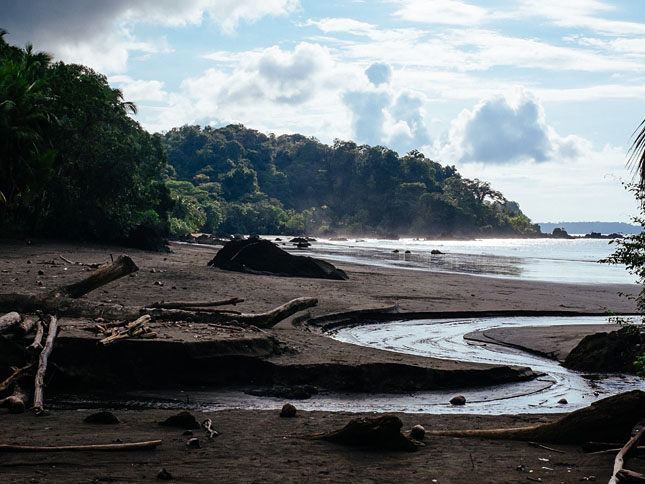
    Choco Colombia

    With a new peace process underway between the Colombian government and leaders of the Revolutionary Armed Forces of Colombia (FARC) in Cuba, the spotlight is back on this long-troubled South American country. But decades of civil conflict have overshadowed an incredible fact: Colombia is among the four most biologically diverse countries on Earth.

    MORE
  • Lisa Palmer, Yale Environment 360

    Colombian Farmers Adjust to Changing Conditions With “Climate-Smart” Agriculture

    ›
    February 10, 2015  //  By Wilson Center Staff
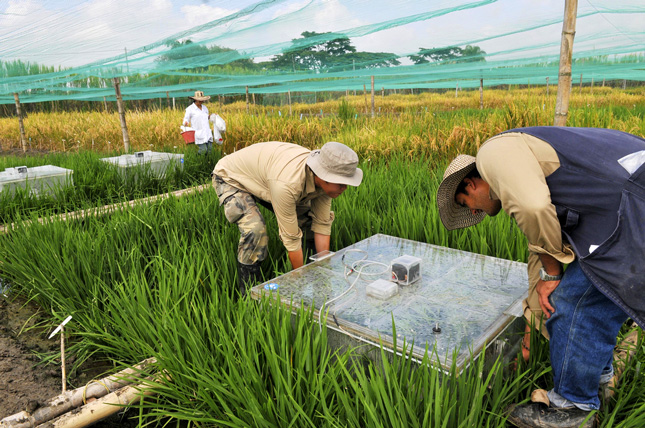
    CIAT_Colombia

    The original version of this article, by Lisa Palmer, appeared on Yale Environment 360.

    Rice is a thirsty crop. Yet for the past three years, Alberto Mejia has been trying to reduce the amount of water he uses for irrigation on his 1,100-acre farm near Ibague in the tropical, central range of the Colombian Andes.

    MORE
  • Lisa Palmer, Future Food 2050

    Greener Pastures for Cattle Ranching

    ›
    November 26, 2014  //  By Wilson Center Staff
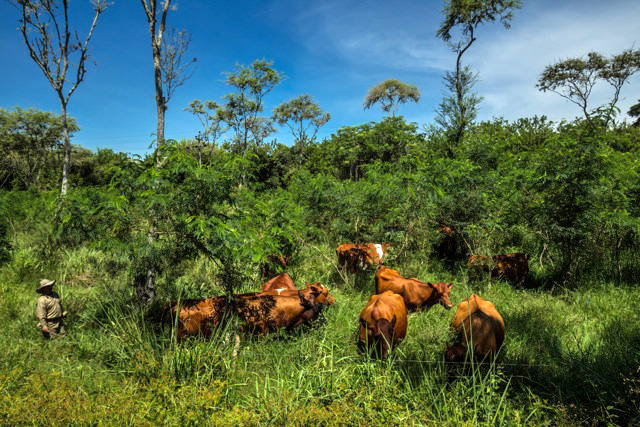
    colombia-pasture1

    The original version of this article, by Lisa Palmer, appeared on Future Food 2050.

    Imagine an overgrown perennial garden. Impenetrable, shrubby bushes knit themselves together in long rows. Grasses reach chest high. Native hardwood trees hog the perimeter.

    MORE
  • Book Review: ‘Oil Sparks in the Amazon: Local Conflicts, Indigenous Populations, and Natural Resources’

    ›
    August 18, 2014  //  By Roger-Mark De Souza
    amazon_oil

    The original version of this article appeared on Americas Quarterly.

    Since the early 1990s, the rising price of crude oil and other key natural resources – and the resulting drive by governments and private companies to extract those resources – has led to sharp conflicts in Latin America. At the core of these disputes is the clash between national economic interest and the rights of indigenous people inhabiting the land where most natural resources are located.

    MORE
  • Nick Snow, Oil and Gas Journal

    Analyst Urges Broader Look at Amazon Oil’s Local Impacts

    ›
    March 27, 2014  //  By Wilson Center Staff
    Amazon-oil-pipe

    The original version of this article, by Nick Snow, appeared in the Oil and Gas Journal.

    Increasingly disruptive protests are likely if oil, gas, and mining companies and national governments don’t pay closer attention to indigenous populations’ needs as Western Amazon basin resources are developed, an expert warned.

    MORE
  • First “Nexus Dialogue” on Water, Energy, and Food Kicks Off in Nairobi

    ›
    Eye On  //  August 6, 2013  //  By Swara Salih

    Water, energy, and food – this “nexus” of interrelated resource issues continues to garner attention from analysts, policymakers, and the media. Over the next four decades global population is projected to increase to about 9.6 billion and, worldwide, demand for water is projected to increase 55 percent; energy, 80 percent; and food, 60 percent. In a new video about the first of a series of workshops on this nexus, the International Union for Conservation on Nature and the International Water Association explain how they are working to bring together private and public sector water infrastructure experts from across Africa and the world to build partnerships and create some consensus on a “nexus-based approach” to managing scarce resources.

    MORE
  • Autumn Spanne, The Daily Climate

    Colombia’s Unexplored Cloud Forests Besieged by Climate Change, Development

    ›
    December 13, 2012  //  By Wilson Center Staff

    The original version of this article, by Autumn Spanne, appeared on The Daily Climate.

    Five hours by truck and mule from the nearest town, a rumbling generator cuts through the silent night to power large spotlights as botanists crouch and kneel on large blue tarps spread across a cow pasture. It’s nearly midnight, and the team works urgently to describe every detail of the dozens of colorful orchids, ferns, and other exotic plants they have collected that day in Las Orquídeas National Park, one of the single most biologically diverse places on the planet.

    MORE
  • Social Interaction Key to Urban Resilience, Says Harvard’s Diane Davis

    ›
    November 7, 2012  //  By Payal Chandiramani

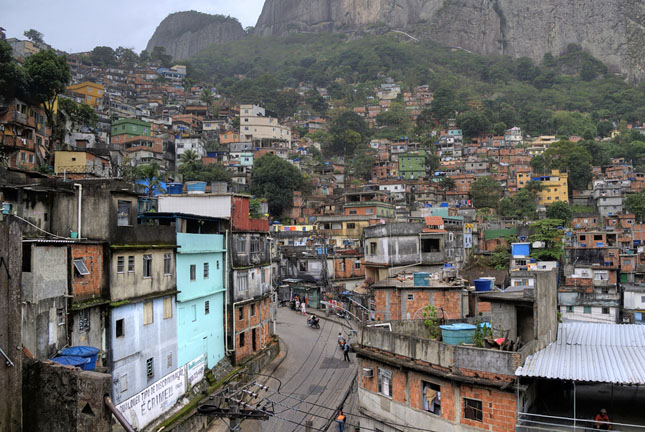
    “Resilience is the capacity of individuals and institutions to cope and adapt in the stress of chronic violence in ways that allow them room for maneuver and hope for the future,” said Diane Davis, Harvard professor of urbanism and development, in an interview at the Wilson Center.

    MORE
Newer Posts   Older Posts
View full site

Join the Conversation

  • RSS
  • subscribe
  • facebook
  • G+
  • twitter
  • iTunes
  • podomatic
  • youtube
Tweets by NewSecurityBeat

Trending Stories

  • unfccclogo1
  • Pop at COP: Population and Family Planning at the UN Climate Negotiations

Featured Media

Backdraft Podcast

play Backdraft
Podcasts

More »

What You're Saying

  • Volunteers,At,The,Lagos,Food,Bank,Initiative,Outreach,To,Ikotun, Pan-African Response to COVID-19: New Forms of Environmental Peacebuilding Emerge
    Rashida Salifu: Great piece 👍🏾 Africa as a continent has suffered this unfortunate pandemic.But it has also...
  • A desert road near Kuqa An Unholy Trinity: Xinjiang’s Unhealthy Relationship With Coal, Water, and the Quest for Development
    Ismail: It is more historically accurate to refer to Xinjiang as East Turkistan.
  • shutterstock_1779654803 Leverage COVID-19 Data Collection Networks for Environmental Peacebuilding
    Carsten Pran: Thanks for reading! It will be interesting to see how society adapts to droves of new information in...

What We’re Reading

  • Rising rates of food instability in Latin America threaten women and Venezuelan migrants
  • Treetop sensors help Indonesia eavesdrop on forests to cut logging
  • 'Seat at the table': Women's land rights seen as key to climate fight
  • A Surprise in Africa: Air Pollution Falls as Economies Rise
  • Himalayan glacier disaster highlights climate change risks
More »
  • woodrow
  • ecsp
  • RSS Feed
  • YouTube
  • Twitter
  • Facebook
  • Home
  • Who We Are
  • Publications
  • Events
  • Wilson Center
  • Contact Us
  • Print Friendly Page

© Copyright 2007-2021. Environmental Change and Security Program.

Woodrow Wilson International Center for Scholars. All rights reserved.

Developed by Vico Rock Media

Environmental Change and Security Program

Woodrow Wilson International Center for Scholars

Ronald Reagan Building and International Trade Center

  • One Woodrow Wilson Plaza
  • 1300 Pennsylvania Ave., NW
  • Washington, DC 20004-3027

T 202-691-4000