

Showing posts from category China.
-
Copper in Afghanistan: Chinese Investment at Aynak
›Will new investments by the Metallurgical Corporation of China (MCC) in the Aynak copper mine break Afghanistan out of its poverty trap? Will future revenues from the subsoil assets in Logar Province bring peace and stability to the ongoing conflict?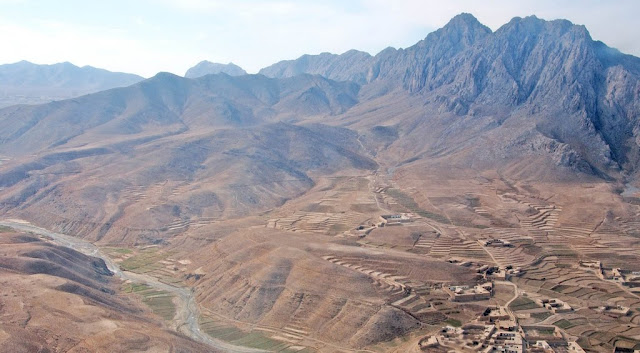
The U.S. Institute of Peace brought together expert panelists to discuss the pitfalls and possibilities related to the Aynak contract. Discussed were current uncertainties in investment plans, future risks related to mine operations, how the various stakeholders of the Aynak project can be more engaged in the process, as well as the planned reinvestment of economic benefits within the broader economy.
Alone, the Aynak Copper Mine’s multi-billion dollar reserves will not bring about security, but its success can be a gateway to future development. According to Lorenzo Delesgues, co-director of Integrity Watch Afghanistan, however, there is also a chance that this conflict-ridden region will find the mines a catalyst for more disputes. According to Delesgues, the potential negative impacts on the surrounding communities and the environment “can be exacerbating factors that might create even more insecurity than what you already have in that area.”Delesgues suggested that certain programmatic alterations needed to be considered by the MCC and the Afghan government to leverage local sustainable economic development beyond Aynak. For Delesgues, local communities need better information about mining’s environmental and employment impacts to improve their decision-making abilities, as many common social and environmental protections are lacking from the current MCC mining plans and activities. An environmental impact assessment, for example, has not yet been carried out, leading to concerns that on-going exploration activities may harm the local environment and downstream populations. To prevent future disputes, Integrity Watch Afghanistan recommends strengthening project monitoring processes and greater public communication and consultation with key stakeholders.
Gary McMahon, senior mining specialist at the World Bank, believes that Afghanistan is in a good position to benefit from the Aynak copper mines. Local employment generation and the MCC’s stated commitment to provide educational, health, and housing services to employees all offer promise for development. There are also contractual obligations for a power plant that will supplement a portion of Kabul’s current demand and the construction of a railway system through Afghanistan, which will extend from China to Tajikistan, and strengthen existing Afghan trade networks.
While the royalty rates established by the Afghan government in the Aynak contract on future mining revenue streams are unprecedented in the mining sector, McMahon fears that the revenue will solely follow international aid flows. “If all that happens is that fiscal revenues [from Aynak] replace foreign aid, the impacts are going to be way less,” says McMahon.
McMahon suggests that, moving forward, the Ministry of Mines and the National Environmental Agency’s capacities for monitoring and evaluation must be improved and strengthened. There also needs to be assurance that the local population gets a “fair share” of jobs and other opportunities, along with continuous consultation of the impact the mines are having on their social and environmental conditions.
In his concluding statements, Ishaq Nadiri, professor of economics at New York University and former senior economic advisor to Hamid Karzai, cautioned the audience about the weight that economics plays in the overall outcome of the Aynak Copper Mine. According to Nadiri, the objective in establishing the Aynak contract was to maximize national benefits. Nadiri offered hope that “the lack of security…[which] emanates from the highly chronic poverty of the country,” could find promising solutions in the wealth of Aynak.
Drafted by Michelle Neukirchen, edited by Julien Katchinoff.
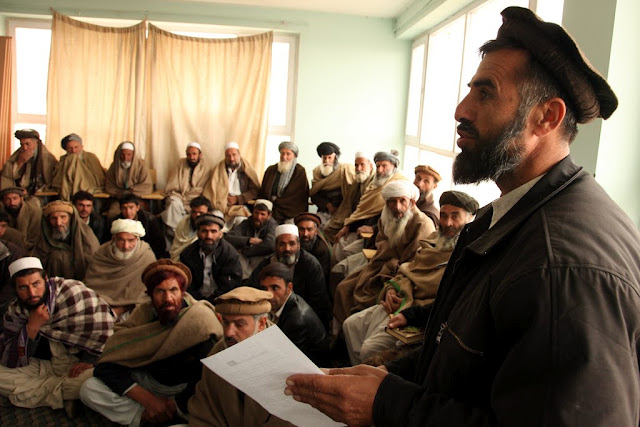
Photo Credits: “River and Mountains of Logar,” courtesy of flickr user AfghanistanMatters and “Logar Province Shura,” courtesy of flickr user IsafMedia. -
Walker’s World: From Warming to Warring: A Review of Cleo Paskal’s New Book
›January 15, 2010 // By Wilson Center StaffWilson Center Senior Scholar Martin Walker recently reviewed Global Warring: How Environmental, Economic, and Political Crises Will Redraw the World Map by Cleo Paskal, for his UPI column, “Walker’s World.”
Excerpts:The Copenhagen summit showed that climate change is as much about geopolitics and power as it is about the weather. China‘s blunt refusal to accept any binding limits on its carbon emissions, despite the agonized pleas of small island governments facing extinction, demonstrated that this new aspect of the game of nations is going to be played as hardball.
And yet, as Cleo Paskal argues in her pioneering new book “Global Warring,” China is also powering ahead on every aspect of climate change. While protecting its right to pollute (because it depends heavily on coal as its main homegrown energy source), China is using state subsidies to seize the lead in solar power manufacturing….But perhaps Paskal’s most striking story is the way that China is also seeking to become a major player in the arctic. China has acquired an icebreaker, a seat with observer status on the Arctic Council and its own arctic research base at Svalbard. (China also has two research bases in the Antarctic.) …
Paskal’s book is full of such vignettes, illustrating the way that climate change and the intensifying competition for resources is starting to change the nature of power politics. Paskal, a Canadian who is a fellow of London’s prestigious Chatham House think tank and a consultant for the U.S. Department of Energy, has been a pioneering scholar of the new terrain where climate change confronts national security, where geopolitics, geoeconomics and global warming all collide. It is not just rivalry for oil and gas supplies and water, but also for fishing rights and undersea mining and mineral rights that may well be up for grabs when some of the lowest-lying Pacific island countries disappear under the rising waves. …
“We need to start thinking about the legal and economic implications of these developments now, before we have to start tackling them in the middle of a crisis or a humanitarian emergency,” Paskal told a seminar at Washington’s Woodrow Wilson Center Friday. …
Paskal sees China and Russia taking these issues more seriously that the United States and Europe, and her book is not just a wakeup call for Western leaders but is also an arresting and original work on climate change, probably the most important book on the environment to be published this year.
“As pressure is put on food, water supplies and national boundaries, famine and war may become more frequent,” Paskal concludes. “This instability may make populations more tolerant of autocratic governments, especially nationalistic capitalist ones where the political, economic and military sectors combine to protect existing resources and aggressively try to secure new ones. China and Russia already have a head start on this model.” -
How Copenhagen Has Changed Geopolitics: The Real Take-Home Message Is Not What You Think
›A fascinating and potentially game-changing geopolitical pas-de-deux unfolded in Copenhagen. The international media and punditocracy christened the United States and China the new G2 in reference to the expected preeminent leadership roles the two hold among their respective developed and developing country contingents. What increasingly became clear, however, was that a different G2 was influencing the agenda: China and India.
India demonstrated that, while it wants an alliance with the United States and its Western allies, a subservient allegiance is not an option.
This was clear in the way India approached a key Copenhagen sticking point—verification. India had been down this road before with the U.S.-India nuclear deal, where Washington’s insistence on external verification was seen by some Indian strategists as undermining India’s sovereignty and security, and as a potential excuse to impose costly sanctions.
Indian concerns about verification created an opportunity for China which, despite the vastly different mix of emissions in both countries, was able to entice India into an alliance. India brought along its IBSA partners, South Africa and Brazil, and it was this expanded group, meeting in conclave, that President Obama gatecrashed in his search for solutions.
Two very important messages were delivered in Copenhagen. First, India told the West it could no longer be taken for granted—it had options. Second, China told India it would be open to a new relationship based on mutual interest.
Going in to Copenhagen, visions for the conference were more varied than many realized. The West primarily thought it was negotiating a trade deal (as evidenced by the drop in EU carbon trading prices after the talks failed to deliver a climate market deal). China, too, was negotiating a trade deal, but remained open to opportunities to gain larger strategic advantages. India, on the other hand, sought a stage to drive home its major geopolitical positions.
Coming out of Copenhagen, the conference’s narrative is clearer: This was geopolitics pure and simple.
India—home to the world’s most populous democracy, a thriving economy, and one of the world’s largest English-speaking populations—is a natural U.S. ally. Its recent experience with the United States on nuclear cooperation, however, has made it wary. Such paranoia gave Beijing an opportunity to entice Delhi into an alliance at Copenhagen. Despite China’s development of Pakistan as a nuclear client state, ongoing border disputes and skirmishes, and other conflicts between the two emerging powers, Beijing succeeded.
If the United States and its Western allies are to coax India (and by extension, a substantial portion of the developing world) into going along with an ambitious emissions reduction program, or indeed any other trade regime, they will need to desist from seeking to impose measures that Delhi regards as protectionist and self-serving.
For the West, moving the world’s most populous democracy to its side, and not China’s, is worth certain concessions. Not just for the sake of a climate deal, but also for larger strategic purposes. At Copenhagen, the West incorrectly lumped India with China, and this mistaken assement proved to be self-fulfilling.
Analysis of India has long suffered from “hyphenation.” First it was India-Pakistan, now India-China. At the beginning the India-China link was competitive, but Copenhagen has shown it has the potential to become cooperative. India should be assessed on its own terms. If geopolitics abhors a stand alone, however, then the time has come to rehyphenate democratic, economically strong, English-speaking India. It would be in the United States and its allies’ benefit to create a new cooperative link: India-U.S.
A longer version of this article was originally published by UPI-Asia.com.
Cleo Paskal is a fellow at Chatham House in London and author of Global Warring: How Environmental, Economic, and Political Crises Will Redraw the World Map (Palgrave). Scott Savitt, a former Beijing-based correspondent for United Press International, is the author of the forthcoming memoir Crashing the Party (Atlas). ©Copyright Cleo Paskal and Scott Savitt.
Photo: Prime Minister of India Manmohan Singh. Courtesy World Economic Forum. -
The Campus Beat: Using Blogs, Facebook, to Teach Environmental Security at West Point
›November 17, 2009 // By Geoffrey D. DabelkoThe lecture was only a few hours away. In desperation, I turned to Facebook. “I’ve got just 50 minutes with the cadets at West Point today to talk water, conflict, and cooperation. What are the most compelling examples you would use to make both hard security and human security points, both threat and opportunity points? I ask in part because it is proving harder to decide what to leave out than what to put in!”
Within seconds, experts from the Departments of State and Energy, USAID, and National Geographic responded with examples, including the Tibetan plateau and glacial melt, the lower Jordan River, and more. I used these cases and others to break through to an audience that included both those skeptical of “treehugger” issues and those eager to learn. The map of Chinese current and planned hydro projects produced audible gasps and wide eyes among the class of future officers.
While at West Point, colleague Meaghan Parker and I met with geography faculty to better understand how and what they are teaching on environmental security and demographic security. The professors on the banks of the Hudson face similar challenges to their non-military brethren; today’s students have shorter attention spans and lack experience conducting in-depth research (or getting beyond Google).
But some challenges are unique to the service academies: isolation from academic peers; the need to make sure the material is relevant to future military leaders; and most of all, the physical and mental demands on cadets’ time placed by army training. I saw it as a sign of success that I only had three stand up during my lecture, the military’s sanctioned way to keep yourself awake in class. (LTC Lou Rios USAF, one of the faculty members we met with, wrote about teaching environmental security at West Point previously on New Security Beat.)
Video, blogs, and other new media seem like a way to bridge some of these gaps. We’re especially excited that the cadets in at least three courses will be using the New Security Beat as part of their classes by reading posts, commenting, and proposing a post on a topic of their choosing. We’re looking forward to a cadet joining us next summer for internship with ECSP.
All of these outreach efforts are part of our strategy to both understand how all types of actors—including future army officers—come to understand environment and security links while providing insights and analysis to that same diverse group.
Photos by Geoff Dabelko and Meaghan Parker -
Weekly Reading
›In an Economist.com debate on population growth between John Seager of Population Connection and Michael Lind of the New America Foundation, Seager argues that rapid population growth is “the source of many of the world’s—especially the poor world’s—woes,” as it accelerates environmental degradation and “undermines both security and development.” On the other hand, Lind counters that “countries are not poor because they have too many people,” and asserts that “technology and increased efficiency have refuted what looks like imminent resource exhaustion.”
In Foreign Policy, David J. Rothkopf contends that actions to mitigate climate change—though necessary to avoid very serious consequences—could subsequently spur trade wars, destabilize petro-states, and exacerbate conflict over water and newly important mineral resources (including lithium).
The International Crisis Group (ICG) reports that “the exploitation of oil has contributed greatly to the deterioration of governance in Chad and to a succession of rebellions and political crises” since construction of the World Bank-financed Chad-Cameroon pipeline was completed in 2003. Chad must reform its management of oil resources in order to avoid further impoverishment and destabilization, ICG advises.
The Royal Society and the Institution of Mechanical Engineers (IME)—both based in the United Kingdom—released independent reports on geoengineering the climate. While calling reduction of greenhouse gas emissions “the safest and most predictable method of moderating climate change,” the Royal Society recommends that governments and international experts look into three techniques with the most potential: CO2 capture from ambient air, enhanced weathering, and land use and afforestation. The IME identified artificial trees, algae-coated buildings, and reflective buildings as the most promising alternatives. “Geo-engineering is no silver bullet, it just buys us time,” IME’s Tim Fox told the Guardian.
In “Securing America’s Future: Enhancing Our National Security by Reducing Oil Dependence and Environmental Damage,” the Center for American Progress (CAP) argues that unless the United States switches to other fuels, it “will become more invested in the volatile Middle East, more dependent on corrupt and unsavory regimes, and more involved with politically unstable countries. In fact, it may be forced to choose between maintaining an effective foreign policy or a consistent energy supply.”
The Chinese government is “drawing up plans to prohibit or restrict exports of rare earth metals that are produced only in China and play a vital role in cutting edge technology, from hybrid cars and catalytic converters, to superconductors, and precision-guided weapons,” The Telegraph relates. The move could send other countries scrambling to find replacement sources.
In studying the vulnerability of South Africa’s agricultural sector to climate change, the International Food Policy Research Institute finds that “the regions most vulnerable to climate change and variability also have a higher capacity to adapt to climate change…[and that] vulnerability to climate change and variability is intrinsically linked with social and economic development.” South African policymakers must “integrate adaptation measures into sustainable development strategies,” the group explains. -
Glaciers, Cheetahs, and Nukes, Oh My! EP in the FT
›August 7, 2009 // By Geoffrey D. DabelkoFinancial Times South Asia Bureau Chief James Lamont has written a flood of environment-as-political-dialogue stories this week! (Well, only two, but that constitutes a deluge in the world of environmental peacebuilding.)
On Monday he wrote about India and China’s agreement to work together to monitor Himalayan glacial melt. The potential decline in water availability from seasonal snow and glacier melt is finally seeping into the consciousness of policymakers outside the climate world, including the diplomatic and security communities. Lamont frames the step as a rare instance of cooperation in a strategically sensitive area at the center of a 1962 territorial war between the countries.
While it would be easy to make too much of such an agreement, it is a tangible recognition of the importance of the ecological unit rather than the national one. It highlights how environmental interdependence across national boundaries can force cooperation in the face of politically difficult relations.
On Wednesday Lamont used cheetah diplomacy between India and Iran as an entry point for his story on international attempts to address Iran’s nuclear proliferation threat. India is asking Iran to help reintroduce cheetahs on the subcontinent, where they are now extinct. In what Lamont said would be an “unusual” example of “high-profile cooperation” for the two countries, diplomats are arranging for talks ahead of a regional wildlife conference. This baby step in relations could be even more significant since the United States publicly acknowledged that India may be able to play an interlocutor role with Iran on the hot button nuclear program question.
While both of these developments are relatively small in the scheme of the larger strategic relationships, they are fundamentally aimed at (re)building relationships between countries by establishing patterns of cooperation where interdependence is obvious and necessary. Such efforts are just one tool in the often-neglected toolbox of environmental peacebuilding.
Photo: Yawning cheetah cub courtesy Flickr user Tambako. -
Climate-Security Links Recognized by UN General Assembly
›June 4, 2009 // By Geoffrey D. DabelkoThe security threat of sea level rise to small island states appears to have proven so obvious as to overcome the common objections of many countries (notably P5 members China and Russia) to framing climate change as a threat to security. Just yesterday, the UN General Assembly passed by consensus a non-binding resolution linking climate and security. The final version of the resolution (GA/10830) is not yet online, but the May 18 draft resolution gives you an idea of the final language.
Symbolic, yes, but perhaps this will make it easier for climate security questions to come before the UN Security Council again. The April 2007 Security Council session on climate change and security, at the behest of the British chair at the time, was, shall we say, met with a mixed reception, but 2009 is already different than 2007 in so many ways. It will be interesting to watch where the discussion goes from here at the UN and in national capitals.
Graphic: Symbol of the Alliance of Small Island States (AOSIS). -
Wildlife Trafficking a Silent Menace to Biodiversity
›June 4, 2009 // By Alan CampanaWildlife trafficking is the third-largest criminal industry worldwide—after drugs and the sex trade—involving $20 billion in global trade each year. Illegal wildlife traffickers are difficult to track down, as they employ increasingly sophisticated methods, showing higher levels of organization and technological savvy. In addition, the resources devoted to halting wildlife trafficking are extremely limited, due in part to other issues—such as terrorism and climate change—dominating the international dialogue. Animal trafficking has become a forgotten crisis, and with devastating impacts on species’ survival and ecological health, said experts at a May 20 Wilson Center meeting.
Global Traffic Problems
The extent of wildlife trafficking is difficult to assess, in part due to the large legal trade in wildlife that often acts as cover for smugglers. Laurel Neme, author of Animal Investigators: How the World’s First Wildlife Forensics Lab is Catching Poachers, Solving Crimes, and Saving Endangered Species, pointed out that every year 25,000 primates, 2-3 million birds, 10 million reptile skins, and more than 500 million tropical fish are legally traded, and it is believed that illegal trade at least matches, and probably exceeds, these numbers. Rare and endangered species are in particular danger of being trafficked, since rare animals generally fetch a higher price on the black market. For instance, ounce for ounce, rhino horn is worth more than diamonds, fetching $50,000 per kilogram.
The scope and complexity of trafficking is the primary obstacle to confronting it. Wildlife trafficking knows no borders and involves countries in every region of the globe. Traffickers are also diverse, ranging from petty criminals to criminal organizations to terrorists. While wildlife trafficking is a global problem, the two largest participants are China and the United States.
Jamming Traffic
Kevin Garlick of the U.S. Fish and Wildlife Service (FWS) outlined the challenges facing U.S. law enforcement officials investigating the supply side of trafficking. For one, the industry is very lucrative; a sea turtle skin that sells for $70 in Mexico can be made into boots that sell for $500 in the United States. Organized crime has become increasingly involved, resulting in detailed planning and financial support for trafficking operations, sophisticated forgery of permits, and international management of huge shipments.
In contrast, enforcement officials lack human and financial resources. The FWS has 115 wildlife inspectors who staff only 38 of the nearly 300 points of entry into the United States, as well as 199 criminal investigators who pursue leads from confiscations and tips. By way of comparison, the FBI has 2,000 and the Drug Enforcement Agency has 5,000 investigators.
China’s Wildlife Challenges
WWF’s Crawford Allen explained that increasing affluence in China is leading to increasing demand for traditional medicines, which often include parts of rare animals; unusual meats, which are considered delicacies; and luxury products such as tiger bone wine. Rising demand in China has fueled a number of wildlife crises, particularly for tiger, elephant, and freshwater turtle populations.
China’s Southeast Asian neighbors have been affected by China’s growing wealth. For instance, the pangolin, a nocturnal anteater that is sought after for its meat, as well as its skin (for fashionable leather) and scales (an ingredient in traditional Chinese medicine), is now highly endangered. Today, the pangolin trade is so profitable that organized traffickers have set up processing plants to butcher and package the meat, which is shipped out via airplane and is difficult to identify. The 100 tons of pangolin seized last year in Southeast Asia are only “the tip of the iceberg,” according to Allen.
Despite the seriousness of the global wildlife-trafficking situation, the speakers agreed that there is hope in the increasing international cooperation that is taking place and in scientific improvements in investigative techniques.
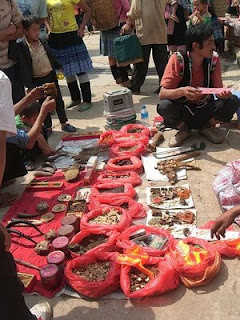
By China Environment Forum Intern Alan Campana. Edited by China Environment Forum Director Jennifer Turner.Photo: Illegal medicinal products in China. Courtesy of Flickr user avlxyz.
 The
The  A fascinating and potentially game-changing geopolitical pas-de-deux unfolded in Copenhagen. The international media and punditocracy christened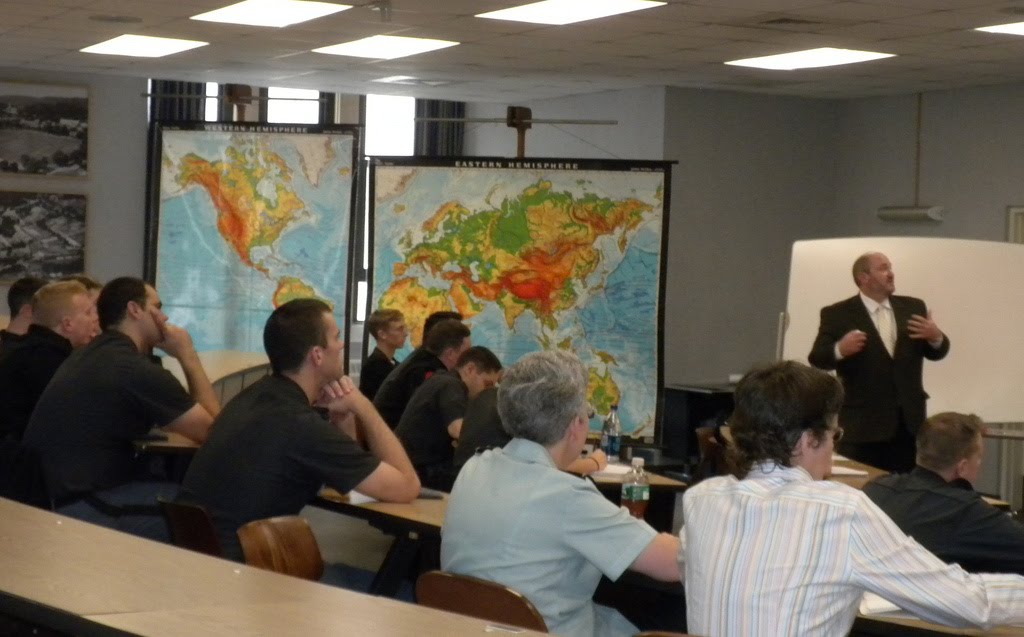

 Financial Times South Asia Bureau Chief James Lamont has written a flood of environment-as-political-dialogue stories this week! (Well, only two, but that constitutes a deluge in the world of environmental peacebuilding.)
 The security threat of sea level rise to small island states appears to have proven so obvious as to overcome the common objections of many countries (notably P5 members China and Russia) to framing climate change as a threat to security. Just
  Wildlife trafficking is the third-largest criminal industry worldwide—after drugs and the sex trade—involving $20 billion in global trade each year. Illegal wildlife traffickers are difficult to track down, as they employ increasingly sophisticated methods, showing higher levels of organization and technological savvy. In addition, the resources devoted to halting wildlife trafficking are extremely limited, due in part to other issues—such as terrorism and climate change—dominating the international dialogue. Animal trafficking has become a forgotten crisis, and with devastating impacts on species’ survival and ecological health, said experts at a


