-
Storytelling Is Serious Business: Narratives, Research, and Policy
›The use of storytelling, through evocative writing, short films, infographics, and maps, to convey global issues is increasingly popular, yet few organizations are able to invest the time and energy needed to develop emotionally compelling and visually expressive content. [Video Below]
-
Amid Perfect Storm of Climate Challenges, Can Aquaculture Net Food Security Gains in Bangladesh?
›October 15, 2013 // By Jacob Glass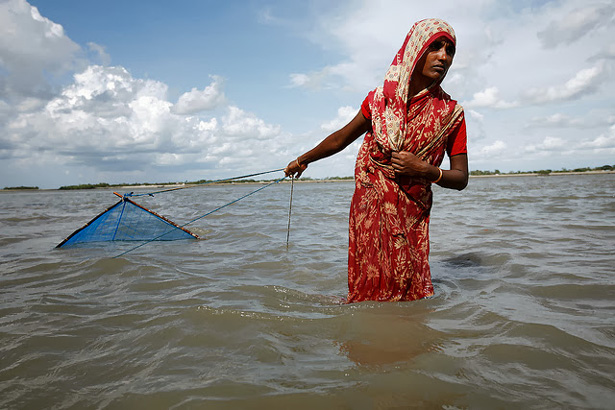
It is difficult to find a country feeling the negative impacts of climate change more severely than Bangladesh. Name any alarming, seemingly far off effect of a warming world being discussed in the halls of Washington or the summits of Copenhagen, and there is a good chance Bangladesh is experiencing it today. Flooding, drought, sea level rise, mass migration, and crushing poverty are exacerbated by a growing population and rapid urbanization. This perfect storm of climactic and demographic trends presents a looming crisis for Bangladesh, no more so than when it comes to food security.
-
A Season for Motherhood: The Role of Family Planning in Improving Maternal Health
›Ensuring access to family planning is not only a matter of human rights, but can also play a key role in protecting the health of mothers and children. Maternal health experts and program directors met at the Wilson Center on July 31 to discuss the role family planning takes in women’s health in developing countries, what successes family planning programs worldwide have had so far, and what can be done to expand services. Sarah Craven, chief of the UN Population Fund’s Washington office, moderated the event.
-
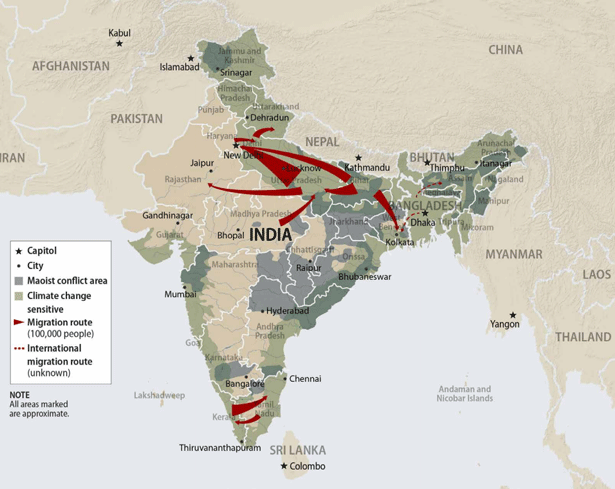
India’s Assam Shows Second-Order, Dangerous Effects of Climate Change in South Asia
›August 13, 2013 // By Ashley Ziegler
To use the military parlance, climate change is often considered a “threat multiplier,” challenging stability and development around the world by exacerbating underlying conditions of vulnerability. South Asia is one region that faces multiple stressors that have the potential to feedback off each other.
Higher temperatures, more extreme weather, rising sea levels, flooding, and increased cyclonic activity in the Bay of Bengal and the Arabian Sea are reshaping the environment, warns the Center for American Progress (CAP) in a report.
-
Backdraft: Flipping the Frame on Conflict and Climate Change
›Fire needs oxygen to burn. When a fire starts inside a building, the floors, ceilings, walls, doors, and windows can constrict the flow of air. Breaking in to fight the fire thus carries the risk of opening a new airway. If that happens, a smoldering fire can expand explosively, bursting into roaring flames as it sucks air in through the new passageway. This sudden inrush of air to fuel a burst of fire has a name: backdraft.
-
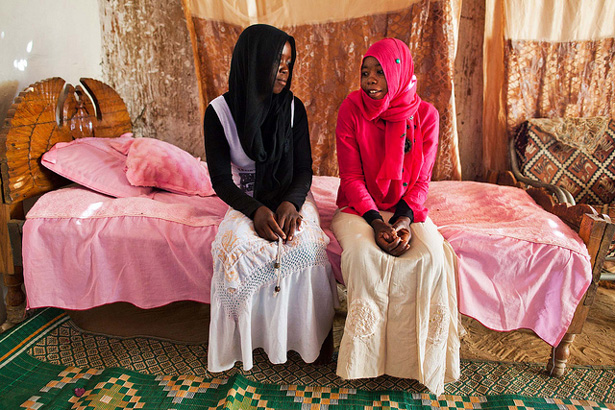
From Ethiopia to Egypt, Girls’ Education Programs Combat Child Marriage
›According to the UN Population Fund, more than 140 million girls will become child brides between 2011 and 2020 – an estimated 14.2 million young girls marrying too young every year or 39,000 daily. The majority of these girls do not receive access to education or reproductive health services. [Video Below]
-
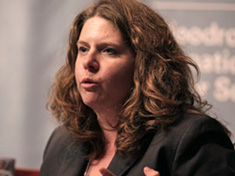
Lisa Friedman: Bangladesh Shows Importance of Expanding Coverage of Climate-Induced Migration
›“What I found in Bangladesh was that [climate migration] wasn’t a straight line,” says Lisa Friedman in this week’s podcast. It’s “a far more complicated story.”
Friedman is the deputy director of ClimateWire, a news service that brings readers daily information related to climate change and its effects on business and society. At the launch of ECSP’s new report, Backdraft: The Conflict Potential of Climate Mitigation and Adaptation, Friedman discussed her experiences reporting on climate-induced migration in Bangladesh – one of the most vulnerable countries to climate change in the world, due to its low-lying geography, dense population, and high poverty levels.
-
It’s Not a Drug, It’s Not a Device – It’s Women Working Together
›“Cooperative nurturing is the natural state of humans,” said Anthony Costello, director of the University College London’s Institute for Global Health, during a side event yesterday here at the Women Deliver conference in Kuala Lumpur. Children and mothers are healthier when they have a support network, so the Institute for Global Health has partnered with a number of NGOs over the last two decades to form thousands of community-based women’s groups in Bangladesh, India, Nepal, and Malawi.
Showing posts from category Bangladesh.