• woodrow wilson center
  • ecsp

New Security Beat

Subscribe:
  • rss
  • mail-to
  • Who We Are
  • Topics
    • Population
    • Environment
    • Security
    • Health
    • Development
  • Columns
    • China Environment Forum
    • Choke Point
    • Dot-Mom
    • Friday Podcasts
    • Navigating the Poles
    • Reading Radar
  • Multimedia
    • Water Stories (Podcast Series)
    • Backdraft (Podcast Series)
    • Tracking the Energy Titans (Interactive)
  • Films
    • Water, Conflict, and Peacebuilding (Animated Short)
    • Paving the Way (Ethiopia)
    • Broken Landscape (India)
    • Scaling the Mountain (Nepal)
    • Healthy People, Healthy Environment (Tanzania)
  • Publications
  • Events
  • Contact Us

NewSecurityBeat

The blog of the Wilson Center's Environmental Change and Security Program
Showing posts from category Asia.
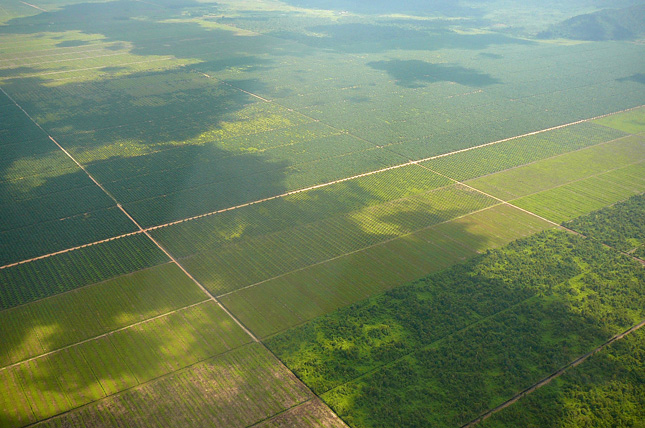
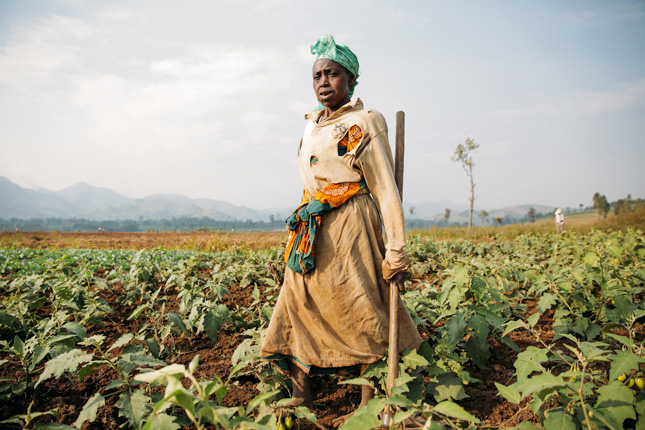
  • Why Women’s Empowerment Must Start With Land Rights

    ›
    Guest Contributor  //  October 11, 2016  //  By Justine Uvuza
    Landesa-title

    Property and citizenship are in many ways what define us, and they interact in fascinating ways.

    MORE
  • Building a Case for Integrated Development: A New Research Agenda and Examples From the Field

    ›
    From the Wilson Center  //  September 20, 2016  //  By Sreya Panuganti

    Zunilda Arce (center) and young women from the Ita Guasu indigenous community in Paraguay, participate in the development of their community development plan. This activity is part of USAID’s efforts to strengthen civil society participation in municipal governance. Through its local partner Federation of Production Cooperatives (FECOPROD), USAID also works with indigenous communities to help them identify and advocate for their needs within a political context. /Luciano González, FECOPROD

    With the Sustainable Development Goals nearing their one-year anniversary, the global community continues to strive toward eradicating poverty by 2030. In order to achieve this ambitious target, many international development practitioners are embracing a more holistic approach to development, combining traditionally single-sector programming, like health or environment work, into more comprehensive efforts. But such integrated development is sometimes easier said than done.

    MORE
  • Striving for Sustainability at 10 Billion: The 2016 World Population Data Sheet

    ›
    Guest Contributor  //  September 14, 2016  //  By Jeff Jordan & Peter Goldstein
    Niger-graph

    Featured side by side at the top of The New York Times home page recently were two stories: one on the United States and China, the world’s largest producers of carbon emissions, committing to a global climate agreement, another on how rising seas are already affecting coastal communities in the United States.

    MORE
  • Wild Laws: China and Its Role in Wildlife Trafficking

    ›
    China Environment Forum  //  From the Wilson Center  //  September 12, 2016  //  By Evie Kirschke-Schwartz
    rhino-remote

    Picture your typical farm: Pigs, cows, chickens, goats…and tigers? This may sound far-fetched, but many iconic wild animals – including tigers, bears, and rhinos – are now farmed en masse in China.

    MORE
  • A New Kind of Conservation: Making the Connection Between Community and Nature

    ›
    Guest Contributor  //  September 9, 2016  //  By Suzanne York
    Ngamba_Caregivers

    An increasing number of conservation and health activists are beginning to understand the value of an integrated approach to development. Without addressing the needs of people, conservation measures will not be very effective, and conversely, without conservation, people lose vital natural resources and suffer consequences to their health.

    MORE
  • The Women of Sarawak and Mindoro on the “Invisible Battles” of Climate Change

    ›
    Eye On  //  September 8, 2016  //  By Sreya Panuganti

    “At the Eye of the Storm” is a series exploring how empowering women can ensure they are climate victors, not climate victims.

    Although separated by a thousand miles, the women of the Malaysian state of Sarawak and the Filipino island of Mindoro are united by a major struggle: climate change. As rainfall patterns grow increasingly unpredictable, natural disasters become more frequent, and drought ravages once-arable land, women are on the frontlines in both communities.

    MORE
  • From Brown to Green: Three Scenarios for a Southeast Asian Regional Energy Grid

    ›
    Guest Contributor  //  September 7, 2016  //  By Molly McKeon & Adam Greer
    Lopburi-solar

    Southeast Asia is one of the fastest growing energy markets in the world. Regional demand for energy may grow by as much as 80 percent and electricity demand more than triple by 2040. To keep up, governments are working to expand coordination across borders and create a broader regional energy grid (indeed their efforts predate their northern neighbors’ recent announcement of a “supergrid” by several decades).

    MORE
  • How Lapis Lazuli Turned One Afghan Mining District to the Taliban

    ›
    August 25, 2016  //  By Adrienne Bober
    helaluck-mine-tunnel1

    In the mountains of northern Afghanistan, between Pakistan and China, a region that has historically rejected the Taliban has become the group’s second-largest source of revenue. The twisting tale of Kuran wa Munjan reveals the challenges of extracting precious minerals in unstable and fragile states.

    MORE
Newer Posts   Older Posts
View full site

Join the Conversation

  • RSS
  • subscribe
  • facebook
  • G+
  • twitter
  • iTunes
  • podomatic
  • youtube
Tweets by NewSecurityBeat

Trending Stories

  • unfccclogo1
  • Pop at COP: Population and Family Planning at the UN Climate Negotiations

Featured Media

Backdraft Podcast

play Backdraft
Podcasts

More »

What You're Saying

  • Volunteers,At,The,Lagos,Food,Bank,Initiative,Outreach,To,Ikotun, Pan-African Response to COVID-19: New Forms of Environmental Peacebuilding Emerge
    Rashida Salifu: Great piece 👍🏾 Africa as a continent has suffered this unfortunate pandemic.But it has also...
  • A desert road near Kuqa An Unholy Trinity: Xinjiang’s Unhealthy Relationship With Coal, Water, and the Quest for Development
    Ismail: It is more historically accurate to refer to Xinjiang as East Turkistan.
  • shutterstock_1779654803 Leverage COVID-19 Data Collection Networks for Environmental Peacebuilding
    Carsten Pran: Thanks for reading! It will be interesting to see how society adapts to droves of new information in...

What We’re Reading

  • Rising rates of food instability in Latin America threaten women and Venezuelan migrants
  • Treetop sensors help Indonesia eavesdrop on forests to cut logging
  • 'Seat at the table': Women's land rights seen as key to climate fight
  • A Surprise in Africa: Air Pollution Falls as Economies Rise
  • Himalayan glacier disaster highlights climate change risks
More »
  • woodrow
  • ecsp
  • RSS Feed
  • YouTube
  • Twitter
  • Facebook
  • Home
  • Who We Are
  • Publications
  • Events
  • Wilson Center
  • Contact Us
  • Print Friendly Page

© Copyright 2007-2021. Environmental Change and Security Program.

Woodrow Wilson International Center for Scholars. All rights reserved.

Developed by Vico Rock Media

Environmental Change and Security Program

Woodrow Wilson International Center for Scholars

Ronald Reagan Building and International Trade Center

  • One Woodrow Wilson Plaza
  • 1300 Pennsylvania Ave., NW
  • Washington, DC 20004-3027

T 202-691-4000