

Showing posts from category Asia.
-
Netting the Most From Improved Fisheries Governance
›October 7, 2008 // By Will Rogers “Frequently, we forget that environmental management is all about institutions and governance, and the decisions and trade-offs that we make,” said the University of Washington’s Patrick Christie at “Governance of Marine Ecosystem-Based Management: A Comparative Analysis,” a September 29, 2008, event sponsored by the Wilson Center’s Environmental Change and Security Program (ECSP). “And of course they need to be informed by ecological principles as well. But when it comes down to it, you’re managing individuals, institutions, [and] budgets.” Christie believes that as more and more marine species move dangerously close to extinction—whether from overfishing, pollution, or habitat destruction—ecosystem-based management (EBM), which governs ecosystems according to ecological rather than political boundaries, offers the best approach to marine conservation. This meeting was the final event in ECSP’s “Fishing for a Secure Future” series.
Decentralizing EBM
For Alan White of The Nature Conservancy, the Coastal Resource Management Project (CRMP), initiated by the U.S. Agency for International Development in 1996, exemplifies EBM’s success. Working in 111 coastal municipalities in the Philippines and covering approximately one-sixth of the country’s coastline, CRMP helped managers of municipal fisheries and marine protected areas (MPAs) collaborate with coastal law enforcement agencies to restore fish populations. EBM can be achieved, argued White, by allowing local municipalities to control simple regulatory schemes—so long as they are simultaneously sharing information with larger-scale networks. However, “the local governments have to be the ones to pay for this; they can’t be dependent on foreign donor projects or even large NGOs. It’s got to be sustained through the mechanism of governance and governments in those areas,” he said.
The Coral Triangle Initiative (CTI) regional action plan, drafted by the CTI’s six members—Indonesia, East Timor, the Philippines, Malaysia, Papua New Guinea, and the Solomon Islands—is designed to make ecosystem-based fisheries management “more mainstream in the region,” said White. Among the many factors decreasing fish populations in the region are illegal and commercial fishing, chemical poisoning, industrial pollution, coral bleaching, typhoons, and aquarium fishing, he noted, and to effectively address these problems, local municipalities and larger-scale actors must coordinate their strategies.
Curbing Illegal Fishing in the Philippines
Tetra Tech’s Nygiel Armada explained that the Fisheries Improved for Sustainable Harvests (FISH) Project in the Philippines’ Danajon Bank ecosystem demonstrates how improving control mechanisms can combat illegal and commercial fishers’ activities. The FISH Project focuses on improving control mechanisms, including the network of MPAs; species-specific management; gear restrictions; size limits on fish; registration and licensing; and zoning of fishing and water activities. Strengthening these mechanisms and combining them with cross-cutting initiatives such as information, education, and communication campaigns; better policies; and collaboration with law enforcement agencies led to more fish.
“Governance is only as strong as your weakest link,” emphasized Armada. The weakest municipalities—those that allowed illegal fishing practices to continue and failed to enforce control mechanisms—weakened overall gains. To sustain fish stocks and improve governance, all localities must work together to enforce control mechanisms.
Marine Governance, Large and Small
“As scale increases, and complexity increases, and control and potential for coordination become less feasible, there’s really [a] need to pay increasing attention to the context within which governance is taking place,” maintained Robin Mahon of the University of the West Indies, who studies the Caribbean large marine ecosystem. As Mahon argued, “policy cycles at all levels are important because different types of decisions take place at each level.”
Video of the event and PowerPoint presentations are posted on the Woodrow Wilson Center website.
Photo: Patrick Christie. Courtesy of Dave Hawxhurst and the Woodrow Wilson Center. -
Weekly Reading
›The Intergovernmental Panel on Climate Change has released a paper examining climate change’s likely effects on water resources, as well as how these changes in water resources could affect ecosystems, agriculture, human health, and the economy.
In “Warfare Ecology” (abstract), an article published in the September issue of BioScience, Gary Machlis and Thor Hanson argue that a new, holistic approach to the ecological study of warfare is needed, encompassing preparations for war, combat, and post-conflict activities.
Investing in economic development and education—both at home and abroad—is a more efficient way to prevent violence than investing a similar amount in weaponry or defense infrastructure, argue Representative Danny Davis (D-IL) and Michael Shank of George Mason University’s Institute for Conflict Analysis and Resolution in The Hill.
This year’s Clinton Global Initiative Annual Meeting featured a panel devoted exclusively to water and sanitation issues.
“UN demographers projected in 2002 that the population of the Philippines in 2008 would reach between 75 and 85 million. But the population has already overshot the high projection and now stands at 89 million, up from 60 million in 1990. And the country’s forests, as well as its people, are paying the price in terms of urban overcrowding and rural deforestration [sic],” writes Henrylito Tacio.
Economist environment correspondent Edward McBride moderates an online debate over whether water should be priced according to its market value. -
Access to Contraception Could Reduce Maternal Mortality by One Third, World Bank Reports
›August 14, 2008 // By Sonia SchmanskiFertility rates worldwide have been on the decline for many years, the result of a steady decrease in desired family size. But more often than not, fertility rates have not fallen as quickly as desired family size, as access to contraceptives has not kept pace with increasing demand. Consequently, more than 75 million pregnancies each year are unintended, finds “Fertility Regulation Behaviors and Their Costs: Contraception and Unintended Pregnancies in Africa and Eastern Europe & Central Asia,” a World Bank discussion paper surveying decades of research from Africa, Eastern Europe, and Central Asia. One fifth of these pregnancies end in induced abortion, fully half of which are classified as unsafe, meaning they are not attended by a properly trained health care worker or in an environment that conforms to minimum medical standards.
The costs of unsafe abortion are tremendous, financially and in terms of human lives. Approximately 67,000 women die annually from complications resulting from unsafe abortion, leaving more than 200,000 children motherless. Sexual and reproductive health issues constitute 20 percent of the global disease burden, and produce additional “direct and indirect costs to the individual woman, the woman’s household, the country’s health system and society as a whole.”
In Africa, post-abortion care can consume up to half of obstetrics and gynecology department budgets. The cost of this care is often much higher than the patient’s monthly salary. The authors report that “comprehensive family planning services to prevent unwanted pregnancy and reduce unsafe abortion in Nigeria would cost only a quarter of what is being spent in direct costs to treat post-abortion complications.” This point is taken up by author Margaret E. Greene is the latest issue of FOCUS, ECSP’s series of occasional papers featuring Wilson Center speakers. She writes that “[r]obust, compelling evidence linking good reproductive health to poverty reduction,” as is offered in the World Bank report, will “support efforts to include it in country-level poverty reduction strategies and in the allocation of international poverty reduction funding.”
This situation repeats itself across the globe. In Central Asia and Eastern Europe, induced abortion is “the principal method of birth control,” due to the expense of importing Western contraceptives, the medical community’s stigma against oral contraceptives, and the availability of abortion result. In Russia, government concerns about low fertility led the government to dismantle its sex-education curriculum and to carry out widespread layoffs in the government-controlled offices of contraceptive manufacturers.
Without exception, the case studies in this discussion paper find significant financial benefit to increasing modern contraceptive availability. Inadequate access is “an important barrier,” the authors write, discounting the argument that the contraceptives are there and people simply don’t use them. DHS surveys worldwide find that cost has prohibited contraceptive use for fewer than 2 percent of the estimated 137 million women with an unmet need. Women have decided, it seems, that the costs of childbearing far outweigh those of contraceptives.
“It is imperative,” the authors write, “that policies and programs address the need for contraception globally – for all population groups but with special emphasis on those who are most disadvantaged.” Community insurance schemes to reduce out-of-pocket payments can help accomplish this. Other ideas include increased subsidies for basic health services and adjusted user fee policies. The report also urges expanded and improved provision of contraceptive information and services, as well as improved training for health care providers. The problem is not a lack of good ideas and policies, but a lack of political will.
-
Population, Natural Resource Pressures Could Ignite Human-Wildlife Conflict in Laos
›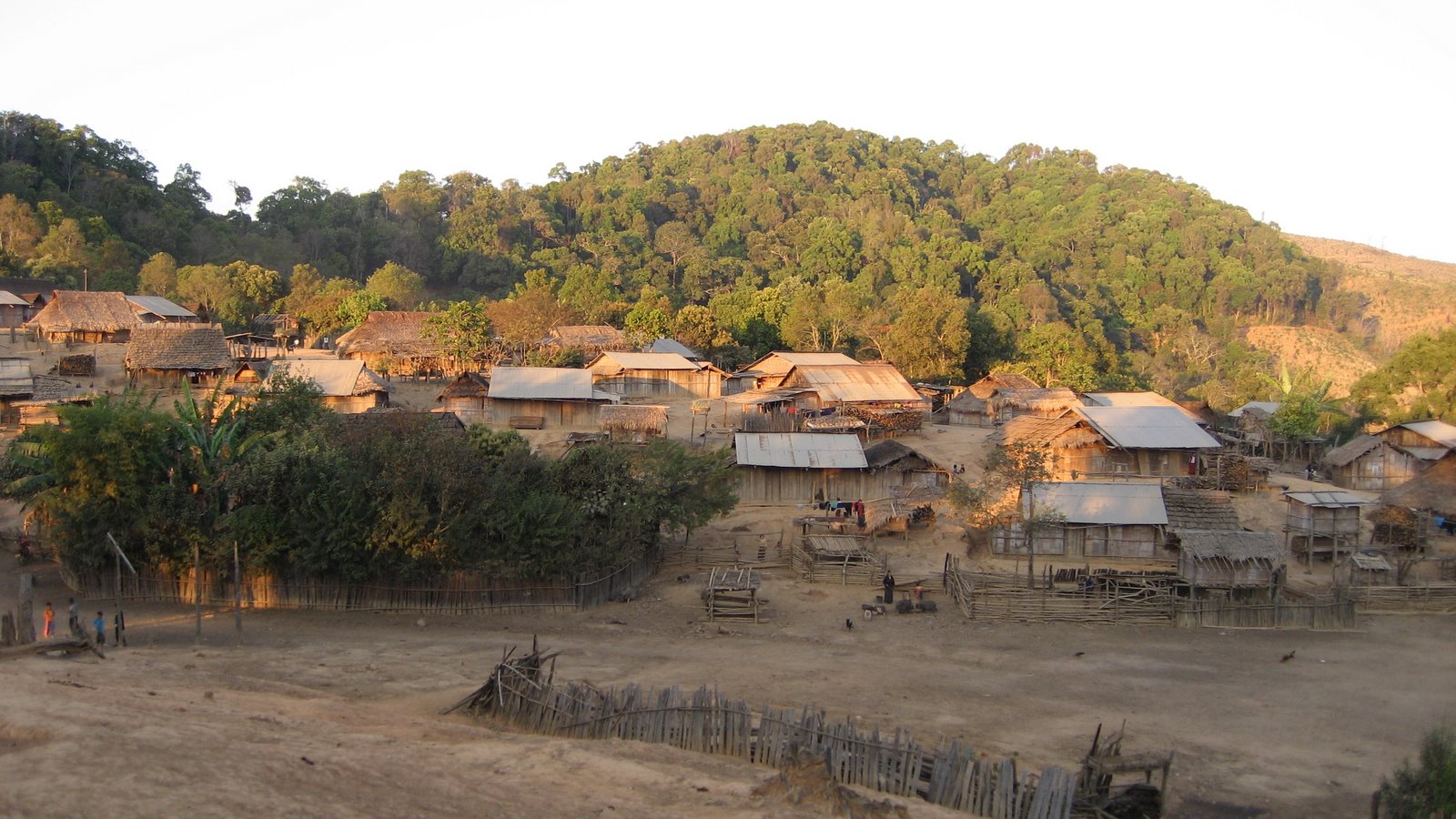 High population growth, limited arable land, and soaring rice prices in Lao People’s Democratic Republic mean that land access is critical for food security. At the same time, there is immense pressure to convert forests and small-scale agricultural land into commercial plantations for rubber, coffee, and other valuable crops. Together, these factors are significant threats not only to people, but to wildlife and biodiversity as well. They are also resulting in the emergence of new tensions between people and wildlife across the Lao landscape.
 -
Aggressive Prevention Measures May Help International Community Avert Major Avian Flu Flap
›July 2, 2008 // By Jackson DroneyThe days of dire avian flu pandemic forecasts may one day be behind us. “The situation is really improving…it doesn’t mean that we can say that the situation globally is completely under control—we have the situation in countries where it is still quite entrenched—but it does mean that in the rest of the world there is a great deal of vigilance and action under way,” said UN System Influenza Coordinator David Nabarrom recently.
He noted that government and private sector actors—particularly in the UK, South Korea, the United States, and Australia—have taken aggressive steps to prepare for an outbreak and have reduced the risk factors that lead to the spread of the disease. Also, he was pleased that Sanofi Pasteur, a pharmaceutical company, has donated 60 million H5N1 vaccines to a growing global stockpile.
Despite this progress, concerns remain. Vietnam, Bangladesh, India, Egypt, and Indonesia have the highest incidence rates of the virus, with the prevalence of the disease in Indonesia particularly startling. In March, UN Food and Agriculture Organization Chief Veterinary Officer Joseph Domenech said, “I am deeply concerned that the high level of virus circulation in birds in the country could create conditions for the virus to mutate and to finally cause a human influenza pandemic.”
Nabarrom credited international vigilance for the success we’ve had thus far. Although avian influenza has largely faded from the front page headlines, that vigilance must continue, as birds and people continue to die from avian flu. Hold the champagne bottles: There is still work to be done. -
Climate Change, Migration, Conflict: Are the Links Overblown?
›June 9, 2008 // By Wilson Center Staff“Experts say a third of Bangladesh’s coastline could be flooded if the sea rises one metre in the next 50 years, creating an additional 20 million Bangladeshis displaced from their homes and farms,” says a recent article from Reuters, echoing a refrain about the links between climate change, migration, and instability that has become common in news stories and think tank reports over the past several months.
Yet not everyone agrees that climate change will lead to massive, destabilizing human migrations. “Contrary to conjecture from security researchers, we find little evidence that migration will exacerbate already volatile situations in the developing world,” write Clionadh Raleigh and Lisa Jordan in “Assessing the Impact of Climate Change on Migration and Conflict,” a paper prepared for the March 2008 World Bank “Social Dimensions of Climate Change” workshop. “As the people most affected by climate change are typically the poorest and least powerful within a country, they are less capable of waging significant conflicts to redress grievances against neighbors or governments.” In addition, they maintain, environmental migration tends to be short-term and internal, further lessening the likelihood that it will lead to conflict.
Although environmental degradation can increase people’s vulnerability to floods and landslides, so can “unequal patterns of asset ownership and income, rural land tenure systems, population growth in marginal areas, and governments’ land access policies,” say Raleigh and Jordan, and it is important that climate change not make natural disaster risk analysis one-dimensional. The authors agree that Bangladesh will be highly vulnerable to floods and wind storms in the future, but argue that this does not necessarily make them potential “climate migrants,” as even people who are very vulnerable to climactic changes can—and do—develop resilience strategies for dealing with gradual and extreme changes. -
Weekly Reading
›The Effects of Climate Change on Agriculture, Land Resources, Water Resources, and Biodiversity in the United States, the long-awaited report from the U.S. Climate Change Science Program and the Subcommittee on Global Change Research, was released this week.
The Worldwatch Institute’s Robert Engelman discussed his recent book More: Population, Nature, and What Women Want on NPR’s Talk of the Nation.
Saleem Ali urges Pakistan and India to amicably resolve the Sir Creek dispute in an op-ed in Pakistan’s Daily Times.
“Reducing carbon dependency also goes to the heart of our basic security needs for the future,” writes Tony Blair in an op-ed in the Washington Post.
A new guide from the Population Reference Bureau on sexual and reproductive health in the Middle East and North Africa targets journalists. -
“Development in Reverse”: ‘International Studies Quarterly’ Article Links Natural Disasters, Violence
›May 20, 2008 // By Sonia SchmanskiAlthough numerous research projects have found that environmental change can contribute to conflict “through its impact on social variables such as migration, agricultural and economic decline, and through the weakening of institutions, in particular the state,” very few analysts have systematically addressed the relationship between natural disasters and violent civil conflict, write Philip Nel and Marjolein Rightarts in “Natural Disasters and the Risk of Violent Conflict,” published in the March 2008 issue of International Studies Quarterly (subscription required). Criticizing political scientists’ tendency to diminish the importance of geography and environmental factors in assessing violence, they argue that it has become critically important to “correct this oversight.”
Recent events indicate that this attention is overdue. On May 2, Cyclone Nargis began its devastating journey through Myanmar. The latest UN estimates put the death toll at somewhere between 70,000 and 100,000. On May 12, a 7.9-magnitude earthquake struck China’s Sichuan Province (incidentally, volcanic eruptions and earthquakes top Nel and Rightarts’ list of the disasters most likely to lead to violence). Official death toll estimates currently stand at 40,000, but are likely to continue to increase. While the Chinese government has been praised both at home and abroad for the speed and scale of its response, Burma’s ruling military junta has been roundly condemned for delaying the arrival of international humanitarian assistance. It remains to be seen whether the junta’s controversial response will lead to popular rebellion among the Burmese people.
Low- and middle-income countries with high levels of inequality are most susceptible to the violence caused by natural disasters, write Nels and Rightarts. Natural disasters create openings for violent civil conflict by reducing state capacity while simultaneously increasing demands upon the state. The scramble for limited resources in the wake of a natural disaster can easily devolve into widespread violence.
“Given the dire predictions that natural disasters are set to become more frequent in the near future” due to climate change, Nel and Rightarts conclude, “conflict reduction and management strategies in the twenty-first century simply have to be more attuned to the effects of natural disasters than they have been up to now.”
 “Frequently, we forget that environmental management is all about institutions and governance, and the decisions and trade-offs that we make,” said the University of Washington’s

