-
Christina Larson, Yale Environment 360
Gauging the Impact of Warming On Asia’s Life-Giving Monsoons
›August 21, 2012 // By Wilson Center Staff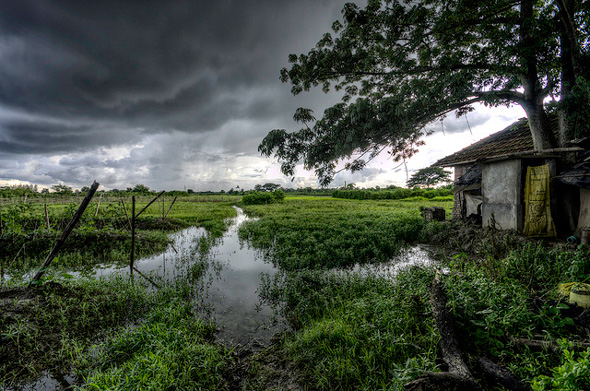
The original version of this article, by Christina Larson, appeared on Yale Environment 360.
Bouncing along bad roads in a jeep through central Mongolia, with bright blue skies and high clouds overhead, we drive for miles through a treeless landscape, passing only dry grasslands dotted with cattle and white yurts. But as we head north – myself, two U.S. scientists, and one Mongolian forestry expert – we begin to notice Siberian pine and larch growing on the northern slopes of rolling hills, but not the southern slopes, and at some elevations, but not others. In water-scarce Mongolia, as my travel companion Neil Pederson of Columbia University’s Lamont-Doherty Earth Observatory explained, the precarious growth of trees is limited by temperature and moisture availability; small variations – northern slopes are slightly cooler and wetter – can make all the difference.
-
Inside U.S. Climate Security Policy: Geoff Dabelko Interviewed by ISN
›August 20, 2012 // By Kate Diamond
Climate change “has been thought of in many quarters as something that affects folks ‘over there,’ and not as much domestically, and I think that’s a mistake,” said ECSP’s Geoff Dabelko in a recent podcast with the Zurich-based International Relations and Security Network. “I think folks are coming to a realization that there are very high economic, political, and ultimately security stakes for the United States.”
-
PRB’s 2012 World Population Data Sheet
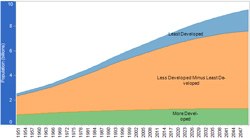
›“The most rapid population growth in many ways [occurs in] the countries that can least afford it,” said Carl Haub in a webinar on July 19 to launch the Population Reference Bureau’s (PRB) 50th annual World Population Data Sheet. This year, the report explores aging populations in more developed countries, rapid population growth in less developed countries, and the increased global prevalence of non-communicable diseases in an interactive map, which concisely illustrates global trends. PRB estimates that the world’s population is 7,057,075,000 as of mid-2012; the global population crossed the seven billion threshold in October 2011.
 “The most rapid population growth in many ways [occurs in] the countries that can least afford it,” said Carl Haub in a webinar on July 19 to launch the Population Reference Bureau’s (PRB) 50th annual World Population Data Sheet. This year, the report explores aging populations in more developed countries, rapid population growth in less developed countries, and the increased global prevalence of non-communicable diseases in an interactive map, which concisely illustrates global trends. PRB estimates that the world’s population is 7,057,075,000 as of mid-2012; the global population crossed the seven billion threshold in October 2011.
Aging Europe and East Asia
Haub explained that population growth in Europe has been declining since the 1970s and is more or less a “pre-programmed destiny” for these countries. People of child-bearing ages make up a smaller percent of the population in many more developed countries, so unless there is an “enormous increase” in total fertility rates, these populations will continue to decline for the foreseeable future.
Haub noted that these aging populations are unprecedented. In Germany and Italy, for example, 21 percent are over the age of 65; many other European countries have similar figures, as do other developed countries like Japan and South Korea. PRB expects these percentages to increase throughout the next century and for European countries to struggle to support greater numbers of retirees.
Many such states have already found it difficult to raise the retirement age, even though medical advances allow people to work until later ages. PRB projects that in Japan, 42 percent of their population will be over the age of 60 in 2050; if such a large percentage of the population is no longer in the labor force, it will be difficult for to find the resources to support them.
The report shows that the United States, on the other hand, is still experiencing modest population growth. The higher birthrate is in part due to immigration, as recent immigrants to the United States tend to have more children. Haub noted that European states have been reluctant to accept greater numbers of migrants to try to reverse their declining population.
Youthful Developing Countries
While the demographic destiny of aging countries is somewhat determined, the future for less developed countries is more uncertain. Many countries in sub-Saharan Africa, the Middle East, and South Asia have large and growing youth populations, and how many children these “future parents” will have is uncertain. That uncertainty is underscored by the variety of scenarios for future population growth. The UN has four variants – high, medium, low, and constant fertility – which vary considerably in their projections for future populations, and PRB’s global projections for 2050 are some 600 million people more than the commonly-used medium variant UN projection.
Rapid growth in the least developed countries is hardly a new phenomenon, but PRB breaks down the numbers to an impressive degree. The 2012 Data Sheet provides updated net migration rates, projected population as a multiple of today’s, infant mortality rates, rate of natural increase, and other basic statistics. PRB also provides population pyramids from the wealthiest and poorest quintiles of the population of Malawi, as an example of the utility of desegregating data to better allocate resources to the underserved. They found that while birthrates have begun to decline for the wealthiest one-fifth of Malawians, the poorest citizens still have a total fertility rate of over seven children per woman.
Measuring Health Systems
Devastating infectious diseases – malaria, tuberculosis, and HIV/AIDS – have long been entrenched in some of the least developed and most rapidly growing parts of the world. But this year, PRB began to assess health on a broader level by tracking deaths attributed to non-communicable diseases as well. Diseases like cardiovascular disease, diabetes, respiratory illness, and cancer are leading causes of death in developed countries, but they have also increased in prevalence in developing countries at an alarming rate.
PRB is not the only organization to take note of the change in disease predominance. The World Health Organization has issued guidelines targeting four factors which increase the risk of these illnesses: tobacco use, alcohol abuse, poor diet/obesity, and physical inactivity. The UN also called a special session last September to discuss non-communicable diseases. President of PRB Wendy Baldwin noted that the last such discussion on a health issue was 10 years ago about HIV/AIDS.
Baldwin also pointed out that non-communicable diseases can increase the burden on the health systems of developing countries even more so than in developed states. She reported that in south Asia, for example, people have heart attacks on average six years earlier than people in developed countries, meaning more families lose their primary breadwinners.
The risk factors for these non-communicable diseases are difficult to target, especially with increasing urbanization in developing countries. But in a video accompanying the report, Baldwin mentioned that raising the price of cigarettes is an effective way to reduce tobacco consumption, especially for youth. Some countries have also made progress in increasing physical activity through sports programs and making urban areas safer for pedestrians. “The low and middle income countries have a real opportunity to take really positive steps to confront that rise in non-communicable diseases and to address the risk factors that drive them,” she said.
The Data Sheet Over Time
The World Population Data Sheet has long been a vital resource for those in the population, health, and environment fields and has grown to include far more data than its first iteration in 1962. At first, the sheet had only four indicators: a population estimate for the year, annual rate of increase, crude birth rate, and crude death rate. Over time, PRB began measuring a greater number of key figures like infant mortality and life expectancy at birth. Population projections, a staple of the current version, were not added until 1978, perhaps in response to the inception of the United Nations World Population Projections in 1974.
Over the past five decades, the data sheet has been witness to some major shifts in global population trends. While PRB discourages researchers from comparing past data to current figures because the measures and methods of gathering information have likely changed over time, it is still possible to see the rise of importance in several trends based on the indicators PRB chose to focus on each year. For example, extremely young populations have been found to have profound effects on a country’s stability and prosperity, as have aging populations. The 1966 data sheet was the first to measure the percentage of the population under the age of 15, and it didn’t become a consistent data point until 1977.
The number of people living in cities in the developing world surpassed those in the developed in 1970, according to the UN, and in 1972, PRB began tracking the percentage of populations living in urban areas. HIV/AIDS indicators were added in 2000, as global awareness and a commitment to fighting the disease was rising.
PRB’s demonstrated commitment to continually adding more data and refining existing projections makes the data sheet is a valuable resource to those studying the problems of today and the future. Fifty years on, the amount of information collected is staggering. The data sheet provides a glimpse at not just how many people there are in the world, but also where and how they live.
For more information, take a look at the full data sheet!
Sources: Population Reference Bureau, UN Population Division.
Image Credit: PRB; Video: Noncommunicable Diseases and Youth in Developing Countries. -
From Youth Bulge to Food and Family Planning, Los Angeles Times’ ‘Beyond 7 Billion’ Series Synthesizes Population Challenges
›Over the next 40 years, the world is set to add 2.3 billion people. Millions more will join the middle class, pushing consumption upwards and further straining the world’s natural resources. Variables like climate change and political instability will exacerbate that strain and complicate efforts to bolster peaceful and stable development. Los Angeles Times correspondent Kenneth Weiss and photographer Rick Loomis examine these numerous and interconnected challenges in a five-part series on population growth and consumption dynamics.
Speaking to demographic and health experts (including a number of New Security Beat regulars, like Richard Cincotta, Jon Foley, and Dr. Joan Castro), Weiss provides a thorough, astute, and compelling assessment of population dynamics in a rapidly changing world. The series starts with a basic introduction to population, climate, and consumption dynamics and progresses through to discuss political demography, global food security, and detailed looks at two important case studies, China and the Philippines.
Part One: A Population Primer
Population growth alone poses a number of challenges as cities become more crowded and demand for basic resources like water and food outpaces supply. Climate change and the unpredictable and sometimes extreme weather that is its hallmark “will make all of these challenges more daunting,” writes Weiss. And “population will rise most rapidly in places least able to handle it.” Africa, the Middle East, and South Asia, already expected to bear the brunt of climate change with rising sea levels, shorter growing seasons, and increasingly variable weather patterns, will also have to support the bulk of the world’s population growth by mid-century. Populations in Europe, North America, and East Asia are expected to stay stable or decline in numbers.
The magnitude of growth in Africa, the Middle East, and South Asia, however, is uncertain. What happens from here “hinges on the cumulative decisions of hundreds of millions of young people around the globe,” Weiss writes. And yet, “population growth has all but vanished from public discourse.” Family planning in particular remains hamstrung by “erratic funding and unpredictable crosscurrents.” The result, he writes, is that even “under the best conditions, it’s hard to get contraceptives into the hands of impoverished women who want them.”
Part Two: The Arc of Instability
Drawing on work from demographer Richard Cincotta, George Mason University’s Jack Goldstone, Population Action International, and others, part two of Weiss’ series examines youth bulges and the so-called “arc of instability,” stretching across the disproportionately youthful countries of Africa, the Middle East, and South Asia.
When a large youth population is mixed with other societal conditions, like “religious and ethnic friction, political rivalries, economic disparities, or food shortages,” youth can be “the kindling” for a spark that ignites simmering tensions, writes Weiss. Afghanistan is a case in point, where unemployed young men are often turning to the Taliban not out of extremist fervor, but out of a desperate need to support themselves and their families. “It’s too hard to employ this many people and too easy to recruit them into violence,” Cincotta told Weiss.
And Afghanistan is just the beginning, according to Goldstone. “We are literally going to see one billion young people come into the populations in the arc of instability over the next two decades,” he said. “We can’t fight them. We have to figure a better way to help them.”
Part Three: Feeding a Growing Population
As the world’s population continues to grow, and as more families join the middle class, world food production will have to double by mid-century in order to meet future demand. “What that actually means,” says World Wildlife Fund’s Jason Clay, an agriculture specialist, “is that in the next 40 years we need to produce as much food as we have in the last 8,000.”Jon Foley on how to feed nine billion and keep the planet
Weiss presents the Horn of Africa and Punjab as microcosms of the problems facing global food production in the 21st century. Desertification and urbanization are eating away at potential cropland, while harmful farming techniques leech essential nutrients from soil, rendering it useless for future use. Insufficient infrastructure means that food spoils as it’s shipped from where it’s produced to where it’s needed, while extreme and widespread poverty means that those most in need can’t afford enough to feed their families.
Stuck between growing demand and restricted supply, the University of Minnesota’s Jonathan Foley said the challenge of the century is straightforward: “How will we feed nine billion people without destroying the planet?”
Part Four: Population and Consumption in China
China has “a greater collective appetite – and a greater ecological impact – than any other country,” writes Weiss, making it a prime example of “how rising consumption and even modest rates of population growth magnify each other’s impact on the planet.”
The country’s one-child policy slowed population growth rapidly, cutting fertility almost in half in less than a decade. Over time, a large working-age cohort with few dependents emerged, and helped China reap a demographic dividend. The resulting economic prosperity has come at a cost, however, as rising incomes and increasing consumption, spread across 1.3 billion people, have wreaked havoc on the country’s environment on a scale not seen anywhere else in the world.
Because of that scale, what happens in China will have global repercussions. Climate scientists “say that in order to avoid a potentially catastrophic rise in global temperatures, worldwide carbon dioxide emissions must be cut in half by 2050,” Weiss writes. “For that to happen, China’s emissions would have to peak by 2020” – 15 years earlier than official government projections. The government remains opposed to further limits on emissions, arguing that such limits would “cripple” economic growth – an unfair impediment considering that developed countries were able to “pollute their way to prosperity, their argument goes.”
Part Five: Family Planning in the Philippines
Weiss ends the series with an in-depth look at family planning in the Philippines – a country at the forefront of the global debate over access to contraception. Lawmakers in the 80-percent-Catholic country have steadfastly refused to fund family planning services, while support from the international community all but vanished when USAID, “the major donor of contraceptives to the Philippines,” said in 2008 that it would end its contraceptive program.
Today, half of all pregnancies in the Philippines are unintended. Lawmakers are considering a “reproductive health bill…call[ing] for public education about contraceptives and government subsidies to make them available to everyone,” but a powerful opposition, including Church leadership, has stalled the bill for 14 years, Weiss writes.Joan Castro on population-environment programing in the Philippines
Public officials, including the former Manila mayor who ended the city’s contraceptive program 12 years ago, portray unbridled population growth as an economic asset, saying that “when you have more people, you have a bigger labor force.” For the millions of Filipinos who live in poverty, however, the lack of affordable family planning services leaves them with little control over family size and puts the Philippines on track to grow from 96.4 million people today to 154.9 million by mid-century. At that rate, the Philippines would be Asia’s third fastest growing country, behind Timor Leste and Afghanistan.
Not everything in the series is dire – there are side columns highlighting population, health, and environment programming in Uganda, Iran’s successful family planning program, and Dr. Joan Castro’s family planning and marine conservation work in the Philippines. But Weiss is not naïve about the challenges ahead. Under any of the United Nation’s population projections, “living conditions are likely to be bleak for much of humanity,” he writes. “Water, food, and arable land will be more scarce, cities more crowded, and hunger more widespread.”
“Even under optimistic assumptions, the toll on people and the planet will be severe.”
But while the population challenges facing the world are many, Weiss, like many before him, makes one argument clear: providing family planning services to the 222 million women who want to control the number of children they have but cannot would go a long way towards minimizing future strain.
Be sure to check out the photo and video features accompanying the “Beyond 7 Billion” series on the feature site.
Note: The sentence beginning with “When a large youth population…” was corrected.
Sources: Los Angeles Times, UN Population Division.
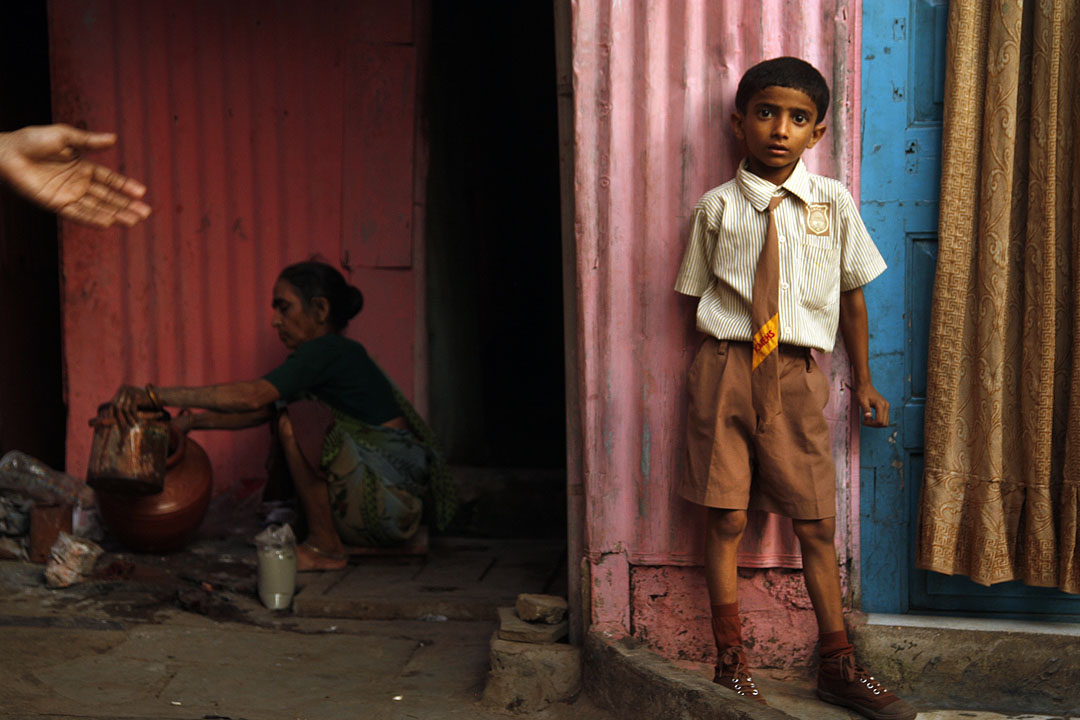
Video Credit: “The Challenge Ahead,” used with permission courtesy of the Los Angeles Times; Photo: “Dharavi,” used with permission courtesy of Rick Loomis/Los Angeles Times; Jon Foley video: TEDx. -
Population Aging: A Demographic and Geographic Overview
›The original version of this article, by Richard Cincotta, appeared on the National Intelligence Council’s Global Trends 2030 Blog. It is the first post in a series on population aging, featuring Jack Goldstone, Richard Jackson, Jennifer Dabbs Sciubba, Ronald Lee, Andrew Mason, Toshi Yoshihara, Elizabeth H Stephen, David Coleman, and Eric Kaufmann.
This series, Population Aging to 2030, begins with an introductory essay aimed at familiarizing readers with some of the demographic and geographic particulars of this phenomenon, and with several key demographic terms. The term most in need of definition is, of course, “population aging.” -
In Mongolia, Climate Change and Mining Boom Threaten National Identity
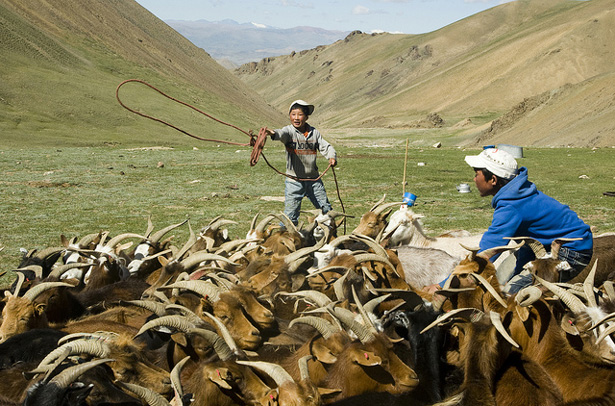
›July 23, 2012 // By Kate DiamondMongolia, a vast, sparsely populated country almost as large as Western Europe, is at once strikingly poor and strikingly rich. Its GDP per capita falls just below that of war-torn Iraq, and Ulan Bator has some of the worst air pollution ever recorded in a capital city. At the same time, Mongolia sits atop some of the world’s largest mineral reserves, worth trillions of dollars, and its economy, already one of the world’s fastest growing, could expand by a factor of six by the end of the decade as those reserves are developed.
-
Center for American Progress Takes on Climate Change, Migration, and Why They Matter to U.S. National Security
›July 19, 2012 // By Kayly OberIn early 2012, the Center for American Progress (CAP) released Climate Change, Migration, and Conflict: Addressing Complex Crisis Scenarios in the 21st Century. Although generally in line with climate-migration pieces before it (“It is difficult to fully understand the detailed causes of migration and economic and political instability, but the growing evidence of links between climate change, migration, and conflict raise plenty of reasons for concern”), the report strays from the usual by focusing on U.S. national security interests and four particular sub-regions of concern.
Northwest Africa
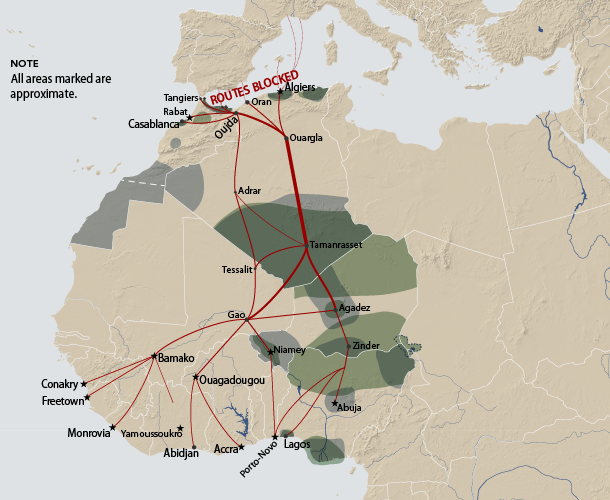
The first region examined – and the one perhaps most on the radar of security analysts at the moment – is Northwest Africa. Here the already-tenuous political stability left in the wake of the Arab Spring will most certainly be exacerbated by climate change, authors Michael Werz and Laura Conley write. “Northwest Africa is crisscrossed with climate, migration, and security challenges…rising coastal sea level, desertification, drought, and the numerous other potential effects of climate change have the potential to increase the numbers of migrants.” All of these factors combine to create what Werz and Conley define as an “arc of tension,” that will strengthen organizations that thrive on chaos, like Al Qaeda in the Islamic Maghreb, which has already taken advantage of the regional power vacuum left by Muammar Gaddafi’s ouster.
CAP investigates this arc of tension more fully in a more focused, separate brief on Northwest Africa, drilling down on Nigeria, Niger, Algeria, and Morocco. They find that these countries already grapple with a complex set of issues, including population pressures, drought, land degradation, large-scale migration, and natural resource conflicts. Climate change exacerbates all of these. Particularly worrying is the threat it poses to traditional pastoral and agricultural livelihoods, which could translate into “increasing numbers of disenfranchised youth, who security experts believe are more easily recruited to assist [terrorist groups] in return for money and food.”But environmental pressures and related conflict are not new in these areas, so how do we parse out the slow-onset climate change factors from the usual variety? That question is left unanswered and remains an open – and hotly debated – problem for researchers. The multi-faceted nature of migration, in particular, makes it hard to define the exact causes of movement.
On a larger scale, flagging the environment as the principal reason for migration has its problems, especially under the umbrella of “refugee” status. According to respected migration experts, using the term “refugee” in the case of environmental or climate scenarios is incorrect, since the environment is often simply one “push” factor, while economic opportunities make for a heavier “pull.” Furthermore, applying the term refugee in this case, they say, is misleading and undermines true political refugees.
CAP uses the less polarizing term “climate migrants” in their paper, saying “no universally accepted concepts, much less legal categories, exist to describe or define climate migrants. There is agreement, however, that factors such as drought, flooding, severe weather, and environmental degradation can cause human mobility in large numbers that are certain to increase in the near future.”
South Asia
In a case like Bangladesh and India, the second sub-region to be examined, the international community is preoccupied with rising sea levels, which is considered a more concrete example of climate change affecting migration. Ultimately, as CAP notes, it’s also a security issue:In December 2008 the National Defense University in Washington, D.C., ran an exercise that explored the impact of a flood that sent hundreds of thousands of refugees into neighboring India. The result: the exercise predicted a new wave of migration would touch off religious conflicts, encourage the spread of contagious diseases, and cause vast damage to infrastructure.
While true that India is “not in a position to absorb climate-induced pressures,” as Werz and Conley write, it’s not quite true that “foreign climate migrants” would be necessarily be an immediate problem, as they suggest.
India has a history of taking in Bangladeshi migration, with an estimated 10 to 20 million illegal Bangladeshis currently living in India, according to the Institute for Defence Studies and Analyses, an Indian think tank. Traditionally, Bangladeshis have migrated for a myriad of socioeconomic reasons, but most alluring are land availability and a stronger Indian economy. In any case, Bangladesh-India migration would not be new phenomenon.
The environment has also been a part of the equation, but in the case of large-scale sea level rise, its effect on migration can be a bit more nuanced. As the International Food Policy Research Institute noted in its study “Environmental Migrants: A Myth?,” Bangladeshis often have “risk-sharing and informal lending arrangements” to deal with idiosyncratic shocks, which include flooding. Instead, crop failure actually has the strongest effect on mobility. This suggests that it’s not just sea level rise that observers worried about environmentally-driven migration need to track in Bangladesh, but also drought and rain-induced flooding.
The Andes
The third region, the Andes of South America, also suffers from a slightly myopic security lens. Here, it’s all about melting glaciers and snowcaps. Retreating glaciers would spell disaster for countries which rely heavily on seasonal melt for agriculture and hydroelectric power. Most vulnerable are those with weak governance systems and infrastructure like Peru, Bolivia, Ecuador, and Colombia. For reference, hydropower supplies a whopping 80 percent of Peru’s electricity. However, there are more subtle impacts that could portend bigger trouble for the region.
Regional security experts concede that higher temperatures are already affecting crop production in rural Colombia, harming the ability to consolidate the security gains made by Plan Colombia over the last decade, for example. And a recent report from EUROCLIMA, the European Union’s program on climate change in Latin America, paints an even bleaker picture for agricultural production in the face of desertification and drought:Natural ecosystems, agriculture, water resources, and human health in Latin America have been impacted by unusual extreme weather events reported in the past years. For example, droughts related to El Niño impacts on the flows of the Colombia Andean region basins (particularly in the Cauca river basin), are causing a 30 percent reduction in the mean flow, with a maximum of 80 percent loss in some tributaries. Consequently, soil moisture, and vegetation activity are strongly reduced.
Perhaps more worrying is the impact on the biodiversity in the region. Considering that Latin America represents 16 percent of the world’s surface but 40 percent of its biodiversity this could have serious implications for the biomedical field and others. In a recent Nature study, scientists discovered that in situations where glacial coverage is reduced to the point where it only covers 30 to 50 percent of the drainage basin, several species begin to disappear. They calculated that the entire melting of the glaciers in these areas would result in a huge loss of biodiversity, where between 11 and 38 percent of animal and plant species could go extinct, including many of endemic species that can be found only in these areas.
China and the Third Pole
Finally, China is now in its fourth decade of ever-growing internal migration, some of it driven in recent years by environmental change. Today, across its vast territory, China continues to experience the full spectrum of climate change-related consequences that have the potential to drive migration. CAP finds that the consequences of climate change and continued internal migration in China include “water stress; increased droughts, flooding, or other severe events; increased coastal erosion and saltwater inundation; glacial melt in the Himalayas that could affect hundreds of millions; and shifting agricultural zones” – all of which will affect food supplies and the country’s seemingly relentless pace of development. Still, the most unique factor of migration in China is the power of the central government to be the main “push factor,” as in the case of the Three Gorges Dam.
Agreeing to Agree
Though they might sacrifice some nuance in the regional breakdowns, the core of CAP’s argument for why climate migration matters to U.S. national security is solid. The United States has a “vested interest in helping ensure that areas with weak or absent governance structures – where poverty, environmental degradation, and grievances over central governments and energy production coincide – do not become future recruiting grounds for extremists,” write Werz and Conley. “The possible impacts of climate-related migration in such fragile situations could be destabilizing.” Invest in people rather than just military might; invest in poverty reduction, economic development, and alternative livelihoods.Jon Barnett on migration as adaptation
In the context of climate change, this means accepting that migration is a form of adaptation. As Jon Barnett notes in an interview with ECSP:In some circumstances it might be appropriate to [invest in traditional adaptation projects like] infrastructure and hard options where we’re very certain about the nature of the risk…but in other cases, expanding the range of choices and freedoms and opportunities that people have to deal with climate change in the future is perhaps the better strategy.
This requires higher-level thinking by states to concede that migration will happen and it isn’t necessarily a bad thing. Migration bolsters origin communities through remittances and education and technology sharing. But this thinking has yet to permeate policymaking, with obvious political reasons. Until then, states that are committed to preventing migration are actually cutting off important community responses.
Ultimately, what we consider adaptation and development needs to evolve. By investing in an integrated, multi-sector development approach, we can prevent violent responses to migration at the source rather than relying on reactionary and military solutions. Or, as CAP’s Michael Werz and Laura Conley put it more boldly, “our security can no longer be guaranteed by military strength or economic clout alone, but only by our ability to compel collective action.”
Photo credit: “Villagers going to the local market in Bogoro walk past a Bangladeshi patrol unit of the United Nations Mission in the Democratic Republic of the Congo (MONUC) as the country prepares for the second round of elections. 12/Oct/2006. UN Photo/Martine Perret,” courtesy of United Nations Photo Flickr.
Sources: Center for American Progress, Institute for Defence Studies and Analyses, Inter-American Development Bank, International Food Policy Research Institute, Nature, The World Bank.
Video Credit: “The Nexus of Climate Change, Migration and Security,” courtesy of the Center for American Progress. Image: “The Arc of Tension,” courtesy of the Center for American Progress. -
An Update on PRB’s Population, Health, and Environment Project Map
›As reproductive rights advocates reflect on their disappointment with the outcome of last week’s Rio+20 summit, it is encouraging to see that population, health, and environment (PHE) projects – which fundamentally connect women’s health with sustainable development – continue to sprout up around the world. The Population Reference Bureau (PRB) launched their community-supported PHE Project Map in March 2010, and since then, the map has grown to include 76 projects across three continents, and has been viewed more than 82,000 times.
The goal of the map is to show which organizations are doing what PHE work where and when. While the map highlights expected hotspots like Ethiopia, Madagascar, and the Philippines, it also brings into focus countries that may not necessarily come to mind when thinking about PHE – South Africa, Venezuela, and Vietnam being among them. The map is updated on a rolling basis, and has grown substantially during its first two years.
These numbers should offer encouragement to reproductive rights and sustainable development advocates. Even if world leaders are still struggling to integrate these issues into a global development framework, NGOs, local nonprofits, and development agencies across the world are moving full-speed ahead to improve healthcare, strengthen ecosystems, and empower women and men across Latin America, sub-Saharan Africa, and South Asia.
To add a project to the map, contact PRB’s Rachel Yavinksy at ryavinsky@prb.org.
Showing posts from category Asia.
 “The most rapid population growth in many ways [occurs in] the countries that can least afford it,” said Carl Haub in a webinar on July 19 to launch the Population Reference Bureau’s (PRB) 50th annual