-
Managing the Planet: The World at Seven Billion
›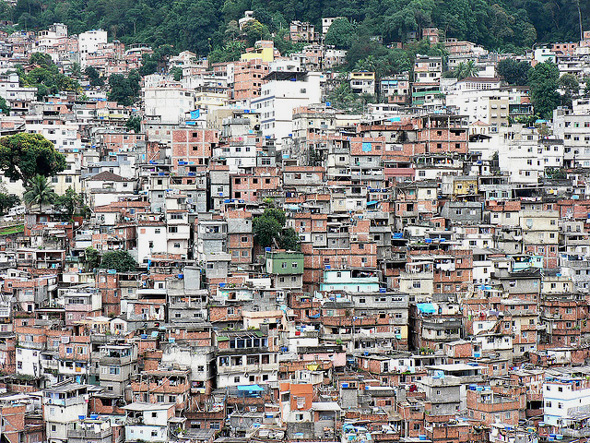
Population growth “is highly concentrated in what are today the poorest and least well-governed areas of the world,” said George Mason University professor Jack Goldstone at the Wilson Center on December 5.
Goldstone was joined by Suzanne Ehlers, president and CEO of Population Action International (PAI), and Matthew Erdman, population-health-environment technical advisor at USAID, to discuss the implications of seven billion people and counting for the environment as part of the joint Wilson Center-George Mason University Managing the Planet series. [Video Below]
-
National Intelligence Council Releases ‘Global Trends 2030’: Prominent Roles Predicted for Demographic and Environmental Trends
›
“We are at a critical juncture in human history, which could lead to widely contrasting futures,” writes the chairman of the National Intelligence Council (NIC) Christopher Kojm in the council’s latest forward-looking quadrennial report, Global Trends 2030: Alternative Worlds, released yesterday.
This year, principal author Mathew Burrows and his colleagues focus on a series of plausible global scenarios for the next 20 years and the trends or disruptions that may influence which play out. Among the most important factors in these projections are demography and the environment.
-
‘The Christian Science Monitor’ Explores the Global Water Crisis: Should We Charge More for Water?
›“There is as much of that water on the planet today as when the first amphibian flopped ashore; as much as when the ancient Greeks divined the future in the babble of brooks,” writes William Wheeler in The Christian Science Monitor. “So why do experts in science, economics, and development warn that a ‘global water crisis’ threatens the stability of nations and the health of billions?”
-
India’s Environmental Security Challenge: Water, Coal, Natural Gas, and Climate Change Fuel Friction
›November 23, 2012 // By Michael KugelmanThe original version of this article appeared in NATO Review.
Few regions are more environmentally insecure than South Asia.
The region faces rising sea levels and regularly experiences coastal flooding – of particular concern in a region with heavily populated and arable-land-rich coastal areas. Additionally, it is highly vulnerable to glacial melt. The Western Himalayas, which provide water supplies to much of South Asia, have experienced some of the most rapid melt in the world.
-
Making ‘Beyond Seven Billion’: Reporting on Population, Environment, and Security
›“When I embarked on this series, I approached it as an environmental reporter: What does a growing number of us and growing consumption mean for our planet?” said Los Angeles Times reporter Ken Weiss at the Wilson Center on October 9. Weiss, along with photographer Rick Loomis, recently completed a five-part series and multimedia presentation on global population that was the culmination of a year of research and travel through more than six countries. [Video Below]
-
International Day of the Girl Child: Recognizing the Unique and Complex Vulnerability of Young Girls
›October 11, 2012 // By Schuyler NullToday is the first “International Day of the Girl Child” – a day established last year by the United Nations to acknowledge the rights and unique challenges faced by young girls around the world.
The latest UN projections put the number of women under the age of 19 at about 1.18 billion today. Especially in developing countries (though not only) these young girls often face outsized barriers to happy, healthy, and productive lives.
-
Manipadma Jena, Inter Press Service
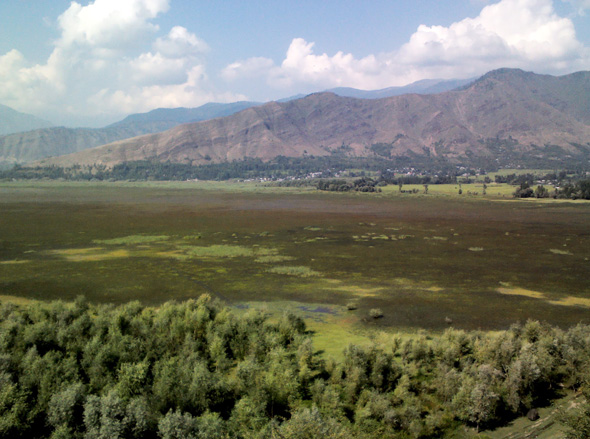
A Lake of Hope and Conflict
›October 4, 2012 // By Wilson Center StaffThe original version of this article, by Manipadma Jena, appeared on Inter Press Service.
Parvez Ahmad Dar climbs three hours to reach the hilltop, generator-equipped tourist center in Ajaf village, 35 kilometers from Srinagar, to recharge his mobile phone.
The 46-year-old president of the Wular Valley People’s Welfare Forum is in high demand as an activist and organizer – he cannot allow the long power outages in northern India’s Kashmir Valley to cut off communication with his constituency.
-
Containing a Development Flood: Green Urbanization in Asia
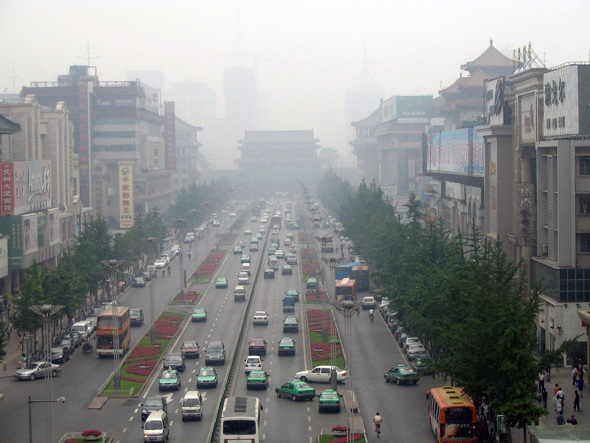
›On April 1, 2012, a Chinese woman on her way to work suddenly felt the earth beneath her crumble and, in an instant, found herself plunging into an abyss of scalding hot water. The woman had unknowingly stepped into one of the many sinkholes appearing in China’s megacities. The emergence of sinkholes in China is part of a larger set of environmental issues related to rapid urbanization taking place in the Asia-Pacific region overall. [Video Below]
Showing posts from category Asia.