-
Aqueduct Water Risk Atlas Shows Detailed View of Global Water Vulnerability
›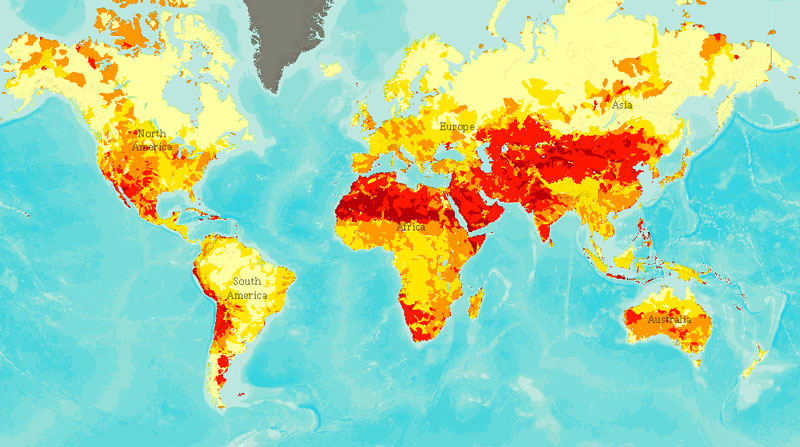
As world population pushes towards nine billion by mid-century and millions are elevated to the global middle class every year, demand for water continues to grow as well. More people need more water for drinking and household use, but also for agriculture, mining, energy, and industry. With water often cited as a limit to growth and potential crisis point, the World Resources Institute has released the Aqueduct Water Risk Atlas, which details various types of water stress around the world in impressively detailed fashion.
-
Breaking Out of the Green House: Indian Leadership in Times of Environmental Change (Book Preview)
›
The 2009 Copenhagen summit was a watershed moment in the history of climate change negotiations, especially from an Indian perspective. Brazil, South Africa, India, and China – the “BASIC” group – asserted their position, which led to a virtual collapse in talks, ostensibly marking the ascent of the global “south” and relative descent of the “north.”
-
Sam Eaton Describes Population-Food-Environment Links in Rural Philippines
›
In this podcast, journalist Sam Eaton describes the process of producing two pieces that aired on Marketplace and NewsHour last year on the connection between population, the environment, and food security in the Philippines. Eaton visited the rural village of Humayhumay where PATH Foundation Philippines, Inc., has a pilot program distributing contraceptives and teaching community members about conservation and sustainable livelihoods. Although Eaton said he was at first hesitant to tackle such an “abstract concept” as integrated population, health, and environment development, he found on the ground that it had “all the elements of a good story” and there were tangible benefits visible within the community. Eaton discussed his reporting at the Wilson Center on January 28.
-
Cleo Paskal and Uttam Sinha on the Geopolitical Implications of Climate Change for India and China
›India and China – “the two most important countries going forward in this century” – will both experience domestic concerns as a result of environmental change, but they are responding very differently, said Cleo Paskal, an associate fellow at Chatham House, in an interview with the Environment, Conflict, and Cooperation (ECC) Platform.
-
Janani Vivekananda on Strengthening Resilience to Climate Variability in South Asia
›“Building resilience should help address the root causes of vulnerability, creating increased capacity to be able to adapt to a range of possible climate futures, not just cope with… specific climate impacts,” says International Alert’s Janani Vivekananda. Otherwise, if the specific impacts don’t play out, “in a fragile context that could be quite destabilizing and seen as a wasted opportunity.”
-
Mapping China’s Massive West-East Electricity Transfer Project [Infographic]
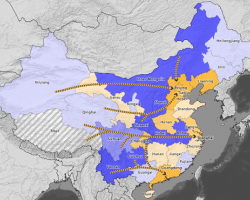
›The Wilson Center’s China Environment Forum is proud to announce that we are launching our first interactive infographic: a map of China’s West-East Electricity Transfer Project. The map underscores China’s energy and water imbalances and the looming choke point China faces in terms of water, food, and energy security. The map also illustrates how consumer goods made in China’s factories along its eastern coast are powered by coal and hydropower in the country’s western provinces.
-
Aging in the 21st Century: A Celebration and a Challenge
›“We are in the midst of a silent revolution,” said Ann Pawliczko, a senior technical advisor in the population and development branch at the United Nations Population Fund (UNFPA), quoting former UN Secretary-General Kofi Annan. “It is a revolution that extends well beyond demographics, with major economic, social, cultural, psychological, and spiritual implications.”
-
Sam Eaton on Food Security, Family Size, and Family Planning in the Philippines
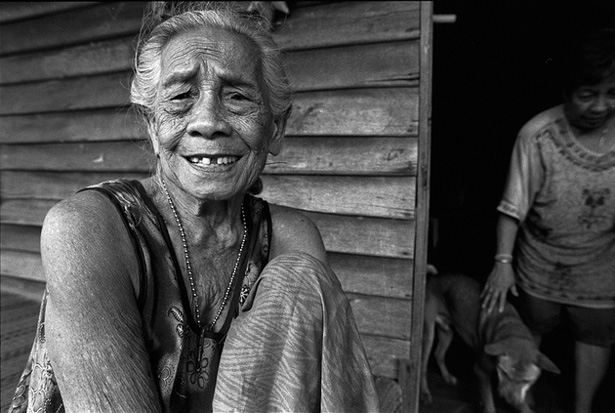
›February 13, 2013 // By Graham Norwood“We chose the Philippines because we really wanted to do a story that looked at population growth,” reporter Sam Eaton says of his two-part contribution to the Food for Nine Billion project, which aired last year on PBS’ NewsHour and American Public Media’s Marketplace. Eaton recently visited the Wilson Center to discuss his experiences in the Philippines, describing the heavy toll overcrowding and poor resource management is taking on the country’s ecosystems and highlighting how access to family planning may hold the key to a better future.
Showing posts from category Asia.