

-
Water Wars? Think Again: Conflict Over Freshwater Structural Rather Than Strategic
›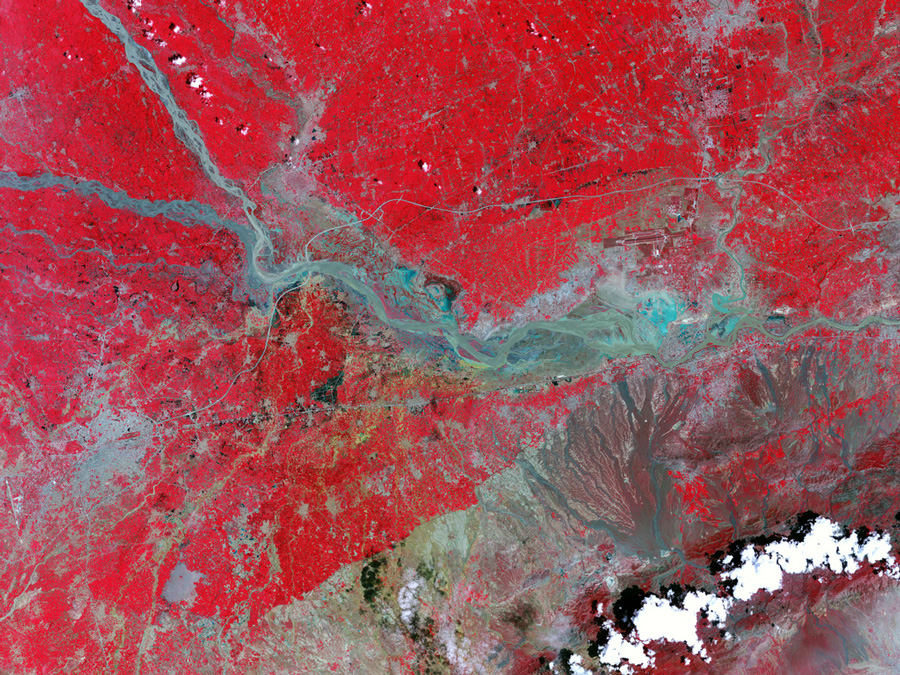
The global water wars are almost upon us!
At least that’s how it seems to many. The signs are troubling: Egypt and Ethiopia have recently increased their aggressive posture and rhetoric over the construction of the Great Ethiopian Renaissance Dam in the headwaters of the Blue Nile, Egypt’s major artery since antiquity. India continues to build new dams that are seen by its rival Pakistan as a threat to its “water interests” and thus its national security. Turkey, from its dominant position upstream, has been diverting the Tigris and Euphrates rivers and increasing water stress in the already-volatile states of Iraq and Syria.
-
Double Dividends: Population Dynamics and Climate Adaptation
›
If current projections hold, Africa’s population will more than double in 40 years, putting more people at risk of food, water, health, and economic insecurity as the climate changes, as well as negating progress made in reducing carbon emissions per person. But what if it didn’t? [Video Below]
-
Mapping China’s Dam Rush – and the Environmental Consequences
›
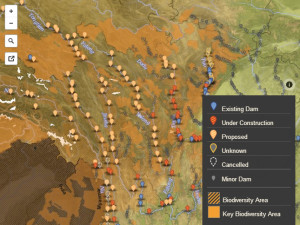
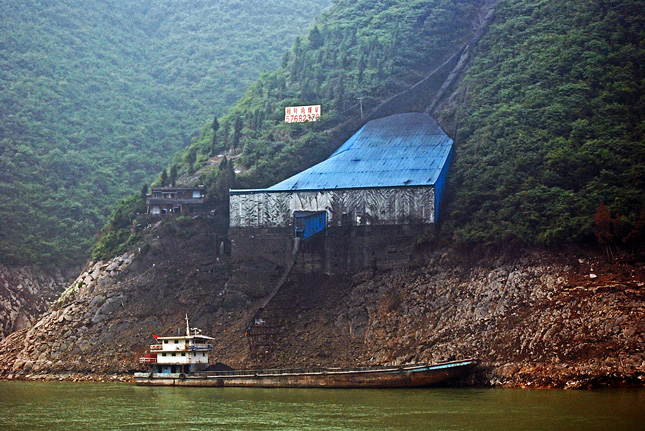
In southwestern China, three parallel rivers – the Nu, Lancang, and Jinsha (also known as the Upper Mekong, Salween, and Yangtze, respectively) – form a series of corridors that connect the tropical rainforests of Southeast Asia to the Tibetan Plateau. These areas are some of the most biodiverse in the world, and scientists argue they have value as “climate refugia” – places worth preserving in order to allow species to retreat to cooler, more suitable climates as temperatures rise. A cascade of dams, however, has been planned for the region, threatening to submerge habitats, reduce the flow of tributary rivers, and make the area less suitable for many plant and animal species.
-
Kathleen Mogelgaard: Four Steps to Better Link Climate Adaptation and Reproductive Health Strategies
›Climate change vulnerability is closely tied to population dynamics, says Kathleen Mogelgaard in this week’s podcast. “We know that population size, composition and spatial distribution around the world is constantly changing, and that these changes do have implications for climate change exposure, sensitivity, and adaptive capacity – the three elements of vulnerability.”
-
Report: China Could Generate 80 Percent of Its Energy From Renewables By 2050 For Less Than Cost of Coal
›The idea that China, the world’s largest producer of greenhouse gas emissions, could generate a significant portion of its energy from renewable sources might seem like a distant dream, but according to a new report, it’s not so far off. [Video Below]
-
Infographic: The Environmental Effects of China’s Growing Pork Industry
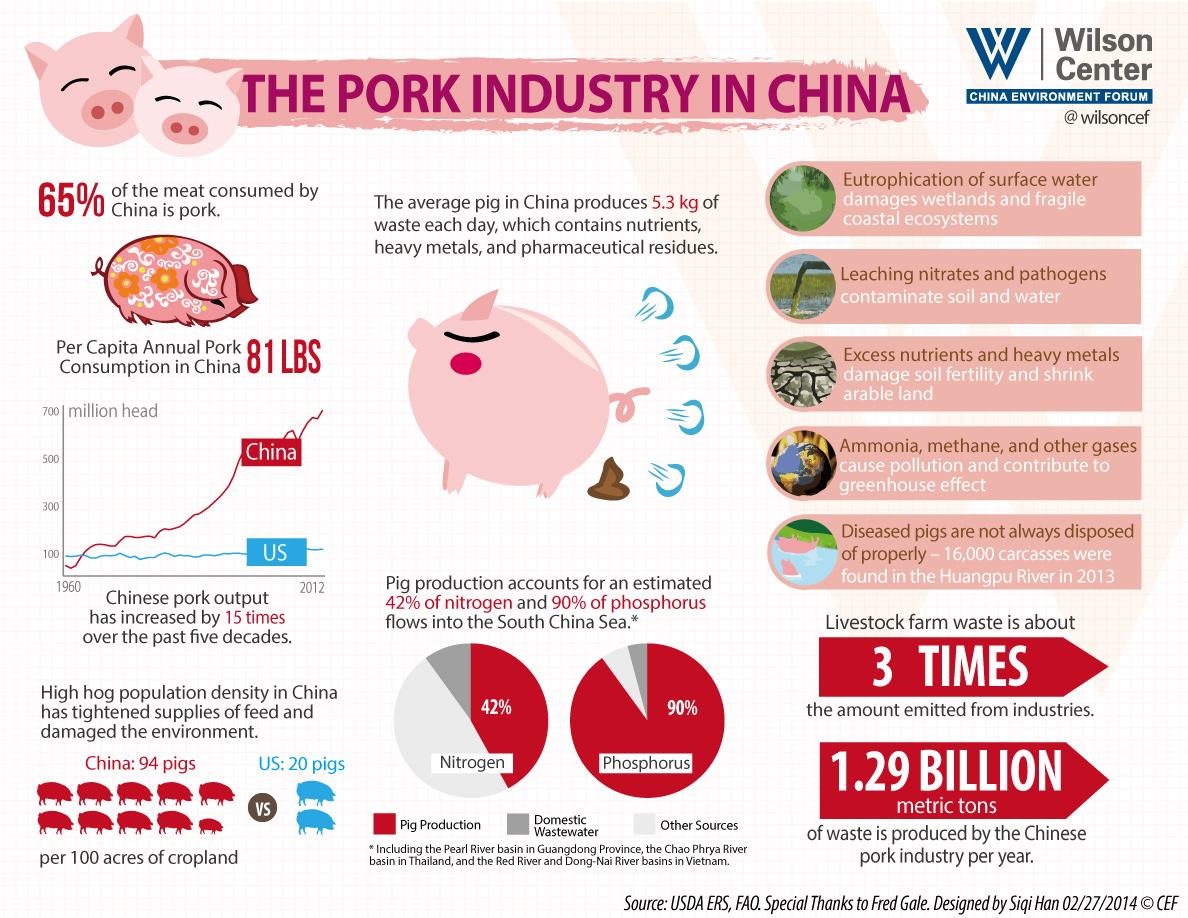
›The pork industry in China accounts for 65 percent of domestic meat consumption, but also produces 1.29 billion metric tons of waste every year. China’s growing appetite for meat has put tremendous pressure on the livestock sector, which now produces three times more waste than industrial sources, and created a series of environmental and food safety issues.
-
Chris Berdnik, Pulitzer Center on Crisis Reporting
Density Breeds Scarcity on Cambodia’s Lake Tonle Sap
›March 10, 2014 // By Wilson Center StaffThe original version of this article, by Chris Berdnik, appeared on the Pulitzer Center on Crisis Reporting.
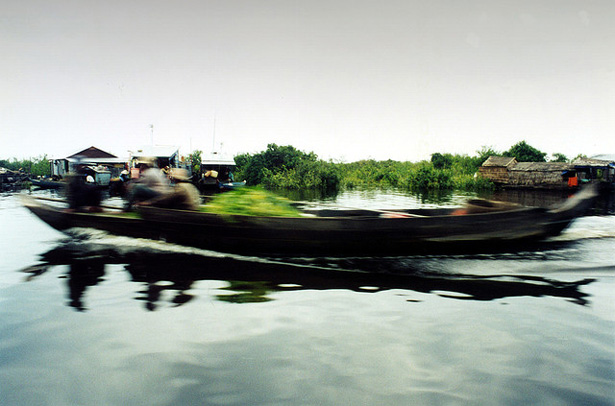
I meet Keo Mao, 42, in the floating fishing village of Akol on Cambodia’s Lake Tonle Sap. The houses here move seasonally with the lake, which expands by a factor of five during the monsoon rains and recedes again in the dry months. Fish supply about 80 percent of the animal protein eaten by Cambodians, and about 60 percent of the inland catch comes from the Tonle Sap.
-
USAID Administrator Rajiv Shah on Public-Private Partnerships and the Future of Aid
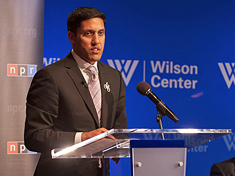
›What’s the best way for America’s chief development agency to help other countries reach prosperity and democracy? Increasingly, it’s creating partnerships not just with other governments, but with the private sector too, says USAID Administrator Rajiv Shah in this week’s podcast.
Showing posts from category Asia.
 What’s the best way for America’s chief development agency to help other countries reach prosperity and democracy? Increasingly, it’s creating partnerships not just with other governments, but with the private sector too, says USAID Administrator

