• woodrow wilson center
  • ecsp

New Security Beat

Subscribe:
  • rss
  • mail-to
  • Who We Are
  • Topics
    • Population
    • Environment
    • Security
    • Health
    • Development
  • Columns
    • China Environment Forum
    • Choke Point
    • Dot-Mom
    • Friday Podcasts
    • Navigating the Poles
    • Reading Radar
  • Multimedia
    • Water Stories (Podcast Series)
    • Backdraft (Podcast Series)
    • Tracking the Energy Titans (Interactive)
  • Films
    • Water, Conflict, and Peacebuilding (Animated Short)
    • Paving the Way (Ethiopia)
    • Broken Landscape (India)
    • Scaling the Mountain (Nepal)
    • Healthy People, Healthy Environment (Tanzania)
  • Publications
  • Events
  • Contact Us

NewSecurityBeat

The blog of the Wilson Center's Environmental Change and Security Program
Showing posts from category Asia.
  • Dawn of the Smart City? Perspectives From New York, Ahmedabad, São Paulo, and Beijing (Report Launch)

    ›
    From the Wilson Center  //  June 19, 2014  //  By Schuyler Null
    Sao-Paulo-escalators

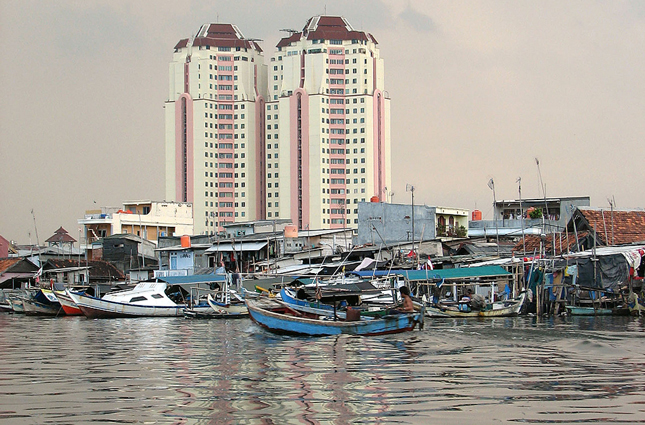
    Rapid growth and environmental change are creating new challenges for urban areas around the world. By 2050, as many as 7 out of 10 people on Earth will live in cities, with the vast majority of growth occurring in today’s developing countries. [Video Below]

    MORE
  • Adil Najam: Pakistan’s Security Problems Distract From Climate Vulnerabilities

    ›
    Eye On  //  June 18, 2014  //  By Kate Diamond

    When Pakistan makes the news, more often than not it’s for one of two things: violent extremism or drone strikes. Adil Najam, a Pakistan expert and a lead author for the UN’s Intergovernmental Panel on Climate Change, says those headlines distract from a far more pressing security concern for the country: climate change.

    MORE
  • National Security and the Accelerating Risks of Climate Change (Report Launch)

    ›
    From the Wilson Center  //  June 16, 2014  //  By Benjamin Dills
    CNA_MAB

    Climate change poses a serious threat to U.S. national security and is becoming a “catalyst for conflict” in vulnerable countries, according to a panel of retired military leaders speaking at the Wilson Center on May 15. [Video Below]

    MORE
  • What Can Governments Do About Falling Birth Rates?

    ›
    From the Wilson Center  //  June 2, 2014  //  By Paris Achenbach & Moses Jackson
    aging

    “We have a fairly unique moment in the history of the world,” said Steven Philip Kramer, a professor at National Defense University, at the Wilson Center on April 17. “There’s never been a time when people have voluntarily produced fewer children than is necessary for sustaining the population.” [Video Below]

    MORE
  • Infographic: Waste, Poor Planning Blunt China’s Wind Energy Ambitions

    ›
    China Environment Forum  //  May 27, 2014  //  By Siqi Han
    Wind-Wasted-V10

    China leads the world in installed wind power by a wide margin, but last year, when it came to actual generation, China produced 20 percent less electricity from wind than the United States.

    MORE
  • Steven Philip Kramer on ‘The Other Population Crisis’

    ›
    Friday Podcasts  //  May 23, 2014  //  By Moses Jackson
    kramer_post

    Ever since Thomas Malthus’ 18th-century treatise linked overpopulation with conflict and poverty, population growth has been a subject of concern and controversy. But does population decline warrant similar attention? According to Steven Philip Kramer, the subject of this week’s podcast and author of The Other Population Crisis: What Governments Can Do About Falling Birth Rates, it does.

    MORE
  • China’s Coal-to-Gas Plants Trade Urban Air Quality for Higher Carbon Emissions

    ›
    China Environment Forum  //  Guest Contributor  //  May 21, 2014  //  By Hal Bernton

    Last September, facing a growing public outcry to ease smog, China’s State Council called for the accelerated development of a new energy industry that turns coal into methane gas. Piped to Beijing and other cities, this gas could help cut down on smog by replacing dirtier fuels now used to cook meals, heat homes, and produce electricity. But embracing it involves a major environmental trade-off in overall carbon emissions.

    MORE
  • Russell Sticklor, CGIAR

    Can Underground Water Storage Mitigate Cross-Basin Tensions?

    ›
    May 16, 2014  //  By Wilson Center Staff
    groundwater_storage

    The original version of this article, by Russell Sticklor, appeared on CGIAR’s Agriculture and Ecosystems Blog.

    As the earth’s surface grows hotter and precipitation becomes more variable due to the impacts of climate change, the world is in need of solutions to more effectively store water supplies. One potential solution is deceptively simple: store water in aquifers below the ground.

    MORE
Newer Posts   Older Posts
View full site

Join the Conversation

  • RSS
  • subscribe
  • facebook
  • G+
  • twitter
  • iTunes
  • podomatic
  • youtube
Tweets by NewSecurityBeat

Trending Stories

  • unfccclogo1
  • Pop at COP: Population and Family Planning at the UN Climate Negotiations

Featured Media

Backdraft Podcast

play Backdraft
Podcasts

More »

What You're Saying

  • Volunteers,At,The,Lagos,Food,Bank,Initiative,Outreach,To,Ikotun, Pan-African Response to COVID-19: New Forms of Environmental Peacebuilding Emerge
    Rashida Salifu: Great piece 👍🏾 Africa as a continent has suffered this unfortunate pandemic.But it has also...
  • A desert road near Kuqa An Unholy Trinity: Xinjiang’s Unhealthy Relationship With Coal, Water, and the Quest for Development
    Ismail: It is more historically accurate to refer to Xinjiang as East Turkistan.
  • shutterstock_1779654803 Leverage COVID-19 Data Collection Networks for Environmental Peacebuilding
    Carsten Pran: Thanks for reading! It will be interesting to see how society adapts to droves of new information in...

What We’re Reading

  • Rising rates of food instability in Latin America threaten women and Venezuelan migrants
  • Treetop sensors help Indonesia eavesdrop on forests to cut logging
  • 'Seat at the table': Women's land rights seen as key to climate fight
  • A Surprise in Africa: Air Pollution Falls as Economies Rise
  • Himalayan glacier disaster highlights climate change risks
More »
  • woodrow
  • ecsp
  • RSS Feed
  • YouTube
  • Twitter
  • Facebook
  • Home
  • Who We Are
  • Publications
  • Events
  • Wilson Center
  • Contact Us
  • Print Friendly Page

© Copyright 2007-2021. Environmental Change and Security Program.

Woodrow Wilson International Center for Scholars. All rights reserved.

Developed by Vico Rock Media

Environmental Change and Security Program

Woodrow Wilson International Center for Scholars

Ronald Reagan Building and International Trade Center

  • One Woodrow Wilson Plaza
  • 1300 Pennsylvania Ave., NW
  • Washington, DC 20004-3027

T 202-691-4000