-
As Glacial Floods Threaten Mountain Communities, a Global Exchange Is Fostering Adaptation
›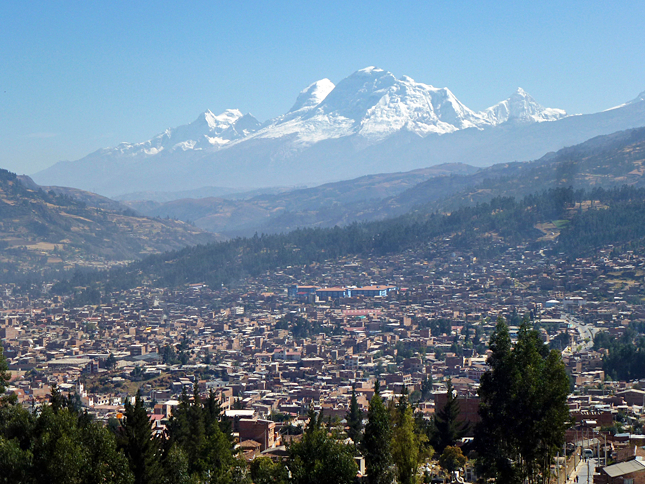
In 1941, glacial Lake Palcacocha in the Peruvian Andes burst its moraine dam of earth and stones, sending a torrent of water through the city of Huaraz and killing an estimated 5,000 people. Between 1941 and 1950, two more glacial lake outburst floods, or GLOFs, which can occur after enough water fills in behind a glacier’s end moraine, killed another 5,000 people in the Cordillera Blanca. In response, the government set up one of the most effective glaciological units in the world with the goal of preventing future outburst floods. Using drain pipes, reinforced terminal moraine dams, sophisticated tunnels, and valve systems, they drained or contained 34 lakes in the region. As a result, thousands of lives were saved.
-
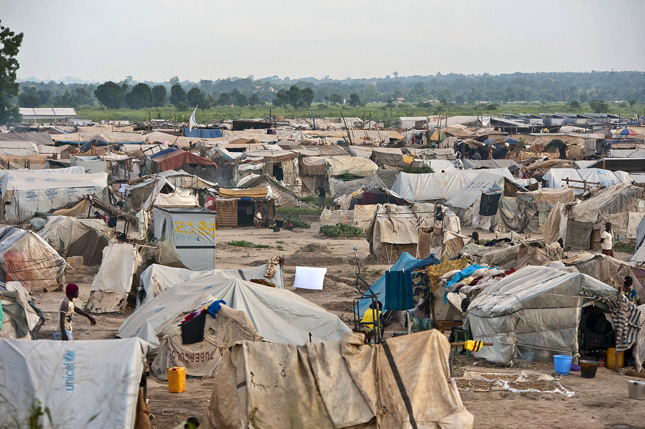
What’s in a Name? States of Fragility and Adjusting Aid to Conflict Zones
›April 13, 2015 // By Lauren Herzer Risi
Depending on how closely you pay attention to the OECD, you may have picked up on a subtle but meaningful change in this year’s States of Fragility report. Whereas previous reports were titled Fragile States, the Organization for Economic Cooperation and Development has shifted its framing to focus less on states and more on conditions, less on the binary status of a “fragile state” and more on fragility as a universal condition that can impede development in all countries.
-
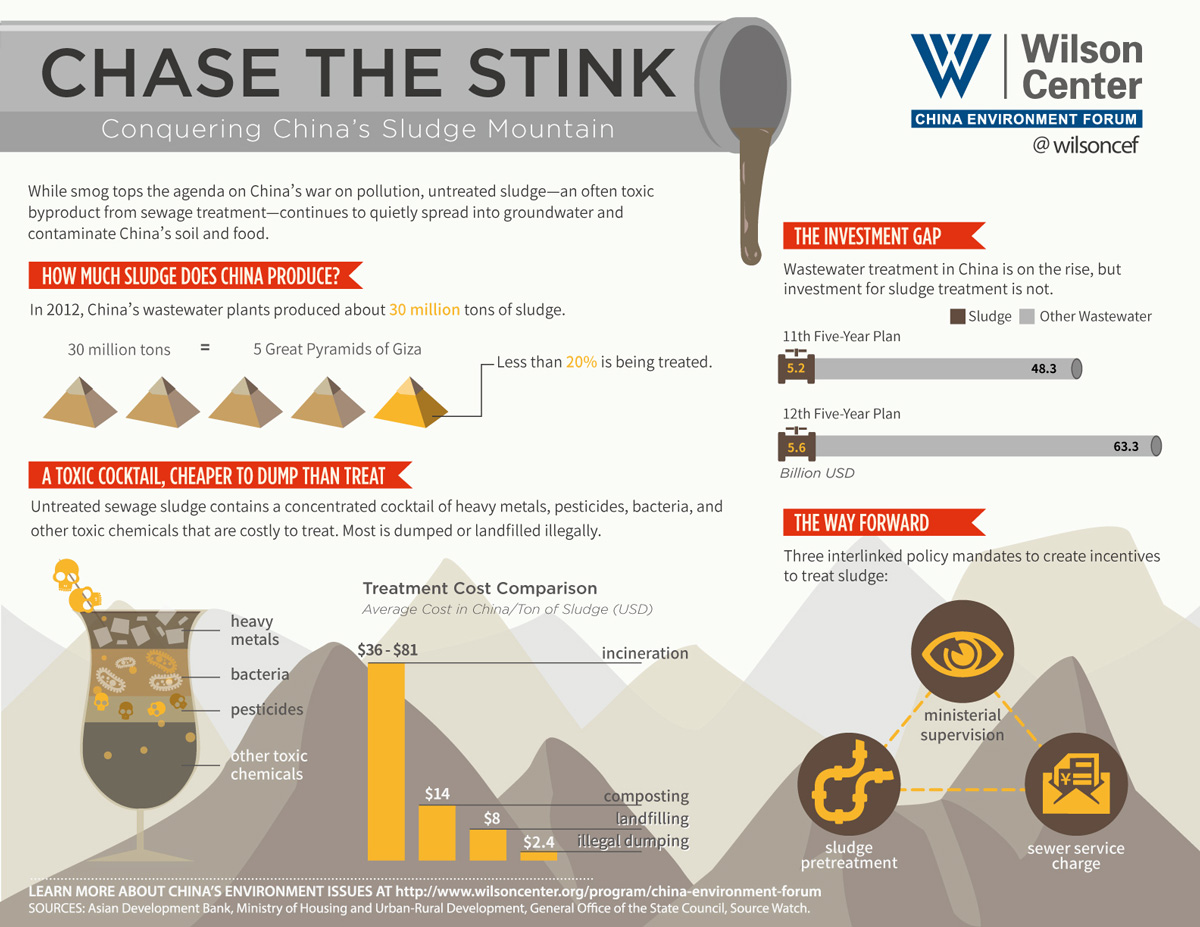
Infographic: Conquering China’s Sludge Mountains
›While Chinese officials make full frontal regulatory attacks on smog, untreated sludge, an often toxic byproduct from sewage treatment, continues to quietly spread into groundwater and contaminate soil and food.
-
High Stakes: Understanding Risk and Why This Year’s Climate Negotiations Are So Important
›Expectations for the upcoming UN climate change summit in Paris are higher than they’ve been in years. Experts expect it will be the best chance to achieve a binding, universal agreement to limit carbon emissions. But the conference is still not getting the attention it deserves from policymakers and the public, given the stakes – and not just for the environment but for the international system writ large, said Nick Mabey, founding director and chief executive of the UK-based environmental NGO E3G at the Wilson Center on February 12.
-
China’s Water-Energy-Food Roadmap: A New Global Choke Point Report
›The creation of a water-energy research initiative in the landmark U.S.-China climate agreement last fall could be the beginning of a new and different path for Sino-U.S. collaboration.
-
The U.S. Energy Pivot: A New Era for Energy Security in Asia?
›The past decade has brought ground-shaking changes to global energy markets. The unconventional fuel boom has unexpectedly reduced U.S. dependence on oil imports, while in the Asia-Pacific region, energy-constrained nations are increasingly reliant on foreign sources to meet their soaring demand. With the U.S. slated to export liquid natural gas (LNG) to Asia as early as 2017, a new energy era has come.
-
Heat and Hotheads: The Effect of Rising Temperatures on Urban Unrest
›When the first wave of protests erupted in Ferguson, Missouri, following the shooting of Michael Brown in August 2014, it looked as if unrest might spread to other American cities, echoing the “long hot summers” of 50 years before.
-
A Quick Video Tour of How We Got to 7 Billion and Where We’re Going Next
›Hans Rosling has always been an innovator when it comes to bringing big ideas to big audiences. The Norwegian doctor, statistician, and co-founder of the Gapminder Foundation has become known – to the kind of people who watch TED Talks anyway – for lively presentations aimed at demystifying common ideas about global development and demography. On Gapminder.org, he literally stands chest-high in water appealing for your donation to help him “cross the river of myths.”
Showing posts from category Asia.