• woodrow wilson center
  • ecsp

New Security Beat

Subscribe:
  • rss
  • mail-to
  • Who We Are
  • Topics
    • Population
    • Environment
    • Security
    • Health
    • Development
  • Columns
    • China Environment Forum
    • Choke Point
    • Dot-Mom
    • Friday Podcasts
    • Navigating the Poles
    • Reading Radar
  • Multimedia
    • Water Stories (Podcast Series)
    • Backdraft (Podcast Series)
    • Tracking the Energy Titans (Interactive)
  • Films
    • Water, Conflict, and Peacebuilding (Animated Short)
    • Paving the Way (Ethiopia)
    • Broken Landscape (India)
    • Scaling the Mountain (Nepal)
    • Healthy People, Healthy Environment (Tanzania)
  • Publications
  • Events
  • Contact Us

NewSecurityBeat

The blog of the Wilson Center's Environmental Change and Security Program
Showing posts from category Asia.
  • Rethinking Business As Usual: Leveraging the Private Sector to Strengthen Maternal Health

    ›
    Dot-Mom  //  From the Wilson Center  //  December 1, 2015  //  By Anna Bella Korbatov
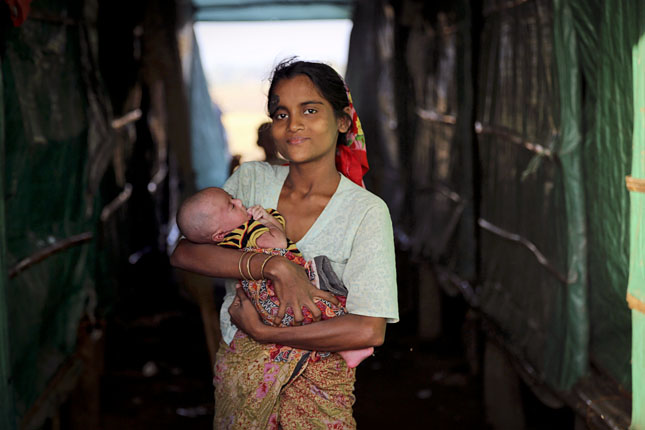
    Salimus Clinic

    In 2013, nearly 300,000 women died during pregnancy and childbirth. The majority of those deaths were in developing countries and entirely preventable. Much of the effort towards reducing this number has been focused on what governments should do differently, but the private sector plays just as important a role as the public sector, said a panel of experts at the Wilson Center on September 17. [Video Below]

    MORE
  • The ECC Factbook Illustrates How the Environment Can Contribute to Peace and Conflict

    ›
    Eye On  //  Guest Contributor  //  November 30, 2015  //  By Johannes Ackva & Benjamin Pohl

    In his speech on climate change and national security on November 10, Secretary of State John Kerry said climate change is already a “threat multiplier,” and that worse is to be expected if climate change continues unchecked. But the relationship between the environment and violent conflict is complex and often indirect. Researchers have been wrangling for years over the role that global environmental change plays in fueling conflict and state fragility.

    MORE
  • Priyali Sur, Foreign Policy

    South Asian Environmental Migrants Pushed to Back of Line in Refugee Flood

    ›
    November 26, 2015  //  By Wilson Center Staff
    refugee camp Germany

    The original version of this article, by Priyali Sur, appeared on Foreign Policy.

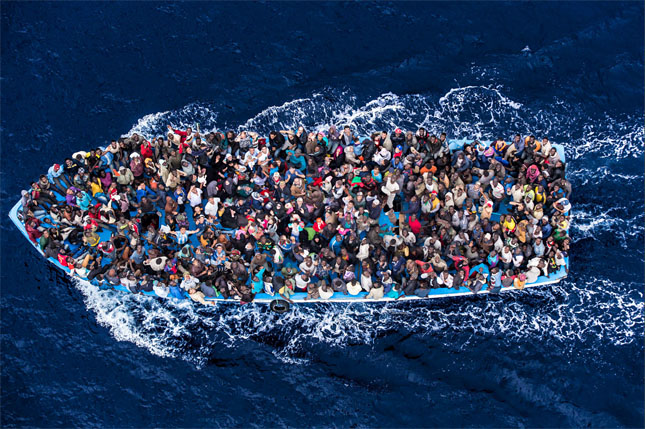
    The dark eyes and hair of the Pakistanis, Bangladeshis, and Afghans almost blend with the other migrants’. The brown skin tones are also not giveaways, but ask them where they come from, and you notice the hesitation – trying hard to blend into the crowd of Syrian migrants at Europe’s border crossings, afraid of being spotted and sent back.

    MORE
  • Will China’s New Air Law Solve its Pollution Crisis?

    ›
    China Environment Forum  //  November 25, 2015  //  By Cai Jingjing & Joyce Tang
    anyang china smog

    The recent news that China has been underreporting its already globe-leading coal consumption by nearly 20 percent for the last decade underscores the scale of its air pollution crisis.

    MORE
  • In Shenzhen, Tracking the Early Steps of China’s Carbon Pivot

    ›
    China Environment Forum  //  Choke Point  //  November 18, 2015  //  By Keith Schneider
    Shenzhen

    SHENZHEN, China – To some extent, the contemporary industrial age is a global narrative of substance abuse and recovery.

    MORE
  • The Renewable Energy Era Has Already Started

    ›
    Guest Contributor  //  November 5, 2015  //  By Mohamed T. El-Ashry
    distributed solar_India

    The world has entered a new energy era. Last year, for the first time in four decades, the global economy grew without an increase in CO2 emissions, according to the Renewable Energy Policy Network for the 21st Century.

    MORE
  • What’s the Impact of China’s Cap-and-Trade Program?

    ›
    China Environment Forum  //  November 4, 2015  //  By Zhou Yang

    China’s announcement of a nationwide cap-and-trade program is a sign that the government is serious in its “war against pollution,” says China Environment Forum Director Jennifer Turner, and it may help move the climate change discussion in the United States too.

    MORE
  • A Little Bit of Sugar Helps the Pill Go Down: Resilience, Peace, and Family Planning

    ›
    October 26, 2015  //  By Roger-Mark De Souza
    Jharana Kumari Tharu - female community health volunteer in Bina

    Adapted from a commentary on “The Pill Is Mightier Than the Sword,” which appeared in the International Journal of Health Policy and Management.

    A recent article by Malcolm Potts, Aafreen Mahmood, and Alisha Graves of the University of California Berkeley’s OASIS Initiative notes that family planning has an important role to play in building peace by increasing women’s empowerment and their agency. “The pill is mightier than the sword,” as they put it.

    MORE
Newer Posts   Older Posts
View full site

Join the Conversation

  • RSS
  • subscribe
  • facebook
  • G+
  • twitter
  • iTunes
  • podomatic
  • youtube
Tweets by NewSecurityBeat

Trending Stories

  • unfccclogo1
  • Pop at COP: Population and Family Planning at the UN Climate Negotiations

Featured Media

Backdraft Podcast

play Backdraft
Podcasts

More »

What You're Saying

  • Volunteers,At,The,Lagos,Food,Bank,Initiative,Outreach,To,Ikotun, Pan-African Response to COVID-19: New Forms of Environmental Peacebuilding Emerge
    Rashida Salifu: Great piece 👍🏾 Africa as a continent has suffered this unfortunate pandemic.But it has also...
  • A desert road near Kuqa An Unholy Trinity: Xinjiang’s Unhealthy Relationship With Coal, Water, and the Quest for Development
    Ismail: It is more historically accurate to refer to Xinjiang as East Turkistan.
  • shutterstock_1779654803 Leverage COVID-19 Data Collection Networks for Environmental Peacebuilding
    Carsten Pran: Thanks for reading! It will be interesting to see how society adapts to droves of new information in...

What We’re Reading

  • Rising rates of food instability in Latin America threaten women and Venezuelan migrants
  • Treetop sensors help Indonesia eavesdrop on forests to cut logging
  • 'Seat at the table': Women's land rights seen as key to climate fight
  • A Surprise in Africa: Air Pollution Falls as Economies Rise
  • Himalayan glacier disaster highlights climate change risks
More »
  • woodrow
  • ecsp
  • RSS Feed
  • YouTube
  • Twitter
  • Facebook
  • Home
  • Who We Are
  • Publications
  • Events
  • Wilson Center
  • Contact Us
  • Print Friendly Page

© Copyright 2007-2021. Environmental Change and Security Program.

Woodrow Wilson International Center for Scholars. All rights reserved.

Developed by Vico Rock Media

Environmental Change and Security Program

Woodrow Wilson International Center for Scholars

Ronald Reagan Building and International Trade Center

  • One Woodrow Wilson Plaza
  • 1300 Pennsylvania Ave., NW
  • Washington, DC 20004-3027

T 202-691-4000