-
Family Planning in Fragile States
›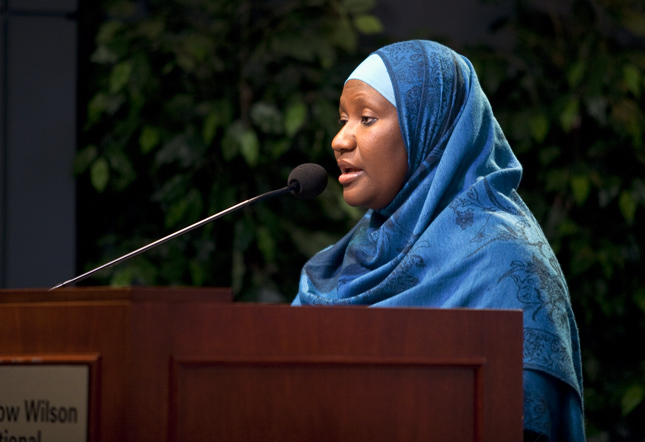
“Conflict-affected countries have some of the worst reproductive health indicators,” said Saundra Krause of the Women’s Refugee Commission at a recent Wilson Center event. “Pregnant women may deliver on the roadside or in makeshift shelters, no longer able to access whatever delivery plans they had. People fleeing their homes may have forgotten or left behind condoms and birth control methods.”
-
Food Security Comes to Capitol Hill, Part Two: Women’s Edition
›April 30, 2010 // By Schuyler NullThe focus on food security on Capitol Hill continued with Wednesday’s House Hunger Caucus panel, “Feeding a Community, Country and Continent: The Role of Women in Food Security.” According to panel organizers Women Thrive Worldwide, “over half the food in developing countries – and up to 80 percent in sub-Saharan Africa – is grown by women farmers, who also account for seven in ten of the world’s hungry.”
The panel illuminated some of the inequities routinely faced by female farmers that often prevent them from using the same inputs as men (tools, fertilizer, etc.), bar their access to credit, and force them onto less productive land.
“Women around the world face unique economic and social barriers in farming and food production,” said Nora O’Connell of Women Thrive Worldwide. “But they are key to increasing food security and ending hunger, and all international programs must take their needs into account.”
Panelist David Kauck of the International Center for Research on Women (ICRW) cited the State Department’s Consultation Document on the Global Hunger and Food Security Initiative: “Economic output could be increased by 15-40 percent and under-nutrition reduced by 15 million children simply by providing women with assets equal to those of men.”
According to the 2008 ICRW report, A Significant Shift: Women, Food Security, and Agriculture in a Global Marketplace:Women also are more likely than men to spend their income on the well-being of their families, including more nutritious foods, school fees for children and health care. Yet agricultural investments do not reflect these facts. Women in forestry, fishing and agriculture received just 7 percent of total aid for all sectors.
One of the most fundamental problems faced by women in developing countries is a lack of basic education leading to illiteracy and innumeracy, making it difficult for women to understand agricultural policy or the fair market values of their products. Therefore, men are much more likely to control valuable markets.
In addition, women are less likely to learn about and adopt new agricultural technologies and best practices. Lydia Sasu, director of the Development Action Association, said that when she attended agricultural school in Ghana she was one of only three women, compared to more than 40 men, in her class.
Women in developing countries rarely own the land they farm, which can make it difficult to apply for credit and extension services without collateral. According to the ICRW report:In Uganda, women account for approximately three out of four agricultural laborers and nine out of 10 food-producing laborers, yet they own only a fraction of the land. Women in Cameroon provide more than 75 percent of agricultural labor yet own just 10 percent of land. A 1990 study of credit schemes in Kenya, Malawi, Sierra Leone, Zambia and Zimbabwe found that women received less than 10 percent of the credit for smallholders and only 1 percent of total credit to agriculture. Women receive only 5 percent of extension services worldwide, and women in Africa access only 1 percent of available credit in the agricultural sector.
“The fundamental barrier to women in agriculture,” said USAID’s Kristy Cook, “is access to assets.” Cheryl Morden of the International Fund for Agricultural Development (IFAD) said we have reached the “tipping point,” where action on this issue seems inevitable on the international policy level. However, she questions how quickly that momentum can translate to change on the ground.
The State Department has made improving women’s lives an important part of both their Global Hunger and Food Security Initiative and the Global Health Initiative. ”Investing in the health of women, adolescents, and girls is not only the right thing to do; it is also the smart thing to do,” said Secretary of State Hillary Clinton in January.
Reproductive health and family planning services will be key to both initiatives. A policy brief by ICRW’s Margaret Greene argues that poor reproductive health can have negative effects on women’s educational and economic opportunities. As Secretary Clinton said, “When women and girls have the tools to stay healthy and the opportunity to contribute to their families’ well-being, they flourish and so do the people around them.”
Photo Credit: “Transplanting at rainfed lowland rice in Madagascar,” courtesy of flickr user IRRI Images. -
Climate Change and Gender
›“Women, Gender Equality and Climate Change,” a fact sheet released by the United Nations WomenWatch, is a cache of information for those interested in climate change’s differentiated impacts on the sexes. The fact sheet synthesizes data from many sources, mostly UN, into concise sections on food security, biodiversity, water, health, human rights, energy, natural disasters, migration, and adaptation–including financing projects and the development of new technology. While brief, each section is well-sourced and offers a list of links to relevant UN publications and websites.The Heinrich Böll Foundation-Southern Africa commissioned eight case studies examining the relationship between climate and gender in four southern African countries: South Africa, Botswana, Mozambique, and Namibia. Examining poor areas deemed to be significantly exposed to the impacts of climate change, researchers found that women in each study “seemed to cope better with the impacts of changing circumstances than the men” and were “repositories of knowledge about crops and climate, the environment, natural resources, food preservation techniques,” writes Belynda Petrie, CEO of OneWorld Sustainable Investments and author of a regional summary report. The studies offered a number of recommendations, including creating national gender indicators, developing gender-sensitive aid programs, and improving access to water. -
World Bank President: Climate Policy Is Not “One-Size-Fits All”
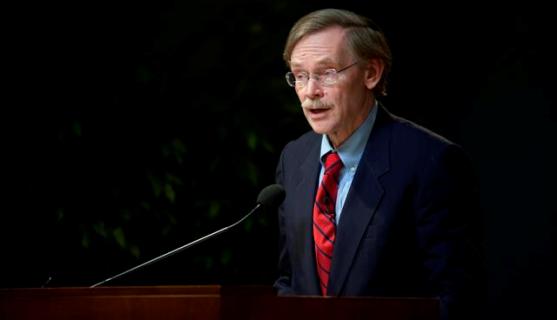
›Speaking at the Woodrow Wilson Center yesterday, World Bank President Robert Zoellick said the financial crisis indicated that developed countries should listen to developing countries, but not out of “charity or solidarity: It is self-interest.”
His prepared remarks, “The End of the Third World? Modernizing Multilateralism for a Multipolar World,” notably included a section on climate change:Take climate change: The danger is that we take a rule book from developed countries to impose a one-size-fits-all model on developing countries. And they will say no.
Climate change policy can be linked to development and win support from developing countries for low carbon growth but not if it is imposed as a straitjacket.
This is not about lack of commitment to a greener future. People in developing countries want a clean environment, too.
Developing countries need support and finance to invest in cleaner growth paths. 1.6 billion people lack access to electricity. The challenge is to support transitions to cleaner energy without sacrificing access, productivity, and growth that can pull hundreds of millions out of poverty.
Avoiding geo-politics as usual means looking at issues differently. We need to move away from the binary choice of either power or environment. We need to pursue policies that reflect the price of carbon, increase energy efficiency, develop clean energy technologies with applications in poorer countries, promote off-grid solar, innovate with geothermal, and secure win-win benefits from forest and land use policies. In the process, we can create jobs and strengthen energy security.
The developed world has prospered through hydro electricity from dams. Some do not think the developing world should have the same access to the power sources used by developed economies. For them, thinking this is as easy as flicking a switch and letting the lights burn in an empty room.
While we must take care of the environment, we cannot consign African children to homework by candlelight or deny African workers manufacturing jobs. The old developed country prism is the surest way to lose developing country support for global environment goals. -
Cassie Gardener
Integrating Population, Health, and Environment in Ethiopia’s Bale Mountains
›Ethiopia suffers from vast deforestation, rapid population growth, and high rates of maternal mortality. But development programs that address these issues in an integrated fashion may help end that suffering. As part of my two-month internship with the PHE-Ethiopia Consortium, I recently visited the Movement for Ecological and Community Action (MELCA) Project in the rural Bale Zone of southeastern Ethiopia to witness these programs in action.
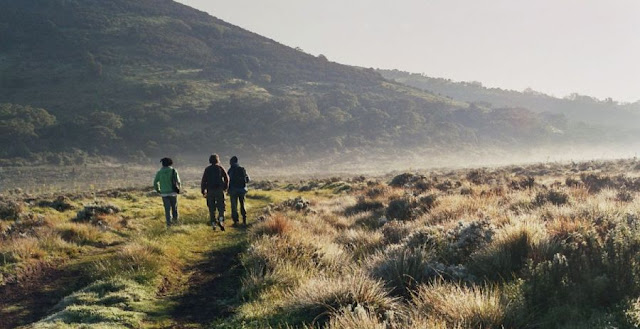
Ethiopia’s Spectacular Bale Mountains
The little-known Bale Mountains are national and global treasures of biodiversity, teeming with dozens of endemic mammal, bird, and plant species. Ethiopia’s most important region for migrating birds, the rivers and streams in the Bale watershed flow to more than 12 million people in southern Ethiopia and western Somalia. Bale Mountains National Park hosts half of the world’s population of its rarest canid, the Ethiopian wolf, which has dwindled to a mere 250 individuals due to human interaction. When I toured the park, I was lucky enough to spot bushbucks, mountain nyalas, molerats, and several Ethiopian wolves.
As in many parts of the country, rural communities around the park face grave livelihood and health challenges, and their unsustainable use of land to eke out a living is threatening its conservation efforts. Due to diminishing agricultural land and an average total fertility rate of 6.2 children per mother in the region, people are increasingly forced to cut trees for fuel and timber in order to feed and house their families.
If Bale’s resources continue to be exploited in an unsustainable way, more mammal species would become extinct here than in any other area of equivalent size in the world. Even worse, MELCA Project Manager Tesfaye Teshome told me that if deforestation and impending climate change dry up Bale’s precious watershed, drought and famine could lead to the displacement or death of millions of Ethiopian citizens.
Raising PHE Awareness in the Community
Since 2005, MELCA, a member organization of the PHE-Ethiopia Consortium, has been working to protect biodiversity and culture in the Bale region through research, advocacy, and their award-winning youth environmental education program called SEGNI, or “Social Empowerment through Group and Nature Interaction.” In March 2008, with funding from Engender Health and the Packard Foundation, MELCA launched an integrated population, health and environment (PHE) project that provides culturally sensitive training at the community, school, and government levels.I was impressed that after just seven months of raising awareness, I met dozens of community members and key stakeholders who strongly believe in both the conceptual and operational benefits of PHE integration. For example, the Health Extension Workers and beneficiaries explained to me that community members in the Bale region, most of whom are conservative Muslims, held negative perception of family planning, which contributed to the area’s large family sizes and maternal mortality. But by involving Islamic community leaders in the project’s discussions, MELCA helped convince religious leaders that family planning is an important part of improving the health and livelihoods of the community.
“After the PHE training, we have improved awareness of population, family planning, health and environmental issues, and we understand that child spacing is better. Even my wife is now using family planning services, and as a result our lives are improved,” said Shihase, a religious leader in the community.
Join the Club: PHE Goes to School
Inspired by training sessions at schools, the SEGNI nature clubs, women’s clubs, and anti-AIDS clubs joined together to form new “PHE Clubs.” With the support of MELCA, PHE Club students plant indigenous tree seedlings in school nurseries for distribution to the community. They also create dramas, songs, poems, and illustrated storyboards about population, health, and environment issues, and use modest “mini-media” equipment such as a stereos and microphones to share these stories with their peers and other community members.
When I arrived at Finchaa Banoo Elementary School, hundreds of students greeted me with a PHE song, wearing traditional costumes with PHE banners strewn across their chests. They led me to their nursery site where they had planted 60,000 indigenous tree seedlings. A beautifully decorated cultural hut was filled with 10 PHE storyboard panels, painted by a local PHE-trained artist.
Fatiye, a 21-year old PHE club leader in 8th grade, proudly told me, “Before the coming of PHE, I’d been working only on SEGNI and knew only about biodiversity and culture. But now, I clearly understand health and population issues, including HIV/AIDS, taught to me by my peers. By having the integration of clubs, we’ve strengthened our power to accomplish more.”
Working Together to Save Time and Improve Health
MELCA’s PHE trainings also helped government officials and development workers who had previously operated in isolated sectors to integrate their work at the planning and implementation levels. Health Extension Workers and experts from the Agricultural and Rural Development Office said that collaboration is beneficial to them and the community, because it saves time and accomplishes greater results. Shankore, one of the Health Extension Workers, told me that integrating efforts across sectors allows them to help more households adopt both family planning and better sanitation, by more consistently and efficiently delivering services at the same time.
And their efforts are paying off: “Previously, we were giving birth just like chickens, our forest coverage was diminishing, and we were damaging our resources. We had cattle in our homes, and our children had health problems. Now, we understand how to improve these issues,” Khasim Sheka, a male member of the community, told me. “Health Extension Workers are teaching us about cleaning our home gardens and homes, and we separate our house from our cattle, liquid, and solid waste. My wife wasn’t using any family planning before, and now she’s using five-year Norplant.”
Although MELCA’s PHE project is still in its early stages, it appears capable of being scaled up with a little investment in additional training and by building the capacity of its staff and community members. In particular, the reproductive health component of the project needs to be strengthened, since Health Extension Workers are not trained on simple long-term family planning methods like IUDs, and are afraid they will lose clients if they continue to have to refer them to the distant health clinic.
With these improvements, MELCA could more successfully implement the integrated PHE approach, which will not only reduce the impact of population growth and deforestation on Bale Mountain Natural Park, but will improve the health and livelihoods of its neighbors, and ultimately protect its biodiversity for Ethiopia and the global community.
For more information about PHE-Ethiopia, please contact phe-ethiopia@gmail.com or visit their website at http://www.phe-ethiopia.org. For more information about MELCA, please contact melca@ethionet.et or visit their website at http://www.melca-ethiopia.org.
Cassie Gardener was the National Campus Organizer for the Sierra Club’s Global Population and Environment Program from 2006-2010, and is currently traveling around the world and volunteering for integrated health and development programs like PHE-Ethiopia and GoJoven prior to beginning her Masters in Public Health Program at UCLA in the fall.
Photo Credits: Morgennenbel034_31a, courtesy of flickr user Agoetzke Practitioners, courtesy of Cassie Gardener. -
Shape of Things to Come: Uganda’s Demographic Barriers to Democracy
›In March, Uganda’s cultural landmark, the Kasubi Tombs, were destroyed in a suspicious fire. Tensions spilled over when Ugandan President Yoweri Museveni paid a visit to the Bugandan site and found his entrance blocked by an angry crowd. According to an independent newspaper, soldiers accompanying the president opened fire, killing three civilians.
With ethnic-tinged unrest and student protests in Kampala, as well as cross-border conflicts in the north and east, Museveni, who has led Uganda since 1986, is facing a potentially serious test as elections approach early next year. The country’s demographic profile, and in particular the lack of opportunities for growing numbers of young people, will add to the country’s challenges, as I argue in a new case study of Uganda’s demography.
Uganda has the youngest population in the world, with 77 percent of its people younger than age 30. Women in Uganda have an average of 6.7 children each and 41 percent of married women have an unmet need for family planning. The population of Uganda is currently growing by about one million people per year, and given the force of its demographic momentum, Uganda’s population is likely to almost double by 2025 even if fertility declines.
Population Action International has found that countries with age structures like Uganda’s are the most likely to experience internal strife and autocratic governance. Between 1970 and 2007, 80 percent of outbreaks of civil conflict occurred in countries in which 60 percent or more of the population was younger than age 30.During that same period, 90 percent of countries with an age structure like Uganda’s had autocratic or only partially democratic governments.
Demography alone does not cause conflict. Most governments, even those with youthful populations, do not become entrenched in internal violence and upheaval. But age structure affects a country’s vulnerability to conflict, due to the demands a government faces in providing for its growing numbers.
In Uganda, young people face diminishing prospects in agriculture, the primary industry, as plot sizes shrink with each successive generation. At projected population growth rates, land density may increase 350 percent by 2050, from 122 inhabitants per km2 to a possible 551 inhabitants per km.
Only one-quarter of students who enroll in primary school reach the final grade, and even those with university degrees find few jobs. A reported youth unemployment rate of 22 percent is even higher in urban areas.
After 25 years in power, President Museveni will stand for a fourth official term in 2011. Despite growing dissent among his constituents, he appears confident of keeping his seat. Regardless of what happens next year,Uganda’s leaders must firmly commit to addressing their country’s demographic issues.
Age structure can become a window of opportunity if youth are engaged in society and couples can choose the number of children they can support. But in Uganda, that window remains far out of reach.
Three new case studies from Population Action International on Haiti, Yemen and Uganda examine the challenges specific to countries with very young age structures and recommend policy solutions.
Elizabeth Leahy Madsen is a senior research associate at Population Action International (PAI). She is the primary author of the 2007 PAI report The Shape of Things to Come: Why Age Structure Matters to a Safer, More Equitable World.
Photo Credits: “Atanga.pater.uganda,” courtesy of flickr user Kcarls. -
VIDEO – Joshua Busby on Climate Change and African Political Stability
›April 6, 2010 // By Sean Peoples“It is not enough to say that Ethiopia is vulnerable,” says Joshua Busby, an assistant professor at the LBJ School of Public Affairs at the University of Texas at Austin. Also necessary is “which parts of Ethiopia are vulnerable and why.” Busby is part of the Department of Defense-funded Climate Change and African Political Stability (CCAPS) project. Part of the Minerva Research Initiative, CCAPS is a multi-year, multi-institution effort to diagnose and assess the causal connections between climate change and security consequences.
In order to diagnose these relationships, CCAPS will use “geographic information systems to map sub-national vulnerability to climate change,” Busby says. Maps will not only include physical exposure to climate change, but also detailed social, household, and community level indicators and broader factors of politics, governance, and demography.
Although only in the first year of the project, Busby describes the initial achievements CCAPS has made in mapping specific vulnerability areas throughout western Ethiopia, the Democratic Republic of the Congo, and Nigeria. In the next few years, the CCAPS project will continue to map region-specific areas of vulnerability on the African continent and will provide policymakers with the tools to improve foreign assistance flows in areas of high vulnerability. -
Conflict and Peacebuilding in Africa
›“Political Marginalization, Climate Change, and Conflict in African Sahel States,” authored by Clionadh Raleigh and appearing in the March 2010 issue of International Studies Review, examines the relationship between political status, economic status, and conflict among African communities threatened by climate change. “[T]he risk of conflict depends largely on the size and political importance of ethnic groups,” Raleigh finds. “Small, politically insignificant ethnic groups experience most conflicts related to environmental pressures.” The work is geared toward helping practitioners predict where high levels of vulnerability and conflict may occur in the face of climate change. (SUBSCRIPTION ONLY)The Initiative for Peacebuilding and Adelphi Research‘s Peacebuilding Across Lake Albert: Reinforcing Environmental Cooperation Between Uganda and the Democratic Republic of Congo uses the case study of Lake Albert to explore the possibilities for, and limits of, peacebuilding initiatives around natural resources and the environment. Looking specifically at protected areas, water and fisheries, and energy and oil, the study finds that resources can serve as “entry points for improving trust-building between and within countries,” even amidst heightened competition. Peacebuilding Across Lake Albert concludes that local stakeholder participation is integral to success and recommends that donor efforts focus on strengthening communal ties, creating opportunities for “benefits-sharing from sustainable resource management,” and increasing inclusiveness throughout the development process.
Showing posts from category Africa.