-
Family Planning and Results-Based Financing Initiatives
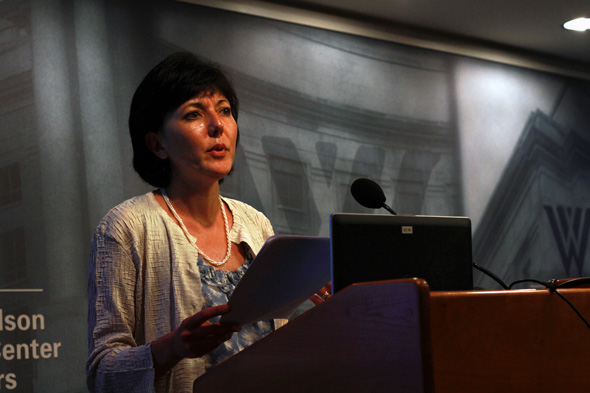
›“Family planning means healthier moms and kids – and it’s good for development too,” said Lindsay Morgan, a senior health analyst at Broad Branch Associates, a healthcare advocacy group. But any number of hurdles can keep women from accessing family planning services. Morgan spoke at a May 21 discussion about results-based financing (RBF) programs, which aim to address hurdles on both the supply and demand sides of the equation in developing countries by incentivizing the provision of a variety of quality services while removing barriers to access for women in need of those services.
Removing Barriers to Providing and Using Family Planning Services
Incentives in RBF programs can come in a variety of forms – like subsidies or fees paid to clinics or vouchers sold to women, said Morgan. In Burundi, for example, under a pilot program rolled out across three provinces in 2006, health facilities receive payments for each patient that uses a modern method of contraception. In 2009, the government and international partners began scaling up the program to a nationwide level. In addition to expanding the program’s geographic reach, the scale-up incorporated new payment criteria to better incentivize quality of care (as opposed to just quantity) and longer-lasting methods of contraception.
Since the RBF pilot began, maternal and child health indicators have improved. The number of children being fully immunized is up, as is contraceptive prevalence, said Morgan. Additionally, those immediate results can lead to a slew of additional benefits down the line. For instance, improving modern contraceptive prevalence is one of the most cost-effective interventions available for reducing maternal death, she said.
In nearby Kenya, the health ministry leads a voucher system across four districts and two Nairobi slums to help some of the country’s poorest women afford maternal healthcare, family planning, and gender-based violence services.
The program is “written into large policy documents [and] strategic pieces,” including Vision 2030, a long-term government-wide strategy document “unveiled in 2008 as a way to reach middle-income country status by 2030,” said Ben Bellows, a reproductive health associate at Population Council Kenya. The government’s emphasis on the voucher program as more than just a health initiative is an acknowledgment of the downstream impact that improved maternal and reproductive health can have on the country’s development, he said.
“An Equity Gap in Family Planning”
However, the fact that the voucher program is needed at all is evidence of “an equity gap in family planning,” Bellows said. Access to family planning services can be significantly skewed depending on a woman’s income level, he said, pointing to a recent article in The Lancet assessing health inequalities in 12 different maternal and child health services across 54 priority Millennium Development Goal countries.
The equity gap reflects “an interesting problem with development,” said Bellows: Though low-income countries are converging with higher income countries, in terms of economic growth rates and income levels “the benefits of growth aren’t being evenly distributed.” The Africa Progress Panel’s annual report, released last month, echoes that point, he said.
“Governments are failing to convert the rising tide of wealth into opportunities for their most marginalized citizens,” the report concludes, and “unequal access to health, education, water and sanitation is reinforcing wider inequalities.”
Kenya’s voucher system is designed to help shrink that gap. Among the poorest of the poor – those benefitting from the system – inequalities are dropping, even if on a broader scale, inequity still exists between poor and wealthy Kenyans. “We’re seeing lower inequalities of service in areas exposed to the voucher,” said Bellows.
“RBF supports progress on a path towards universal health coverage,” said Beverly Johnston, the senior policy advisor at USAID’s Office of Population and Reproductive Health. And within the context of family planning “the whole idea is to level the playing field” so that all contraceptive methods are equally readily available to the women seeking them.
“A Catalyst for Change” in Family Planning
In addition to addressing equal access concerns, RBF programs can serve as “a catalyst for change…to stimulate quality of care and quality of family planning counseling in particular,” said Johnston.
A commonly cited hurdle to better family planning access is social norms that support large family sizes or otherwise limit a woman’s ability to space or limit her pregnancies. Given community health workers’ unique roles within their communities – “often on the front lines…where many of these social taboos and barriers exist,” as Morgan described – simply strengthening their training, and in turn improving the quality of care that women receive, can help counter norms that might otherwise prohibit access to family planning.
As more women receive higher quality care, norms dissipate even further, said Morgan. “There is evidence that [quality of care] is strongly associated with a woman’s decision to choose a method to use, to continue to use it, and to recommend it to others.”
“Rights Are Tantamount”
One trap RBF programs need to be aware of is over-incentivizing expansion of coverage to the detriment of quality or individual women’s concerns about what makes sense for them, said Johnston.
“Rights are tantamount,” she said. In order to ensure that rights are upheld, programs must reflect and be sensitive to local histories and local needs – particularly given the fact that some countries have had “a history of coercive programs and policies.”
Ultimately, “we really look at RBF as just one tool,” said Johnston. “RBF is not for every place and every context,” and neither is family planning’s place in RBF programming.
As one tool of many, RBF programs are gaining prominence as a way to meet MDGs related to maternal and child health. Bellows sees RBF’s importance lasting long past that 2015 deadline, though.
“The high inequity that we witness across many low-income countries, and the ability of targeted mechanisms [like Kenya’s voucher program] to address that, suggest that this may be a kind of generalized solution,” he said. “Obviously it will be context specific in the way in which it is rolled out, but the strategy of incentivizing clients and providers suggests that there’s some sort of globalized solution that could be considered for this widespread challenge.”
Event Resources
Photo Credit: Sean Peoples/Wilson Center. -
USAID’s New Global Health Framework and Delivering Equity in Health Interventions
›USAID’s new Global Health Strategic Framework, Better Health for Development, lays out the agency’s major health priorities for the next five years. “Core global health priorities” include reducing maternal mortality, ensuring child survival and nutrition, fostering an “AIDS free generation,” and fighting infectious diseases. Family planning and reproductive health is listed as a key area for bilateral engagement. In particular, the strategy hopes to continue to “graduate” countries from the agency’s family planning program, which since the 1980s has transitioned 21 countries into local ownership of family planning support. The strategy also takes stock of the shifting global health environment, noting the rise of the “BRICS” countries as new donors and the need to strengthen public health systems in developing countries. “Already, private payments account for 50-80 percent of total health spending in Africa and Asia, leading to system inefficiencies, inequitable access, and health costs that prove catastrophic to individuals and families,” the report reads. In order to achieve its priorities within this context, the document sets out a number of strategies, including a focus on program sustainability, the empowerment of women, and integrated approaches to development. Health, it says, “cannot be isolated from other development challenges.”Speaking of health interventions, a team of researchers led by Aluisio Barros of the Federal University of Pelotas, Brazil, recently compared coverage data from more than 50 countries against an index of household wealth to estimate the most and least equitable interventions. The study, “Equity in Maternal, Newborn, and Child Health Interventions in Countdown to 2015: A Retrospective Review of Survey Data From 54 Countries,” published in The Lancet, found that “interventions with similar levels of overall coverage often have very different degrees of inequality.” According to the data, “the most inequitable indicator was skilled birth attendant, followed by four or more antenatal care visits, whereas the most equitable was early initiation of breastfeeding.” For example, though the average for attendance by a skilled birth attendant was 53.6 percent across the entire sample, the wealthiest fifth had an 84.4 percent coverage rate and the poorest stood at 32.3 percent. “Interventions that are usually delivered in fixed health facilities…tend to be the most inequitably distributed,” write the authors, with geographical access, financial barriers, and discrimination appearing as likely obstacles for the poor. The authors conclude that, although “concern about inequalities in maternal and child health in poor countries was conspicuously absent from the global agenda in the past,” the availability of new, intervention-specific data provides a means of targeting equity issues in health delivery more successfully. -
Learning From Success: Ministers of Health Discuss Accelerating Progress in Maternal Survival
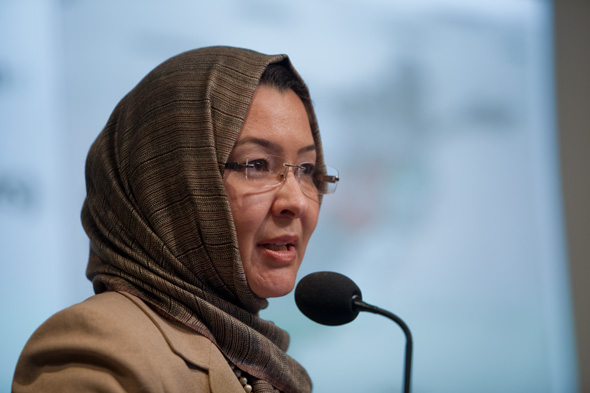
›“The gains we have made [in reducing maternal mortality rates] are remarkable; however, gains are fragile and donor resources are declining. Substantial investments must be maintained to safeguard these hard-wins,” said Afghan Minister of Health Suraya Dail at the Wilson Center on April 23. [Video Below]
As part of the Wilson Center’s Global Health Initiative, the Advancing Dialogue to Improve Maternal Health series partnered with the U.S. Agency for International Development to co-host Minister Dail, along with Honorable Dr. Mam Bunheng, Minister of Health, Cambodia; Honorable Dr. Bautista Rojas Gómez, Minister of Health, Dominican Republic; and Dr. Fidele Ngabo, Director of Maternal and Child Health, Ministry of Health, Rwanda.
These ministers spoke about the lessons learned in countries where there has been tremendous progress under challenging circumstances.
In the Dominican Republic, Bautista Rojas Gomez said the first challenge was to address the “Dominican paradox,” where maternal mortality rates were high despite the fact that 97 percent of women received prenatal care and delivered in hospitals. The government created a zero tolerance policy that included a comprehensive surveillance system, mandatory maternal death audits, and community oversight of services, which assured better quality services.
Similar political commitment improved indicators in Cambodia, where maternal mortality rates dropped from 472 to 206 per year from 2005 to 2010. “It takes a village…and the prime minister has inspired the country to act,” said Mam Bunheng. Through increased access to contraception the number of children per woman went from seven to three and commitment to family planning, education, technology, infrastructure, and community have been the key drivers of success.
“In Rwanda, the big challenge we are having is education,” said Fidele Ngabo. “Many of the maternal health indicators depend on education.” When women and girls are educated they are twice as likely to utilize modern contraception. The efforts of Rwanda’s government have been instrumental in facilitating positive change, he said, particularly the efforts of First Lady Jeannette Kagame, who he called a “champion” for women and girl’s health.
As witnessed throughout the Advancing Dialogue to Improve Maternal Health series – and reiterated by the ministers of health – the interventions to improve maternal mortality rates exist, what’s left is to generate the needed political willpower.
Event Resources
Photo Credit: David Hawxhurst/Wilson Center. -
New Surveys Generate Mixed Demographic Signals for East and Southern Africa
›May 8, 2012 // By Elizabeth Leahy MadsenThe pace of fertility decline in sub-Saharan Africa will be the single most important factor in whether the global population reaches the UN’s high projection of nearly 11 billion in 2050, or remains closer to the low projection of 8 billion. In recent years, the high projection has seemed more likely, as sub-Saharan Africa has been marked by stalled fertility declines and stagnant rates of contraceptive use. Survey results released over the past year showing dramatic increases in contraceptive use in Ethiopia, Malawi, and Rwanda therefore set demographers and the family planning community abuzz, signaling that concerted efforts to improve health services had paid off and fertility rates were on the decline. But in recent months, additional surveys from Mozambique, Uganda, and Zimbabwe have shown that those positive trends are not universal.
-
Nabeela Ali on How PAIMAN Is Improving Maternal Health in Pakistan
›“Maternal mortality is a very complex thing – it’s not just patient-doctor relationships, it has so much to do with behaviors, with communities, with the household, with family members,” said Nabeela Ali, chief of party for the Pakistan Initiative for Mothers and Newborns (PAIMAN), which received USAID maternal and child health funding from 2004 to 2010.
Pakistan is the world’s sixth most populous country, yet has long held one of the world’s highest maternal mortality rates. Ali spoke at the Wilson Center last fall about strategies to better engage faith-based organizations on maternal and child health issues. In this interview with ECSP, she stressed that despite Pakistan’s very religious society, these interventions are possible with the right messaging.
PAIMAN aims to reach vulnerable and isolated groups, including poor, rural, or conservative women. “The areas where no one can reach [are] where we targeted,” Ali said.
In these areas, ulama – influential religious leaders and scholars – are highly trusted. “It was not a one-size-fits-all strategy,” Ali emphasized. “Religious leaders are not technical people, but they are experts in their own field. You have to approach them with trust and respect.”
“The first step is establishing rapport with them; then they listen to you,” said Ali. This is best done through another alim, not a technical person. Those ulama that were approachable proved to be valuable allies in the promotion of maternal health. PAIMAN has reached over 35 million people in Pakistan over its now eight-year run.
Projects like PAIMAN are necessary in areas of the world where religious leaders are the most respected community authorities. In Pakistan, Ali believes that now that this strategy has been demonstrated to be viable, the government should help bring it to scale. An NGO-funded project ends, but a government-funded program has much more continuity, which in turn helps build trust with local leaders, she said.
Sources: UN Population Division. -
Uganda’s Demographic and Health Challenges Put Into Perspective With Newfound Oil Discoveries [Part One]
›April 26, 2012 // By Kate DiamondUganda’s population is the second youngest in the world, with half of the country younger than 15.7 years old (just older than Niger’s median age of 15.5 years). In the past 10 years, the country – about half the size of France in land area – has added 10 million people, growing from 24 to 34 million. That growth, paired with other factors like poor governance and long-standing insecurity, has made providing basic services a difficult task for a government that is one of Africa’s most aid-dependent.
-
Food Security in a Climate-Altered Future, Part One: “Hotspots” Suggest Food Insecurity More Than a Supply Problem
›March 20, 2012 // By Kathleen MogelgaardSmall talk about the weather with my Malawian taxi driver became serious very quickly. “We no longer know when the rains are coming,” he said as we bumped along the road toward the Lilongwe airport last November. “It is very difficult, because we don’t know when to plant.”
These days, he is grateful for his job driving a taxi. His extended family and friends are among the 85 percent of Malawians employed in agriculture, much of which is small-holder, rain-fed subsistence farming. Weather-related farming challenges contribute to ongoing food insecurity in Malawi, where one in five children is undernourished.
His observations of the recent changes in climate match forecasts for the region: In East Africa, climate change is expected to reduce the productivity of maize – Malawi’s main subsistence crop – by more than 20 percent by 2030, according to a recent analysis by Oxfam International.
I looked out the window at dusty fields and tried to imagine what Malawi might look like in 2030. For one thing, it will be more crowded. A lot more crowded. According to UN population projections, by 2030, Malawi’s population will have grown from about 15 million today to somewhere between 26.9 and 28.4 million. With climate change dampening agricultural productivity and population growth increasing food demand, how will Malawians – many of whom don’t have enough to eat now – have enough to eat in the future?
It gets quiet in the taxi as the driver and I both ponder this question. Malawi is not alone in being a climate-vulnerable country with a rapidly growing population dependent on rain-fed agriculture. Population Action International’s Mapping Population and Climate Change tool shows us that many “hotspot” countries – scattered across Latin America, Africa, and Asia – face the triple challenge of low climate change resilience, projected decline in agricultural productivity, and rapid population growth.
Agricultural trade, government safety net programs, and foreign assistance will no doubt continue to play an important role in the quest for food security in Malawi and other “hotspot” countries in the future. And climate change adaptation projects will, hopefully, reshape agricultural practices and technologies in ways that can boost yields and enable crops to better withstand temperature and precipitation fluctuations.
These interventions will be critical in addressing the supply side of future food security challenges. But what about growing demand?
Malthus Revisited?
Juxtaposing population growth with food production does, of course, bring us back to Thomas Robert Malthus’ original (and by now somewhat infamous) dire warning: that population growth would eventually outrun food supply. But seeing the scale of the challenges in Malawi firsthand, I must admit that my inner Malthus sat up and took notice.
It is true that technological advances have enabled astounding growth in agricultural yields that have enabled us to feed the world in ways the doom-filled Malthus could never have imagined in the early 19th century. But it is also true that the agricultural productivity gains that helped us keep pace with population growth for so long are beginning to slow: According to the U.S. Department of Agriculture, aggregate agricultural yields averaged 2.0 percent growth annually between 1970 and 1990, but that growth in yields declined to 1.1 percent between 1990 and 2007, and is projected to decline to less than 1.0 percent in the years to come.
This comes at a time when the Food and Agriculture Organization reports that food production will need to increase by 70 percent by 2050 in order to adequately feed a larger, wealthier, and more urbanized population.
To dismiss any talk of population growth as outmoded Malthusian hand-wringing misses an opportunity to embrace interventions that can contribute significantly to prospects for future food security – namely, empowering women with information and services that enable them to determine the timing and spacing of their children.
In Malawi and many of the “hotspot” countries around the world, high proportions of women remain disempowered in this regard. Meaningful access to family planning and reproductive health services results in smaller, healthier families that will be better equipped to cope with the food security challenges that are headed their way.
Not only does a smaller family mean that limited household resources go further, but access to family planning and reproductive health services is connected to other important education and economic outcomes.
A new Population Reference Bureau policy brief, for example, highlights how improving women’s reproductive health will not only lead to declining fertility and slower population growth in sub-Saharan Africa, but can also contribute to balancing a woman’s many roles (agricultural producer, worker, mother, caregiver, etc.) in ways that support greater food security for her family. And research by the International Food Policy Research Institute shows that in developing countries, women’s education and per capita food availability are the most important underlying determinants of child malnutrition – with women’s education having the strongest beneficial impact. Access to family planning paves the way for these outcomes – and by slowing population growth, can help to slow the growth in food demand.
Women’s Needs and Future Food Demand
The scale of potential benefits of meeting women’s family planning needs is significant when thinking about future food demand, both globally and especially in food insecure, climate-vulnerable countries. As we have seen in Malawi, there is a range of possible future population sizes and that range grows even wider when the projections are extended to 2050: According to the UN, Malawi’s 15 million today will grow to somewhere between 45 million and 55 million by 2050.
That span of 10 million people embodies assumptions about declining fertility in Malawi. To reach 55 million, the average number of children per woman would need to drop from 5.7 today to 4.5 by 2050. If fertility drops further, to 3.5 children per woman, Malawi’s population would grow to (only) 45 million. Where Malawi ends up in that 10-million-person population spread will have deep implications for per capita food availability, not to mention other important development outcomes.
Fertility declines of this kind do not require coercion or “population control.” As we have seen time and again, when women are empowered with information and services that enable them to determine the timing and spacing of their children, smaller, healthier families are the inevitable result.
Meeting women’s needs for reproductive health and family planning services is not – and never should be – about reducing population size. Universal access to reproductive health is recognized as a basic human right and central development goal (embodied in Millennium Development Goal 5) because of its vital connections to women’s and children’s health, education and employment opportunities, and poverty alleviation. And yet, too many women remain without the ability to effectively plan their families. In Malawi, one in four married women would like to delay their next birth or end child-bearing all together but aren’t using contraception; globally, 215 million have this unmet need.
As global efforts ramp up to address interlinked challenges of food security and climate change adaptation, assessing the role of population growth is more important than ever. And in designing strategies to address these challenges – strategies like the U.S. Government’s Feed the Future Initiative and UN-supported National Adaptation Plans – we should not pass over opportunities to incorporate interventions to close the remaining gap in universal access to family planning, especially in places like Malawi and other “hotspot” countries (such as Haiti, Nigeria, and Nepal), where women’s unmet family planning needs are high and population growth is rapid.
Continue reading with part two on the often under-examined role of population projections in food security assessments here.
Sources: Food and Agriculture Organization, Guttmacher Institute, International Food Policy Research Institute, International Institute for Environment and Development, MEASURE DHS, Oxfam International, Population Action International, Population Reference Bureau, The Lancet, U.S. Department of Agriculture, UN Population Division.
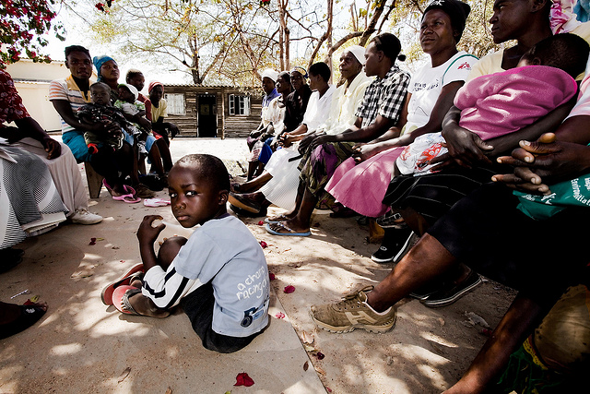
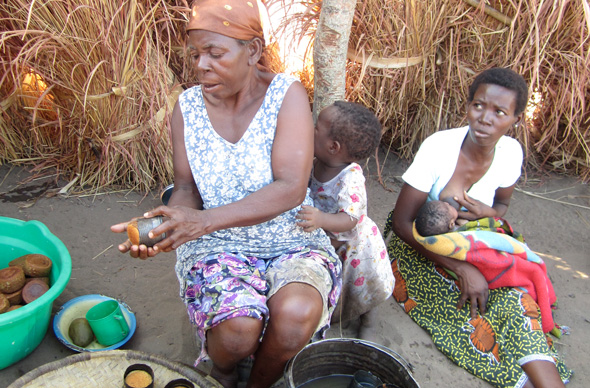
Photo Credit: Women in a village near Lake Malawi make cornbread while caring for small children, used with permission courtesy of Jessica Brunacini. -
USAID’s New Climate Strategy Outlines Adaptation, Mitigation Priorities, Places Heavy Emphasis on Integration
›February 29, 2012 // By Kathleen MogelgaardIn January, the U.S. Agency for International Development released its long-awaited climate change strategy. Climate Change & Development: Clean Resilient Growth provides a blueprint for addressing climate change through development assistance programs and operations. In addition to objectives around mitigation and adaptation, the strategy also outlines a third objective: improving overall operational integration.
The five-year strategy has a clear, succinct goal: “to enable countries to accelerate their transition to climate-resilient low emission sustainable economic development.” Developed by a USAID task force with input from multiple U.S. agencies and NGOs, the document paints a picture of the threats climate change poses for development – calling it “among the greatest global challenges of our generation” – and commits the agency to addressing both the causes of climate change and the impacts it will have on communities in countries around the world.
These statements are noteworthy in a fiscal climate that has put development assistance under renewed scrutiny and in a political environment where progress on climate change legislation seems unlikely.
Not Just Challenges, But Opportunities
To make the case for prioritizing action on climate change, the strategy cites climate change’s likely impact on agricultural productivity and fisheries, which will threaten USAID’s food security goals. It also illustrates the ways in which climate change could exacerbate humanitarian crises and notes work done by the U.S. military and intelligence community in identifying climate change as a “threat multiplier” (or “accelerant of instability” as the Quadrennial Defense Review puts it) with implications for national security.
Targeted efforts to address climate change, though, could consolidate development gains and result in technology “leap-frogging” that will support broader development goals. And, noting that aggregate emissions from developing countries are now larger than those from developed countries, the strategy asserts that assisting the development and deployment of clean technologies “greatly expands opportunities to export U.S. technology and creates ‘green jobs.’”
In addition to providing a rationale for action, the strategy provides new insights on how USAID will prioritize its efforts on climate change mitigation and adaptation. It provides a clear directive for the integration of climate change into the agency’s broader development work in areas such as food security, good governance, and global health– a strong and encouraging signal for those interested in cross-sectoral planning and programs.
Priorities Outlined, Tough Choices Ahead
President Obama’s Global Climate Change Initiative, revealed in 2010, focuses efforts around three pillars: clean energy, sustainable landscapes, and adaptation. USAID’s climate strategy fleshes out these three areas, identifying “intermediate results” and indicators of success – such as the development of Low Emission Development Strategies in 20 partner countries, greenhouse gas sequestration through improved ecosystem management, and increasing the number of institutions capable of adaptation planning and response.
In laying out ambitious objectives, however, the authors of the strategy acknowledge constrained fiscal realities. The strategy stops short of identifying an ideal budget to support the activities it describes, though it does refer to the U.S. pledge to join other developed countries in providing $30 billion in “fast start financing” in the period of 2010 to 2012 and, for those USAID country missions that will be receiving adaptation and mitigation funding, establishes “floors” of $3 million and $5 million, respectively.
The final section of the strategy lists over thirty countries and regions that have already been prioritized for programs, including Bangladesh, India, Kenya, Malawi, and Peru. But “we are unable to work in every country at risk from climate change impacts or with the potential for low carbon sustainable growth,” the strategy asserts. An annex includes selection criteria to guide further funding decisions, including emission reduction potential, high exposure to physical climate change impacts, a suitable enabling environment, coordination with other donors, and diplomatic and geographic considerations.
“Integration” Central to Strategy
The concept of integration figures prominently throughout the 27-page document. For those of us working in the large and growing space where the global challenges of climate change, food security, health, livelihoods, and governance overlap, this attention is heartening. While it may sometimes seem simply fashionable to pay lip service to the idea of “breaking out of stovepipes,” the strategy identifies concrete ways to incentivize integration.
“Integration of climate change into USAID’s development portfolio will not happen organically,” the strategy says. “Rather, it requires leadership, knowledge and incentives to encourage agency employees to seek innovative ways to integrate climate change into programs with other goals and to become more flexible in use of funding streams and administrative processes.”
To this end, USAID plans to launch a group of pilot activities. USAID missions must submit pilot program proposals, and selected programs will emphasize integration of top priorities within the agency’s development portfolio (including Feed the Future and the Global Health Initiative). Among other criteria, pilots must demonstrate buy-in from multiple levels of leadership, and will be selected based on their potential to generate integration lessons and tools over the next several years.
This kind of integration – the blending of key priorities from multiple sectors, the value of documented lessons and tools, the important role of champions in fostering an enabling environment – mirrors work carried out by USAID’s own population, health, and environment (PHE) portfolio. To date, USAID’s PHE programs have not been designed to address climate challenges specifically, and perhaps not surprisingly they aren’t named specifically in the strategy. But those preparing and evaluating integration pilot proposals may gain useful insights on cross-sectoral integration from a closer look at the accumulated knowledge of more than 10 years of PHE experience.
Population Dynamics Recognized, But Opportunities Not Considered
Though not a focus of the strategy, population growth is acknowledged as a stressor – alongside unplanned urbanization, environmental degradation, resource depletion, and poverty – that exacerbates growing challenges in disaster risk reduction and efforts to secure a safe and sufficient water supply.
Research has shown that different global population growth scenarios will have significant implications for emissions growth. New analysis indicates that the fastest growing populations are among the most vulnerable to climate change and that in these areas, there is frequently high unmet need for family planning. And we have also clearly seen that in many parts of the world, women’s health and well-being are increasingly intertwined with the effects of changing climate and access to reproductive health services.
In its limited mention of population as a challenge, however, the strategy misses the chance to identify it also as an opportunity. Addressing the linked challenges of population growth and climate change offers an opportunity to recommit the resources required to assist of the hundreds of millions of women around the world with ongoing unmet need for family planning.
The strategy’s emphasis on integration would seem to be an open door to such opportunities.
Integrated, cross-sectoral collaboration that truly fosters a transition to climate-resilient, low-emission sustainable economic development will acknowledge both the challenge presented by rapid population growth and the opportunities that can emerge from expanding family planning access to women worldwide. But for this to happen, cross-sectoral communication will need to become more commonplace. Demographers and reproductive health specialists will need to engage in dialogues on climate change, and climate specialists will need both opportunities and incentives to listen. USAID’s new climate change integration pilots could provide a new platform for this rare but powerful cross-sectoral action.
Kathleen Mogelgaard is a writer and analyst on population and the environment, and a consultant for the Environmental Change and Security Program.
Sources: FastStartFinance.org, International Energy Agency, Maplecroft, Population Action International, The White House, U.S. Department of Defense, USAID.
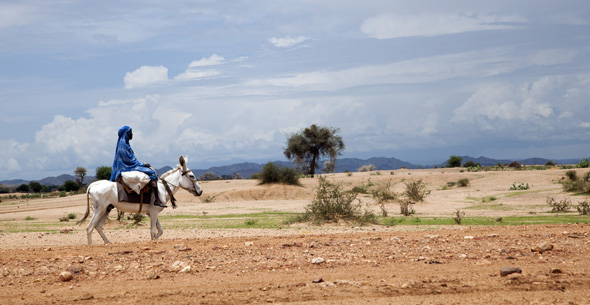
Photo Credit: “Displaced Darfuris Farm in Rainy Season,” courtesy of United Nations Photo.
Showing posts from category USAID.