-
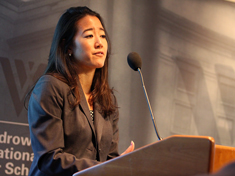
Melanie Nakagawa on Integrating Gender Into REDD+ at the Department of State and USAID
›
A central tenet of John Kerry’s time as Secretary of State has been an emphasis on climate change. In a speech in Indonesia this year, he compared the threat of changing climate conditions to terrorism and weapons of mass destruction. Though the United States has been slow to enact major climate legislation, the Department of State has developed a “road map” for responding in its own way. The REDD+ program could play a major role in this response, says Melanie Nakagawa of the department’s policy planning staff in this week’s podcast.
-
Getting Specific About Climate Conflict: Case Studies Show Need for Participatory Approaches to Adaptation
›May 28, 2014 // By Moses Jackson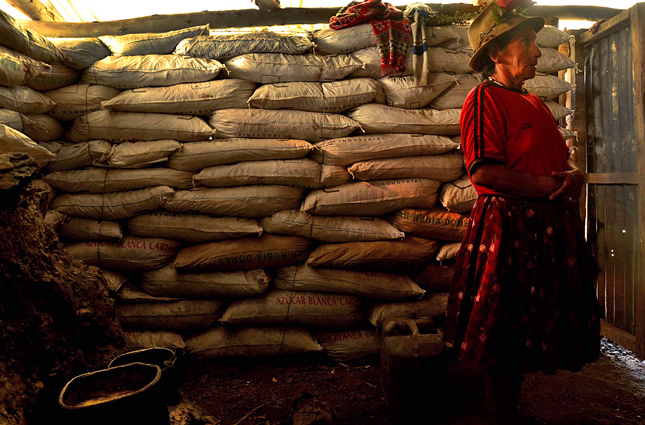
Will climate change cause conflict? That question, which has sparked heated debates in academia and the media, resists simple answers. But is climate change already contributing to conflict in some places? If so, how exactly? And more importantly, what should be done about it? These questions were the focus of a 2013 preliminary report produced for USAID by international development firm Tetra Tech ARD, which examines the climate-conflict nexus in Uganda, Ethiopia, and Peru.
-
To Build Resilience Through Development, Learn From Population, Health, and Environment Programs
›May 19, 2014 // By Laurie MazurIn an era defined by climate change and other disruptions, “resilience” – the capacity to survive and thrive in times of crisis and change – is increasingly essential.
-
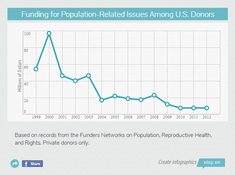
The Future of Population Funding in the U.S.: Mixed Prospects for Foundation Support
›May 12, 2014 // By Laurie MazurWorld population continues its steady climb, surpassing 7 billion in 2011 and heading to somewhere between 8 and 11 billion by midcentury. But funding to address population-related issues is moving in the opposite direction.
-
Make It Count: Evaluating Population, Health, and Environment Development Programs
›Evaluation is the lifeblood of any development effort – it’s how implementers know if they’re making a difference, determine what to do more or less of, and enables funders to evaluate cost-effectiveness. But it’s also an inexact science, no more so than when it comes to complex interventions that cut across sectors. [Video Below]
-
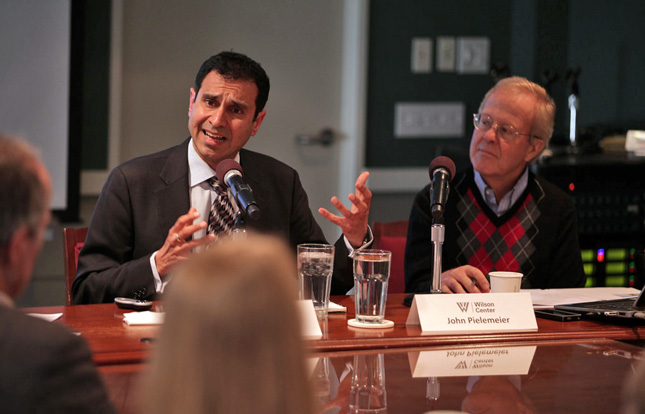
Kathleen Mogelgaard, Aspen Institute
Hungry, Hot, and Crowded: The Importance of Multi-Dimensional Strategies for Resilience
›May 6, 2014 // By Wilson Center StaffIn a world faced with rising temperatures, increasingly severe droughts and floods, and a rapidly growing population, how can people adapt to this new way of life – and even thrive? Leading experts discussed this question in-depth during an Aspen Institute Global Health and Development Program event titled, “Building Resiliency: The Importance of Food Security and Population.” The panel took place as part of the Civil Society Policy Forum at the 2014 IMF/World Bank Spring Meetings in Washington, DC.
-
Water, Sanitation, and Hygiene Programs as a Strategy to Advance Maternal Health
›Of all the Millennium Development Goals, the maternal health and sanitation targets are among the farthest off track, said Rebecca Fishman, operations and special projects director of WASH Advocates. [Video Below]
-
USAID Launches New Water, Conflict, and Peacebuilding Toolkit
›With almost 800 million people currently lacking access to clean water and two-thirds of the world’s population projected to face conditions of severe water stress by 2025, disputes over water are a growing global concern. But while dwindling water supplies sharpen focus on conflict, long-term peacebuilding opportunities are often overlooked. [Video Below]
Showing posts from category USAID.