-
John Pielemeier: Population, Health, and Environment Programs Need to Prove It Before Becoming Mainstream
›
A new model of integrated development, combining population, health and environment (PHE) interventions, is efficient, effective, and relatively inexpensive. But more rigorous program evaluations are necessary to prove its value, argues John Pielemeier in this week’s podcast.
-
Gidon Bromberg: Jordan River Shows Water Can Be a Path to Peace, Generate Will for Change
›
At last month’s launch of the USAID Water and Conflict Toolkit at the Wilson Center, Gidon Bromberg explained that the toolkit is about much more than just conflict. “It’s put very much in forefront the possibilities of peacebuilding,” he says in this week’s podcast. “Water is an opportunity in areas where there aren’t many opportunities.”
-
A New Model of Development? The Role of Public-Private Partnerships in International Aid
›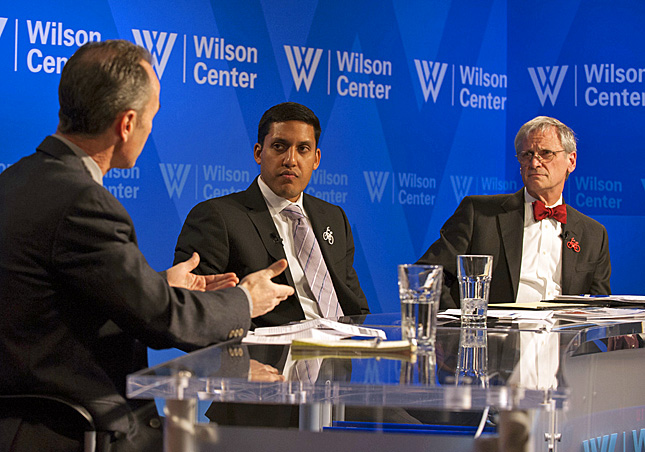
USAID funding is “far outstripped” by private investment and business relationships in “nearly every country” in which it works – and that’s a good thing, according to USAID Administrator Rajiv Shah. [Video Below]
-
USAID Administrator Rajiv Shah on Public-Private Partnerships and the Future of Aid
›What’s the best way for America’s chief development agency to help other countries reach prosperity and democracy? Increasingly, it’s creating partnerships not just with other governments, but with the private sector too, says USAID Administrator Rajiv Shah in this week’s podcast. -
Have Ideas About Reducing Urban Poverty in the Developing World? In Graduate School? Apply Within
›The Wilson Center’s Urban Sustainability Laboratory, in partnership with USAID, International Housing Coalition, World Bank, and Cities Alliance, is pleased to announce the 5th Annual Urban Poverty Paper Competition for graduate students. The competition calls on students currently enrolled in a Master’s or PhD program to submit paper abstracts on topics relating to urban poverty in the developing world.
-
From Victoria to Chilwa: Integrated Development in Two African Lake Basins
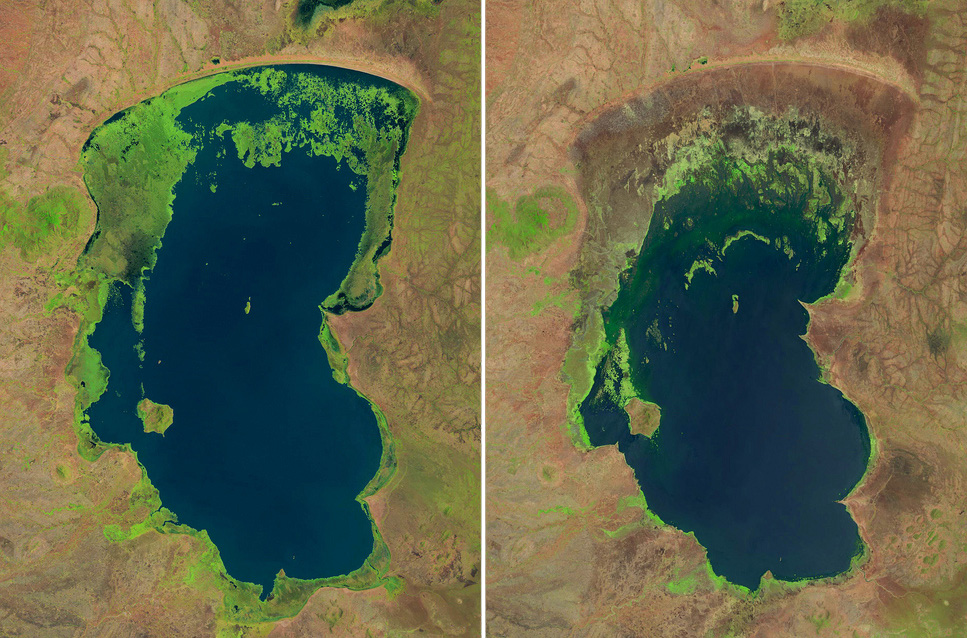
›In Lake Victoria and Lake Chilwa basins, interconnected development challenges defy sectoral boundaries, said experts at the Wilson Center on February 10. According to Deepa Pullanikkatil of Leadership for Environment and Development and Doreen Othero of the Lake Victoria Basin Commission, growing populations, shrinking resource bases, and persistent human health concerns demonstrate the need for integrated development approaches that combine population, health, and environmental (PHE) interventions. “We need different sectors working together to achieve the greater goal,” said Pullanikkatil. [Video Below]
-
Geoff Dabelko, Ensia
The Periphery Isn’t Peripheral: Barriers to Cross-Sectoral Collaboration in Development
›February 14, 2014 // By Wilson Center StaffWhat do melting Himalayan glaciers have to do with food security in Cambodia? Not much, thought an aid practitioner trying to boost food security along the lower reaches of the Mekong River – until she heard a colleague working on the Tibetan Plateau describe the downstream implications of climate change in the Himalayas. Everything she was working on, she suddenly realized, could be literally washed away.
-
Turning the Tide? Technology Provides New Ways to Combat Gender-Based Violence
›Worldwide, one in three women suffer beatings, coercion into sex, or other abuse from an intimate partner during her lifetime, according to the UN, while one in five is a victim of rape or attempted rape.
“Gender-based violence is a pervasive global challenge. It serves as a barrier to national economic and social advancement across the world,” said Alex Dehgan, former chief scientist and director of the Office of Science and Technology at the U.S. Agency for International Development, on December 9 at the Wilson Center. [Video Below]
Showing posts from category USAID.
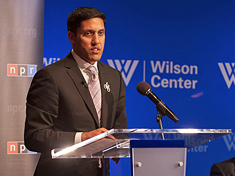 What’s the best way for America’s chief development agency to help other countries reach prosperity and democracy? Increasingly, it’s creating partnerships not just with other governments, but with the private sector too, says USAID Administrator