-
Ban Ki-moon: Natural Resources Should Be Part of Peacebuilding
›July 30, 2010 // By Schuyler NullNatural resource management is a critical component of the peacebuilding process according to a new report from UN Secretary-General Ban Ki-moon. The report, presented to the UN Security Council and General Assembly this month, is a follow-up to last year’s presentation by the Secretary-General’s office on peacebuilding in the immediate aftermath of conflict.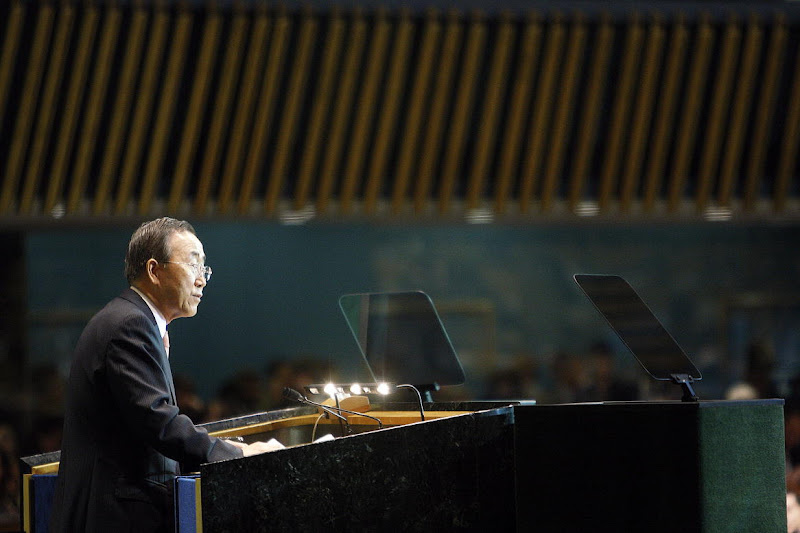
The Secretary-General singles out the 2009 UN Environment Programme (UNEP) study “From Conflict to Peacebuilding: The Role of Environment and Natural Resources” for demonstrating the recent links between land use, natural resources, frequency of conflict, and conflict relapse. The Secretary-General writes:44. I wish to highlight two areas of increasing concern where greater efforts will be needed to deliver a more effective United Nations response. First, natural resources: a recent study by the United Nations Environment Programme concluded that 40 per cent of internal conflicts over a 60-year period were associated with land and natural resources, and that this link doubles the risk of conflict relapse in the first five years. Efforts have been made to draw early attention to these risks and to improve inter-agency coordination to address them, including by strengthening national capacity to prevent disputes over land and natural resources, as described in paragraph 31 above. Examples include programmes in Afghanistan, Timor-Leste and the Sudan, where coordination among several United Nations entities addressing land and natural resource management has demonstrated the importance of an inclusive approach. In order to further deliver on the ground I call on Member States and the United Nations system to make questions of natural resource allocation, ownership and access an integral part of peacebuilding strategies.
ECSP Director Geoff Dabelko calls the inclusion of this language “an important step towards integrating environmental issues into broader UN peacebuilding efforts and providing critical top-level political support for this integration effort.”
UNEP’s Post-Conflict and Disaster Management Branch (PCDMB) has been working to support a variety of UN bodies on integrating environment and natural resources into the peacebuilding process. Recent PCDMB efforts have been based in Afghanistan, Iraq, Lebanon, Sierra Leone, the DRC, and Sudan. New Security Beat asked UNEP PCDMB’s Director of Policy and Planning David Jensen to reflect on the new report via email:I’m thrilled to finally see that after over 10 years of work by UNEP and a variety of other organizations and scholars, these issues have finally been recognized at the highest political level. There is no longer any doubt that the mismanagement of natural resources can be a key factor in contributing to violent conflict. At the same time, the very recognition that environmental issues and natural resources can contribute to violent conflict underscores their potential significance as pathways for cooperation, transformation, and the consolidation of peace in war-torn societies.
As Jensen writes in ECSP Report 13, “If people cannot find clean water for drinking, wood for shelter and energy, or land for crops, what are the chances that peace will be successful and durable? Very slim.”
Last fall, Jensen predicted the UN was finally approaching a fundamental tipping point for inclusion of natural resource issues in the broader peacebuilding process, and the Secretary-General appears to have proven him right.
Photo Credit: “Secretary-General Addresses General Assembly,” courtesy of flickr user United Nations Photo.USAID Head Calls for Integrating Health Services in New Global Health Initiative
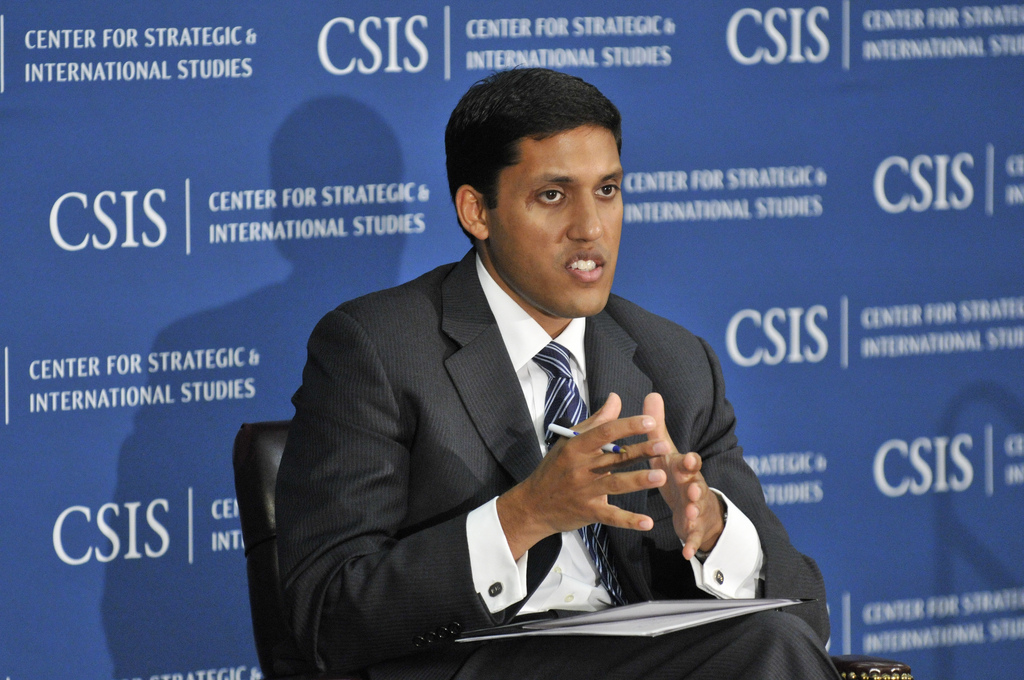
›July 2, 2010 // By Russell Sticklor This Tuesday, Dr. Rajiv Shah, administrator for U.S. Agency for International Development gave a major speech at the Center for Strategic & International Studies on USAID’s Global Health Initiative. With $63 billion earmarked for GHI over the next six years, there are high expectations for the program.
Shah laid out some details of GHI’s main priorities, which include improving family planning services, enhancing nutrition initiatives, and building stronger and broader-based healthcare systems across the developing world, with special attention paid to the health needs of mothers and their young children. He offered a number of examples of the benefits of integrating family planning with other health services for women and children, including maternal health and nutrition.
Shah did not, however, mention integrating family planning with environmental programs, the benefits of which USAID-funded programs have amply demonstrated. He also did not delve into the emerging nexus of family planning, population growth, and climate change, a subject of much discussion at last month’s Women Deliver conference in Washington, D.C.
On the other hand, Shah did say that GHI’s emphasis on improving nutrition for the world’s poor will complement another major Obama administration outreach effort, the Feed the Future initiative—repeating a point he made at the recent launch of the food security effort.
Shah also highlighted the need for establishing benchmarks for measuring success that revolve around people, not diseases. He suggested one way of achieving this would be to ensure that clinics—particularly in rural areas—broaden their mandate to offer a variety of health-prevention services, rather than providing resources that treat primarily one type of illness.
For a full transcript of Shah’s speech, click here.
More analysis of Shah’s speech and USAID’s Global Health Initiative to come in the weeks ahead.
Photo Credit: “Statesman Forum: Dr. Rajiv Shah, USAID Administrator,” courtesy of flickr user CSIS: Center for Strategic & International Studies.Backdraft: The Conflict Potential of Climate Mitigation and Adaptation
›The European Union’s biofuel goal for 2020 “is a good example of setting a target…without really thinking through [the] secondary, third, or fourth order consequences,” said Alexander Carius, co-founder and managing director of Adelphi Research and Adelphi Consult. While the 2007-2008 global food crisis demonstrated that the growth of crops for fuels has “tremendous effects” in the developing world, analysis of these threats are underdeveloped and are not incorporated into climate change policies, he said. [Video Below]
Can Food Security Stop Terrorism?
›May 28, 2010 // By Schuyler NullUSAID’s “Feed the Future” initiative is being touted for its potential to help stabilize failing states and dampen simmering civil conflicts. Speaking at a packed symposium on food security hosted by the Chicago Council last week, USAID Administrator Rajiv Shah called food security “the foundation for peace and opportunity – and therefore a foundation for our own national security.”
USDA v. Taliban
›May 28, 2010 // By Dan AsinAgricultural development is the “top non-security priority” in Afghanistan, said U.S. Secretary of Agriculture Tom Vilsack, in a recent speech. “Unemployment is the best recruiting tool for the Taliban,” he told the Des Moines Register.
Sixty USDA experts are working with their partners in State, USAID, DOD, and other members of U.S. government to increase agricultural opportunities in rural areas of the country. Embedded in small civil-military units of 15-100 people, USDA experts have worked on projects of all scales: installing windmill water pumps, training veterinarians, refurbishing university research laboratories, stabilizing river banks and irrigation canals, and developing storage facilities.
In his keynote speech at the Feed the Future launch, Vilsack emphasized the need to build markets. In Afghanistan, USDA is focusing on improving infrastructure so farmers can receive deliveries and ship produce, and boosting credit vehicles to help farmers purchase the inputs to grow crops. Opium traders provide seeds to the farmers and pick up the crops at the farms, he said, which makes opium easier to produce than legal crops.
Alternative crops could be just as or more valuable, Vilsack told NPR:Table grapes are in some cases perhaps four and five times more valuable than poppy. Saffron, almonds, pomegranates, a number of fruits are significantly more profitable. What we have to do is we have to establish that the reward of putting those crops in the ground is greater and the risk is equal to or less than poppy production.
On the same NPR program, Vilsack’s counterpart agreed: “Agriculture growth means employment and employment means security. They’re so much related to each other. In places where the military operates, if you do not offer people the future, just by military means, security and stability will be a very far-reaching dream,” said Minister of Agriculture, Irrigation, and Livestock Mohammad Asif Rahimi.
But the Afghan government faces an immense challenge: Afghanistan’s unemployment rate is estimated at 35 percent, which ranks it in the bottom 20 countries in the world. With a population growth rate of 3.5 percent and nearly half the population already under the age of 15, the need for job creation is only set to increase.
While agricultural development and food security are essential, Rahimi acknowledged, alone they are not enough. The Afghan government needs a “whole of government approach,” he said. To win the hearts of its people the government must offer “an alternative to what the Talibans were offering to people…more livelihood and security and education and health, and also a better and more secure future.”
Both Vilsack and Rahimi avoid the common trap of equating hunger with conflict, instead emphasizing agricultural employment and economic opportunities as key to solving that intractable conflict.
But it’s not the only piece of the puzzle. I hope the Feed the Future’s “whole of government” approach in Afghanistan will emphasize not only agriculture, but also the environmental policies and health services, such as family planning, that can ensure that agricultural gains are sustainable even after the troops leave.
Sources: Central Intelligence Agency, Des Moines Register, NPR, United Nations Statistics Division, United Nations Population Division, U.S. Agency for International Development, U.S. Department of Agriculture, U.S. Department of State.
Photo Credit: Colonel Stephen Redman and John Van Horn of the USDA discuss crop plans with local residents while surveying the site of the Arkansas Agribusiness Development Team’s (ADT)demonstration farm plot near Shahr-e-Safa, Afghanistan, courtesy Flickr user isafmedia.Securing Food in Insecure Areas
›May 25, 2010 // By Dan Asin“Of the 1 billion people who are in food-stressed situations today, a significant proportion live in conflict-ridden countries,” said Raymond Gilpin of the U.S. Institute of Peace at last Thursday’s launch of USAID’s Feed the Future initiative. “Most of them live in fear for their lives, in uncertain environments, and without clear hope for a better tomorrow.”
According to data from the World Food Programme and the UCDP/PRIO Armed Conflict Database, of the countries with moderately to very high hunger rates in 2009, nearly a quarter experienced violent conflict in the previous year, and nearly half in the preceding two decades.
Gilpin said those working toward food security need to develop “conflict-sensitive” approaches, because “a lot of fundamentals that underlie this problem have a lot to do with conflict.” He noted several points, from production to purchasing power, at which conflict enters to disrupt the farm to mouth food cycle:- Production: Be it forced or voluntary, internal or external, conflict often results in displacement. Farmers are not exempt, and when they’re not on their land they cannot produce.
- Delivery: “Food security isn’t always an issue of food availability; it’s an issue of accessibility,” he said. “When violent conflict affects a community or a region…it destroys infrastructure and weakens institutions.”
- Market access: In conflict zones, it is solitary or competing armed contingents, rather than the market’s invisible hand, that control access to supplies. “Groups who usually have the monopoly of force, control livelihoods and food and services,” he said.
- Purchasing power: Conflict disrupts economic activity, degrading both incomes and real wealth. Those remaining in the conflict area suffer from fewer opportunities to conduct business, while those choosing to migrate relinquish their assets. In instances where food is available to purchase, conflict reduces the number of individuals who can afford it.
Photo Credit: World Food Programme distribution site in Afghanistan, courtesy Flickr user USAID Afghanistan.USAID’s Shah Focuses on Women, Innovation, Integration
›May 20, 2010 // By Wilson Center StaffWomen in developing countries are “core to success and failure” of USAID’s plan to fight hunger and poverty, and “we will be focusing on women in everything we do,” said USAID Administrator Rajiv Shah at today’s launch of the “Feed the Future” guide.
But to solve the “tough problem” of how to best serve women farmers, USAID needs to “take risks and be more entrepreneurial,” said Shah, as it implements the Global Hunger and Food Security Initiative.
“A lot of this is going to fail and that’s OK,” Shah said, calling for a “culture of experimentation” at the agency. He welcomed input from the private sector, which was represented at the launch by Des Moines-based Pioneer Hi-Bred.
In one “huge change in our assistance model,” Feed the Future will be “country-led and country-owned,” said Shah, who asked NGOs and USAID implementing partners to “align that expertise behind country priorities” and redirect money away from Washington towards “building real local capacity.” USAID will “work in partnership, not patronage,” with its 20 target countries, he said.
To insure that the administration’s agricultural development efforts are aligned to the same goals, Shah said USAID will collect baseline data from the start on three metrics: women’s incomes, child malnutrition, and agricultural production.
“Whether it is finance, land tenure, public extension, or training efforts, it does not matter whether it is an ‘agricultural development’ category of program,” said Shah. All programs will “provide targeted services to women farmers.”
While Shah briefly mentioned integrating these efforts with the administration’s Global Health Initiative, he only gave one example. Nutrition programs would be tied to health “platforms that already exist at scale” in country, such as HIV, malaria, vaccination, and breastfeeding promotion programs, he said.
Targeting Food Security: The Wilson Center’s Africa Program Takes Aim
If “food supplies in Africa cannot be assured, then Africa’s future remains dismal, no matter how efforts of conflict resolution pan out or how sustained international humanitarian assistance becomes,” says Steve McDonald, director of the Wilson Center’s Africa Program, in the current issue of the Wilson Center’s newsletter, Centerpoint. “It sounds sophomoric, but food is essential to population health and happiness—its very survival—but also to productivity and creativity.”
The May 2010 edition of Centerpoint highlights regional integration, a key focus of U.S. policy, as a mechanism for assuring greater continuity and availability of food supplies. Drawing on proceedings from the Africa Program’s “Promoting Regional Integration and Food Security in Africa” event held in March, Centerpoint accentuates key conclusions on building infrastructure and facilitating trade.
Photo Credit: “USAID Administrator Shah visits a hospital in Haiti” courtesy Flickr user USAID_Images.Reforming Development: New Year’s Resolutions for Policymakers
›The foreign policy headlines are dominated by terrorism, Iraq and Afghanistan, the Arab-Israeli dispute, and North Korea and Iran’s nuclear weapons.
Under the radar, however, a quiet revolution is going on. Policymakers from the Pentagon to Capitol Hill are proposing ways to modernize development policy to meet the demands of foreign policy in the 21st century.
Development Seeking Its Place Among the Three “D”s—Diplomacy, Development and Defense
Three major efforts launched in 2009 are expected to be completed in 2010:- The State Department’s “Quadrennial Diplomacy and Development Review” of operations at State and USAID is due in Fall 2010; preliminary recommendations are scheduled for this month.
- The White House’s review of global development policy will involve all government agencies with development programs. Headed by National Security Advisor Jim Jones and NEC head Larry Summers, the team will report out in the next few months.
- Congress, which for a long time has paid little attention to these issues, also is making development reform a priority. Both the Senate and the House are writing new legislation to replace the current bill, which was last overhauled in 1961.
A new policy framework is long overdue. Everyone agrees that the Obama administration inherited a system that is broken and must be fixed. But how? I propose seven New Year’s resolutions for policymakers trying to revamp development.
1. Address all the myriad issues that impact American interests and for which development aid could be an important policy tool.
Promoting development is critical to a diverse range of cross-cutting issues:- preventing violent conflicts
- restoring economic growth and dampening financial instability
- expanding global trade
- dealing with global climate change
- dealing with global pandemics and other health challenges
- eliminating absolute poverty
2. Lay out a government-wide “national development strategy” that sets clear goals and objectives for US development policy—and doesn’t just tinker with organizations and budgets.
Development promotion, broadly defined, must be an important part of the solution. But any new strategy must go beyond just reforming the aid program.
While needed, new policies and programs are costly. The sooner they are put into place, however, the lower the long-term costs of not addressing them will be.
3. Include all the parts of the U.S. government that are now engaged in promoting development.
Existing development capacities are spread throughout the executive branch, and, in some cases, the private sector. Currently 25 departments, 25 agencies, and almost 60 offices are involved in making or implementing development policy. There is no central oversight, planning, budgeting, implementation, or evaluation.
There must be a central point within the government that monitors and coordinates all development programs. Past experience indicates that only the White House, with a strong presidential mandate, can effectively pull off this coordination. Many previous attempts at reform have foundered because the executive branch refused to take congressional initiative seriously.
4. Reflect on lessons learned over the past 60 years.- While liberalized trade and economic openness can improve growth, each country must craft its own strategies.
- Growth is important, but it alone will not eliminate poverty. Measures that directly address poverty are important for their own sake, and if done right, will enhance economic growth as well.
- Similarly, good governance and democracy are important for growth, but are also important goals in their own right. Participatory decision-making is critical to program success.
- Conflict, with its high human costs, is not caused by poverty and lack of development, but makes the solution to other problems much more difficult.
- Investments in poor people, and particularly poor women, pay high dividends. Measures increasing access to education and health, redistributing productive assets (credit and land), and supporting small-scale rural and urban enterprises are particularly effective.
The United States is now one of many players in the development game. In fact, in all but a few countries, it is not even the major aid provider. In Southeast Asia, China, Japan, or India are more likely to be the major donors; in Africa, it is the European Union or China.
Furthermore, many nongovernmental funders have joined the field. The Gates Foundation has spent more than $12 billion on its Global Health Program. Ford and other U.S. foundations are seeking to rebuild African universities, and companies like Mars and FedEx are running technical assistance programs. In addition, American private voluntary agencies have raised over $10 billion in private funds—more than some European aid donors.
Trade and private financial transactions dwarf official development assistance (ODA). For instance, remittances from migrants to their home countries are approaching US$300 billion a year, nearly 50 percent more than all ODA. Frankly, trade liberalization and financial stability will have greater impact on development than any increase in ODA.
As a result of these seismic shifts, U.S. development policy needs to be smarter and more strategic, mobilizing new and different ways to engage governments, corporations, universities, foundations, and civil society (as is now being done for with HIV/AIDS).
6. Make fundamental changes to existing aid structures, which have atrophied over the years.
Currently, USAID is not equipped to deal with the challenges of the 21st century. It is considerably understaffed and lacks the necessary technical skills, particularly in agriculture and institution-building. The agency has no capacity to think strategically about the global development environment and lacks a voice at policy tables. Furthermore, new independent development agencies, such as the Millennium Challenge Corporation and PEPFAR, have proliferated
A revamped U.S. aid program needs a strategy that would:- Give responsibility for formulating and implementing development strategies to the user country, thereby transferring ownership and increasing effectiveness. Providers, of course, can then choose whether or not they want to support the country’s strategy.
- Agree on a more rigorous, transparent, performance-based approach to allocating ODA.
- Give equal priority to global problems, regional needs, and country priorities.
A long-term commitment is essential because these significant changes will not be implemented overnight. It will take the next three years of President Obama’s tenure (and perhaps longer) to change long-embedded policies and practices. Remember, the Defense Department was established in 1948, but did not fully integrate the three services until the Goldwater-Nichols Act of 1986—almost 40 years later.
New Year’s resolutions are often broken as the tough work of fulfilling them becomes all too apparent. But breaking these resolutions will adversely affect U.S national interests in the coming decades. As Secretary of State Clinton argued recently, development “is a strategic, economic, and moral imperative – as central to advancing American interests and solving global problems as diplomacy and defense.”
The administration and Congress now have an opportunity to set development policy on a new course. Let’s hope they take it.
John Sewell is a senior scholar at the Woodrow Wilson International Center for Scholars.
Showing posts from category zz Organizations.