-
One in Three People Will Live in Sub-Saharan Africa in 2100, Says UN
›June 8, 2011 // By Schuyler Null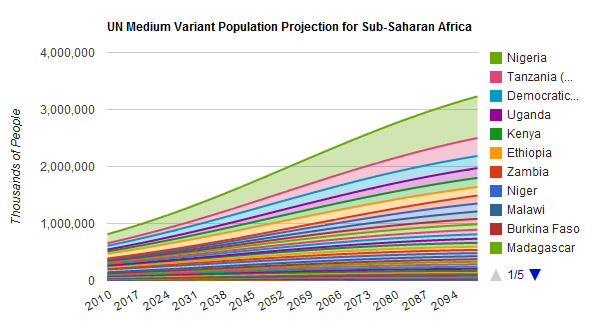
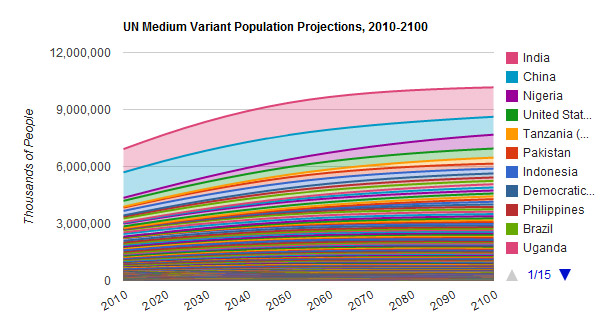
Between now and 2100, three out of every four people added to world population will live in sub-Saharan Africa. That’s what the medium variant of the UN’s world population projections estimates.* As we noted in our previous post on the latest UN numbers, Nigeria leads sub-Saharan growth, but other countries will also grow by major multiples: Tanzania and Somalia will be 7 times larger; Malawi more than 8 times; and Niger, to grow to more than 10 times its current population.
-
Yemen Beyond the Headlines: Losing the Battle to Balance Water Supply and Population Growth
›Part three of the “Yemen Beyond the Headlines: Population, Health, Natural Resources, and Institutions” event, held at the Wilson Center on May 18.
Overlooked in most news coverage of Yemen’s crisis is the country’s struggle to manage its limited natural resources – particularly its rapidly depleting groundwater – in the face of soaring population growth. At the recent Wilson Center event, “Yemen: Beyond the Headlines,” Yemen’s ambassador to Germany, Mohammed Al-Eryani, and Daniel Egel of the RAND Corporation outlined Yemen’s shaky prospects for economic development without more sustainable agricultural practices and more efficient water management. [Video Below]
With a population of more than 24 million and a total fertility rate (TFR) of 5.5 – nearly double the average TFR for the region – Yemen’s population is projected to grow to 36.7 million by 2025 and jump further to 61.6 million by mid-century, according to the latest UN projections. While those figures may not seem large by global standards, given Yemen’s already limited stocks of arable land and groundwater, the country’s rapid rate of growth may quickly outpace its resources.
“Already in a Crisis”: The Groundwater Deficit
Yemen’s per capita water supply is falling fast in the face of booming population growth and agricultural consumption, said Al-Eryani, a water engineer who founded Yemen’s Ministry of Water and the Environment. While the commonly accepted threshold for water scarcity is 1700 cubic meters or less per capita, Yemen’s per capita renewable water availability is now in the neighborhood of 120 cubic meters, he said.
Meanwhile, water scarcity has been exacerbated by erratic precipitation that has hit rainfall-dependent farmers especially hard. In a country with no real rivers or perennial streams, rainfall harvesting has long enabled agricultural production, as evidenced by the country’s many intricately terraced hillsides – “the food baskets of Yemen,” said Al-Eryani.
Yemenis have coped with shifting precipitation patterns by drawing more groundwater for irrigation and other domestic uses. While drilling wells has provided some short-term relief, the practice is unsustainable in the long term, creating a “water deficit,” Al-Eryani said, that continues to grow each year.
In the populous Sanaa basin, home to the Yemeni capital, consumption outweighs the aquifer’s natural rate of recharge by a factor of five to one and groundwater levels have been plummeting at six meters per year, he said. With only minimal government regulation of drilling, the country’s groundwater situation is poised to worsen, one of the reasons Al-Eryani declared his country is “already in a crisis.”
Stalled Economic Development
Yemen’s stalled economic development is particularly pronounced outside of urban areas, “where the resources are,” said Daniel Egel, citing the country’s failure to build modern transportation infrastructure and develop other economic activities besides farming. He called for the international development community to focus on creating jobs in rural areas, particularly by increasing the financing available for non-agricultural businesses and by improving secondary roads. In addition, he warned development actors to be aware of how gender inequality and local social structures, such as tribes, affect development efforts.
Given the country’s dependence on agriculture, water scarcity poses a threat to Yemen’s food security and its economic development. Three out of every four Yemeni villages depend on rainfall for irrigation, Egel said, making them highly vulnerable to unexpected climate change-induced shifts in precipitation patterns. Water scarcity also weakens the financial stability of Yemeni households, with the cost of water “accounting for about 10 percent of income during the dry season,” he said.
Averting a “Domino Effect”
Al-Eryani asserted that water management policies will “have to be designed in piecemeal fashion,” as no one single action will avert a catastrophe. He suggested a number of steps to alleviate the country’s growing water crunch, including:- Focus on the rural population, which makes up 70 percent of the population, has the highest fertility rates, and are the most reliant on agriculture;
- Move development efforts outside of Sanaa to other regions of the country;
- Increase investment in desalination technology for coastal areas;
- Increase water conservation in the agricultural sector; and,
- Exploit fossil groundwater aquifers in Yemen’s sparsely populated eastern reaches.
“The battle to strike a sustainable balance between population growth and sustainable water supplies was lost many years ago,” Al-Eryani said. “But maybe we can still win the war if we can undertake some of these measures.”
See parts one and two of “Yemen Beyond the Headlines: Population, Health, Natural Resources, and Institutions” for more from this Wilson Center event.
Sources: UN Population Division, World Bank.
Photo Credit: “At the fountain,” courtesy of flickr user Alexbip. -
Yemen Beyond the Headlines: Governance, State Capacity, and the U.S.
›Part two of the “Yemen Beyond the Headlines: Population, Health, Natural Resources, and Institutions” event, held at the Wilson Center on May 18.
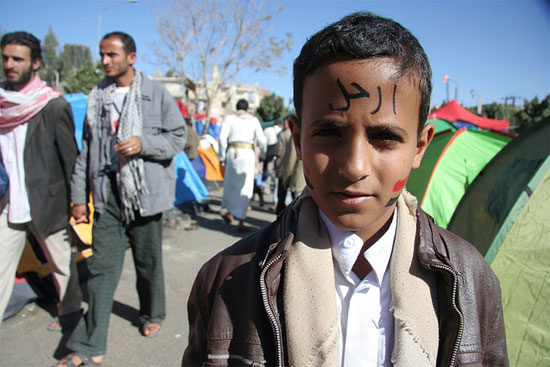
“Moving beyond Ali Abdullah Saleh has proved to be very challenging, not only for the Yemeni people, but for the neighboring countries and for the international community as a whole,” said former U.S. Ambassador to Yemen Edmund Hull, one of a number of speakers on governance and future challenges during the all-day conference, “Yemen Behind the Headlines: Population, Health, Natural Resources, and Institutions,” at the Woodrow Wilson Center. [Video Below]
Don’t Throw Out the Good With the Bad
Yemen’s protest movement is different than those of Egypt or Tunisia because neighboring countries, such as those in the Gulf Cooperation Council, are actively involved. “[They] don’t have the luxury of saying this is a purely Yemeni affair,” said Hull. “They have to identify where their national interests are and then they have to come up with a legitimate and effective way of protecting those interests.” Included in those national interests is dealing with the presence of Al-Qaeda in the Arabian Peninsula.
But, Hull said, “It would be a shame if, as part of this revolution, what was good in Yemen gets tossed out with what was bad.” Among the institutions that should be protected are the Social Fund for Development, a government development initiative designed to reduce poverty , and the Central Security Forces, “still a very necessary institution and one that has to be protected if other challenges in Yemen are to be met,” he said.
“It’s a mistake to over-focus on the end of a regime – yes, it’s important to get a transfer of power, but I would argue [that it is] equally important to institutionalize the forces that have led to this, as a safeguard against the counter revolution and as an impetus to meeting those many, many political challenges that Yemen faces.”
Going forward, Hull said that elections will be key: Yemen had good electoral experiences in 2003 and 2006 but the system has since suffered some “backsliding,” he said. He also emphasized the importance of letting the youth participate, protecting social networking systems and NGOs, instituting legal requirements to promote transparency, and freeing up and protecting the media. “Unless you have a media spotlight, abuses are going to accumulate,” he said.
Not a “Basket-Case”
“Yemen is not a basket case,” said Charles Schmitz, an associate professor at Towson University. “There have been substantial achievements that I think we need to take into account.” Among these achievements, he highlighted Yemen’s growth in life expectancy, literacy rates, and gross domestic product. The country’s population growth rate has also slowed over the past two decades, though its total fertility rate remains one of the highest in the region.
These gains were fuelled by two resource booms, Schmitz explained: mainly, remittances from the construction boom in the 1970s and oil production. However, oil production dropped off dramatically after peaking around 2001, and remittances have not been able to keep up with the growth of the economy.
“Yemen is in a very severe crisis,” Schmitz said. “The oil has stopped… the balance of payments has been going negative for the last couple of years… and the government appears to be dipping into the central bank.” As a result, he said there is a “very real” possibility of the currency – the riyal – collapsing. The currency represents trust in the government, of which there is none right now, he said.
An Opportunity for New Thinking
“The key variable to the future of the Yemeni economy is state capacity, and this is something Yemen has not done well thus far, largely because of the political crisis,” Schmitz said.
“I think we must be attuned to the reality around us,” said Jeremy Sharp, a specialist in Middle Eastern affairs with the Congressional Research Service. “Quite frankly, Yemen needs a lobby in this country. Yes we have a tight budget environment, but it’s also an opportunity for new thinking.”
“The degree and extent of U.S. engagement with Yemen…is based primarily on the perceived terrorist threat there,” said Sharp. “Our policy toward Yemen always seems to be one horrific terrorist attack away from public outcries for deeper U.S. involvement – i.e., military involvement.”
A Cycle of Transitions?
“We may be looking at cycles of transition in Yemen over the coming decades,” said Ginny Hill, an associate fellow with the Middle East and North Africa Programme at Chatham House. “Stable political settlements take time.” The street protestors are not going to get what they want in the short term, “but just two or three of them sitting in government or being involved in the negotiation process… is going to change the dialogue in Yemen,” she said.
The United States has difficult questions to answer, said Sharp: Who will control Yemen’s security forces down the line? How will the next leader deal with the U.S.-Yemen partnership? Will power be fragmented between civilian and military leaders? Will the next leader play the nationalist card and reduce cooperation with the United States to bolster their own public standing?
“In the absence of the degree of engagement that we need, the [U.S. government] aims high rhetorically,” said Sharp. “We speak about these things while pursuing our own national security goals on the ground. Perhaps this path is unsustainable and events will force the U.S. to pay even more attention to Yemen. Or perhaps we will continue to muddle along this path and never quite reach the brink, precipice, or impending crisis that is so routinely predicted in the media.”
See parts one and three of “Yemen Beyond the Headlines: Population, Health, Natural Resources, and Institutions” for more from this Wilson Center event.
Sources: UNICEF, World Bank.
Photo Credit: “Even small children…,” courtesy of flickr user AJTalkEng. -
Yemen Beyond the Headlines: Women’s Health and Well-Being, Foundations of a Fragile State
›Part one of the “Yemen Beyond the Headlines: Population, Health, Natural Resources, and Institutions” event, held at the Wilson Center on May 18.
“Ultimately, whether Yemen is able to achieve its goals for social and economic development, will to a large extent depend on its future population growth and size,” said Gary Cook, senior health advisor at the U.S. Agency for International Development, in his opening address on Yemen’s population and development challenges at the Woodrow Wilson Center. [Video Below]
Cook was joined on the opening panel of the all-day conference, “Yemen Behind the Headlines: Population, Health, Natural Resources, and Institutions,” by Dalia Al-Eryani, former project officer for Pathfinder International’s Safe Age of Marriage Project, and T.S. Sunil, professor of sociology at the University of Texas San Antonio, to discuss issues related to population, reproductive health, and child marriage. Drawing speakers and participants form the Middle East, Europe, and the United States, the conference was part of the Wilson Center’s HELPS Project, a multi-year effort to deepen understanding of links among health, environment, livelihoods, population and security.
Yemen’s Population and Development Challenges
Since 1950, the population of Yemen has increased from 4.3 million to 24 million, with an annual population growth rate above three percent, Cook said. High fertility drives Yemen’s rapid population growth, with an average total fertility rate (TFR) of 5.5 births per woman. Rates are even higher in rural areas and among women with limited or no education, he said.
Future population growth will have tremendous impacts on the country’s economy, education, health, and natural resources, said Cook, and “there is a very large gap between the high fertility assumption and the low fertility assumption.”
An additional 1.5 million new people will be added to the labor force and 29 percent less income per person will drop by 29 percent by 2035 if current fertility rates persist, said Cook. Though Yemen has a national population policy that outlines TFR targets of 3.3 in 2025 and 2.1 by 2035, the latest UN Population Division projections suggest these expectations are optimistic. Education and health demands and expenditures will increase greatly, while per capita arable land and water will decrease, exacerbating ongoing land and water scarcity in Yemen.
“We do not have enough local and external resources to address the needs of a rapidly expanding population,” said Cook. “Helping couples who want to limit and space their births will also help the nation,” he added.
Law, Culture, and Child Marriage
“Enforced by law and culture alike,” early marriage in Yemen is common, said Al-Eryani, with over 50 percent of Yemeni women married before they are 17 years old, and 14 percent before they turn 14. Opponents of child marriage argue that children are neither emotionally nor physically ready for marriage and that the practice increases health risks and lowers educational opportunities for girls.
Currently, Yemen has no minimum age for marriage law, and recent attempts to pass such a law have failed, said Al-Eryani. “The practice never really has been questioned.”
“There is a belief that child marriage is a good thing – both for the girl and for the family,” she said. Early marriages are a way to build family honor and tribal ties, and many poor families see opportunity for financial gain in the form of a dowry. “These families see no socially acceptable alternatives for the girl…and all of this is supported by the belief that Islam condones child marriage,” she said.
Through awareness sessions, health fairs, and school plays, the community-based Safe Age of Marriage Project has helped to change social norms around child marriage in two districts in Yemen.
After participating in the program, community members were significantly more likely to believe that delaying marriage gives girls more educational opportunities, empowers them to make decisions, and promotes healthy pregnancy and children, Al-Eryani said. Child marriage was banned in one of the communities, and the marriages of 53 girls and 26 boys were canceled as the result of the project. In the future, she hopes involving more religious and local leaders could further increase the program’s impact.
Youth and “The Reproductive Health Transition”
“When we talk about fertility transition, we only talk about the number of children born,” said Sunil. “A reproductive health transition takes into account not just total fertility rate, but a number of different dimensions.”
Women should have the freedom to decide if, when, and how often to reproduce, said Sunil, through access to safe, effective, affordable, and acceptable family planning methods. They also should have access to quality maternal health care throughout pregnancy and birth, he said.
“It’s a popular belief that Islamic societies with poor and limited resources are not compatible with a reproductive health transition,” said Sunil. “But the onset of a reproductive health transition is underway in Yemen.”
While the transition in Yemen is progressing more slowly than in other countries in the region, many positive trends can be seen among the country’s youth, said Sunil. Trends indicate a drop in fertility rates, especially among younger women; marriage of girls under 15 years old has declined; and contraceptive use among young women age 15 to 24 has increased significantly.
Government and international donor agencies “must capture the growing momentum among the younger cohort” and meet demands for better education, postponement of marriage, and healthcare services, said Sunil. Continued focus on adolescent reproductive health will be the key to achieving the reproductive health transition, he concluded. “From an economic and human perspective, the growing young population in Yemen is potentially a tremendous asset.”
See parts two and three of “Yemen Beyond the Headlines: Population, Health, Natural Resources, and Institutions” for more from this Wilson Center event.
Sources: Population Reference Bureau, UNICEF, U.S. Agency for International Development.
Image Credit: “Young girl with her mom – Sanaa,” courtesy of flickr user fveronsei1. -
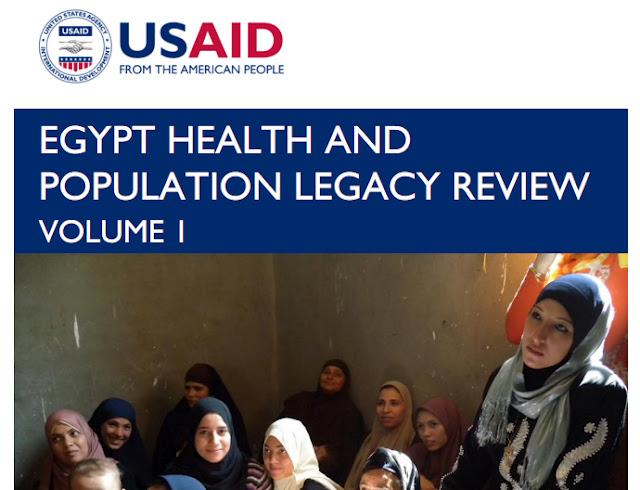
USAID Egypt’s Health and Population Legacy Review
›On May 23 the Middle East Program, ECSP, and the Global Health Initiative of the Woodrow Wilson Center, along with the Global Health Technical Assistance Project, hosted a panel of speakers discussing the past 30 years of the U.S. Agency for International Development’s health and population initiatives in Egypt, as outlined in the new Egypt Health and Population Legacy Review. Geoffrey Dabelko, director of ECSP and coordinator of the Global Health Initiative at the Wilson Center, moderated the event. [Video Below]
Peter McPherson, former administrator of USAID during the Reagan administration, and George Laudato, the administrator’s special assistant for the Middle East, presented on the historical context behind USAID in Egypt and the results of their efforts. McPherson pointed to three lessons that can be drawn from the recent report:- “Big payoffs” require long-term efforts; and
- Economic support for a country can have a dramatic impact; but
- The host country’s commitments and investments are still important.
Motaz Zahran, political counselor for the Embassy of Egypt, noted that USAID efforts were “just one sector of a fruitful partnership” between the United States and Egypt that he hoped would continue. He said the success story outlined by the report was reflective of improvements in coordination and addressing specific goals.
Other panelists outlined the successes of USAID in Egypt as related to their own areas of expertise. Leslie B. Curtin, co-author of the review and an expert in demographics and health outcomes, noted the dramatic improvements in a range of health sectors, in particular the rise in contraceptive prevalence and immunization rates and decrease in both maternal and infant mortality rates.
Nahed Matta, MD, senior maternal and newborn health officer at USAID, focused on improvements to the quality of maternal health, which she said were made possibly through better technology and increased fact-gathering to identify the key factors regarding maternal health trends. Sameh El-Saharty, MD, senior health policy specialist at the World Bank and Health Legacy Review Committee member, credited the increased number of health professionals in Egypt, better information gathering on health systems, and restructured models of health insurance, as successful strategies.
Concluding the session, Amie Batson, deputy assistant administrator for Global Health at USAID, discussed the lessons that other development initiatives can draw from the legacy of USAID efforts in Egypt. She highlighted the importance of country ownership, in which the developing country engages with other institutions and religious and political leaders at both national and local levels, and of policies that fund routine monitoring and evaluation. She also outlined the possibilities of innovation and south-to-south sharing on the local and international scale, referencing inroads made by two recent initiatives: the “MAMA” mobile device program, launched by Secretary Clinton in May 2011 to assist with disseminating maternal health information, and the Saving Lives at Birth initiative, launched by USAID in partnership with several other organizations in March 2011.
Laura Rostad is an intern for the Middle East Program at the Woodrow Wilson Center.
Image Credit: Adapted from cover of the Egypt Health and Population Legacy Review, courtesy of USAID; cover photo courtesy of Leslie Curtin. -
The Walk to Water in Conflict-Affected Areas
›May 18, 2011 // By Wilson Center StaffConstituting a majority of the world’s poor and at the same time bearing responsibility for half the world’s food production and most family health and nutrition needs, women and girls regularly bear the burden of procuring water for multiple household and agricultural uses. When water is not readily accessible, they become a highly vulnerable group. Where access to water is limited, the walk to water is too often accompanied by the threat of attack and violence.
-
Connections Between Climate and Stability: Lessons From Asia and Africa
›“We, alongside this growing consensus of research institutes, analysts, and security agencies on both sides of the Atlantic, think of climate change as a risk multiplier; as something that will amplify existing social, political, and resource stressors,” said Janani Vivekananda of International Alert, speaking at the Wilson Center on May 10. [Video Below]
Vivekananda, a senior climate policy officer with International Alert’s Peacebuilding Program, was joined by co-presenter Jeffrey Stark, the director of research and studies at the Foundation for Environmental Security and Sustainability (FESS), and discussant Cynthia Brady, senior conflict advisor with USAID’s Office of Conflict Management and Mitigation, to discuss the complex connections between climate change, conflict, stability, and governance.
A Multi-Layered Problem
Climate change and stability represent a “double-headed problem,” said Vivekananda. Climate change, while never the only cause of conflict, can increase its risk in certain contexts. At the same time, “states which are affected by conflict will already have weakened social, economic, and political resilience, which will mean that these states and their governments will find it difficult to address the impacts of climate change on the lives of these communities,” she said.
“In fragile states, the particular challenge is adapting the way we respond to climate change, bearing in mind the specific challenges of operating in a fragile context,” said Vivekananda. Ill-informed intervention programs run the risk of doing more harm than good, she said.
For example, Vivekananda said an agrarian village she visited in Nepal was suffering from an acute water shortage and tried adapting by switching from rice to corn, which is a less water-intensive crop. However, this initiative failed because the villagers lacked the necessary technical knowledge and coordination to make their efforts successful in the long term, and in the short term this effort actually further reduced water supplies and exacerbated deforestation.
“Local responses will only be able to go so far without national-level coordination,” Vivekananda said. What is needed is a “harmony” between so-called “top-down” and “bottom-up” initiatives. “Adapting to these challenges means adapting development assistance,” she said.
“What we’re finding is that the qualities that help a community, or a society, or in fact a government be resilient to climate change are in fact very similar qualities to that which makes a community able to deal with conflict issues without resorting to violence,” said Vivekananda.
No Simple, Surgical Solutions
“The impacts of environmental change and management of natural resources are always embedded in a powerful web of social, economic, political, cultural, and historical factors,” said Stark. “We shouldn’t expect simple, surgical solutions to climate change challenges,” he said.
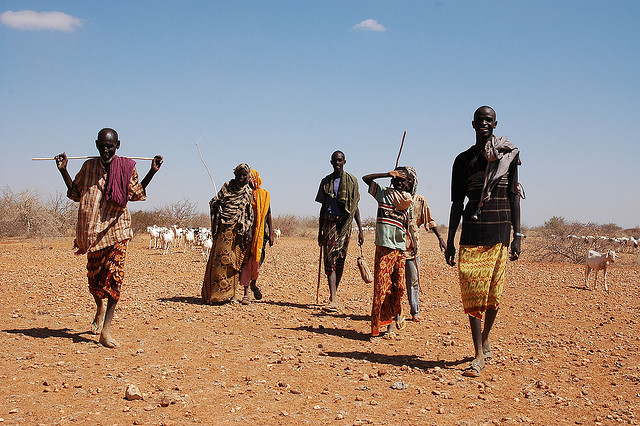
Uganda and Ethiopia, for example, both have rich pastoralist traditions that are threatened by climate change. Increasing temperatures, drought, infrequent but intense rains, hail, and changes in seasonal patterns are threatening pasture lands and livelihoods.
At the same time, pastoralists are confronting the effects of a rapidly growing population, expanding cultivation, forced migration, shrinking traditional grazing lands, anti-pastoralist attitudes, and ethnic tensions. As a result, “any intervention in relation to climate adaptation – whether for water, or food, or alternative livelihoods – has to be fully understood and explicitly acknowledged as mutually beneficial by all sides,” Stark said. “If it is seen in any way to be favoring one group or another it will just cause conflict, so it is a very difficult and delicate situation.”
Yet, the challenges of climate change, said Stark, can be used “as a way to involve people who feel marginalized, empower their participation…and at the same time address some of the drivers of conflict that exist in the country.”
Case Studies: Addressing the “Missing Middle”
When doing climate change work in fragile states, “you have to think about your do-no-harm parameters,” said Brady. “Where are the opportunities to get additional sustainable development benefit and additional stabilization benefit out of reducing climate change vulnerability?”
More in-depth case studies, such as the work funded by USAID and conducted by FESS in Uganda and Ethiopia, are needed to help fill the “missing middle” between broad, international climate change efforts – like those at the United Nations – and the community level, Brady said.
The information generated from these case studies is being eagerly awaited by USAID’s partners in the Departments of State, Defense, and Treasury, said Brady. “We are all hopeful that there will be some really significant common lessons learned, and that at a minimum, we may draw some common understanding about what climate-sensitive parameters in fragile states might mean.”
Image Credit: “Ethio Somali 1,” courtesy of flickr user aheavens. -
Ten Billion: UN Updates Population Projections, Assumptions on Peak Growth Shattered
›May 12, 2011 // By Schuyler NullThe numbers are up: The latest projections from the UN Population Division estimate that world population will reach 9.3 billion by 2050 – a slight bump up from the previous estimate of 9.1 billion. The most interesting change however is that the UN has extended its projection timeline to 2100, and the picture at the end of the century is of a very different world. As opposed to previous estimates, the world’s population is not expected to stabilize in the 2050s, instead rising past 10.1 billion by the end of the century, using the UN’s medium variant model.
Showing posts from category zz Organizations.