-
Geoff Dabelko, Ensia
The Periphery Isn’t Peripheral: Barriers to Cross-Sectoral Collaboration in Development
›February 14, 2014 // By Wilson Center Staff
What do melting Himalayan glaciers have to do with food security in Cambodia? Not much, thought an aid practitioner trying to boost food security along the lower reaches of the Mekong River – until she heard a colleague working on the Tibetan Plateau describe the downstream implications of climate change in the Himalayas. Everything she was working on, she suddenly realized, could be literally washed away.
-
State of the Oceans 2013: Acidification, Overfishing Major Threats to Ecosystem Health
›
“The rate of speed of change in the global oceans are greater than [that] of any time in known history,” said Karen Sack of the Pew Charitable Trusts, speaking at the Wilson Center on November 13. She was joined by Paul Schopf, professor of oceanography and associate dean for research and computing at George Mason University, and Libby Jewett, director of the Ocean Acidification Programs at National Oceanic and Atmospheric Administration (NOAA), to discuss the latest State of the Ocean Report. [Video Below]
-
A. Tianna Scozzaro, Population Action International
Population Dynamics Are Crucial to Sustainable Development – So Why Isn’t Anyone Talking About Them?
›January 29, 2014 // By Wilson Center StaffThe original version of this article, by A. Tianna Scozzaro, appeared on Population Action International’s All Access blog.
For the past 11 months, a group of United Nations member states has been holding meetings seeking input on future goals for sustainable development once the Millennium Development Goals (MDGs) expire in 2015. Led by co-chair ambassadors from Hungary and Kenya, this Open Working Group of 69 countries has delved into topics ranging from governance to health and everything in between.
-
New Architecture for a New World? Making the Millennium Development Goals Sustainable
›Next year, the Millennium Development Goals (MDGs), adopted by the United Nations after the Millennium Declaration, are set to expire. As they wind down, the global development community is taking stock. While there have been great strides toward accomplishing many of the goals set forth in 2000, there has been little headway in ensuring environmental sustainability, said Melinda Kimble, senior vice president of the United Nations Foundation. Which raises the question: What should change for the next set of global development goals, which are supposed to be even more environmentally focused – the “Sustainable Development Goals?”
-
Ready for Change: Notre Dame Launches the Global Adaptation Index
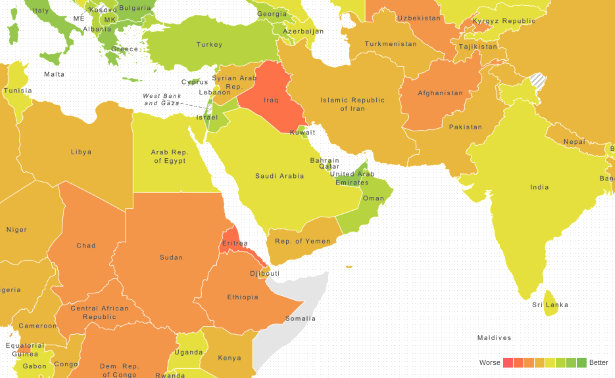
›In 2008 and 2010, the price of many basic food stuffs soared, sparking a series of riots and food crises around the world. People in the poorest countries – those living with the smallest margins – were most affected, while the economies of developed nations were able to absorb the price changes. According to Notre Dame’s Global Adaptation Index, how climate change will impact different countries depends not only on their vulnerability to physical changes, but also their ability to absorb these impacts. [Video Below]
-
Turning the Tide? Technology Provides New Ways to Combat Gender-Based Violence
›Worldwide, one in three women suffer beatings, coercion into sex, or other abuse from an intimate partner during her lifetime, according to the UN, while one in five is a victim of rape or attempted rape.
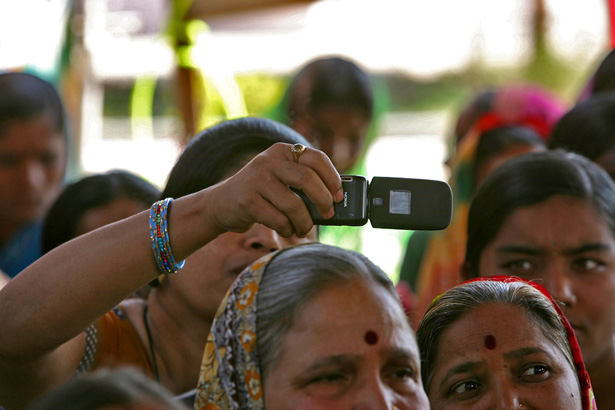
“Gender-based violence is a pervasive global challenge. It serves as a barrier to national economic and social advancement across the world,” said Alex Dehgan, former chief scientist and director of the Office of Science and Technology at the U.S. Agency for International Development, on December 9 at the Wilson Center. [Video Below]
-
“Essential to Prosperity and Opportunity”: Heather Boonstra on Adolescent Sexual and Reproductive Health
›
“If girls and young women are often thought of as the forgotten drivers of development, their sexual and reproductive health is almost entirely absent,” says the Guttmacher Institute’s Heather Boonstra in this week’s podcast.
-
Talking Science: Climate Change and Health Communications in a Skeptical Era
›Communicating complex scientific concepts to general audiences is difficult given today’s information overload. Capturing the attention of time-pressed policymakers long enough to explain multifaceted issues like climate change and global health is an even greater challenge. The Environmental Communications Division of the National Communication Association co-sponsored two panels at the Wilson Center on November 22 featuring communication directors and professors of communications to explore this issue. [Video Below]
Showing posts from category zz Organizations.