-
Opportunity Costs: Evidence Suggests Variability, Not Scarcity, Primary Driver of Water Conflict
›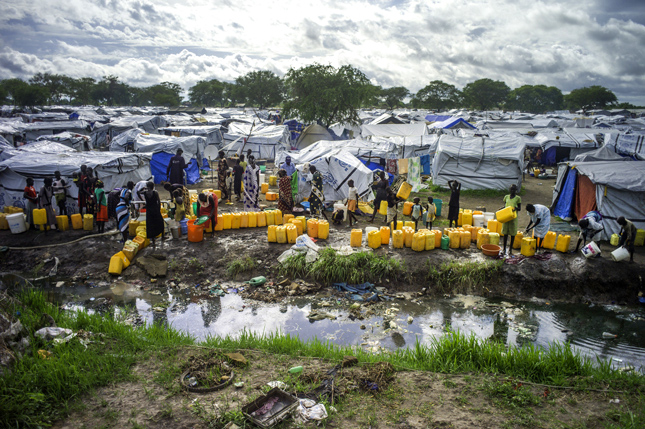
Nearly 1 billion people lack reliable access to clean drinking water today. A report by the Water Resources Group projects that by 2030 annual global freshwater needs will reach 6.9 trillion cubic meters – 64 percent more than the existing accessible, reliable, and sustainable supply. This forecast, while alarming, likely understates the magnitude of tomorrow’s water challenge, as it does not account for the impacts of climate change.
-
Overcoming Malnutrition Key to Maternal and Child Health Improvements, Says Dr. Ranu Dhillon
›
With less than 500 days until they expire, it’s almost certain that the Millennium Development Goals on child mortality and maternal health will be missed by many countries. Already, work on drafting the MDG successors has begun; but unless policymakers put nutrition at the center of maternal and child health systems, reducing global maternal and child mortality ratios by an appreciable amount will be difficult, says Dr. Ranu Dhillon in this week’s podcast.
-
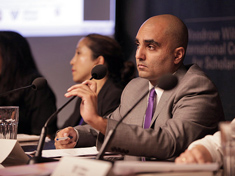
Proven and Promising Solutions to Strengthening Maternal Health Supply Chains
›In 2012, as part of the Every Women Every Child movement, 13 vital health commodities were identified by a UN panel that could save the lives of more than 6 million women and children over the course of five years. There are often significant cultural and behavioral barriers to these commodities reaching people in low- and middle-income countries, but physical logistics is also a major problem. -
Silver Buckshot: Alternative Pathways Towards Greenhouse Gas Mitigation
›In 1986, global nuclear weapons stockpiles peaked at nearly 70,000 warheads. By the beginning of 2013, there were just over 17,000, with only 4,400 kept operational. This dramatic reduction was the fruit of a negotiation process that began in the late 1940s. In spite of incredible tensions between the United States and the Soviet Union, negotiators were able to make progress once they focused on building trust with small, pragmatic steps, rather than starting with the complete elimination of all weapons. [Video Below]
-
The Intergenerational Cycle of Malnutrition: How Gender and Social Status Doom Many Mothers and Newborns
›When Dr. Ranu Dhillon stumbled upon baby Reena during a routine visit to a clinic in India, she was almost comatose and unable to get the care she needed. Dhillon traveled with Reena and her mother from hospital to hospital, but left again and again without finding treatment. [Video Below]
-
Securing Rights or Results? A False Choice in Integrating Youth Into Sustainable Development
›“The greatest challenge we have today is that we have a world that is pushing back on rights,” said Dr. Babatunde Osotimehin, executive director of the United Nations Population Fund (UNFPA), at the Wilson Center. [Video Below]
-
Africa’s Trifecta: Food Security, Resilience, and Demographics at the U.S.-Africa Leaders Summit
›August 5, 2014 // By Roger-Mark De Souza“You can’t build a peaceful world on an empty stomach,” Secretary of State John Kerry said yesterday at a high-level working session on resilience and food security, quoting Norman Borlaug, the father of last century’s “Green Revolution.”
-
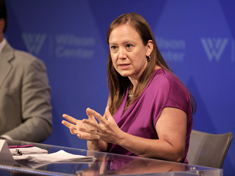
Suzanne Ehlers: Global Development Agenda Needs Re-Framing to Focus on Rights of Young People
›
Successfully incorporating the rights of young people and women into whatever development agenda succeeds the Millennium Development Goals next year hinges not only on the scope of new goals, but how those goals are worded, says Suzanne Ehlers in this week’s podcast.
Showing posts from category zz Organizations.