-
‘State of African Resilience’ and a Review of Food Security-Family Planning Programs
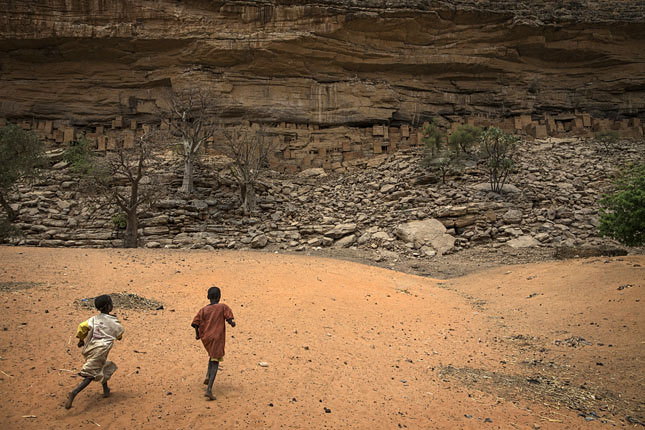
› In their first annual report, the ResilientAfrica Network (RAN), a partnership of 15 African universities, Tulane University, Stanford University, and the Center for Strategic and International Studies, outlines efforts to explore and define multiple “pathways of vulnerability” in sub-Saharan Africa. The report acknowledges that these pathways can be very different from place to place, but by working with African communities more closely, they hope to find new ways to break cycles of chronic crisis. One of the interventions piloted by Stanford was “deliberative polling,” which is based on the premise that communities are more likely to respond to development interventions if they understand the logic behind them and are involved in the process.
 -
Celeste Hicks and Laura Seay, Monkey Cage
Governance, Gender, and No Guarantees in Africa’s Oil-Rich States
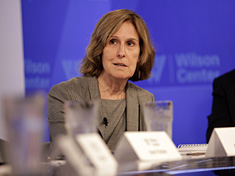
›June 23, 2015 // By Wilson Center Staff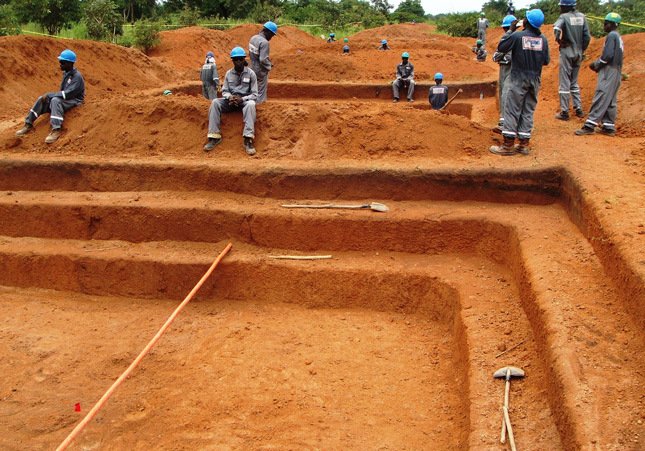
The discovery of oil in Chad in 1969 did not yield many immediate benefits for a population that would soon be wracked by civil war, but hopes were high by the late 1990s. Chad had largely stabilized, and a new, World Bank-backed project to build a pipeline through Cameroon to the Atlantic Ocean coast was touted as a model for socially and environmentally responsible oil exploitation in developing countries.
-
“No Precedent in Human History”: Ruth Greenspan Bell on Why Climate Change Demands More Than the UNFCCC
›The stakes are high for the UN climate conference in Paris later this year, so high in fact, some scholars feel it’s foolish to be putting all our eggs in one basket.
-
European Parliament Passes Conflict-Minerals Bill; UN Releases Report on Money Flows in DRC
›A new report prepared by the UN Environment Program and UN peacekeeping operation in the Democratic Republic of Congo (known as MONUSCO) found that just two percent of the total value of illicit natural resources smuggled from the country comes back to armed groups. Still, these funds, which amount to around $13 million a year, allow some 25 to 49 groups to continue operating in the country’s war-torn eastern provinces. Much more, as much as 50 percent, ends up in the hands of transnational criminal networks with the remaining profits flowing to individuals or companies elsewhere in the DRC or in Uganda, Rwanda, and Burundi. -
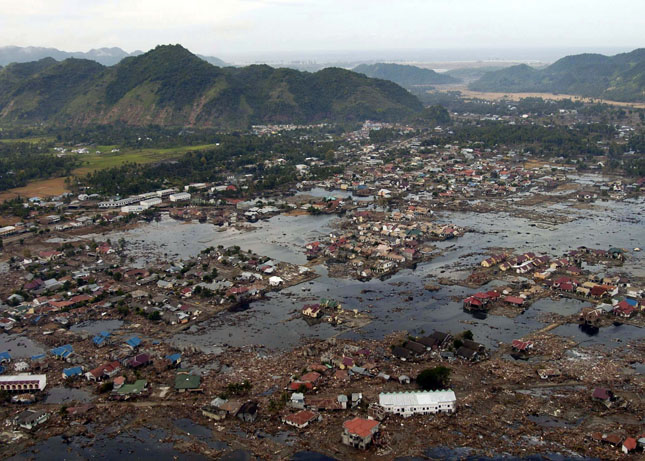
Adapting to Global Change: Climate Displacement, Mega-Disasters, and the Next Generation of Leaders
›The world is more connected than ever before, but also more complex. Big, transnational trends like climate change, urbanization, and migration are changing the calculus of geopolitics, while local-level inequalities persist. “[Change] seems to be spinning around us so fast,” said John Hempelmann, president of the Henry M. Jackson Foundation, which honors the legacy of the late senator from Washington State. How can today’s and tomorrow’s leaders adjust to global trends? [Video Below]
-
The Sahel Beyond the Headlines: Underlying Demographic, Environmental Trends Erode Resilience
›Between the Sahara to the north and savanna to the south lies the semi-arid Sahel, a region stretching from Senegal to Sudan that has experienced desperate poverty, climate change, malnutrition, and violence. While every context is different, the Sahelian countries share some common challenges, including a pattern of recurring crises and fluid borders. Boko Haram’s reign of terror in northern Nigeria and Mali’s coup have both had cross-border components. [Video Below]
-
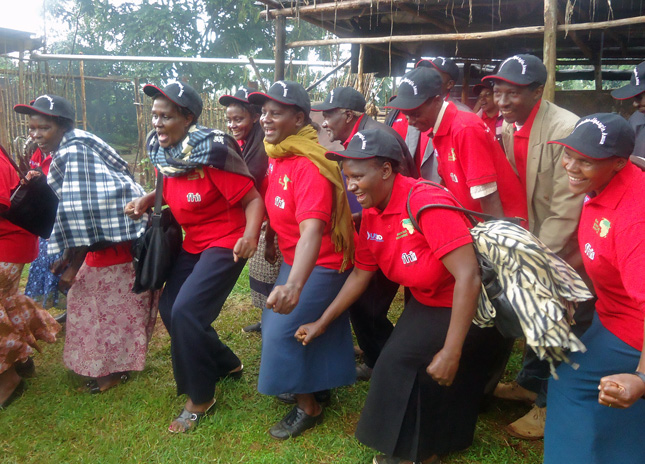
Saplings and Contraceptives: Results From a Population, Health, and Environment Project in Kenya
›East African countries like Kenya have made great strides in recent decades in increasing access to modern contraception, leading to marked declines in fertility rates. But disparities remain.
-
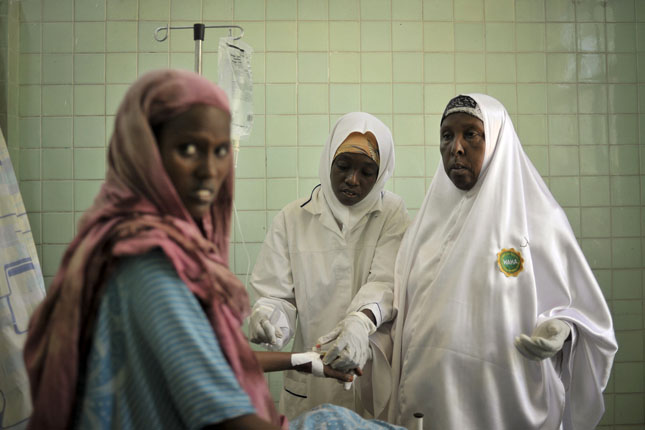
How Midwives Can Answer the World’s Maternal Health Woes
›The world is about to hit a “turning point” in maternal and newborn health, said Laura Laski, chief of the sexual and reproductive health at UNFPA, at the Wilson Center on March 23. “In terms of strengthening the new health system for achieving the MDGS or any other goals, we have to focus on the human resources for health.” In particular, midwives.
Showing posts from category zz Organizations.