-
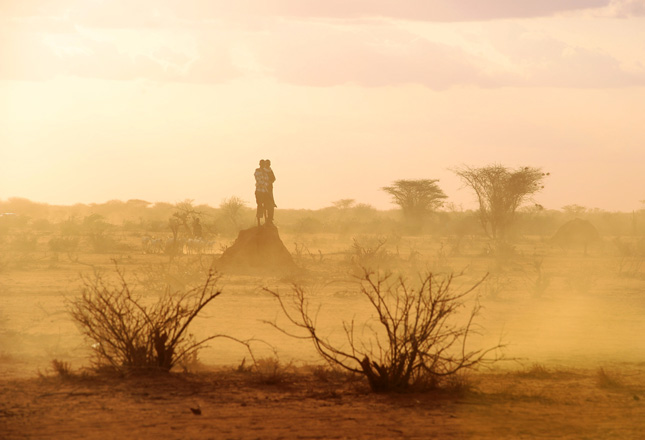
Backdraft #4: Edward Carr on Climate Response, Motivations, and the Value of Ethnographic Research
› Unintended consequences from climate interventions are often the result of not understanding decision-making at a granular enough level, says Edward Carr in this week’s “Backdraft” episode.
 -
As More Aid Flows to Fragile States, a Call for a Better Approach
›March 7, 2017 // By Sreya Panuganti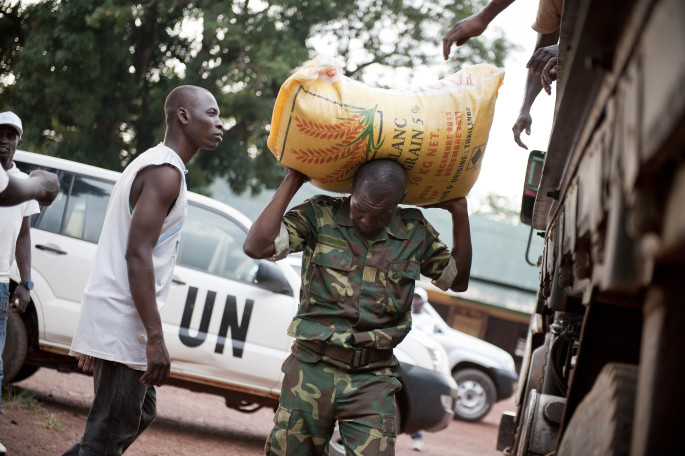
Global poverty has been reduced dramatically over the past two decades. Less than 11 percent of the world’s population were living in extreme poverty in 2013 compared to 35 percent in 1990. But improvements have largely come in stable countries. Many of the remaining pockets of extreme poverty are in “fragile states,” countries that are vulnerable to internal and external shocks and can easily tip into crisis when faced with an environmental, economic, social, or political change.
-
A Journalists’ Guide to Energy and the Environment in 2017
›“Turbulent and possibly revolutionary times are ahead for U.S. energy and environmental policy,” said Bobby Magill, a senior science writer at Climate Central, at the Wilson Center on February 3. “If there’s one message the Trump Administration is sending about environmental and climate regulations, it’s this: The future will not look like the past.”
-
Ground Truth Briefing: Is Climate-Related Migration a National Security Issue?
›Experts predict that climate change will spur some people to leave their homes and countries. How will national security be affected as a result? -
Taking Stock of Africa’s Political and Security Developments in 2016
›2016 was an eventful year for the continent of Africa, with important implications for U.S.-Africa relations. The Wilson Center’s Africa Program asked experts, scholars, and policymakers to weigh in on the most important and impactful events. This collection of essays reflects on those developments and their impact going forward.
-
Richard Choularton on 3 Steps to Avert the Famines We See Coming
›There has been great progress in anticipating famines in recent years, with most predicted six or more months ahead of time, says Richard Choularton, senior associate for food security and climate change at Tetra Tech, in this week’s podcast. But action to address their humanitarian impacts has lagged. Responses need to be more consistent and faster, he says, happening “almost without human intervention.” -
Insights on Ending Famine and Creating Food Security in a Changing World
›The effects of climate change combined with breakdowns in governance are leading to food insecurity “on a scale that we’ve rarely seen,” said Alex de Sherbinin, associate director of Columbia University’s Center for International Earth Science Information Network, at the Wilson Center on January 26.
-
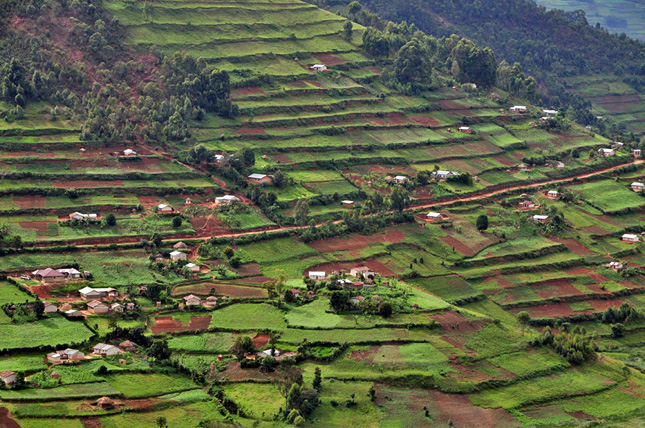
With New Analytics, a Vision of Alternative Futures for Uganda
›Since becoming an independent nation in 1962, Uganda has struggled with high rates of poverty, regional and international conflict, and both endemic and epidemic disease outbreaks, particularly HIV/AIDS. In recent years, though, it has become a key partner of the United States. The U.S. government provides foreign assistance to improve the lives of Ugandans but also to advance stability in the East Africa region generally, with the bulk of these programs administered by the U.S. Agency for International Development (USAID).
Showing posts from category zz Organizations.
 Unintended consequences from climate interventions are often the result of not understanding decision-making at a granular enough level, says Edward Carr in this week’s “
 Experts predict that climate change will
  There has been great progress in anticipating famines in recent years, with most predicted six or more months ahead of time, says Richard Choularton, senior associate for food security and climate change at Tetra Tech, in this week’s podcast. But action to address their humanitarian impacts has lagged. Responses need to be more consistent and faster, he says, happening “almost without human intervention.”