-
Sexuality Education Begins to Take Root in Africa
›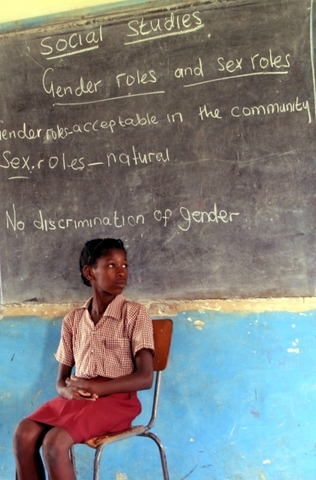
In Kenya, primary and secondary school students take courses called Life Skills Education. So do students in Malawi, Mozambique, Namibia, and Swaziland. South Sudan adds “peace-building” to the subject title. Lesotho, Madagascar, Rwanda, Tanzania, Uganda, and Zambia are more direct. These countries add the word “sexuality” to the course name.
-
It’s Time We Scale Up Climate Leadership
› The urgency to address climate change is only growing. As youth step up and are increasingly vocal about climate change, international negotiations—most recently at COP25—fail to deliver the ambitious global action required for effective response.
Where does this leave the communities most at risk from climate impacts? How can they adapt and transform in the face of enormous threats, sometimes to their very existence? With researchers and policy experts often focused on technological fixes and pushing new solutions to specific threats, it’s easy to assume that transformation is underway to respond to the new climate reality. In reality, transformative change is tough—especially when up against ingrained habit, culture, and a lack of political and financial resources to support it. Perhaps most importantly, transformative change requires effective leadership and champions—those people who build political will and create momentum to move policy innovations or on-the-ground action.
-
CODE BLUE: Addressing NCDs in Maternal Health Starts with Increasing Access and Reducing Disparity
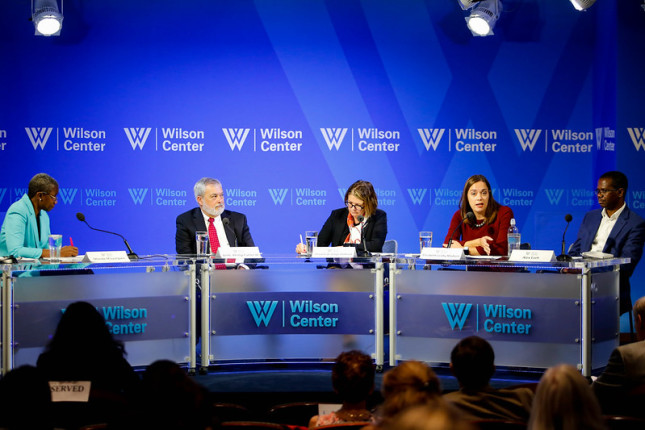
›We’ve got a crisis impacting our mothers and a crisis impacting our babies, said Dr. Lisa Waddell, Senior Vice President of Maternal Child Health and NICU Innovation and Impact Deputy Medical Director at the March of Dimes, at a recent Wilson Center event launching the Maternal Health Initiative’s CODE BLUE series, developed in partnership with EMD Serono, a business of Merck KGaA, Darmstadt, Germany. She was referring to non-communicable diseases (NCDs), which impact maternal health in the United States and globally. NCDs kill 18 million women of reproductive age each year, accounting for two in every three deaths among women.
-
Which Demographic “End of History”?
›First published 30 years ago in the National Interest, Francis Fukuyama’s landmark essay, “The End of History?,” argued that, with the fall of fascism and communism, no serious blueprint for modern-state development lay open, save for those paths that would ultimately embrace both political and economic liberalism. Over the past two decades, movement toward this ideal end-state has trickled to a halt. Instead, the political elites of Eurasia’s regional powers—Russia, Turkey, Iran, and China—have crafted stable illiberal regimes that borrow whatever they need from free-market economics, electoral politics, nationalism, and religion. Their ascent has produced a form of “non-endpoint stability”—two mutually antagonistic camps: one composed of liberal democracies, the other a mix of illiberal hybrids. As long as these camps remain stable, the international system falls far short of Fukuyama’s theoretical end of history. -
ICPD25: I March for Gender Equality
› The Nairobi Summit on ICPD25 came a quarter century after the landmark International Conference on Population and Development (ICPD) was held in Cairo in 1994. Pledges made 25 years ago by 179 countries recognized that human rights, including reproductive rights, were fundamental to development and population concerns. A rigorous Programme of Action was created to reduce maternal deaths, ensure access to family planning, and protect women and girls from gender-based violence, including female genital mutilation and child marriage. -
Investing in Women’s Empowerment Essential to Achieving Peace, Security in Africa
›Africa in Transition // From the Wilson Center // November 14, 2019 // By Brigitte Hugh & Deekshita RamanarayananA country can achieve sustainable peace and security only if women are included, said Monde Muyangwa, Director of the Wilson Center’s Africa Program at a recent Wilson Center event on the role of women in promoting peace and security in Africa. “And I would argue that part of the challenges that we face on the African continent, the insecurity that we face in parts of the African continent,” she said, “is precisely because not all segments of society are included.”
-
Family Planning in Humanitarian Settings is Achievable and Effective
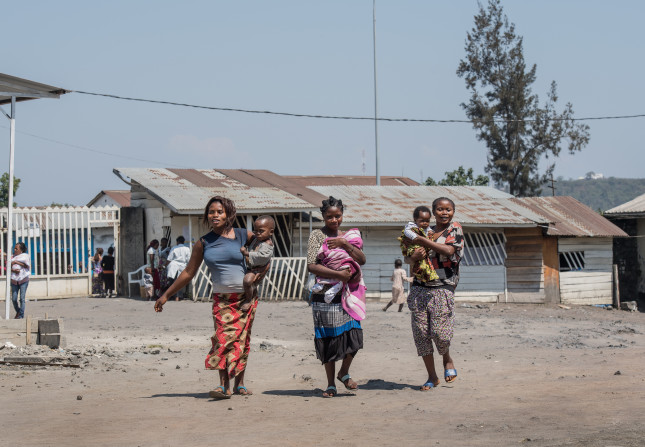
›“Family planning saves lives, even in times of crisis,” said Gwen K. Young, Managing Director at the Global Emergency Response Coalition at a Wilson Center event on October 8 on the importance of providing family planning and reproductive health services in humanitarian settings. Speakers from Save the Children, CARE, the International Rescue Committee, and FP2020 spoke to programmatic successes, innovative solutions, and local partnerships in fragile settings. Young highlighted that 1 in 70 people worldwide need humanitarian assistance and a quarter of these are women and girls of reproductive age. All told, more than 30 million women and girls in 42 countries.
-
Untapped Opportunities? The Need to Integrate Young Women in Water Management
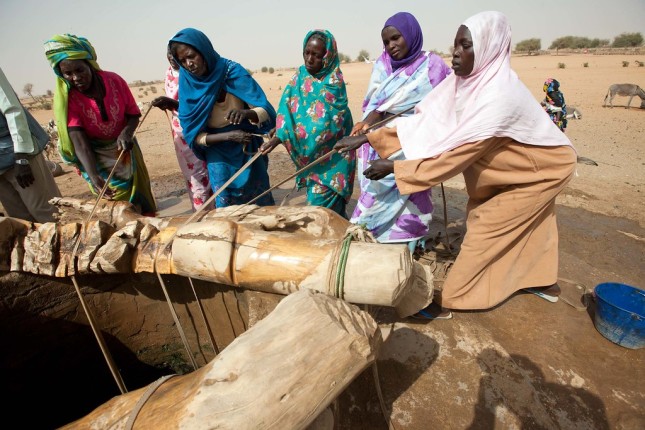
›Water security is a pervasive climate issue and one that has increasingly been viewed as a gendered issue. Worldwide, women and girls spend 200 million hours collecting water every day. While doing so, they place themselves at increased risk of assault and become more likely to develop medical issues related to physical labor. They also pay an opportunity cost, as this time could be better spent in school or performing other productive tasks.
Showing posts from category youth.
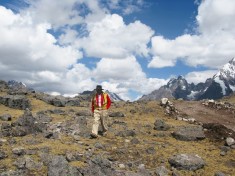 The urgency to address climate change is only growing. As youth step up and are increasingly vocal about climate change, international negotiations—most recently at COP25—fail to deliver the ambitious global action required for effective response.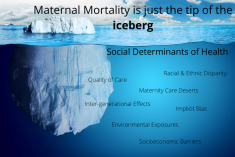
 First published 30 years ago in the National Interest, Francis Fukuyama’s landmark essay, “
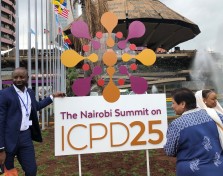 The Nairobi Summit on