-
India’s Assam Shows Second-Order, Dangerous Effects of Climate Change in South Asia
›August 13, 2013 // By Ashley Ziegler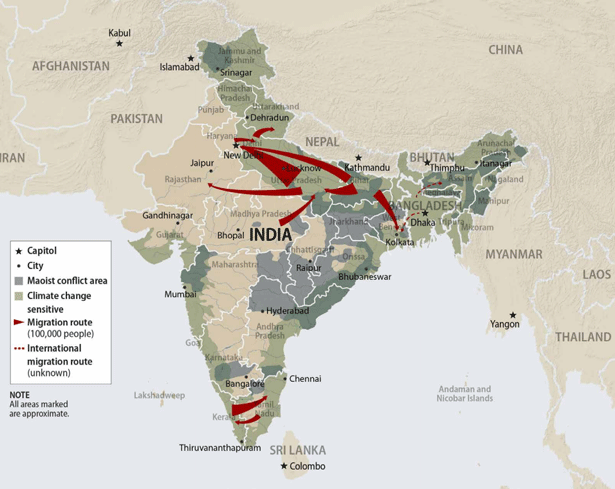
To use the military parlance, climate change is often considered a “threat multiplier,” challenging stability and development around the world by exacerbating underlying conditions of vulnerability. South Asia is one region that faces multiple stressors that have the potential to feedback off each other.
Higher temperatures, more extreme weather, rising sea levels, flooding, and increased cyclonic activity in the Bay of Bengal and the Arabian Sea are reshaping the environment, warns the Center for American Progress (CAP) in a report.
-
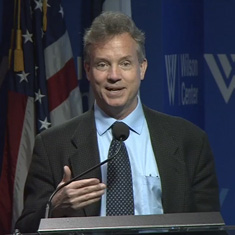
Mark Montgomery: More Data on Urban-to-Urban Migration Needed
›
“If I ask you to consider the image in your mind of a migrant girl, probably you – like me – have a vision of a girl embarking from a rural village on a trek to the city,” says Mark Montgomery of the Population Council in this week’s podcast. But, “Is that what the empirical realities show?”
Perhaps not: “It is far more common for urban and migrant girls to come from other cities and towns than it is for them to come from rural villages,” he explains.
-
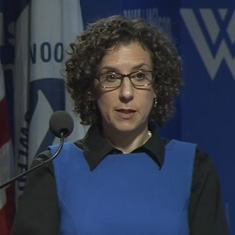
Miriam Temin: Migrant Girls, Forced or Not, Need Safety Nets
›“There’s a common myth that migrant girls are forced to move against their will, but in fact what we’ve found through our research is that most migrant girls are involved in the decision to move,” said the Population Council’s Miriam Temin in this week’s podcast.
Temin spoke at the launch of her and her colleagues’ new report, Girls on the Move: Adolescent Girls and Migration in the Developing World, about the economic incentives for girls to migrate and the risks involved for them.
-
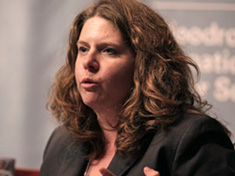
Lisa Friedman: Bangladesh Shows Importance of Expanding Coverage of Climate-Induced Migration
›“What I found in Bangladesh was that [climate migration] wasn’t a straight line,” says Lisa Friedman in this week’s podcast. It’s “a far more complicated story.”
Friedman is the deputy director of ClimateWire, a news service that brings readers daily information related to climate change and its effects on business and society. At the launch of ECSP’s new report, Backdraft: The Conflict Potential of Climate Mitigation and Adaptation, Friedman discussed her experiences reporting on climate-induced migration in Bangladesh – one of the most vulnerable countries to climate change in the world, due to its low-lying geography, dense population, and high poverty levels.
-
Carl Haub, Demographics Revealed
What Does “Urbanization” Really Mean?
›The original version of this article, by Carl Haub, appeared on Demographics Revealed.
Few terms in demography can cause more confusion than “urbanization.” News stories reporting projections of world urbanization are nearly always accompanied by photographs of places such as London or Shanghai, and it does seem rather natural to think of urbanization in those terms.
-
Michael Kugelman, The Diplomat
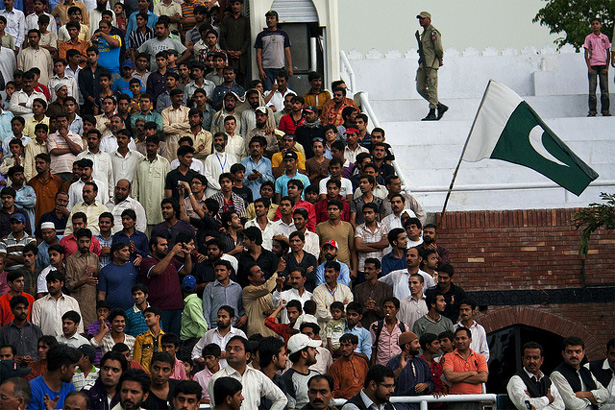
Can Pakistan Avert Demographic Doom?
›June 7, 2013 // By Wilson Center StaffThe original version of this article, by Michael Kugelman, appeared on The Diplomat.
On May 11, Pakistan’s Election Day, approximately 60 percent of eligible voters went to the polls. This figure far exceeded the 44 percent who turned out for Pakistan’s previous election in 2008. Media reports have featured moving accounts of the elderly being carried to the polls, and of women standing in the heat for hours to cast their ballots.
-
Youth Farming and Aquaculture Initiatives Aim to Reduce Food and Political Insecurity in Senegal
›The 2011-12 West African food crisis led to riots in Senegal and Burkina Faso as well as food insecurity for millions of rural and urban poor across the region. The crisis emerged from a number of factors, including instability in northern Mali, increases in global food prices, and low rainfall in the 2010-2011 and 2011-2012 growing seasons. Many countries in the region are now reassessing and expanding domestic agricultural capabilities. At the top of the agenda for Senegal, a democratic republic on track to reach many Millennium Development Goals, is reducing youth unemployment and increasing domestic agricultural capacity.
-
Measuring Community Resilience: Implications for Development Aid
›A staggering amount of development dollars – one in three, in fact – are lost due to natural disasters and crises. Certain communities are less affected than others by such disasters; they are more resilient. Knowing where vulnerability and strength exist and how to bolster them could help avoid these losses. Yet, today, very little data exists to help development practitioners understand which adaptive capacities are lagging in a given community.
Showing posts from category urbanization.