-
Bixby Report Explains Cross-Cutting Effect of Family Planning on Food Security, Climate Change
›July 16, 2015 // By Linnea Bennett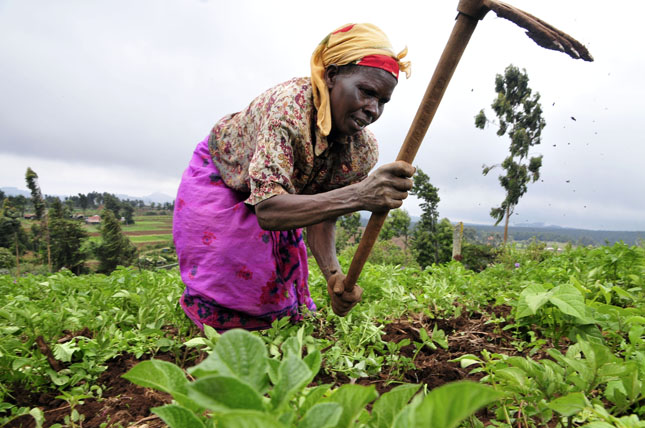
“With current neglect of family planning, the UN’s recent projection of a 2100 world population of up to 12.3 billion is a possibility,” says a report from the University of California, San Francisco’s Bixby Center for Global Reproductive Health. Increased voluntary family planning efforts are needed, the authors contend, to meet existing demand for contraceptives, stabilize the threat of global food insecurity, and reduce carbon emissions that contribute to climate change.
-
Oakland’s Water Treatment Plant Generates Its Own Energy and Then Some
›
Although treating wastewater generally ranks alongside police and fire safety, schools, and transit as the top priorities of any sensible city hall, new ideas about cleaning up sewage almost never attract headlines or TV airtime. In its 90-year history, for instance, The New Yorker, the most urbane and expansive magazine in the country, has never published a feature article on sewage treatment.
-
Oakland’s Web of Waters Shapes New Economy, Civic Energy
›In March 1999, not long after he was sworn in as the 47th mayor of Oakland, Jerry Brown called Lesley Estes, the supervisor of the city’s watershed protection program. Brown, who is now California’s governor, wanted the city staffer he called “Creek Lady” to describe the most formidable ideas she had to conserve natural areas, make parks more beautiful, and clean up the city’s waters.
-
Karachi’s Heat Wave a Sign of Future Challenges to Pakistan’s Fragile Democracy
›Karachi, the world’s second largest city by population, is emerging from the grips of a deadly heatwave. A persistent low pressure system camped over the Arabian Sea stifled ocean breezes and brought temperatures in excess of 113°F (45°C) to the city of 23 million people in June. The searing heat disrupted electricity and water service, making life nearly unbearable. All told, officials estimate the heatwave killed at least 1,200 Pakistanis, more than twice as many as have died in terrorist attacks this year.
-
The Lancet Commission’s Latest Findings on Climate Change, Health, and Policy Responses
›July 1, 2015 // By Francesca Cameron“Tackling climate change could be the greatest global health opportunity of the 21st century,” asserts the newest report by the Lancet Commission on Health and Climate Change.
-
De Souza: In Era of Man, Demography Needs to be Part of Environmental Security Discussion
›A new article from the Wilson Center’s own Roger-Mark De Souza explores how population trends can bolster community resilience in the face of climate change and other security threats. De Souza argues that demographic trends such as age structure help determine how well a population is able to respond to and bounce back from shocks, especially environmental ones like drought and famine.
-
Adapting to Global Change: Climate Displacement, Mega-Disasters, and the Next Generation of Leaders
›The world is more connected than ever before, but also more complex. Big, transnational trends like climate change, urbanization, and migration are changing the calculus of geopolitics, while local-level inequalities persist. “[Change] seems to be spinning around us so fast,” said John Hempelmann, president of the Henry M. Jackson Foundation, which honors the legacy of the late senator from Washington State. How can today’s and tomorrow’s leaders adjust to global trends? [Video Below]
-
Looking Beyond 2015: Promoting Years of Sustainability by Responding to Megatrends
›2015 is a major test for the international system. The Sustainable Development Goals are expected to be adopted in New York in September and expectations for the UN Climate Summit in Paris are higher than perhaps any other time. “It is a critical year,” said Alan Hecht, director for sustainable development for the U.S. Environmental Protection Agency, “but our challenge is years of sustainable development. How do we take actions today, how do we prepare for the future in such a way that we will achieve a more sustainable outcome?” [Video Below]
Showing posts from category urbanization.