-
Our Ocean and Cryosphere Under Threat
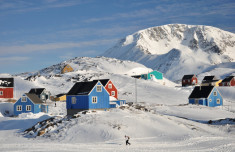
› Evidence of the effects of climate change continues to mount. We see it in extreme weather events, including droughts and intense hurricanes and cyclones, in biodiversity loss, and in erratic weather patterns around the globe. While many of these impacts rightfully make it into front-page news, climate change is also profoundly affecting parts of our planet that we do not understand well—the ocean and the cryosphere.
In September 2019, the International Panel on Climate Change issued a Special Report on the Ocean and Cryosphere in a Changing Climate (SROCC). The report provides a new and sobering analysis of current conditions, as well as projections into the future. Produced by more than 100 authors from 36 countries, the SROCC painstakingly reviews the latest scientific literature, referencing some 7,000 scientific publications in all.
-
Community Input Improves Climate Change-Induced Resettlement Effort
›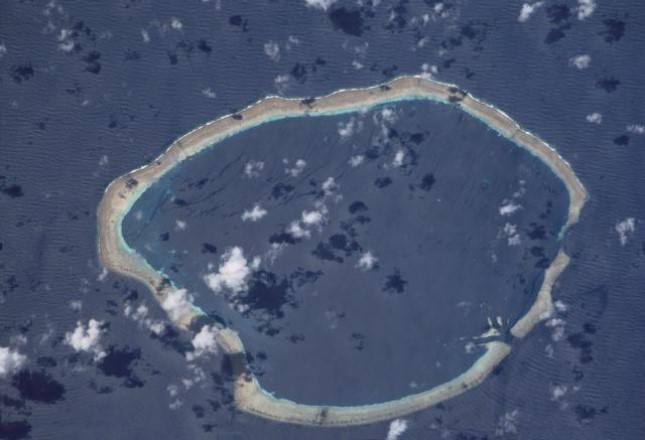
In the Global South, climate change-induced resettlement requires a holistic and integrated approach, involving all stakeholders—state institutions, local customary and civil society institutions—and in particular respectful engagement with local traditional actors and networks. In a policy brief for the Toda Peace Institute, we examined climate change-induced resettlement from the Carteret Islands in the Pacific, a case which encompasses a broad range of issues relevant to future relocation efforts elsewhere. Those who seek to make this type of resettlement possible would do well to heed these lessons.
-
Upcycling ‘Beach Snow’: Clearing Taiwan’s Oyster Farming Marine Debris
›“If you go to some Taiwan beaches, you can see snow,” said Chieh-Shen (Jason) Hu, Ocean Initiative Coordinator for Taiwan’s Society of Wilderness, a 6,000-member organization similar to Sierra Club. Hu was referring to pervasive Styrofoam marine debris from western Taiwan’s oldest industry, oyster aquaculture.
-
Building Coastal Resilience to Protect U.S. National Security
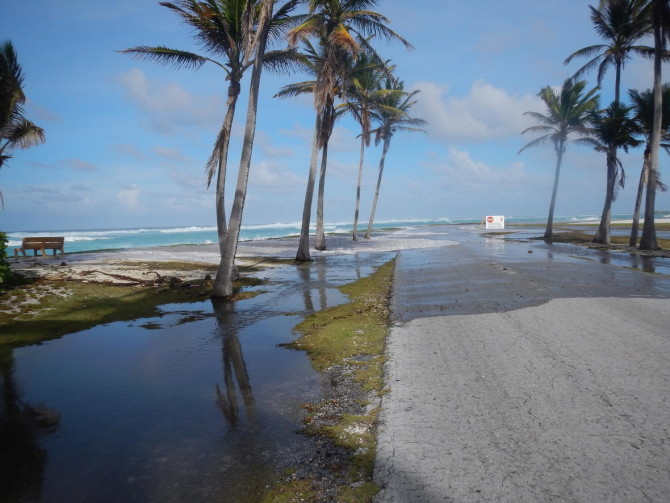
›June 28, 2018 // By Wilson Center StaffAs the Atlantic hurricane season kicks off this month, some coastal communities in the United States and small-island nations in the Caribbean are still recovering from last year’s record-breaking damage. At the same time, the heavy rains pounding the East Coast this week are part of a long-term trend towards more severe heavy rainfall events that have led to deadly floods and threaten critical U.S. military bases. Even on sunny days, cities such as Norfolk and Manila contend with high tide or “nuisance” flooding—a phenomenon that has increased as much as nine-fold since the 1960s, according to NOAA.
-
Panacea for the Pacific? Evaluating Community-Based Climate Change Adaptation
›Guest Contributor // February 22, 2018 // By Rachel Clissold, Tahlia Clark, Benjamin Priebbenow & Karen McNamaraThe Australian government’s recent Foreign Policy White Paper has been criticized for its underwhelming climate change section. Penny Wong, the current opposition leader in the Australian Senate, said that its acknowledgement of the need to support a more resilient Pacific region “rings hollow in light of the Abbott/Turnbull Government’s massive aid cuts.” But despite these criticisms, the Australian government continues to support a range of climate change initiatives in the Pacific. Increasingly, Australian Aid and its fellow donors, including USAID, JICA and GIZ, take a community-based approach to climate adaptation. Germany’s GIZ, for example, carries out community-level adaptation activities for all beneficiaries in the Pacific; and USAID has highlighted its community-level projects as important models. Our recent evaluation of some of these community-level adaptation programs in Vanuatu and Kiribati found that they provide some development benefits, including increased awareness, empowerment, cooperation, and self-esteem, but that it is too soon to tell whether this approach can reduce long-term vulnerability to climate change.
-
Respect for Creation: Leaders and Religious Groups Confront Climate Change in the Caribbean and South Pacific Islands
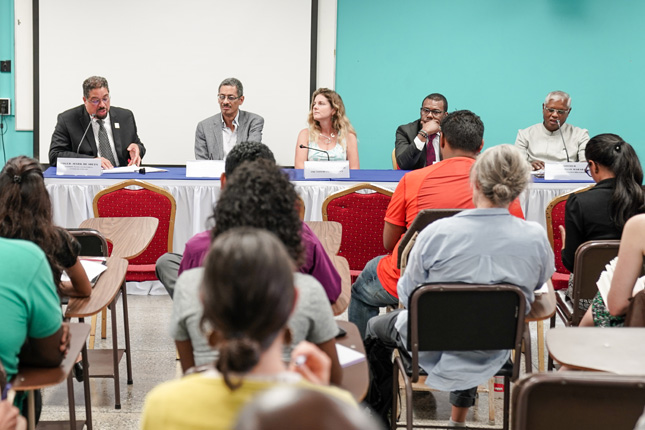
›Climate change is “unfolding as we speak,” said John Agard, professor of Tropical Island Ecology at the University of the West Indies (UWI) at a recent public forum on island nations hosted in Trinidad by UWI’s Institute of International Relations. The “close coupling of terrestrial, coastal, and marine systems” in islands “results in fast-spreading impacts across systems,” said Roger-Mark De Souza¹, formerly the director of population, environmental security, and resilience for the Wilson Center, which partnered with UWI and American University’s Center for Latin American and Latino Studies to organize the event.
-
As Fiji Leads COP-23, Camari Koto Reflects on Climate Resilience in the South Pacific Islands
›Climate change poses an undeniable threat to small island states, but many islanders do not even know what climate change is, says Camari Koto, an indigenous Fijian academic and educator at the University of the South Pacific and member of the Resilience Academy, in our latest podcast. “They know it’s happening, they are unconsciously [taking] adaptive responses,” and certainly feel the brunt of its effects, she says. “But they don’t see climate change as an immediate threat.” -
COP-23: Can More Transparency, New Technology Save Small Island States?
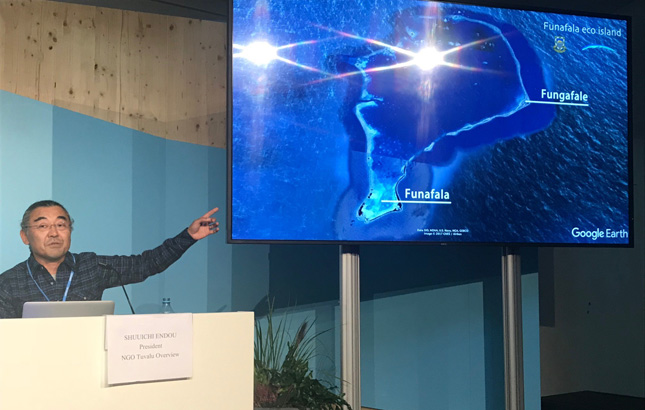
›As the Climate Conference of Parties (COP-23) wraps up in Bonn, Germany, the prime minister of the tiny Pacific island nation of Tuvalu, which is sinking a few millimeters every year, made an impassioned call for transparency in the Paris Agreement “rule book” and for ratcheting up worldwide ambitions to reduce climate change. While informal texts were drafted to guide implementation of the historic 2015 Paris Agreement, formal adoption of these rules will have to wait until COP-24, to be held in Poland next year.
Showing posts from category small island states.
 Evidence of the effects of climate change continues to mount. We see it in extreme weather events, including droughts and intense hurricanes and cyclones, in biodiversity loss, and in erratic weather patterns around the globe. While many of these impacts rightfully make it into front-page news, climate change is also profoundly affecting parts of our planet that we do not understand well—the ocean and the cryosphere.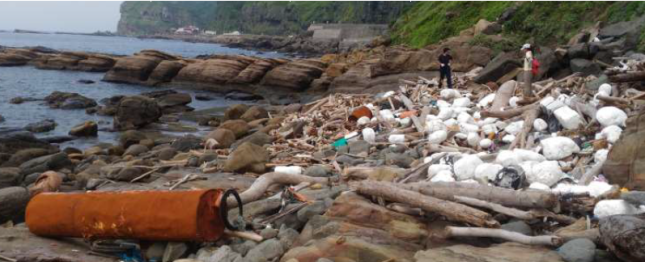
 Climate change poses an undeniable threat to small island states, but many islanders do not even know what climate change is, says Camari Koto, an indigenous Fijian academic and educator at the University of the South Pacific and member of the