Showing posts from category security.
-
Jay Ulfelder, Dart-Throwing Chimp
Public-Health Campaigns as Outsized Threats to Authoritarian Rule
›August 17, 2011 // By Wilson Center StaffThe original version of this article, by Jay Ulfelder, appeared on his blog, Dart-Throwing Chimp.
Are certain forms of popular activism more likely to hasten the fall of dictatorships than others? This question occurred to me after reading a recent Washington Post story describing how one Russian woman, Darya Makarova, has turned her own frustration with the poor health care given to her (now dead) young son into a wider campaign that’s has caught Moscow’s eye:Thousands have turned out for her rallies, written letters, signed petitions or joined in Internet forums. Since Maxim’s death in November, she has raised money to reopen a children’s clinic, with an emergency room, in her community. She has shamed the city into buying three new ambulances, with proper equipment. She has launched a nonprofit organization, Health Care for Children, that has national ambitions. Politicians have sought her out. Pavel Astakhov, who holds the newly created title of children’s ombudsman, came from Moscow to see her – and then appointed her his unpaid deputy, giving her more access and clout. Even officials from the sprawling and notoriously indifferent Health Ministry started to pay attention.
I can see why government officials would be nervous about this still-modest and outwardly apolitical campaign. Popular activism around matters of public health and safety seems like it should pose a special challenge to authoritarian regimes, like Russia’s, that stake their right to rule on paternalistic claims about their ability to deliver both social welfare and social protection.
Movements organized around failures of public health and safety are threatening to these regimes because they call out the paternalistic state for failing at its own game. Whatever the form of government involved, one of the modern state’s fundamental roles is to protect its citizens from public health threats. Even when they serve this function poorly, most autocrats claim to be trying, and these campaigns reveal that they are not succeeding.
Continue reading on Dart-Throwing Chimp.
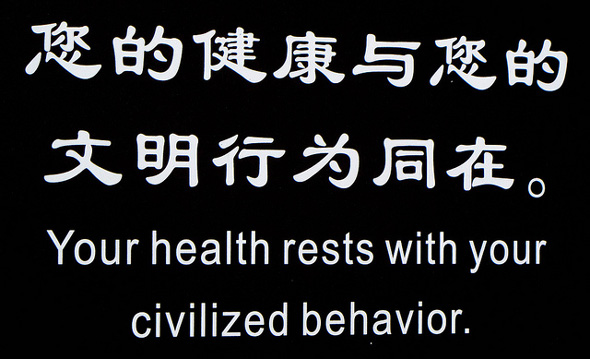
Photo credit: “Your Health rests with…,” courtesy of flickr user okeos. -
Conflict Minerals in the DRC: Still Fighting Over the Dodd-Frank Act, One Year Later
›August 11, 2011 // By Schuyler NullOne year after the Dodd-Frank Act passed Congress with a provision that was aimed at preventing the sourcing of “conflict minerals” by SEC-registered companies, backlash seems to be growing over the impact of the measure, particularly on artisanal miners in the Democratic Republic of the Congo (DRC).
-
Environmental Cooperation for Peacebuilding in Sierra Leone
›Sierra Leone’s decade-long civil war led to a complete collapse of environmental management in the country, according to Oli Brown, an environmental affairs officer with the UN Environment Programme (UNEP). Speaking at the Wilson Center last month, Brown highlighted the country’s current environmental conditions and how they have evolved since the war ended in 2002, while also outlining UNEP’s support for rebuilding the country’s natural resource governance.
Despite its wealth of natural resources, Sierra Leone is plagued by high unemployment, a massive gap between the poor and wealthy, and extreme poverty – 70 percent of the population lives on $1.00 a day. The country is still “very fragile,” said Brown; the poor distribution of resources is partly responsible for the current problems facing the country.
Sierra Leone’s environmental future and prospects for improving its natural resource governance depend on the answers to three key questions, said Brown:
The first 5 to 10 years after a civil war are a critical time for peacebuilding efforts, Brown emphasized. Natural resources can help in this peace building process, but countries must recognize the value of their natural resources, and establish policies that are sustainable – environmentally, economically, and socially.- How can the countries bountiful natural resources be shared more equitably?
- How can the countries natural resources improve local livelihoods and provide jobs?
- How can the war’s legacies be properly addressed while minimizing their negative impact?
Potential in Abundance: Agriculture, Minerals, Fisheries, and Tourism
Today, agriculture – including rice, palm oil, and sugar cane – accounts for 50 percent of Sierra Leone’s GDP, but current production methods are extremely inefficient, said Brown. Farmers use slash-and-burn clearing techniques to grow crops with zero consideration for the environmental effects, a practice which has led to a high level of deforestation. Only four percent of the country’s original forest cover remains, he said.
As part of its plan, Sierra Leone’s government is actively seeking large-scale investment in agricultural products for export. However, access to land development is complicated by the fact that more than 100 different chiefs control land and leasing rights around the country.
Additionally, some fear that companies investing in Sierra Leone may be exploiting the situation to achieve maximum profit without providing local development benefits, such as employment.
Water is also crucial to agriculture development, but Sierra Leone’s government does not know how much they have, said Brown, so they cannot properly plan for addressing the needs of their people. Reforming the sector is critical, as palm oil and sugar cane in particular have great potential for increasing the country’s GDP.
Sierra Leone also has an abundant supply of minerals: Diamonds, iron, rutile, gold, and oil currently account for about 20 percent of GDP and approximately 250,000 jobs, said Brown.
The planned Tonkolili iron mine will be the largest of its type built over the past 20 years anywhere in the world. If successful, the mine could double Sierra Leone’s GDP, he said. But the government must monitor these mining operations to ensure that the environmental damage does not undermine the economic benefits, said Brown. For example, rutile mining without proper safety precautions has produced acid lakes, he said, some of which have been measure with a PH level of 3.7 or greater.
While fishing operations in Sierra Leone make up only 10 percent of GDP, fish provide 80 percent of the animal protein consumed in the country’s households. However, lack of regulation and enforcement has left the door open for rampant illegal and unregulated fishing, said Brown, which has depleted local fish stocks and reduced the size of fish that are caught threatening the country’s food security.
On a more positive note, environmental tourism could be a potential source of sustainable revenue. The large chimpanzee population and the national parks could be strong tourist draws. However, the country must overcome its “blood diamonds” stigma in order to take advantage of its potential.
UNEP is seeking to help Sierra Leone’s government develop its environmental regulations and planning, said Brown, such as ways to measure and regulate water usage. The regulation of agriculture, minerals, fisheries, and tourism industries will be vital steps toward helping Sierra Leone build a sustainable economy and a sustainable peace.
Sources: Awoko Newspaper, Delegation of the European Union to Sierra Leone, Infinity Business Media, The Oakland Institute, UNDP, USAID.
Photo Credit: “mining57,” courtesy of flickr user thehunter1184. -
Backdraft: Minimizing Conflict in Climate Change Responses
›
“What are the conflicts or risks associated with response to climate change?” asked ECSP Director Geoff Dabelko at the Wilson Center on July 18. “How we respond to climate change may or may not contribute to conflict,” he said, but “at the end of the day, we need to do no harm.”
-
Reducing Health Inequities to Better Weather Climate Change
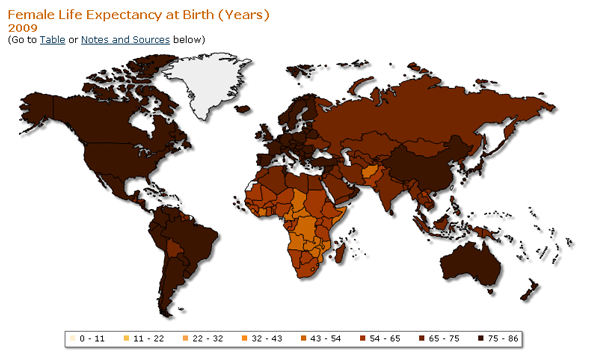
›In an article appearing in the summer issue of Global Health, Dr. Margaret Chan, director-general of the World Health Organization (WHO), brings to light what she calls the starkest statistic in public health: the vast difference in the mortality rates between rich and poor countries. For example, the life expectancy of a girl is doubled if she is born in a developed country rather than in a developing country. Chan writes that efforts to improve health in developing countries now face an additional obstacle: “a climate that has begun to change.”
Climate change’s effect on health has increasingly moved into the spotlight over the past year: DARA’s Climate Vulnerability Monitor measures the toll that climate change took in 2010 on human health, estimating some 350,000 people died last year from diseases related to climate change. The majority of these deaths took place in sub-Saharan Africa, where weak health systems already struggle to deal with the disproportionate disease burden found in the region. The loss of “healthy life years” as a result of global environmental change is predicted to be 500 times greater in poor African populations than in European populations, according to The Lancet.
The majority of these deaths are due to climate change exacerbating already-prominent diseases and conditions, including malaria, diarrhea, and malnutrition. Environmental changes affect disease patterns and people’s access to food, water, sanitation, and shelter. The DARA Climate Vulnerability Monitor predicts that these effects will cause the number of deaths related to climate change to rise to 840,000 per year by 2030.
But few of these will be in developed countries. With strong health systems in place, they are not likely to feel the toll of a changing environment on their health. Reducing these inequities can only be achieved by alleviating poverty, which increases the capacity of individuals, their countries, and entire regions to adapt to climate change. It would be in all of our interests to do just this, writes Chan: “A world that is greatly out of balance is neither stable nor secure.”
Sarah Lindsay is a program assistant at the Ministerial Leadership Initiative for Global Health and a Masters candidate at American University.
Sources: DARA, Global Health, The Lancet, World Health Organization.
Image Credit: Henry J. Kaiser Family Foundation and the World Health Organization. -
Cynthia Brady, USAID
The Specter of “Climate Wars”
›July 29, 2011 // By Wilson Center StaffThe original version of this article, by Cynthia Brady, appeared in the June/July 2011 edition of USAID’s Frontlines.
In 2007, many in the advocacy community rushed to categorize the conflict in the Darfur region of Sudan as a “climate war” in the wake of a compelling United Nations report that emphasized the ways climate change and environmental degradation can drive conflict.
In 2009, international media focused significant attention on an academic study that analyzed historical linkages between civil war and temperatures in sub-Saharan Africa and suggested there would be a 54-percent increase in armed conflicts by 2030. [Video Below]
In both cases, subsequent research and analyses conducted by prominent scholars countered those original claims of such direct climate and conflict connections, at least based on existing evidence. Those studies are two examples of the recent spate of analyses on the subject and serve as cautionary tales against alarmism and overly simplistic assumptions about specific connections between climate change and stability.
The reality is far more complicated.
The science and practice of analyzing the interaction of climate change risk and conflict risk is new and still evolving. As a result, there is little certainty over exactly how climatic change will manifest in specific locations and what the consequences will be for economic development, political stability, and peace and security.
Around the world, climate change likely will create both risks and opportunities, making it critical that development and relief organizations like USAID consider climate change not as a monolithic threat but rather as an important influence within a complex web of environmental and social factors.
Responding to climate change effectively means taking action to reduce the threats. It also means harnessing opportunities by helping people and institutions to effectively cope with and adapt to change – environmental or otherwise. Climate-focused interventions, if conducted strategically and with sensitivity to local context, can produce outcomes for conflict prevention and sustainable development as well.
For example, recent USAID-funded research in the conflict-prone Karamoja region of northeastern Uganda found that engaging local communities in the design and implementation of climate change adaptation activities – for example, promoting shared grazing areas and creating small-scale irrigation systems – holds considerable potential to reduce conflict by building social cohesion and addressing feelings of marginalization and disempowerment among local community members.
Since 2008, USAID has invested in research to better understand how specific climate factors contribute to the risk of conflict and affect the resilience of social structures and institutions. The goal is to build a deeper understanding that will enable the agency and its partners to respond most effectively to climate-related stress, reduce the risk of violent outcomes, and maximize the potential for U.S. foreign assistance to prevent conflict and promote stability.
This knowledge also will help USAID make wise investments as part of meeting U.S. Government commitments under the Global Climate Change Initiative as described in President Barack Obama’s September 2010 Presidential Policy Directive on Global Development.
Climate Change and Conflict Prevention
The research thus far points to climate change as an exacerbating factor in situations where political, economic, and social stresses already exist. The risk of conflict is greatest where there is poor governance and low institutional capacity.
The agency, through its Office of Conflict Management and Mitigation (CMM), has identified two basic scenarios under which climate change could combine with other variables and potentially lead to conflict.
First, climate change could intensify existing environmental or resource problems. For example, a series of droughts could reduce the available local water supply, aggravating competition between farmers and pastoralists in already arid regions. Second, climate change could create new environmental or resource problems that contribute to instability. Changing rainfall patterns, for instance, could damage agricultural production in formerly fertile areas, decimating local livelihoods and causing food insecurity.
There is a third area of potential risk for USAID and other donors as well: namely, that climate-related financing, policies, and programs which have not adequately considered local conflict dynamics and context could produce serious unintended negative consequences.
Climate change-related interventions such as incentive payments to stop deforestation – particularly in fragile states and conflict-affected areas – must recognize that both the money and the power to allocate benefits may inadvertently reinforce the social status quo, shift local power balances, or expose governance failures.
In her field work in Nepal, Janani Vivekananda, a researcher with USAID partner International Alert, recently illustrated how certain types of assistance might inadvertently do harm. She explained how a now-defunct village water tap installed in an effort to mitigate the effects of climate variability, did not appropriately consider the local social, political, and conflict context or even basic environmental parameters. In the end, it contributed to local grievance.
The community had requested the tap to be installed during a period of water stress and three consecutive years of drought. The Government of Nepal sponsored the project just before the elections.
Vivekananda explained: “These people are hand-to-mouth farmers. They didn’t know and they wouldn’t know that ground water levels were falling. They wouldn’t know the negative impacts of uncontrolled surface water extraction and so they chased about this tap, and within three months it ran dry. That was the only cash that was injected into the community for development purposes, and it had no impact whatsoever apart from being a stark reminder that the government itself isn’t doing what it ought to.”
This story highlights the reality that local context will define the outcome of peace or conflict and, thus, as CMM’s discussion paper “Climate Change, Adaptation, and Conflict: A Preliminary Review of the Issues” noted, there remains a pressing need for a more robust, fine-grained understanding of the interaction between climate change and the political, social, and economic realities of conflict-prone areas.
To help fill this information gap, USAID is supporting field-based climate change and conflict research in Peru, Uganda, Ethiopia, and the Niger River Basin in West Africa. At the global level, the agency is improving its ability to integrate climate change considerations into conflict early warning models. It is also establishing academic and practitioner partnerships that explore a wide range of environment and security issues.
Today, close to 60 percent of the State Department’s and USAID’s foreign assistance goes to 50 countries that are in the midst of, recovering from, or trying to prevent conflict or state failure. A significant amount of that assistance is slated for Global Climate Change mitigation and adaptation programming. Yet, as CMM’s conflict early warning specialist, Kirby Reiling, observed, “much of that money could be a lost investment if those countries fall into armed conflict.”
With conflict-sensitive development assistance and with smart climate change policies and programs, vulnerable countries will have enhanced opportunities to build stronger societies and more resilient institutions for sustainable development, peace, and security.
Cynthia Brady is a senior conflict advisor in USAID’s Office of Conflict Management and Mitigation.
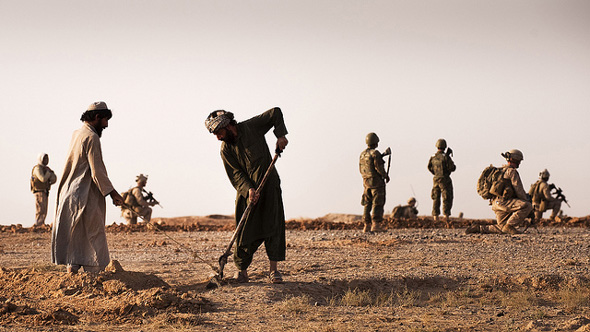
Photo Credit: Afghan farmers plow a field guarded by U.S. Marines, courtesy of flickr user isafmedia. -
Eddie Walsh, The Diplomat
Indonesia’s Military and Climate Change
›July 22, 2011 // By Wilson Center StaffThe original version of this article, by Eddie Walsh, appeared on The Diplomat’s ASEAN Beat blog.
With more than 17,000 islands and 80,000 kilometers of coastline, Indonesia is extremely vulnerable to climate change. Analysts believe that rising temperatures will almost certainly have a negative impact on human security in Indonesia, which in turn will increase the probability of domestic instability and introduce new regional security concerns. With this in mind, it’s important that Indonesia’s armed forces take a range of measures to prioritize environmental security, including procuring new equipment, strengthening bilateral and multilateral relations, and undertaking training for new roles and missions.
Indonesians are expected to experience warmer temperatures, increased precipitation (in the northern islands), decreased precipitation (in the southern islands), and changes in the seasonality of precipitation and the timing of monsoons. These phenomena could increase the risk of either droughts or flooding, depending on the location, and could also reduce biodiversity, lead to more frequent forest fires and other natural disasters, and increase diseases such as malaria and dengue, as well incidences of diarrhea.
The political, economic, and social impact of this will be significant for an archipelago-based country with decentralized governance, poor infrastructure, and a history of separatist and radical conflict. According to a World Bank report, the greatest concern for Indonesia will be decreased food security, with some estimates projecting variance in crop yields of between -22 percent and +28 percent by the end of the century. Rising sea levels also threaten key Indonesian cities, including Jakarta and Surabaya, which could stimulate ‘disruptive internal migration’ and result in serious economic losses. Unsurprisingly, the poor likely will be disproportionately impacted by all of this.
Continue reading on The Diplomat.
Sources: World Bank.
Photo Credit: “Post tsunami wreckage Banda Aceh, Sumatra, Indonesia,” courtesy of flickr user simminch. -
Water, Energy, and the U.S. Department of Defense
›Energy for the War Fighter is the U.S. Department of Defense’s first operational energy strategy, mandated by congress last year. Energy security for the department means having assured access to reliable supplies of energy and the ability to protect and deliver energy to meet operational (non-facilities-related) needs. The report is divided into three main parts, which address reducing current demand for energy in military operations; expanding and securing the supply of energy for military operations; and building consideration of energy security into future force decisions. The strategy is designed to both support current military operations and to focus future energy investments accordingly. Previous federal energy mandates exempted the military’s field operations, which account for three-quarters of the department’s energy consumption. The department as a whole makes up 80 percent of the federal government’s annual energy use.The Water Energy Nexus: Adding Water to the Energy Agenda, by Diana Glassman, Michele Wucker, Tanushree Isaacman, and Corinne Champilouis of the World Policy Institute, attempts to show the correlation between energy and water to motivate policy makers to consider the implications of their dual consumption. “Nations around the world are evaluating their energy options and developing policies that apply appropriate financial carrots and sticks to various technologies to encourage sustainable energy production, including cost, carbon, and security considerations,” write the authors. “Water needs to be a part of this debate, particularly how communities will manage the trade-offs between water and energy at the local, national, and cross-border levels.” The study provides the context needed to evaluate key tradeoffs between water and energy by providing “the most credible available data about water consumption per unit of energy produced across a wide spectrum of traditional energy technologies,” they write.
Sources: U.S. Department of Defense.