-
UN Security Council Debates Climate Change
› Today the UN Security Council is debating climate change and its links to peace and international security. In this short video, ECSP Director Geoff Dabelko outlines his hopes for today’s session and its follow-on activities. He suggests it is time to move from problem identification to problem solving by developing practical steps to respond to climate-security links.
This Security Council debate was held at the instigation of the German government, chair of the Security Council this month. But it is not the first time this body has debated climate and security. In 2007, the United Kingdom used its prerogative as chair to introduce the topic in the security forum. Opinions from member states diverged on whether the Security Council was the appropriate venue for climate change.
Largely at the instigation of the Alliance of Small Island States, the UN General Assembly tackled climate and security links in 2009. The resulting resolution also spurred the UN Secretary-General to produce a summary report on the range of climate and security links.
Sources: Reuters, UN. -
Failed States Index 2011
›“The reasons for state weakness and failure are complex, but not unpredictable,” said J.J. Messner, one of the founders of the Fund for Peace’s Failed States Index, at the launch of the 2011 version of report in Washington last month. The Index is an analytical tool that could aid policymakers and governments seeking to prevent and mitigate state collapse by identifying patterns of underlying drivers of state instability.
The Index ranks 177 countries according to 12 primary social, economic, and political indicators based on analysis of “thousands of news and information sources and millions of documents” and distilled into a form that is meant to be “relevant as well as easily digestible and informative,” according to the creators. “By highlighting pertinent issues in weak and failing states,” they write, the Index “makes political risk assessment and early warning of conflict accessible to policymakers and the public at large.”
Common Threats: Demographic and Natural Resource Pressures
The Index reveals that half of the 10-most fragile states are acutely demographically challenged. The composite “Demographic Pressures” category takes into account population density, growth, and distribution; land and resource competition; water scarcity; food security; the impact of natural disasters; and public health prevention and control. Additional population indices are found in “Massive Movement of Refugees or Internally Displaced Persons (IDPs),” and health indicators, including infant mortality, water, and sanitation, are spread across several categories.
Not surprisingly, some of the most conflict-ridden countries show up at the top of the list. The Index highlights some of the lesser known issues that contribute to their misery: demographic and natural resource stresses in Afghanistan, Iraq, Nigeria, Pakistan, and Yemen (a list that would include Palestine, if inclusion in the Index were not contingent on UN membership); the DRC’s conflict minerals; and Somalia and Sudan’s myriad of environmental and migration problems, which play major roles in their continued instability.
Haiti, with its poor health and lack of infrastructure and disaster resilience, was deemed the Index’s “most-worsened” state of 2011. The January 2010 earthquake and its ensuing “chaos and humanitarian catastrophe” demonstrated that a single event can trigger the collapse of virtually every other sector of society, causing what Messner termed the “Humpty Dumpty effect” – while a state can deteriorate quickly, it is much harder to put it back together again.
The inclusion of natural resource governance within the social and economic indicators would render the Index a more complete analytical tool. In a 2009 report, the UN Environment Program (UNEP) found that “since 1990, at least eighteen violent conflicts have been fueled by the exploitation of natural resources,” and that effective natural resource management is a necessary component of conflict prevention and peacebuilding operations.
The Elephant in the Room: Predicting the Arab Spring
Why did the Index fail to predict the Arab Spring sweeping the Middle East and North Africa? Many critics assert that the inconsistent ranking of the states, ranging from Yemen (ranked 13th) to Bahrain (ranked 129th), demonstrates that the Index is a poor indicator of state instability. Particularly, critics argue that many of the countries experiencing revolutions were ranked artificially low.
“Of course, the Failed States Index did not predict the Arab Spring, and nor is it intended to predict such upheavals,” said Messner at the launch event. “But by digging down deeper into the specific indicator analysis, it was possible to observe the growing tensions in those countries.” The Index has consistently highlighted specific troubling indicators for the region, such as severe demographic pressures, migration, group grievance, human rights, state legitimacy, and political elitism.
Blake Hounshell, a correspondent with Foreign Policy (long-time collaborators with the Fund for Peace on the Index), wrote that the Index was never meant to be a “crystal ball” – even the best statistical data cannot truly encapsulate the complex realities that lead to inherently unpredictable events, such as revolutions. “It’s thousands of individual decisions, not rows of statistics, that add up to political upheaval,” Hounshell continued.
Demographer Richard Cincotta’s work on Tunisia’s revolution illuminates how the Index’s linear indicators can mask a complex reality. Whereas the Failed States Index simply measures “demographic pressure” as a linear function of how youthful a population is, Cincotta pointed out at a Wilson Center event that it was actually Tunisia’s relative demographic maturity that paved the way for its revolution and gives it a good chance of achieving a liberal democracy. Other countries in the region are much younger than Tunisia (Yemen being the youngest). The Arab Spring demonstrates that static indicators alone often do not have the capacity to predict complex social and political revolutions.
Sources: Foreign Policy, The Fund for Peace, UNEP.
Image Credit: Failed States Index 2011, Foreign Policy. -
Preparing for the Impact of a Changing Climate on U.S. Humanitarian and Disaster Response
›Climate-related disasters could significantly impact military and civilian humanitarian response systems, so “an ounce of prevention now is worth a pound of cure in the future,” said CNA analyst E.D. McGrady at the Wilson Center launch of An Ounce of Preparation: Preparing for the Impact of a Changing Climate on U.S. Humanitarian and Disaster Response. The report, jointly published by CNA and Oxfam America, examines how climate change could affect the risk of natural disasters and U.S. government’s response to humanitarian emergencies. [Video Below]
Connecting the Dots Between Climate Change, Disaster Relief, and Security
The frequency of – and costs associated with – natural disasters are rising in part due to climate change, said McGrady, particularly for complex emergencies with underlying social, economic, or political problems, an overwhelming percentage of which occur in the developing world. In addition to the prospect of more intense storms and changing weather patterns, “economic and social stresses from agricultural disruption and [human] migration” will place an additional burden on already marginalized communities, he said.
Paul O’Brien, vice president for policy and campaigns at Oxfam America said the humanitarian assistance community needs to galvanize the American public and help them “connect the dots” between climate change, disaster relief, and security.
As a “threat multiplier,” climate change will likely exacerbate existing threats to natural and human systems, such as water scarcity, food insecurity, and global health deterioration, said Vice Admiral Lee Gunn, USN (ret.), president of CNA’s Institute for Public Research. Major General Richard Engel, USAF (ret.), of the National Intelligence Council identified shifting disease patterns and infrastructural damage as other potential security threats that could be exacerbated by climate change.
“We must fight disease, fight hunger, and help people overcome the environments which they face,” said Gunn. “Desperation and hopelessness are…the breeding ground for fanaticism.”
U.S. Response: Civilian and Military Efforts
The United States plays a very significant role in global humanitarian assistance, “typically providing 40 to 50 percent of resources in a given year,” said Marc Cohen, senior researcher on humanitarian policy and climate change at Oxfam America.
The civilian sector provides the majority of U.S. humanitarian assistance, said Cohen, including the USAID Office of Foreign Disaster Assistance (OFDA) and the State Department’s Bureau of Population, Refugees, and Migration. These organizations provide leadership, funding, and food aid to developing countries in times of crisis, but also beforehand: “The internal rationale [of the Office of Foreign Disaster Assistance] is to reduce risk and increase the resilience of people to reduce the need for humanitarian assistance in the future,” said Edward Carr, climate change coordinator at USAID’s Bureau for Democracy, Conflict, and Humanitarian Assistance.
The U.S. military complements and strengthens civilian humanitarian assistance efforts by accessing areas that civilian teams cannot reach. The military can utilize its heavy lift capability, in-theater logistics, and command and control functions when transportation and communications infrastructures are impaired, said McGrady, and if the situation calls for it, they can also provide security. In addition, the military could share lessons learned from its considerable experience planning for complex, unanticipated contingencies with civilian agencies preparing for natural disasters.
“Forgotten Emergencies”
Already under enormous stress, humanitarian assistance and disaster response systems have persistent weaknesses, such as shortfalls in the amount and structure of funding, poor coordination, and lack of political gravitas, said Cohen.
Food-related aid is over-emphasized, said Cohen: “If we break down the shortfalls, we see that appeals for food aid get a better response than the type of response that would build assets and resilience…such as agricultural bolstering and public health measures.” Food aid often does not draw on local resources in developing countries, he said, which does little to improve long-term resilience.
“Assistance is not always based on need…but on short-term political considerations,” said Cohen, asserting that too much aid is supplied to areas such as Afghanistan and Iraq, while “forgotten emergencies,” such as the Niger food crisis, receive far too little. Furthermore, aid distribution needs to be carried out more carefully at the local scale as well: During complex emergencies in fragile states, any perception of unequal assistance has the potential to create “blowback” if the United States is identified with only one side of a conflict.
Engel added that many of the problems associated with humanitarian assistance will be further compounded by increasing urbanization, which concentrates people in areas that do not have adequate or resilient infrastructure for agriculture, water, or energy.
Preparing for Unknown Unknowns
A “whole of government approach” that utilizes the strengths of both the military and civilian humanitarian sectors is necessary to ensure that the United States is prepared for the future effects of climate change on complex emergencies in developing countries, said Engel.
In order to “cut long-term costs and avoid some of the worst outcomes,” the report recommends that the United States:
Cohen singled out “structural budget issues” that pit appropriations for protracted emergencies in places like Iraq, Afghanistan, and Darfur against unanticipated emergencies, like the 2010 earthquake in Haiti. Disaster-risk reduction investments are not a “budgetary trick” to repackage disaster appropriations but a practical way to make more efficient use of current resources, he said: “Studies show that the return on disaster-risk reduction is about seven to one – a pretty good cost-benefit ratio.”- Increase the efficiency of aid delivery by changing the budgetary process;
- Reduce the demand by increasing the resilience of marginal (or close-to-marginal) societies now;
- Be given the legal authority to purchase food aid from local producers in developing countries to bolster delivery efficiency, support economic development, and build agricultural resilience;
- Establish OFDA as the single lead federal agency for disaster preparedness and response, in practice as well as theory;
- Hold an OFDA-led biannual humanitarian planning exercise that is focused in addressing key drivers of climate-related emergencies; and,
- Develop a policy framework on military involvement in humanitarian response.
Edward Carr said that OFDA is already integrating disaster-risk reduction into its other strengths, such as early warning systems, conflict management and mitigation, democracy and governance, and food aid. However, to build truly effective resilience, these efforts must be tied to larger issues, such as economic development and general climate adaptation, he said.
“What worries me most are not actually the things I do know, but the things we cannot predict right now,” said Carr. “These are the biggest challenges we face.”
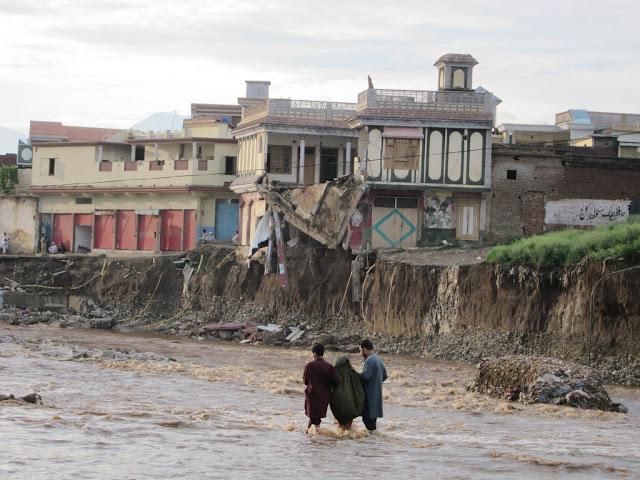
“Pakistan Floods: thousands of houses destroyed, roads are submerged,” courtesy of flickr user Oxfam International. -
Robert Jenkins, OpenDemocracy.net
Women, Food Security, and Peacebuilding: From Gender Essentialism To Market Fundamentalism
›July 5, 2011 // By Wilson Center StaffThat women’s engagement in resolving and recovering from conflict is crucial to sustainable peace has been an article of faith, and an element of international law, since the UN Security Council passed Resolution 1325 in 2000. It took a decade of missed opportunities, however, for the UN to develop a systematic action plan for redeeming the promise of 1325. The September 2010 Report of the Secretary-General on women’s participation in peacebuilding contains a concrete set of commitments for UN actors working in post-conflict settings.
-
Watch: Demographic Security 101 With Elizabeth Leahy Madsen
›June 27, 2011 // By Schuyler Null“Today we are in an era of unprecedented demographic divergence, with population trends moving simultaneously in different directions. Some countries are beginning to experience population decline, while others continue to grow rapidly,” says Elizabeth Leahy Madsen, formerly the senior research associate at Population Action International (PAI). In this primer video from ECSP, Madsen explains how global demographic trends affect economic development, national security, and foreign policy.
-
Scott Wallace, National Geographic
A Death Foretold
›June 23, 2011 // By Wilson Center StaffThe original version of this article, by Scott Wallace, appeared on National Geographic News Watch.
Late last month the Brazilian Congress passed a bill that if it becomes law would ease restrictions on rain-forest clearing and make it easier than ever to mow down the Amazon. That same day, 800 miles north of the parliamentary chamber in Brasilia, assailants ambushed and killed a married couple whose opposition to environmental crimes had placed them in the crosshairs of those who most stand to gain from the new legislation.
It’s a nauseatingly familiar story. Over the past 20 years, there have been more than 1,200 murders related to land conflict in Brazil’s Amazon region. Most of the victims, like the married activists Zé Claudio Ribeiro and Maria do Espírito Santo, were defenders of the rain forest – people seeking sustainable alternatives to the plunder-for-profit schemes that characterize much of what passes for “development” in the Amazon.
The state of Pará – where Zé Claudio and Maria were ambushed on their motorbike as they crossed a rickety bridge – holds an especially notorious reputation for environmental destruction and organized violence. Pará is the bloodiest state in Brazil, accounting for nearly half of all land-related deaths in recent decades. It sprawls across an area larger than the states of Texas, Oklahoma, and New Mexico combined. Picture a tropical version of the Wild West, stripped of the romance, where loggers and ranchers muscle their way onto public land as though they own the place and impose a law of the jungle with their hired thugs. Those who have the nerve to protest soon find themselves the targets of escalating threats. If they persist, they find themselves staring down the gun barrels of those come to make good on the threats.
Continue reading on National Geographic.
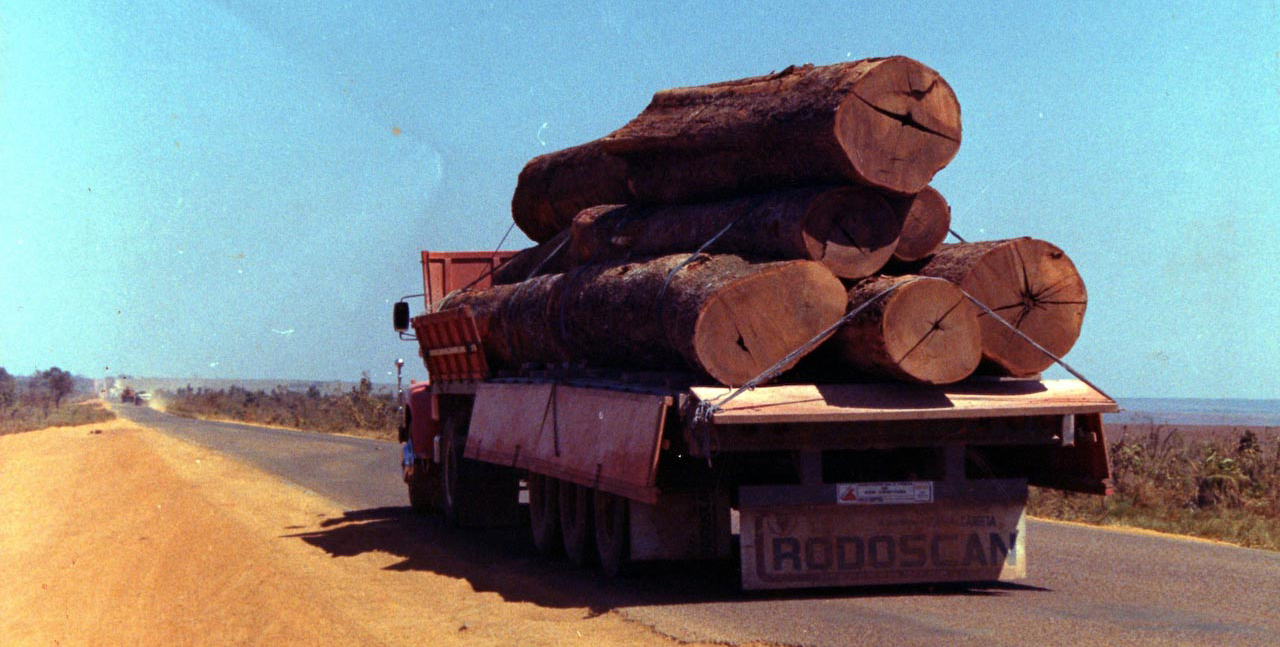
Photo Credit: “Toras,” courtesy of flickr user c.alberto. -
Jacob Park, Our World 2.0
Will Expanding “Human Security” Really Improve People’s Lives?
›June 16, 2011 // By Wilson Center StaffThe original version of this article, by Jacob Park, appeared on the UN University’s Our World 2.0.
To those working in the financial markets, the term “securitization” refers to the financial practice of pooling various types of debt, such as residential mortgages, and repackaging them as products like bonds, etc. And you can bet that most of the 2.5 million pages one gets if one searches for this term on the web probably relate to complex financial markets.
Yet the use of the term “security” is not limited to the financial markets and it appears that the United Nations system and the international community seem to be caught up in its own securitization trend. At the April 2011 65th General Assembly of the United Nations, the General Assembly held an informal debate on the human security concept and why it is important to the UN and the international community.
At this meeting, UN Deputy Secretary General Asha-Rose Migiro argued that “in a world where threats could be as sudden and unpredictable as a tsunami or as protracted and unyielding as an oppressive dictatorship, an expanded paradigm of security was needed to encompass the broad range of conditions threatening people’s survival, livelihoods, and dignity.”
In light of the recent triple disaster in Japan and this year’s uprisings in the Arab World, Migiro stated that from “natural disasters and entrenched poverty to outbreaks of conflict and the spread of disease, the dramatic events of recent weeks had underscored the vulnerability of developed and developing countries alike.”
Her views reflect a trend since the 2005 World Summit, where leaders agreed that human security concerned both “freedom from fear” and “freedom from want,” and the definition of human security expanded beyond the traditional military-political paradigm of security to be inclusive of social, energy, and environmental issues.
In fact, a wide range of UN institutions have been active promoting their respective security work; the United Nations Environment Programme (UNEP) in relation to environmental security; the Food and Agricultural Organization in relation to food security; and the United Nations Development Programme/UN Trust Fund for Human Security, among others. (Similarly, the International Energy Agency, founded in response to the 1973/74 oil shocks, today plays an increasingly important role in advising its member countries on energy security.)
Real Solutions or Good Metaphors?
It’s hard to disagree with the expanded definition of security to include a wide range of social, environmental, and human development issues. But toward what ends? What will this diverse focus ultimately lead to?
Perhaps I am being overly pessimistic and need to be more patient for these various security issues to develop as possible policy solutions. However, experience with the term “sustainable development” offers a good illustration of what happens when vague concepts rather than real solutions starts the drive the institutional machinery of global governance.
It seems like at times we’re replacing solutions with metaphors or frames to discuss social, environmental, and human development global concerns. The emerging security narrative feels as if we’re waiting for some military quick fixes; as if there is some special forces unit that can be called upon to get rid of the climate-induced migration problem in the same manner as a special U.S. Navy SEAL team was dispatched to deal with Osama Bin Laden.
Unfortunately, there is a real possibility that these UN programs and initiatives (however worthwhile they may be) on energy security, food security, environmental security, climate security, and human security will attempt to deal with all of these issues at the same time and at the end, risk dealing with none. One thing is certain: more international conferences will be planned on security issues even if it is unclear what real benefits this will provide to the most vulnerable members of the international community, whom this securitization trend is designed to help.
What do you think? Will the securitization of all threats to human life make a difference to “at risk” communities across the globe? Or are we just getting caught up in language and not solutions?
Thoughts? Be sure to follow-up on Our World 2.0 as well.
Jacob Park is an associate professor of business strategy and sustainability at Green Mountain College in Vermont specializing in global environment and business strategy, corporate social responsibility, community-based entrepreneurship, and social innovation.
Photo Credit: “UN Peacekeepers Rescue School Collapse Victims,” courtesy of flickr user United Nations Photo. -
Finding the Right Paddle: Navigating Climate Change Adaptation and Mitigation Strategies
›June 14, 2011 // By Christina DaggettAfter decades on the periphery, climate change has made its way onto the national security stage. Yet, while the worlds of science, policy, and defense are awakening to the threats of rising sea levels, stronger storms, and record temperatures, debate continues over the means and extent of adaptation and mitigation programs. In a world of possibilities, how to decide which paddle to use to navigate uncertain waters?
Showing posts from category security.