-
Big Money, Big Politics, and Big Infrastructure: Florida’s Saga Illustrates Climate Change’s Deep Challenges
›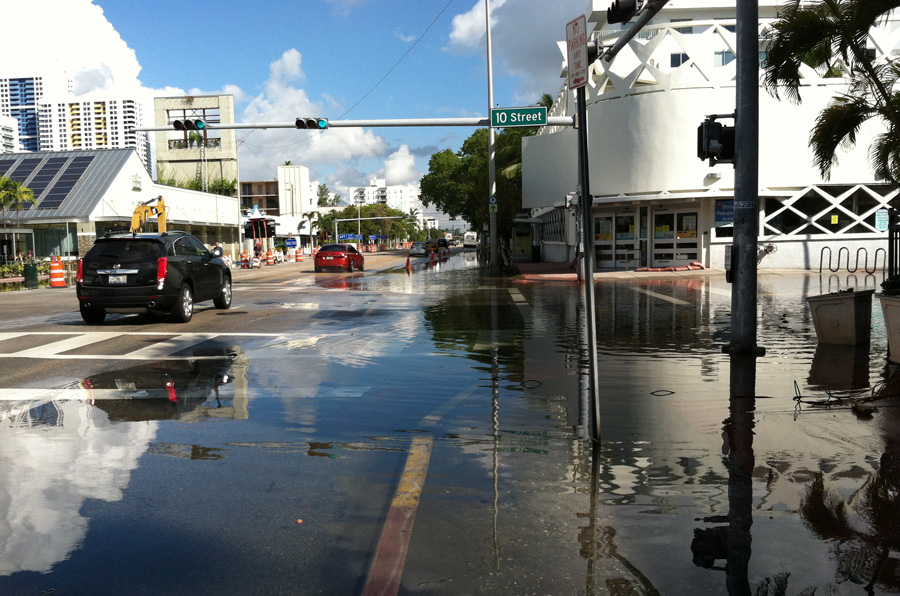
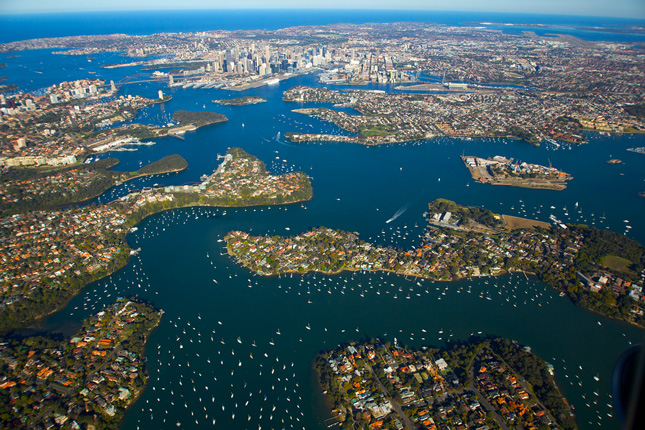
Investigative journalists reported earlier this month that top appointees at Florida’s Department of Environmental Protection and other state agencies ordered employees not to use the terms “climate change” or “global warming” in official communications. Politically coded euphemisms such as “climate drivers” and “climate variability” were to be used instead. “Sea-level rise” was to be replaced with “nuisance flooding.” The news swiftly went viral, with commentators noting the irony of such censorship occurring in Florida – essentially ground zero for climate change in the Global North.
-
Tom Staal on How Resilience Changes the Way USAID Works
›
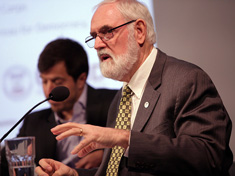
When it comes to international development, a resilience framework is key, says Tom Staal, acting assistant administrator of the Bureau of Democracy, Conflict, and Humanitarian Assistance at USAID, in this week’s podcast.
-
A Quick Video Tour of How We Got to 7 Billion and Where We’re Going Next
›Hans Rosling has always been an innovator when it comes to bringing big ideas to big audiences. The Norwegian doctor, statistician, and co-founder of the Gapminder Foundation has become known – to the kind of people who watch TED Talks anyway – for lively presentations aimed at demystifying common ideas about global development and demography. On Gapminder.org, he literally stands chest-high in water appealing for your donation to help him “cross the river of myths.”
-
World Economic Forum Evaluates Global Risks, Comes to Some Odd Conclusions
›With intense drought in Sao Paulo and California, devastating floods in Malawi, and escalating water-energy confrontations in many developing countries, it is no wonder water is making headlines. It’s also gained the attention of the World Economic Forum (WEF), which lists water crises as the world’s number one risk in its recently released Global Risk Assessment.
-
Efforts to Build Resilience in Sahel Focus on Food, Climate, Population Dynamics
›The Sahel – spreading from the Red Sea to the Atlantic as the Sahara Desert transitions to Sudanian savanna – is drought prone and suffers from chronic food insecurity. Yet, the region also boasts the highest fertility rates in the world, and the highest rates of marriage for young girls. This creates unique vulnerabilities that are being compounded by climate change, says ECSP’s Roger-Mark De Souza in an episode of Wilson Center NOW.
-
The Case for Better Aid to Pakistan: Climate, Health, Demographic Challenges Demand New Approach
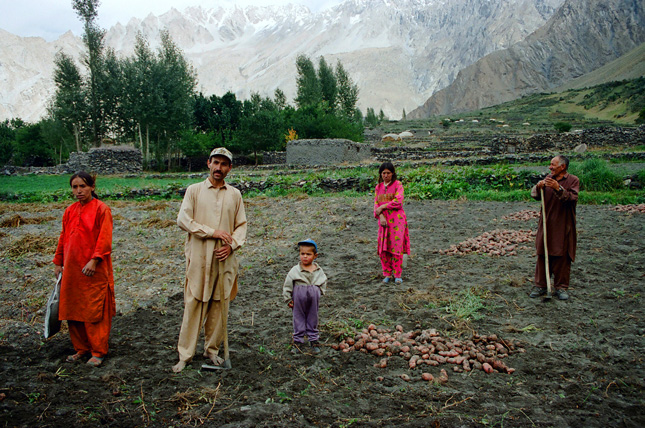
›March 2, 2015 // By Kate DiamondIn 2009, the U.S. Congress passed a five-year, $7.5 billion aid package for a country it had all but abandoned just 10 years earlier. Indeed, if one word can summarize the U.S. relationship with Pakistan, “volatile” might be it. Since the September 11 attacks, the U.S. has appropriated nearly $61 billion in aid to Pakistan – more than twice what it received since independence in 1947.
-
In Critical Year for Climate Change, Lack of Urgency is Worrying, Says Nick Mabey
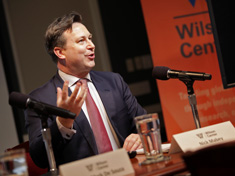
›“After Ukraine, ISIS, terrorism…there are a lot of distractions in 2015,” says Nick Mabey, founder and chief executive of the environmental NGO E3G, in this week’s podcast. “Short term issues are important, but they’re not everything.”
-
As Humanitarian Crises Multiply, Maternal Health and Safety of Women Becoming a Focus
›Accessing maternal health care is already a challenge in many countries, and when conflict erupts or a disaster strikes, it can get even worse, leaving millions of women on their own while at their most vulnerable, said Ugochi Daniels, chief of humanitarian response for the UN Population Fund (UNFPA). Women and girls also become more vulnerable to violence during times of crisis, she said, by virtue of nothing but their gender. [Video Below]
Showing posts from category risk and resilience.