-
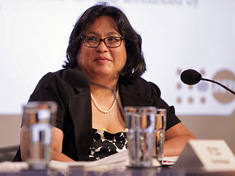
USAID’s Sylvia Cabus on the Sahel: “We Help Farmers…and Their Husbands”
›
In the Sahel, one of the most food-stressed regions of the world, “women bear the brunt in terms of coping mechanisms that are employed at the community level,” says Sylvia Cabus, gender advisor for USAID’s Bureau for Food Security, in this week’s podcast.
-
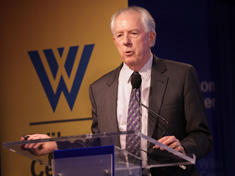
Banning Garrett: Getting Urbanization Right Can “Solve a Lot of Big Problems”
›The world is changing quickly thanks to a convergence of megatrends, says Singularity University’s Banning Garrett in this week’s podcast, but urbanization could be the most critical. “If we get it right in cities, we can solve a lot of big problems,” he says.
-
3 Facets to Relief and Recovery After Nepal’s Earthquake
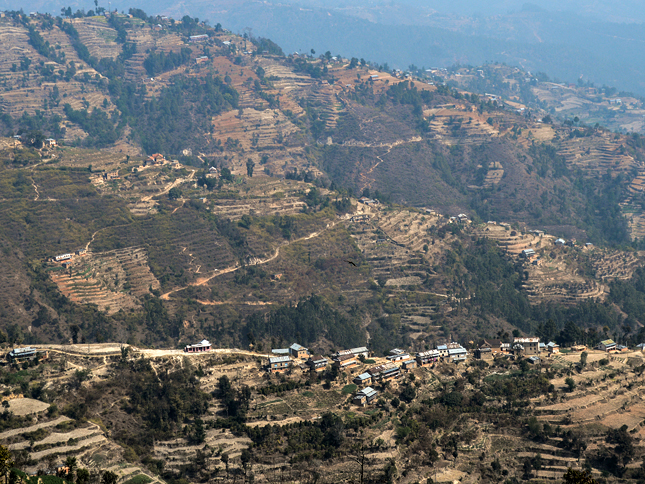
›Nepal’s devastating earthquake last Saturday was both tragic and expected. On September 18, 2011, as colleagues and I were driving through Kathmandu, our car started to shake, buildings began to sway, store fronts cracked, hundreds of people jumped out of windows and streamed into already crowded streets. It was the so-called Sikkim earthquake. There were only a few fatalities and injuries – it was a very minor event compared to last weekend’s disaster. But it validated the rationale for our visit: to help launch a disaster relief dialogue involving U.S. government experts, Nepalese security forces, and their country’s emergency responders.
-
In Kerry’s Quadrennial Diplomacy and Development Review, Climate and Conflict Are Focus
›April 29, 2015 // By Schuyler Null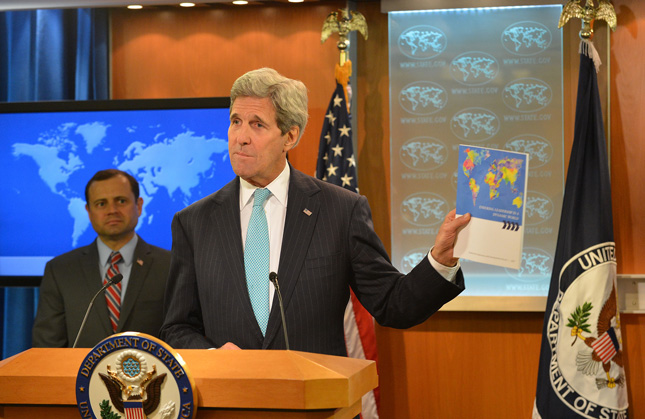
It’s a bit late, but the second-ever Quadrennial Diplomacy and Development Review (QDDR) is finally here. And it’s a good thing – it’d be a shame if this effort to present a coherent strategic narrative of U.S. diplomacy and development, which was started by Secretary of State Clinton in 2010, petered out.
-
Building Climate Resilience in Conflict-Affected States: A Neglected Agenda
›Climate change adaptation and mitigation efforts face many obstacles in fragile and conflict-affected societies. Instead of writing off these situations, however, International Alert’s Janani Vivekananda, Janpeter Schilling, and Dan Smith suggest approaching aid and development differently to proactively build resilience and simultaneously advance climate, development, and peacebuilding goals.
-
Small-Island States Continue Long Crusade for Recognition of Climate Damages
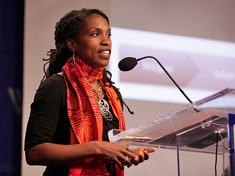
›“Even though small-island nation states generally are responsible for less than one percent of global greenhouse gas emissions, small islands are already expending scare resources on strategies to adapt to growing climate threats and to also repair themselves after they have hit,” says Maxine Burkett, associate professor of law at the University of Hawaii at Manoa, in this week’s podcast.
-
A Call for More Intention, Consistency, and Foresight in an Interconnected World
›April 22, 2015 // By Roger-Mark De SouzaGlobal trends, from climate change and population dynamics to food, water, and energy scarcity, threaten to complicate global security, diplomatic efforts, and development policy. In the United States we are increasingly responding to these trends, rather than anticipating and planning for them.
-
Wilson Center and USAID Launch “Resilience for Peace Project”
›As “resilience” builds as a theme for the development community, a few key concepts are rising to the top of the conversation. [Video Below]
Showing posts from category risk and resilience.