-
From Disaster Risk Reduction to Sustainable Peace: Reducing Vulnerability and Preventing Conflict at the Local Level
›
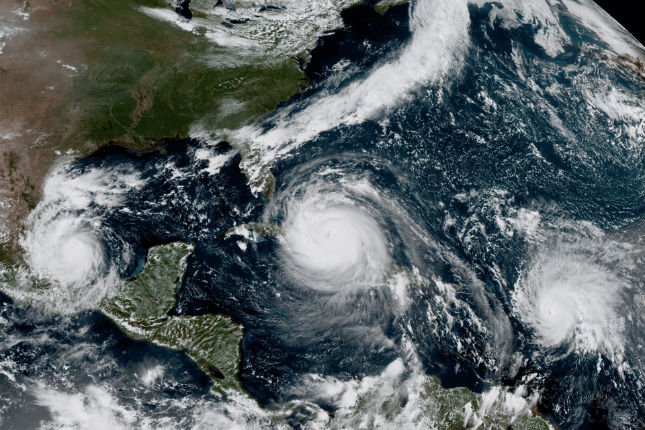
The summer of 2017 was a stark reminder that climate change exacerbates both the intensity and frequency of natural disasters—and that the most vulnerable people are most severely affected. A recent study shows that from 2004-2014, 58 percent of disaster deaths and 34 percent of people affected by disasters were in the most fragile countries, as measured by the Fragile States Index. Disasters in these countries receive considerably less media coverage than the recent hurricanes that hit the United States. This lack of attention also leads many policymakers to overlook a possible opportunity: By working together to reduce fragility and vulnerability, could we not only better prepare for disaster, but also help prevent conflict? We have the policy tools to take an integrated approach to climate, conflict, and disaster—but we need the political will to use them.
-
As Fiji Leads COP-23, Camari Koto Reflects on Climate Resilience in the South Pacific Islands
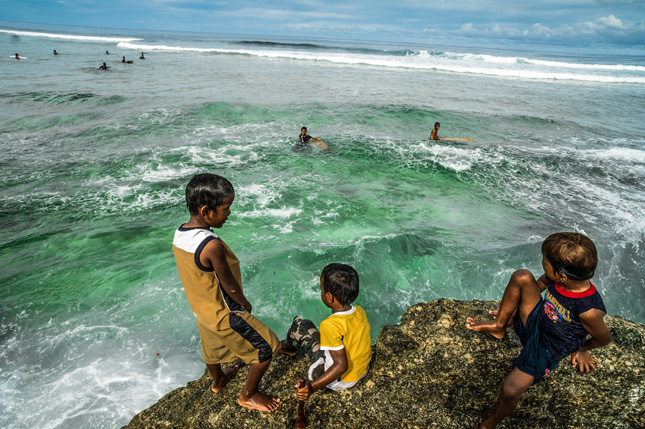
› Climate change poses an undeniable threat to small island states, but many islanders do not even know what climate change is, says Camari Koto, an indigenous Fijian academic and educator at the University of the South Pacific and member of the Resilience Academy, in our latest podcast. “They know it’s happening, they are unconsciously [taking] adaptive responses,” and certainly feel the brunt of its effects, she says. “But they don’t see climate change as an immediate threat.”
 -
From the Pacific to the Atlantic, Protecting Coastal Communities From Climate Threats
›The frontlines of climate change are the world’s shorelines. “It goes without saying that people living in coastal communities are already observing impacts,” said Erin Derrington, a coastal resources specialist working in the Northern Mariana Islands, at a recent Wilson Center event, the third in a series on coastal resilience presented in collaboration with the Hoover Institute and the Stanford Woods Institute on the Environment. “Although that is a challenge, it is also an opportunity and a driver for change and innovation,” said Derrington.
-
Alice Hill: Invest in Resilience to Manage Future Risks to Economy, Security
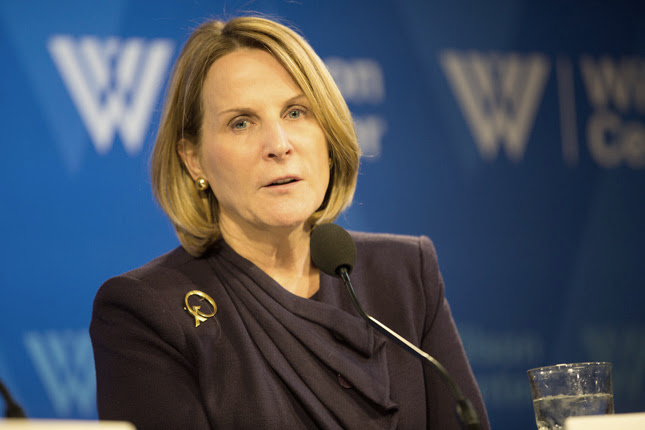
›As our climate changes, “we are vulnerable to unacceptable risks of failures in functionality, durability, and safety,” said Alice C. Hill, former senior director for resiliency policy for the National Security Council, as she launched Resilience Week at the Wilson Center. During the week, members of the UN Resilience Academy joined representatives from the Wilson Center, Stanford Woods Institute for the Environment and the Hoover Institute for in-depth discussions on building global resilience in the face of environmental change. “Resilience is proving necessary to withstand the disruptions to our very interconnected systems,” she said.
-
Top 5 Posts for October 2017
›Hurricanes Irma and Maria devastated Puerto Rico, leaving many on the island without power, drinking water, or cellular service. Such disasters are not just an issue for the Caribbean, said the Wilson Center’s Roger-Mark De Souza in an interview with WOUB that was last month’s most read story on New Security Beat. All coastal areas of the United States, with their growing populations and vulnerable but valuable infrastructure, should be prepared to face more severe climate-related natural disasters.
-
Cities at COP-23: Q&A With WRI’s Ani Dasgupta
›To meet the climate challenge, city leaders are committing to ambitious emissions targets, designing decentralized action plans, and sharing lessons in transnational networks. Since growing cities are a large source of global emissions, their efforts could contribute substantially to global climate objectives. As the world’s climate experts gather next week in Bonn, Germany, for the 23rd Conference of the Parties (COP-23), urban initiatives will be a key focal point of the agenda-setting conversation.
-
Fire Warning: From India to California, Change Fuels the Flames
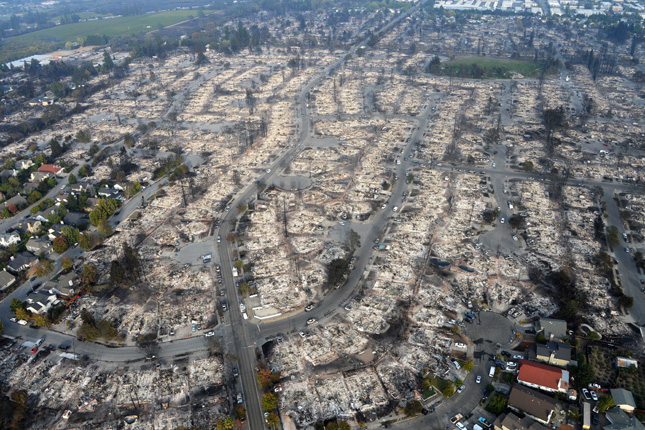
›October 31, 2017 // By Arundhati PonnapaEarlier this month, more than 40 people perished and 20,000 people were ordered to evacuate as Northern California faced some of its deadliest fires in decades. Potentially fueled by climate change, these fires—only the only the latest in a string of fires to strike the state—will reshape landscapes and lives, as I know well from personal experience on the other side of the world.
-
It Takes a Village: Communities Are Key to a Resilient Health System
›“Resilience means the ability to cope and move ahead,” said Joan Dalton, the gender lead at THINK Liberia during the second session in a series of conversations on resilience and health at the Wilson Center. As conflicts, epidemics, and natural disasters increasingly leave global health systems vulnerable to devastation, it is important to build resilient health systems through interventions that support community resilience, agreed global health experts at the panel event co-hosted by CARE and the Maternal Health Initiative.
Showing posts from category risk and resilience.
 Climate change poses an undeniable threat to small island states, but many islanders do not even know what climate change is, says Camari Koto, an indigenous Fijian academic and educator at the University of the South Pacific and member of the