• woodrow wilson center
  • ecsp

New Security Beat

Subscribe:
  • rss
  • mail-to
  • Who We Are
  • Topics
    • Population
    • Environment
    • Security
    • Health
    • Development
  • Columns
    • China Environment Forum
    • Choke Point
    • Dot-Mom
    • Friday Podcasts
    • Navigating the Poles
    • Reading Radar
  • Multimedia
    • Water Stories (Podcast Series)
    • Backdraft (Podcast Series)
    • Tracking the Energy Titans (Interactive)
  • Films
    • Water, Conflict, and Peacebuilding (Animated Short)
    • Paving the Way (Ethiopia)
    • Broken Landscape (India)
    • Scaling the Mountain (Nepal)
    • Healthy People, Healthy Environment (Tanzania)
  • Publications
  • Events
  • Contact Us

NewSecurityBeat

The blog of the Wilson Center's Environmental Change and Security Program
Showing posts from category research.
  • Foresight for Action | Improving Predictive Capabilities for Extreme Weather and Water Events in Pakistan

    ›
    Foresight for Action  //  Guest Contributor  //  December 18, 2019  //  By Amanda King & Michael Kugelman
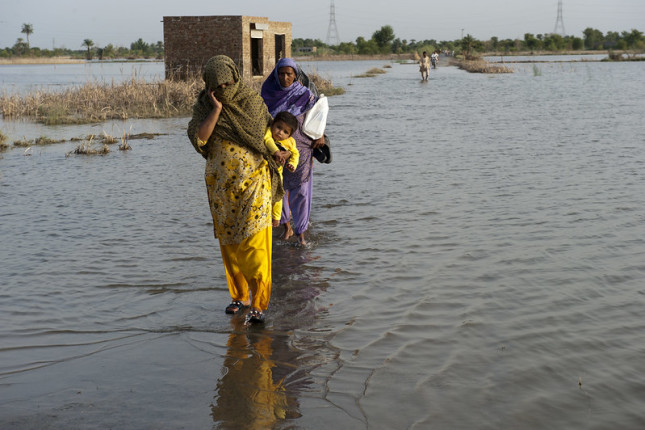
    Pakistan Floods Sept 2010

    The Wilson Center is partnering with the National Oceanic and Atmospheric Administration and the University Corporation for Atmospheric Research to develop a framework to improve predictive capabilities for security risks posed by extreme weather events. Our “Foresight for Action” series highlights research used to develop the framework.

    Pakistan ranks eighth on the list of countries most affected by extreme weather events (1998–2017 data), according to the 2019 Global Risk Index. With increasing global temperatures, severe weather and water events, like monsoons and droughts, are likely to become even more frequent and extreme in the future. Since the 1960s, Pakistan has observed changes in temperature and precipitation. By the end of the century, Pakistan’s temperatures are expected to be significantly higher than the global average.

    MORE
  • Foresight for Action | Weathering the Storm: Improving Predictive Capabilities for Extreme Weather and Water Events in the Caribbean

    ›
    Foresight for Action  //  December 12, 2019  //  By Brigitte Hugh
    190905-H-DO456-052

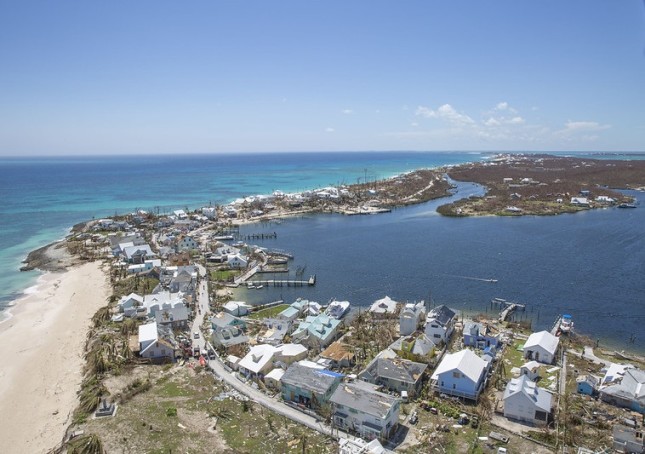
    The Wilson Center is partnering with the National Oceanic and Atmospheric Administration and the University Corporation for Atmospheric Research to develop a framework to improve predictive capabilities for security risks posed by extreme weather events. Our “Foresight for Action” series highlights case studies used to develop the framework.

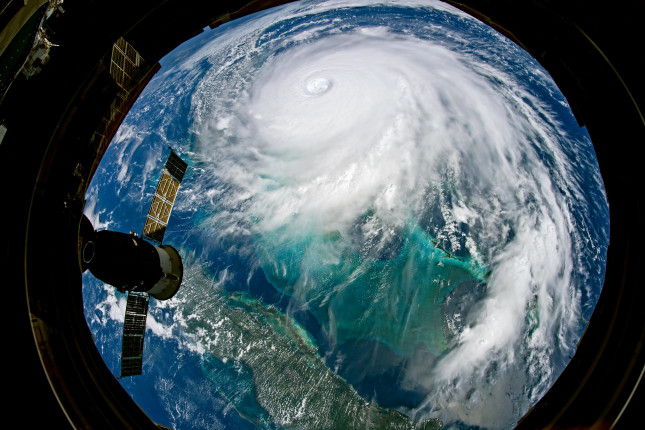
    For two weeks, Hurricane Dorian, one of the strongest hurricanes to make landfall in the Pacific, decimated large swaths of the Caribbean displacing 70,000 people and killing at least 50. Natural disasters like Hurricane Dorian in the Caribbean have only been worsening over the last decade, a trend often attributed to warming oceanic and atmospheric temperatures.

    MORE
  • By, for, and of the People: How Citizen Science Enhances Water Security

    ›
    Water Security for a Resilient World  //  December 10, 2019  //  By Brigitte Hugh
    37358944522_d0cb505bc7_c

    This article is part of ECSP’s Water Security for a Resilient World series, a partnership with USAID’s Sustainable Water Partnership and Winrock International to share stories about global water security.

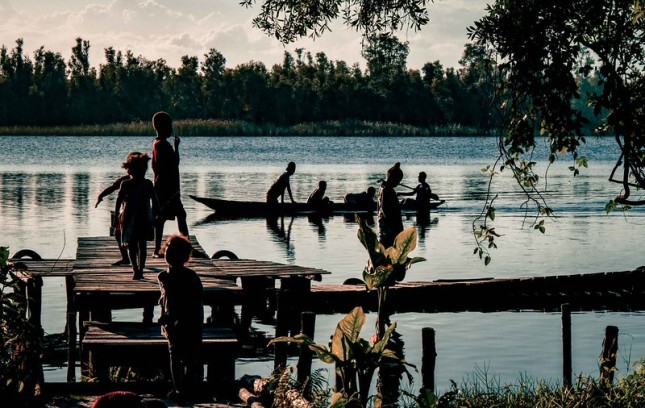
    In the Peruvian Andes, where cropland is irrigated and water availability is variable at best, knowledge of highland hydrology is crucial to survival. However, until recently, the locals did not have adequate information to be able to use their water efficiently. So the community worked with a nonprofit to develop a non-specialist/non-researcher run data-gathering project to monitor the water in the region to optimize its use: in short, they developed a citizen science project.

    MORE
  • Foresight for Action | Ecosystem Degradation, Transnational Migration, and Political Instability: Three Main Tipping Points for East Africa

    ›
    Foresight for Action  //  Guest Contributor  //  November 25, 2019  //  By Marcus King & Mckenna Coffey
    Drought in Ethiopia

    The Wilson Center is partnering with the National Oceanic and Atmospheric Administration and the University Corporation for Atmospheric Research to develop a framework to improve predictive capabilities for security risks posed by extreme weather events. Our “Foresight for Action” series highlights research used to develop the framework.

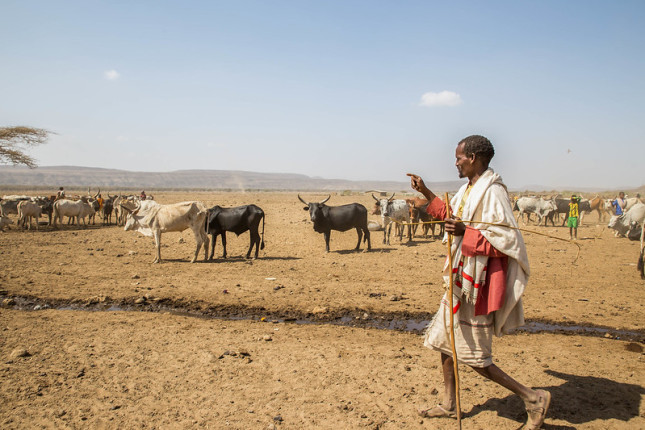
    The Horn of Africa faces critical security and climate risks. Persistent droughts have precipitated the onset of food insecurity and waterborne disease, while heavy rain events such as Cyclone Sagar have caused widespread flooding, mudslides, and wind damage. These challenges are increasing in severity against a backdrop of changing demographic trends—including rapid population growth, increased migration, and urbanization—and power struggles both within and between countries in the region.  

    MORE
  • Foresight for Action | Improving Predictive Capabilities for Security Risks Related to Extreme Weather Events

    ›
    Foresight for Action  //  November 12, 2019  //  By Lauren Herzer Risi, Sherri Goodman & Roger Pulwarty
    48698288003_b0563d3e68_k

    The Wilson Center is partnering with the National Oceanic and Atmospheric Administration and the University Corporation for Atmospheric Research to develop a framework to improve predictive capabilities for security risks posed by weather, water, and climate events. Our “Foresight for Action” series highlights the research used to develop the framework.

    Evidence that extreme weather, water, and climate events pose critical security risks to the U.S. homeland, national security, and global stability has been mounting in recent years. From destabilizing droughts in Africa to devastating hurricanes and flooding in the United States, we are clearly seeing an increase in not only the frequency and severity of these events, but also their physical, social, and economic impacts.

    MORE
  • Research in a Changing Arctic Must be Prioritized

    ›
    October 8, 2019  //  By Sherri Goodman, Peter Davies, Marisol Maddox & Clara Summers
    13982326429_0a315e3bd4_k

    The Arctic is changing, and it’s changing fast, even faster than models had predicted. The most recent Intergovernmental Panel on Climate Change (IPCC) report found with strong confidence that the Arctic is warming two to three times faster than the global average.

    MORE
  • Understanding and Responding to the Role of Drought in National Security

    ›
    On the Beat  //  September 24, 2019  //  By Isabella Caltabiano
    5933228955_318aee0595_k

    “We don’t have a world water crisis, we have a world water management crisis,” said Brigadier General Gerald Galloway (U.S. Army Ret.) at the 2nd National Drought Forum, hosted by the National Integrated Drought Information System and the National Drought Resilience Partnership at the United States Institute of Peace. The Forum brought together subject matter experts with federal and state leaders to discuss how to strengthen the state-federal relationship to improve U.S. drought readiness and resilience.

    MORE
  • In Search of Consensus on Climate-Conflict Links

    ›
    Guest Contributor  //  August 12, 2019  //  By Cullen Hendrix & John O’Loughlin
    UNAMID South African troops deliver 30,000 liters of water to build a clinic in Forog (North Darfur)

    What do we (think we) know about the links between climate change and armed conflict? Early attempts to theorize what climate-related conflict might look like were exceptionally successful in sparking policymaker interest in and funding of research on climate-conflict links. But they were more like works of science fiction than science. Since then, research on climate-conflict links has exploded, with hundreds of articles and working papers published on the subject. Moreover, the findings have been all over the map, with some arguing for strong impacts of climate on conflict at multiple temporal and spatial scales, while others argue—in both specific instances, about the supposedly climate-fueled Syrian Civil War, and more generally—that climate-conflict links are overstated.

    MORE
Newer Posts   Older Posts
View full site

Join the Conversation

  • RSS
  • subscribe
  • facebook
  • G+
  • twitter
  • iTunes
  • podomatic
  • youtube
Tweets by NewSecurityBeat

Trending Stories

  • unfccclogo1
  • Pop at COP: Population and Family Planning at the UN Climate Negotiations

Featured Media

Backdraft Podcast

play Backdraft
Podcasts

More »

What You're Saying

  • Volunteers,At,The,Lagos,Food,Bank,Initiative,Outreach,To,Ikotun, Pan-African Response to COVID-19: New Forms of Environmental Peacebuilding Emerge
    Rashida Salifu: Great piece 👍🏾 Africa as a continent has suffered this unfortunate pandemic.But it has also...
  • A desert road near Kuqa An Unholy Trinity: Xinjiang’s Unhealthy Relationship With Coal, Water, and the Quest for Development
    Ismail: It is more historically accurate to refer to Xinjiang as East Turkistan.
  • shutterstock_1779654803 Leverage COVID-19 Data Collection Networks for Environmental Peacebuilding
    Carsten Pran: Thanks for reading! It will be interesting to see how society adapts to droves of new information in...

What We’re Reading

  • Rising rates of food instability in Latin America threaten women and Venezuelan migrants
  • Treetop sensors help Indonesia eavesdrop on forests to cut logging
  • 'Seat at the table': Women's land rights seen as key to climate fight
  • A Surprise in Africa: Air Pollution Falls as Economies Rise
  • Himalayan glacier disaster highlights climate change risks
More »
  • woodrow
  • ecsp
  • RSS Feed
  • YouTube
  • Twitter
  • Facebook
  • Home
  • Who We Are
  • Publications
  • Events
  • Wilson Center
  • Contact Us
  • Print Friendly Page

© Copyright 2007-2021. Environmental Change and Security Program.

Woodrow Wilson International Center for Scholars. All rights reserved.

Developed by Vico Rock Media

Environmental Change and Security Program

Woodrow Wilson International Center for Scholars

Ronald Reagan Building and International Trade Center

  • One Woodrow Wilson Plaza
  • 1300 Pennsylvania Ave., NW
  • Washington, DC 20004-3027

T 202-691-4000