-
Adapting to Global Change: Climate Displacement, Mega-Disasters, and the Next Generation of Leaders
›
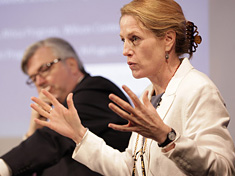
The world is more connected than ever before, but also more complex. Big, transnational trends like climate change, urbanization, and migration are changing the calculus of geopolitics, while local-level inequalities persist. “[Change] seems to be spinning around us so fast,” said John Hempelmann, president of the Henry M. Jackson Foundation, which honors the legacy of the late senator from Washington State. How can today’s and tomorrow’s leaders adjust to global trends? [Video Below]
-
Alice Thomas: Climate Change Effects and Responses Profoundly Undermine Human Rights
›
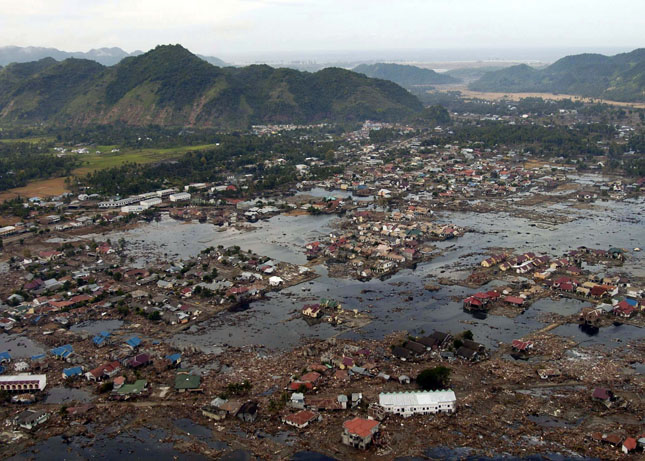
After Typhoon Haiyan ripped across the Philippines in 2014 leveling nearly every building in sight, 4 million people – mostly poor and from coastal regions – were displaced. In response, the government set up “no build” zones in vulnerable areas and worked to move people to new land. But many of the newly relocated people discovered this land came with no access to water, electricity, or other services.
-
The Sahel Beyond the Headlines: Underlying Demographic, Environmental Trends Erode Resilience
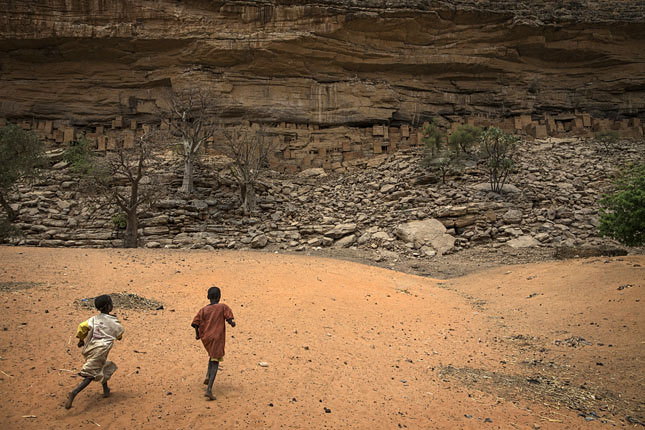
›Between the Sahara to the north and savanna to the south lies the semi-arid Sahel, a region stretching from Senegal to Sudan that has experienced desperate poverty, climate change, malnutrition, and violence. While every context is different, the Sahelian countries share some common challenges, including a pattern of recurring crises and fluid borders. Boko Haram’s reign of terror in northern Nigeria and Mali’s coup have both had cross-border components. [Video Below]
-
Jack Goldstone: Preventing Violence in the Sahel Starts With More Inclusive Governance
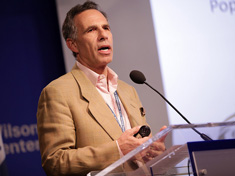
›“The Sahel faces huge problems,” says Jack Goldstone, Virginia E. and John T. Hazel professor of public policy at George Mason University and Wilson Center global fellow, in this week’s podcast. “It is facing massive population growth. It is facing environmental decay. It has a history of violent conflict.”
-
For Next Edition of Influential Global Trends Report, National Intelligence Council Looks to Expand Its Audience
›Between sessions on the value of creating a physical expression of digital brands (Evernote socks) and Bitcoin, this year’s South by South West (SXSW) in Austin, Texas, featured newcomers from a different background: the U.S. National Intelligence Council.
-
Parfait Eloundou-Enyegue: Generational Inequality in the Sahel a Security Risk
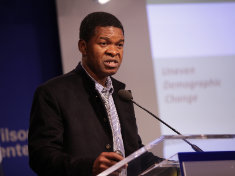
›Rapid population growth, which many Sahelian countries are experiencing, is often associated with an increased risk of sociopolitical violence. But in this week’s podcast, Cornell University Professor Parfait Eloundou-Enyegue argues there is another factor related to demographic change that governments and development organizations should account for: inequality.
-
Saplings and Contraceptives: Results From a Population, Health, and Environment Project in Kenya
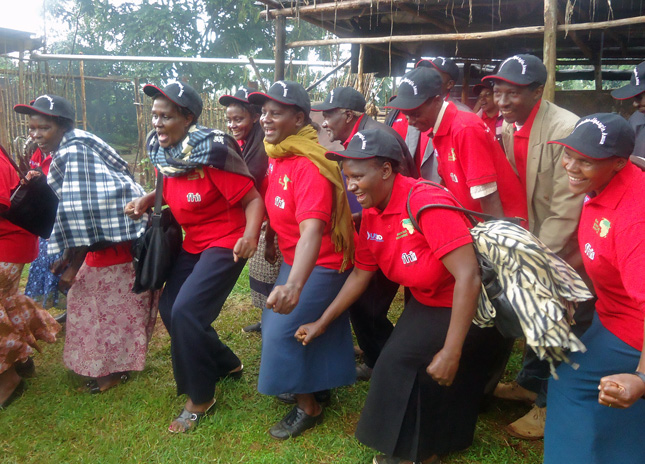
›East African countries like Kenya have made great strides in recent decades in increasing access to modern contraception, leading to marked declines in fertility rates. But disparities remain.
-
How Midwives Can Answer the World’s Maternal Health Woes
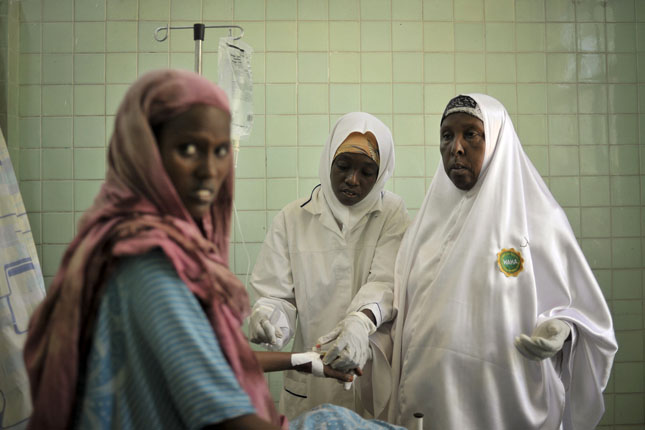
›The world is about to hit a “turning point” in maternal and newborn health, said Laura Laski, chief of the sexual and reproductive health at UNFPA, at the Wilson Center on March 23. “In terms of strengthening the new health system for achieving the MDGS or any other goals, we have to focus on the human resources for health.” In particular, midwives.
Showing posts from category poverty.