-
New Film Explains Blue Ventures’ Integrated Approach to Development and Conservation in Madagascar
›Blue Ventures has become a leader in the population, health, and environment (PHE) community through its work with the remote, semi-nomadic Vezo people living along Madagascar’s southwestern coast. In a new short documentary, The Freedom to Choose: Empowering Communities to Live With the Sea, Blue Ventures describes how their approach has helped the Vezo respond to the combined challenges of resource scarcity, poor reproductive health, and unsustainable livelihoods.
-
Kathleen Mogelgaard: Four Steps to Better Link Climate Adaptation and Reproductive Health Strategies
›
Climate change vulnerability is closely tied to population dynamics, says Kathleen Mogelgaard in this week’s podcast. “We know that population size, composition and spatial distribution around the world is constantly changing, and that these changes do have implications for climate change exposure, sensitivity, and adaptive capacity – the three elements of vulnerability.”
-
Deepa Pullanikkatil: Climate Adaptation Efforts Reveal Health-Environment Links in Malawi
›
Effective development interventions often require thinking outside the box. In southern Malawi’s Lake Chilwa basin, where environmental degradation, public health, and population dynamics intersect in unpredictable ways, people like Deepa Pullanikkatil of Leadership for Environment and Development (LEAD) are challenging conventional thinking with promising results.
-
Environmental Impacts of Household Size, Bringing Family Planning Outside the Health Sector
›What are the environmental implications of changing household sizes? A recent article by Mason Bradbury, M. Nils Peterson, and Jianguo Liu, published in Population and Environment, analyzes data from 213 countries over 400 years and finds the average number of occupants per home tends to decline as population grows. This dynamic, they write, indicates that accommodating housing could prove to be one of “the greatest environmental challenges of the twenty-first century.” As countries develop and urbanize, “according to convergence theory, household size decreases (often from greater than five to less than three).” Other cultural shifts, like increasing divorce rates, urban sprawl driven by rising affluence, decreasing numbers of multigenerational households, and larger houses (in the United States, homes more than doubled in size between 1950 and 2002, according to the article) compound the issue. As population growth continues in parts of the world, these trends pose critical questions for conservation and environmental sustainability, since “households are the end consumers of most natural resources and ecosystem services.” -
After Chance Meeting, New Population, Health, and Environment Program Is Born in Madagascar
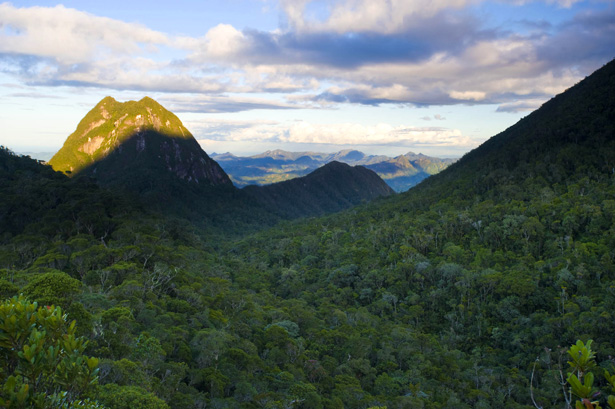
›Against the stunning backdrop of Marojejy National Park, I recently crossed paths with a conservationist from a very different background, working on the opposite side of Madagascar. But, it turns out, the communities we work with face many of the same challenges, and our meeting spawned a new population, health, and environment (PHE) program.
-
Bouncing Forward: Why “Resilience” Is Important and Needs a Definition
›As policymakers respond to the threat of climate and environmental change, the concept of resilience has found itself at the center of discussion. Few scientists and policymakers, however, can come to a consensus on how to define, evaluate, and build resilience.
-
“What I See Is That Women Are Healthier…Children Are Healthier”: Vik Mohan on Blue Ventures’ Work in Madagascar
›Six years after beginning a marine conservation program focused on octopus fishery management in southwest Madagascar, “we can proudly say that we have made a real impact as an organization providing health care,” said Dr. Vik Mohan, medical director of Blue Ventures and a practicing doctor in the United Kingdom.
-
Vik Mohan: Madagascar’s Cyclone Haruna Showed Benefits of Integrated Development
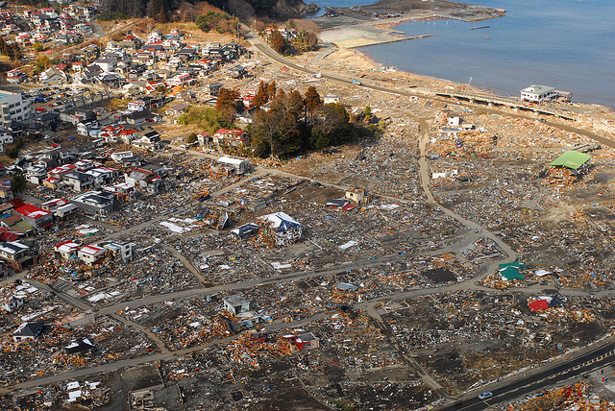
›December 10, 2013 // By Jacob GlassWhen Cyclone Haruna swept across Madagascar last February, Blue Ventures, a marine conservation and community health organization, found themselves in a surprising new role. “We went from development, to aid, and back to development, in an integrated way we never expected,” said Medical Director Vik Mohan in an interview at the Wilson Center.
Showing posts from category PHE.