-
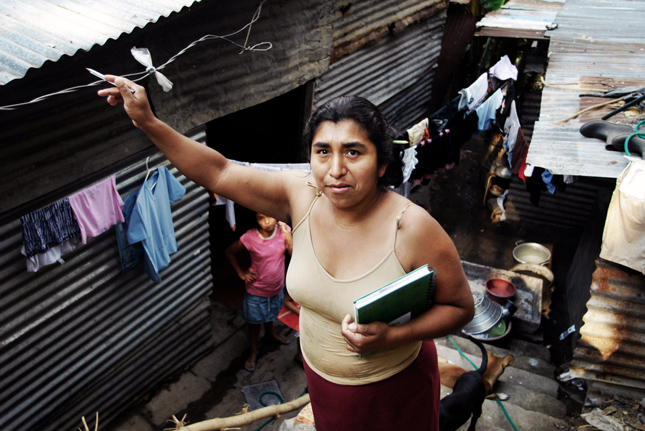
Lisa Meadowcroft on Integrating Water and Sanitation With Maternal Health Goals in Kenya
›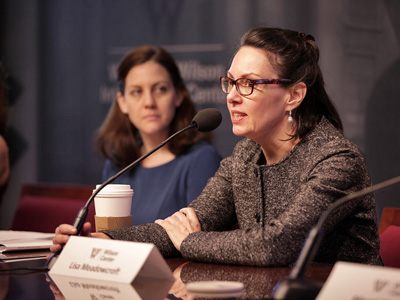
In sub-Saharan Africa, women collectively spend an estimated 40 billion hours a year gathering water, often walking miles to the nearest source, which may not be clean, and braving exhaustion, harassment, and worse along the way. Water availability and quality at health clinics is often not much better, creating a crisis for women, especially pregnant women, throughout the continent. A mutual solution lies in better coordination between efforts to improve water, sanitation, and hygiene (WASH) and maternal health, says the African Medical and Research Foundation’s Lisa Meadowcroft in this week’s podcast.
-
Make It Count: Evaluating Population, Health, and Environment Development Programs
›
Evaluation is the lifeblood of any development effort – it’s how implementers know if they’re making a difference, determine what to do more or less of, and enables funders to evaluate cost-effectiveness. But it’s also an inexact science, no more so than when it comes to complex interventions that cut across sectors. [Video Below]
-
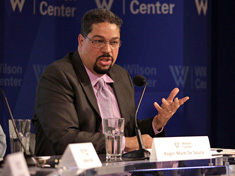
Roger-Mark De Souza: Integrated Development Shows Health, Population Dynamics Crucial for Resilience
›
Resilience means different things to different people. For many in the international development and humanitarian communities, building resilience means responding to growing climate risks through disaster mitigation and planning. But for people like Birhani Fakadi, a 39-year old mother of 11 in rural Ethiopia, it also means access to reproductive health and family planning services, says ECSP’s Roger-Mark De Souza in this week’s podcast.
-
Why They Care: Reproductive Health Champions Spotlight Personal Connections to Development, Environment, More
›“Saving the planet depends on women achieving full human rights, and that begins with reproductive rights,” writes the Natural Resources Defense Council’s Frances Beinecke in a new set of essays on reproductive health published by the United Nations Foundation and the Aspen Institute.
-
Earth Day 2014: Women at the Center of Sustainable Cities
›April 22, 2014 // By Roger-Mark De SouzaWhen I first came on board the Wilson Center last Earth Day, I wrote that I wanted to forge new paths and identify ways that reproductive health, environmental conservation, and women’s empowerment affect our lives today and in the future.
-
Forests on Film: New Stories From Nepal and the Congo Basin
›Given growing awareness about environmental change and how it affects human life, it is perhaps not surprising there is also a growing audience for environmental filmmaking. At the 2014 Environmental Film Festival in the Nation’s Capital on March 25, the Wilson Center premiered ECSP’s latest documentary, Scaling the Mountain: Protecting Forests for Families in Nepal. Together with Heart of Iron, a recent film on mining in the Congo Basin, the event took viewers into some of the world’s most remote forests to see how their inhabitants are adapting to rapid changes in the natural resources on which they depend.
-
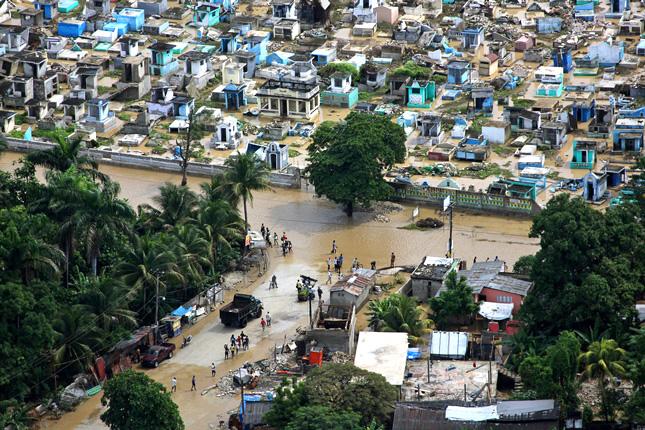
Double Dividends: Population Dynamics and Climate Adaptation
›If current projections hold, Africa’s population will more than double in 40 years, putting more people at risk of food, water, health, and economic insecurity as the climate changes, as well as negating progress made in reducing carbon emissions per person. But what if it didn’t? [Video Below]
-
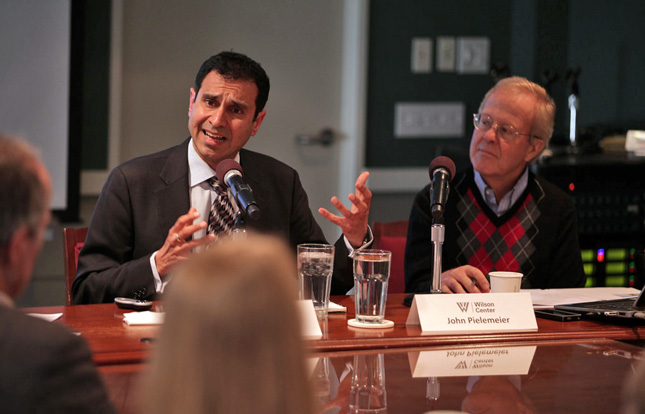
John Pielemeier: Population, Health, and Environment Programs Need to Prove It Before Becoming Mainstream
›
A new model of integrated development, combining population, health and environment (PHE) interventions, is efficient, effective, and relatively inexpensive. But more rigorous program evaluations are necessary to prove its value, argues John Pielemeier in this week’s podcast.
Showing posts from category PHE.